
Business
Electricity workers face threats as system crumbles, Labour laments


By Victor Ahiuma-Young
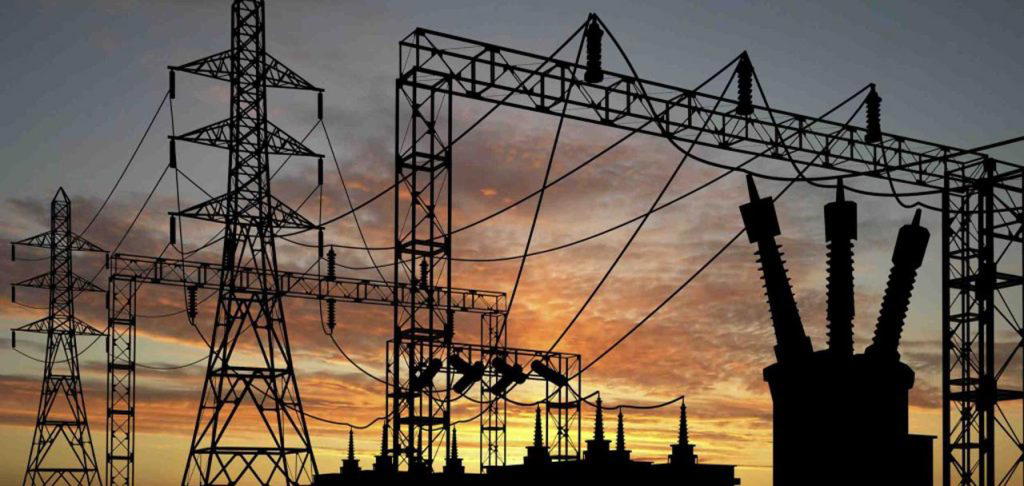
Organised Labour in the nation’s electricity industry has raised alarm over worsening insecurity, deepening poverty, and what they describe as a collapsing power sector, claiming that these are pushing them to the brink.
Under the umbrella of the National Union of Electricity Employees, NUEE, they lamented that its members are increasingly exposed to violence, unsafe working conditions, and economic hardship while striving to keep the country powered.
A statement by NUEE’s Acting General Secretary, Dominic Igwebike, expressed sadness that from overstretched infrastructure to erratic electricity supply, the challenges confronting the sector are mounting.
According to NUEE, workers are being forced to deliver under extreme pressure, even as inflation surges, wages stagnate, and the cost of living spirals beyond reach.
The union warns that without urgent reforms, both the workforce and the nation’s fragile power system could face further decline.
It stated: “In addition, we work under very unsafe environment and circumstances – our linemen and technician in the transmission sector are threatened daily by kidnappers and bandits, distribution engineers and technician are beaten up daily by hoodlums and community boys while our sales and marketing teams face the worst harassment, intimidation and abuse while rendering service to the public.”
According to the union, electricity infrastructure across the country has become a target for vandalism and attacks, leaving technical staff vulnerable in the line of duty.
They added that substations are damaged, transmission lines sabotaged, and entire communities plunged into darkness, compounding the already dire state of power supply.
The NUEE noted that “many workers are grappling with stagnant salaries, casualisation of labour, and poor remuneration in the face of a weakening currency and rising inflation. For many, the promise of decent work—defined by fair pay and safe conditions—has become increasingly unattainable. Insecurity has continued to cast a long shadow over our workplaces and communities. No worker should have to choose between earning a living and staying alive.”
The union also took aim at the state of Nigeria’s power sector reforms, arguing that privatisation has failed to deliver meaningful improvements.
Instead, it claims, the system has produced “public disaster and private gains,” with ordinary Nigerians still suffering from unreliable and inadequate electricity supply.
Despite Nigeria’s vast population of over 220 million people, power generation remains below 5,000 megawatts—far below global benchmarks.
This shortfall continues to strain the system, affecting productivity and placing enormous pressure on workers tasked with maintaining and distributing power nationwide.
Yet, amid the crisis, electricity workers have remained resilient. The union praised its members for their dedication and sacrifice, noting that they continue to serve in both urban and remote areas under hazardous conditions.
Still, NUEE insists that resilience should not be mistaken for acceptance. It is calling for urgent action to address insecurity, improve working conditions, ensure fair wages, and overhaul the failing power sector.
The post Electricity workers face threats as system crumbles, Labour laments appeared first on Vanguard News.

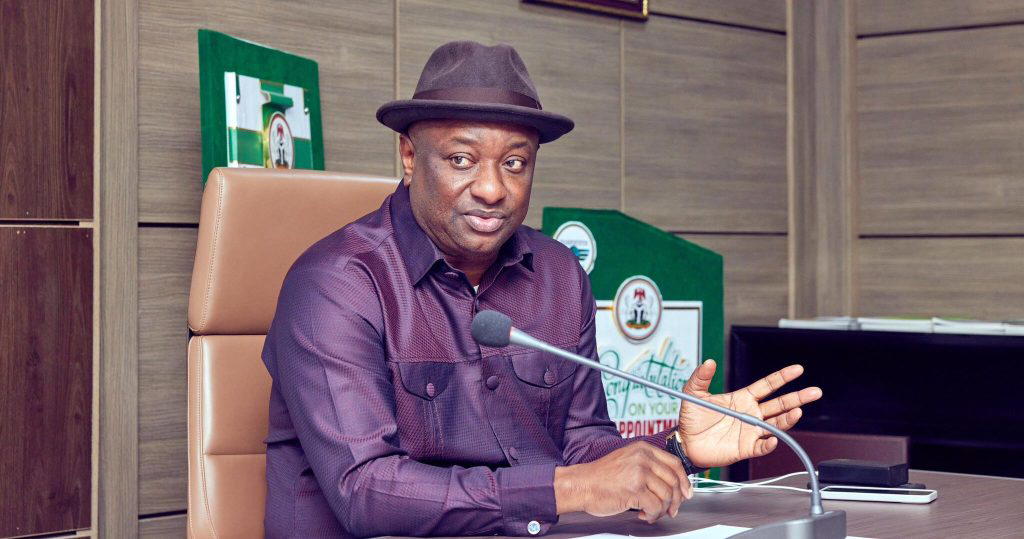
The African Development Bank (AfDB) has appointed Festus Keyamo, Minister of Aviation and Aerospace Development, as the African champion for its $7 billion integrated aviation transformation programme for Africa (IATP).
The bank said the appointment followed Nigeria’s “leadership and vision” in implementing policy reforms aimed at transforming the country’s aviation sector.
In a statement, Tunde Moshood, Special Adviser on Media and Communications to the Minister, said AfDB also invited Keyamo to its annual meeting scheduled for May 28, 2026, in Brazzaville.
According to the statement, the formal signing of the letter of intent (LOI) between the bank and Nigeria would take place at the meeting.
“The Integrated Aviation Transformation Programme for Africa is a continent-wide platform designed to modernize Africa’s aviation ecosystem and mobilize private, institutional, and concessional capital,” the statement reads.
“It seeks to revitalize the industry, as African airlines currently account for less than 3 percent of global air traffic despite housing nearly 18 percent of the global population.
“The aviation minister is now expected to bring his knowledge, commitment, and passion to drive the programme in the whole of Africa.”
In March 2026, the AfDB unveiled the programme as part of efforts to modernise Africa’s aviation industry.
The post AfDB appoints Keyamo to lead $7bn Africa’s aviation transformation appeared first on Vanguard News.

By Peter Egwuatu
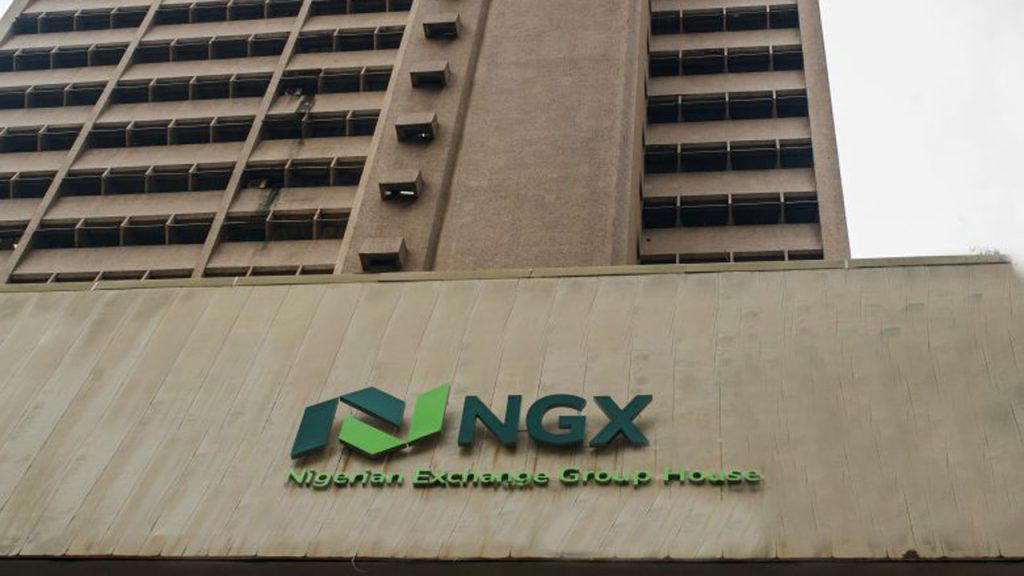
Group Managing Director/CEO, Nigerian Exchange Group (NGX Group), Temi Popoola, has urged the Central Bank of Nigeria’s (CBN) Monetary Policy Committee (MPC) to treat capital market development as a macroeconomic necessity, arguing that the effectiveness of monetary policy increasingly depends on the depth, liquidity, and coherence of Nigeria’s financial markets.
Popoola made this call in a presentation delivered during a session at the CBN Monetary Policy Committee, MPC workshop themed: “Structure and Behaviour of Nigeria’s Equity and Government Debt Markets: Implications for Monetary Policy Effectiveness.”
Represented by Jumoke Olaniyan, Group Chief Strategy Officer, NGX Group Popoola, noted that monetary policy decisions travel through market architecture before reaching households and businesses, and weak market structures can dilute policy effectiveness regardless of the stance adopted by the MPC.
“The real question is not only the level of the policy rate, but whether the financial architecture through which it is transmitted is sufficiently deep and liquid,” he stated.
Popoola noted that Nigeria’s markets are increasingly pricing the broader reform environment, including FX reforms, fiscal adjustment, and improving investor confidence, rather than responding solely to changes in the MPR.
Highlighting the growing scale of the Nigerian capital market, Popoola disclosed that equity market capitalisation had risen to N159.73 trillion in 2026, while fixed-income market capitalisation stood at N55.82 trillion, adding that the NGX All-Share Index (ASI) recorded a 60.13 per cent year-to-date return, reflecting deepening investor confidence despite elevated interest rates.
However, he observed that market activity remains concentrated in a few dominant sectors, while retail participation remains relatively low, limiting the broader wealth-effect channel through which monetary policy reaches ordinary Nigerians.
On the debt market, Popoola pointed to the divergence between the current MPR of 26.50 per cent and the 10-year sovereign yield of 14.95 per cent as evidence that markets are pricing long-term reform credibility rather than merely reacting to interest rates. The ASI’s 51.19 per cent return in 2025, achieved despite elevated rates, reinforced this position.
Popoola also cautioned that the coexistence of Treasury Bills, Open Market Operations (OMO) Bills, and standing facilities creates competing short-end signals that weaken benchmark clarity and dilute policy transmission. “MPR changes are absorbed across multiple instruments rather than transmitted cleanly through a single benchmark,” he noted.
The post NGX Group advocates stronger capital market integration into monetary policy framework appeared first on Vanguard News.

By Yinka Kolawole
The Federal Road Safety Corps (FRSC) has commended Dangote Cement Plc for delivering measurable and transformative improvements in road safety, noting a significant decline in articulated truck crashes across Nigeria following the introduction of innovative transport safety policies and operational reforms.
The Corps described Dangote Cement as a benchmark for transport management and road safety practices, not only in Nigeria but across Africa.
Speaking during a visit to the FRSC Headquarters, the Corps Marshal, Shehu Mohammed, praised the company for setting new standards in road safety management and urged the sustained implementation of initiatives that are reshaping Nigeria’s transport landscape.
He noted that comparative data between 2025 and 2026 revealed a 56 per cent reduction in road crashes involving Dangote Cement trucks, alongside a 36 per cent decline in fatalities and a 52 per cent reduction in injuries.
According to the Corps Marshal, these outcomes clearly demonstrate the effective execution of Dangote Cement’s Gap Analysis and the strength of its internal transport safety policies, which were described as worthy of emulation by logistics operators across Africa. He noted that Dangote Cement’s success reinforces the belief that when industry leaders get safety right, the benefits extend to the entire nation and the continent at large.
Earlier, the Head of Transport at Dangote Cement, Murilo Silva, highlighted the company’s ongoing investments in advanced transport management systems, including automated inspection technologies and artificial intelligence–driven solutions designed to enhance both operational efficiency and road safety.
The post FRSC commends Dangote Cement on new transport safety policy appeared first on Vanguard News.


YPP names ex-APC secretary Dalatu as Adamawa guber candidate

Benjamin Šeško On Why He Chose Manchester United

Enzo Price Confirmed | Rogers Latest | Sesko Exclusive

Simi Sanya and Femi Dapson Are Now Legally Married and It Is Beautiful to See

FCT Area Council Election: Live results from polling units

Premier League Set-Piece Goals (2025/2026)
-
 Sports1 day ago
Why Crystal Palace’s Conference League Win is Bad News For 4 English Clubs
-
 Politics19 hours ago
I never promised to release Nnamdi Kanu from prison – Abia APC candidate, Opah
-
 Business1 day ago
Oyetola, others to discuss green ports, dockworkers’ welfare at 2026 SCAN day
-
 Metro1 day ago
Two children, three others killed in Ogun auto crash
-
 Politics18 hours ago
Atiku: Nobody asked me to be VP – Amaechi on ADC primary
-
 Metro23 hours ago
Windstorm kills food vendor in Benue State
-
 Politics1 day ago
‘Democracy can still work’ – David Mark on Atiku emerging ADC presidential candidate
-
 Sports2 days ago
Anthony Gordon’s Wage After Leaving Newcastle For Barcelona Emerges