
Politics
Obi-Kwankwaso Alliance: NDC surge rattles APC, reshapes 2027 battle lines


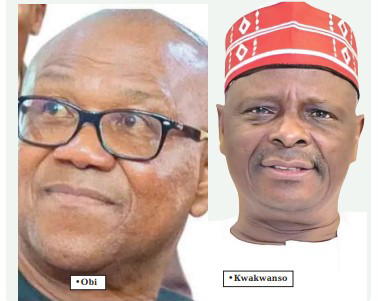
By Luminous Jannamike, ABUJA
Nigeria’s opposition politics may have entered a new phase this week after former presidential candidates Peter Obi and Rabiu Musa Kwankwaso formally joined the Nigeria Democratic Congress, NDC, triggering a wave of defections that is rapidly reshaping calculations ahead of the 2027 presidential election.
Read Also: Political tension resurfaces in Rivers as Wike, Fubara’s allies pick guber forms
Within days of their move from the crisis-hit African Democratic Congress, ADC, senators, House of Representatives members and political blocs aligned with the former coalition began gravitating toward the NDC, instantly giving the relatively new party national visibility, legislative presence and growing momentum.
The speed of the realignment has unsettled both the ruling camp and rival opposition blocs, reopening debate over whether Nigeria’s opposition can finally unite strongly enough to mount a serious challenge to President Bola Ahmed Tinubu in 2027.
Much of the growing attention is being driven by the changing political arithmetic and the fear, in some quarters, that the opposition may finally be finding a rallying point after months of fragmentation and failed coalition talks.
Why the New Alliance is Drawing Attention
In the 2023 presidential election, Obi secured about 6.1 million votes while Kwankwaso polled roughly 1.5 million. Combined, both candidates attracted more than 7.6 million votes against Tinubu’s approximately 8.8 million.
Although both men ran on separate platforms, they built some of the strongest grassroots movements seen in recent political cycles, particularly among young urban voters, first-time voters and northern populist blocs.
The significance of the emerging alliance lies not only in the combined vote strength of both men, but also in the possibility of merging their organisational structures, volunteer networks and legislative influence under one political platform.
Unlike 2023, when Obi and Kwankwaso ran on separate platforms, the emerging alliance is now attracting sitting lawmakers.
Several senators and House members have already moved toward the NDC following the Obi-Kwankwaso alliance, strengthening perceptions that the party could evolve from a fringe platform into a serious national force before 2027.
Among those who defected was Senator Victor Umeh, who cited instability and litigation within the ADC as major reasons for his decision.
Umeh said the prolonged leadership disputes and court cases within the ADC had made it increasingly difficult for serious political actors to remain focused on broader national issues.
He argued that constant internal battles had become one of the biggest weaknesses of opposition politics in Nigeria and explained that his decision followed consultations with supporters and political associates.
The movement of lawmakers into the NDC has also fuelled speculation that more opposition figures may defect in the coming months, especially if the party continues to gain traction nationally.
Some within the opposition believe the defections reflect growing concern among politicians about entering the 2027 election cycle without a stable platform capable of surviving both internal crises and external pressure.
ADC Crisis Opens New Political Space
Only months ago, the ADC appeared positioned to become the main coalition vehicle for several opposition leaders seeking a broad alliance against the APC ahead of 2027.
That coalition, however, became increasingly unstable amid internal disagreements, leadership disputes and fears of prolonged litigation.
The collapse of trust within the alliance eventually pushed Obi and Kwankwaso toward the NDC, a party its leaders now describe as more stable and less vulnerable to factional crises.
Obi said the decision to leave the ADC was driven by the need to avoid endless internal crises and focus instead on governance issues affecting ordinary Nigerians.
“We are coming… to be part of the peaceful family that will work hard to build a united, secure, prosperous Nigeria that will work for everybody.
“We have come to the NDC to help build a united Nigeria that works for everyone. The government created crisis after crisis in our party, forcing us to leave. We are pleading with them for the sake of democracy please don’t come here with litigation. We want to have peace; we want to build the party; we don’t want cases,” Obi said during his unveiling as an NDC member in Abuja.
His remarks have reinforced growing claims within opposition circles that repeated legal battles and internal disputes have consistently weakened alternative political movements before elections.
Kwankwaso also presented the move as part of a broader effort to rebuild democratic opposition politics and create a platform capable of attracting Nigerians dissatisfied with the current political order.
According to him, the decision to join the NDC was based on a commitment to democratic values and the need to provide Nigerians with a credible political alternative ahead of the next election cycle.
NDC Positions Itself as New Opposition Hub
Leading figures within the NDC have openly embraced the growing perception that the party is becoming the new centre of opposition politics.
Former Bayelsa State governor and NDC national leader, Senator Henry Seriake Dickson, recently described the party as stable, united and free from the factional disputes affecting rival opposition platforms.
Party officials have also intensified efforts to attract defectors from the ADC, Labour Party, NNPP and disenchanted factions within the PDP, arguing that the opposition can only become competitive in 2027 through broad cooperation.
The party’s rapid rise has unsettled parts of the opposition landscape, particularly within the ADC, where some loyalists insist the departure of Obi and Kwankwaso could weaken ongoing coalition efforts.
Others, however, believe the defections may ultimately force a broader realignment among opposition figures who fear entering another presidential election divided and weakened.
The developments have already triggered intense political calculations in Abuja, with many politicians now weighing whether the NDC could become the main opposition platform heading into 2027.
APC Dismisses Threat
The ruling All Progressives Congress, APC, has, however, dismissed the growing excitement around the NDC.
APC National Publicity Secretary Felix Morka criticised Obi’s movement across multiple political parties, arguing that it reflected political inconsistency rather than strategic strength.
“These fellows are unserious. They’re busy just running from pillar to post, looking for a cheap, inexpensive, maybe even free platform to offer them the presidential ticket on a platter,” Morka said.
The APC has repeatedly argued that the opposition remains too fragmented and personality-driven to present a serious threat in 2027.
Some ruling party figures also privately dismiss the NDC’s momentum as temporary political excitement that may eventually collapse under disputes over party tickets, zoning arrangements and leadership control at the state and ward levels.
Still, despite the public dismissals, opposition figures insist the ruling party is monitoring developments closely, particularly because of the growing appeal of the alliance among younger voters and disenchanted urban communities.
One of the major tests for the NDC will be whether it can sustain momentum long enough to build strong nationwide structures beyond the initial excitement generated by the Obi-Kwankwaso alliance.
Questions Over Electoral Credibility
Beyond the defections and alliances, concerns over the credibility of the 2027 election are also beginning to dominate political discussions.
Some opposition figures argue that even a united coalition may struggle if electoral institutions fail to guarantee a level playing field.
Those concerns have intensified amid continuing debates over insecurity, judicial intervention in political disputes and the broader influence of incumbency in Nigerian elections.
INEC Chairman Joash Ojo Amupitan has acknowledged the security challenges facing the electoral process while insisting the commission remained committed to credible polls.
“The scale of insecurity across the various parts of Nigeria presents a threat to the conduct of the fair election. However, our election in 2027 will be what we expect… a very free, fair, credible, peaceful, inclusive election,” Amupitan said.
His remarks have done little to completely calm scepticism within opposition circles, where many continue to question whether Nigeria’s institutions can deliver an election widely perceived as transparent and competitive. For now, however, the rapid rise of the NDC has altered the political conversation in Abuja.
What looked only weeks ago like another fractured opposition landscape in the aftermath of the Ibadan Opposition Summit held penultimate weekend is increasingly being viewed as a possible consolidation point ahead of 2027, even as doubts persist over whether Nigeria’s political system will allow a genuinely level contest when the time comes.
The post Obi-Kwankwaso Alliance: NDC surge rattles APC, reshapes 2027 battle lines appeared first on Vanguard News.
www.vanguardngr.com

Osun State Directorate of the National Orientation Agency, NOA, has urged residents to remain security conscious in view of the prevailing security challenges across the country.
The agency also called for greater collaboration with traditional institutions to promote peaceful civic engagement ahead of the 2026 Osun State governorship election.
The State Director of the agency, Adebiyi Adefarasin Stephen, made the appeal on Tuesday during an advocacy visit to the Olowu of Kuta, Oba Adekunle Oyelude Makama, where he led the agency’s management team on a sensitisation programme.
Adefarasin said the visit formed part of efforts to mobilise traditional institutions in support of voter education and to encourage peaceful participation in the electoral process before the 2026 governorship poll in Osun State.
He also stressed the importance of traditional rulers in promoting civic responsibility, peaceful participation and national values at the grassroots, describing them as critical partners in community mobilisation.
The delegation comprised Community Orientation and Mobilisation Officers, COMOs, from Iwo, Ayedire and Olaoluwa Local Government Areas, alongside the second-in-command of the WAI Brigade, Osun State Command.
According to the NOA director, the advocacy visit also provided an opportunity to sensitise the palace on the agency’s flagship National Values Charter, aimed at strengthening patriotism and responsible citizenship.
“The people of Osun State should remain security conscious in view of the current security realities in the country. We urge residents to embrace peaceful coexistence and active civic participation,” he said.
Responding, Oba Adekunle Oyelude Makama commended the National Orientation Agency under the leadership of Director-General, Lanre Issa-Onilu, for initiating the advocacy programme.
The monarch pledged the support of the Kuta Kingdom towards ensuring a peaceful, credible and values-driven governorship election in Osun State.
He also called on the Federal Government to prioritise funding for the agency as a first-line charge to enable it to discharge its mandate effectively and efficiently.
The advocacy visit forms part of the NOA’s ongoing engagement with key stakeholders across Osun State to strengthen voter education, promote national values and encourage peaceful participation in the 2026 governorship election.
dailypost.ng

Demola Olarenwaju, Senior Political Assistant to the African Democratic Congress, ADC, presidential candidate, Atiku Abubakar, has described the embattled former governor of Kaduna State, Nasir El-Rufai as a unique Nigerian politician.
Olarenwaju explained that El-Rufai is unique because of his clear headedness and strategic thoughts.
Posting on X, he noted that the Independent Corrupt Practices and Related Offences Commission, ICPC, would soon have no excuse for detaining him.
The former governor and a chieftain of the ADC has been held in detention by the ICPC since February 19, 2026.
On April 13, the ICPC took the former governor to a Kaduna high court with a revised set of nine charges related to alleged fraud and misuse of office.
El-Rufai is currently undergoing judicial trial amid health challenges and the arrest of his personal physician.
However, Olarenwaju wrote: “What makes El-Rufai unique in Nigeria’s politics is his clear headedness and depth of strategic thought with tactical implementational balance.
“He is not only a planner but if nobody will do the dirties, my man will off his white and enter the mud himself. Hate to love him.
“They will eventually run out of excuses to keep holding the man and then the nakedness of their hypocrisy will become too glaring to be concealed from and ignored by the outside world. Till then, it’s solidarity and courage.”
dailypost.ng
The All Progressives Congress, APC, senatorial candidate for Sokoto East, Umaru Ajiya, has called for a more proactive approach to tackling insecurity, urging security agencies to take the fight to bandits’ hideouts.
Ajiya made the call in Sokoto on the sidelines of the combined convocation ceremony of Sokoto State University, where he was conferred with an honorary degree.
He said Nigeria must shift from what he described as a reactive approach to a proactive strategy in addressing insecurity through improved collaboration among security agencies.
According to him, sustained military operations against bandits are necessary to restore peace, particularly in Sokoto State, which he described as one of the areas most affected by banditry.
Ajiya said persistent attacks by bandits had claimed many lives, displaced residents and increased the number of internally displaced persons in affected communities.
He also advocated the establishment of state police, arguing that it would complement existing security agencies because personnel familiar with local terrain would be better positioned to respond to security threats.
The APC senatorial candidate said, if elected, he would prioritise security, youth empowerment, infrastructure development and other initiatives aimed at improving the welfare of his constituents.
He added that he would focus on legislative representation that promotes equitable resource allocation and effective oversight to address the developmental needs of the Sokoto East Senatorial District.
dailypost.ng


Bandit attacks on Niger, Kaduna farming communities threaten food production

LPG: FG targets 5m homes for cooking gas transition — Ekpo

Three arrested in Katsina over alleged drug supply to terrorists

Meaning Behind Egypt Manager’s ‘X’ Gesture vs Argentina

Simi Sanya and Femi Dapson Are Now Legally Married and It Is Beautiful to See

Premier League Set-Piece Goals (2025/2026)
-
Sports12 hours ago
Meaning Behind Egypt Manager’s ‘X’ Gesture vs Argentina
-
 Sports2 days ago
Wayne Rooney Blasts FIFA’s Decision to Suspend Folarin Balogun’s Red Card
-
 Sports1 day ago
Rodri Addresses Bernardo Silva Incident During Spain 1-0 Portugal
-
 Sports22 hours ago
‘Real Reason’ Why Sami Zayn Lost His Title to CM Punk
-
 Sports1 day ago
World Cup Fans Claim Bernardo Silva Player ‘Cost’ Portugal vs Spain
-
 Sports13 hours ago
VAR Expert Claims Egypt Should Have Had Penalty vs Argentina
-
 Sports2 days ago
Martin Odegaard Speaks on Neymar Clash After Norway 2-1 Brazil
-
 Sports2 days ago
Ball Boy and Girls Salaries Revealed