
Politics
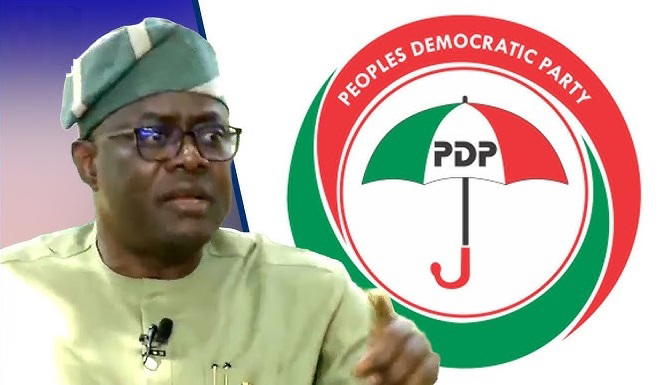
2027 Presidency: How far can PDP-APM alliance take Makinde?


By Dapo Akinrefon
On Thursday, May 14, Governor Seyi Makinde of Oyo State declared his intention to run for President on the platform of the Peoples Democratic Party, PDP, and Allied Peoples’ Movement, APM, alliance in the 2027 presidential election.
Read Also: 2027: 31 APC Govs endorse Tinubu with 10.99m votes
The declaration, however, seemed to have transformed the politics of Oyo State.
The declaration was not merely the launch of another presidential ambition; it was the unveiling of a broader political experiment rooted in coalition-building, the same strategy that propelled Makinde to power in 2019.
This time, however, the stakes are significantly higher.
Standing before thousands of supporters gathered for a mega rally organised by the PDP and APM, the governor announced a new opposition alliance which he hoped could become the foundation of a national political movement ahead of the 2027 general elections.
MoU between PDP, APM
The event followed the formal signing of a Memorandum of Understanding between both parties at the PDP South-West Secretariat in Ibadan, supervised by the governor and the National Chairman of the APM, Yusuf Mamman Dantalle.
But beyond the symbolism of party agreements and campaign rhetoric lay a deeper political question: can the alliance model that worked effectively in Oyo State be successfully replicated at the national level against the formidable machinery of the All Progressives Congress, APC?
Observers of political events opine that it may define Nigeria’s political direction over the next two years.
The ghost of 2019
Makinde’s emergence as governor in 2019 remained one of the clearest examples of successful opposition coalition politics in recent Nigerian history.
At the time, Oyo politics was deeply fragmented. Yet several opposition parties and influential political figures decided to close ranks in a determined effort to remove the APC from power in the state.
Former Governor Rashidi Ladoja, now the Olubadan of Ibadanland, and leaders from parties such as the ADC, SDP, and ZLP merged their political structures into the PDP in support of Makinde’s candidacy.
How the alliance proved decisive
Makinde defeated APC candidate, Mr Adebayo Adelabu, by polling 515,621 votes against Adelabu’s 357,982.
Observers at the time credited the coalition with neutralising the APC’s dominance by pooling grassroots structures, regional influence and anti-incumbency sentiments into a single electoral force.
Six years later, Makinde appeared convinced that the same formula could become the basis for a national opposition resurgence.
The difference, however, is that coalition politics at the federal level is infinitely more complicated than state-level alliances.
Time to reset Nigeria
At the Ibadan rally, Makinde framed the emerging alliance as a democratic necessity rather than a narrow partisan arrangement.
The governor argued that Nigeria’s democratic foundations were under pressure due to what he described as increasing interference in opposition politics nationwide.
He said the gathering represented more than a political rally, explaining that it was an attempt to retrace the country’s democratic journey and understand how Nigeria arrived at its current political situation.
“We are all here at this mega rally to announce the grand alliance between the People’s Democratic Party and the Allied Peoples’ Movement. We must retrace our steps to understand how we arrived at this point in our political history,” he said.
He further warned that the country was approaching a dangerous political crossroads where democratic competition itself appeared threatened.
“We have found ourselves at a point in our nation’s political history where the very foundations of democracy are being shaken,” he lamented.
The governor accused unnamed political actors of deliberately weakening opposition parties in pursuit of a one-party state.
Makinde said: “We have continued to witness interference in the affairs of opposition parties across our beloved country, with the clear intention of steering Nigeria towards a one-party state.”
His comments reflected a growing sentiment among opposition figures who believed Nigeria’s democratic space is shrinking amid defections, internal crises and the expanding influence of the APC across key political institutions.
While he insisted that genuine democracy could not survive without vibrant political competition, he warned: “Without a multi-party system, there can be no true democracy. So, where is our democracy today?”
Economic hardship as political fuel
While the alliance is fundamentally political, its organisers clearly understood that public frustration over economic conditions may become the opposition’s strongest weapon heading into 2027.
Nigeria is currently grappling with severe inflation, rising food prices, energy costs and worsening living conditions for many households. Security challenges also remain persistent across several parts of the country.
Makinde, who tapped directly into those frustrations during his address, lamented that worsening economic and security realities had forced many Nigerians into daily survival struggles.
“The economic and security situations continue to worsen, forcing the majority of Nigerians into survival mode on a daily basis,” he said.
He lampooned those in authority for treating public office as private property rather than a responsibility entrusted to them by citizens.
“Those entrusted with the responsibility of safeguarding the welfare of the people have instead treated the authority given to them as personal property, to be exercised at their own discretion,” he stated.
This line of criticism signalled what could become the central opposition narrative before 2027, that the APC government has failed to sufficiently cushion the hardship experienced by ordinary Nigerians.
Yet, the challenge for Makinde and his allies will be transforming public frustration into organised electoral momentum.
Beyond party politics
One of the most striking aspects of Makinde’s speech was his effort to redefine opposition politics beyond traditional party structures.
The governor was of the view that the opposition was no longer limited to politicians or political parties but included ordinary Nigerians dissatisfied with the direction of the country.
He said millions of citizens who felt excluded by the current economic and governance realities were already part of the broader opposition movement.
“The opposition in Nigeria is not limited to political parties alone. The opposition is every ordinary Nigerian for whom this country is no longer working,” he declared.
Makinde added that opposition parties remained committed to working together to provide Nigerians with what he described as a credible alternative.
“And the opposition political parties in Nigeria remain committed to working together to present a credible alternative for our people,” he said.
The language was carefully crafted to position the alliance as a populist movement rather than merely an electoral arrangement among elite politicians.
The politics of resistance
The presidential hopeful also sought to present the emerging coalition as an act of resistance against political intimidation and public despair.
The governor argued that Nigerians had been pushed to the brink by worsening conditions and political manipulation, noting that many citizens were being driven towards hopelessness and division.
“For several months now, one question has remained at the forefront of my mind: where do we go from here? Is this truly the path we intend to continue on as a nation?” he asked.
Makinde maintained that there was an expectation in some quarters that Nigerians would become too exhausted by hardship to demand accountability.
“We have been pushed to the brink, with the expectation that we will turn against one another in confusion and desperation,” he stated.
According to him, the ruling establishment assumed that the daily struggle for survival would weaken citizens’ capacity to resist poor governance.
“Their greatest assumption is that we will become too exhausted from the daily struggle to survive to resist or demand better,” he said.
While he argued that the emerging alliance had already disproved assumptions that opposition parties could never unite, he said: “They concluded that the opposition could never unite. I stand before you to say clearly: that was a grave miscalculation.”
Perhaps the most politically symbolic moment of the rally came when Makinde announced what he called the ‘Reset Nigeria Movement’.
Calling on opposition parties to close ranks, Makinde described the alliance between the PDP and APM as the beginning of a larger political coalition.
He urged opposition parties to embrace gradual but deliberate unity, saying, “To the opposition political parties, this is the time for unity, one party at a time. That is exactly what the PDP and APM are demonstrating.“
The governor stressed that the country urgently required fresh leadership and direction, adding, “This is the moment to work together in unity and determination to give our generation the leadership and direction it urgently needs.“
Describing Ibadan as “the city of warriors”, the governor said the new alliance marked the first stage of a broader political journey.
“And so, today, here in my home state, in Ibadan, the city of warriors, the first grand alliance is formed: the alliance between the Peoples Democratic Party and the Allied Peoples’ Movement,” he said.
He explained that the partnership would enable both parties to present candidates across all levels of government.
“This partnership will enable us to present candidates at every level of government, from the Presidency to the State Assemblies, and every office in between,” he declared.
How far can the alliance go?
Despite the excitement generated by the Ibadan rally, the political realities confronting Makinde’s ambition remain daunting.
However, history showed that coalitions frequently struggle with internal contradictions after the initial objective of electoral victory is achieved.
Furthermore, Makinde’s South-West origin introduced another strategic complication.
President Bola Tinubu remained the dominant political figure in the region.
For Makinde to emerge as a serious national contender, he would need not only to fracture APC’s influence in the South-West but also build strong alliances across northern Nigeria and other southern regions. That is a significantly more difficult task than the coalition politics of Oyo State.
Opposition leaders’ push for coalition
Several opposition leaders who spoke at the Ibadan rally attempted to frame the alliance as a response to national disappointment under the APC administration.
Throwing his weight behind the alliance, former Osun State governor, Prince Olagunsoye Oyinlola, linked the coalition directly to unfulfilled promises made during the 2023 elections.
Oyinlola, who addressed the gathering in the Yoruba language, recalled how President Tinubu had campaigned on promises of economic revival and national progress.
“What brought us to this level of alliance? About three and a half years ago, our brother, Bola Tinubu, said it was his turn to become President,” he said.
He noted that Nigerians were promised improvements in electricity supply, the oil sector and economic prosperity.
“He assured Nigerians that the power sector would be revitalised, the oil sector repositioned, and the country would move towards progress and prosperity.
“But where are we today? That was the purpose of the opposition summit in Ibadan, to chart a new course for the country and build a stronger alliance capable of addressing the challenges facing Nigerians”, he said.
Similarly, Oyo PDP chairman Dayo Ogungbenro described the alliance as a major turning point for opposition politics in Nigeria.
Ogungbenro said the coalition reflected a shared determination to strengthen the opposition ahead of 2027.
“This is a significant turning point in our democratic journey. The coming together of the PDP and the APM reflects a shared determination to strengthen the opposition and present a credible alternative to the Nigerian people,” he said.
On his part, APM National Secretary, Mr Oyadeyi Ayodele, argued that the alliance went beyond electoral calculations.
Ayodele, who described the alliance as a democratic necessity aimed at restoring balance and effective governance, said: “This partnership represents a watershed moment for our democracy. It demonstrates that political differences can be set aside when the greater good of the nation is at stake.”
He explained that the coalition intended to confront insecurity and economic hardship through collective action.
“Our collective resolve is to build a credible and united platform capable of addressing the challenges confronting Nigeria, including insecurity and economic hardship,” Ayodele stated.
The long road to 2027
For now, Makinde’s declaration has undoubtedly altered the early political conversation surrounding 2027.
By launching both a presidential bid and an opposition alliance simultaneously, he has positioned himself not merely as another aspirant but as a possible architect of opposition consolidation.
The real test lied ahead: whether opposition parties can sustain unity beyond public declarations; whether Nigerians can be persuaded that the alliance offered a credible governing alternative; and whether Makinde himself can successfully transition from influential governor to national political force.
The post 2027 Presidency: How far can PDP-APM alliance take Makinde? appeared first on Vanguard News.
www.vanguardngr.com

Veteran journalist and former presidential aide, Reuben Abati, has suggested that President Bola Tinubu demonstrated political dominance following the outcome of the All Progressives Congress, APC, presidential primary.
This is even as the veteran journalist in veiled remark questioned the eleven million votes won by Tinubu, saying basic vote counting appeared difficult during some of the party primaries held over the weekend.
Speaking on Arise Television’s Morning Show on Monday, Abati said Tinubu’s overwhelming victory at the APC primary showed that he was “the owner of the game.”
According to him, the president’s emergence with over 11 million votes against his challenger, Stanley Osifo, who secured just over 1,000 votes, sent a strong political message to opposition parties ahead of the 2027 general elections.
He noted that the APC primary result created what he described as a “demonstration effect” for opposition figures, including former Vice President Atiku Abubakar of the African Democratic Congress, ADC.
Abati said the implication was that opposition candidates would need to secure more votes than the figures already recorded for Tinubu within his party.
He, however, pointed out that the APC primary process was not without controversy, noting that there were protests and disagreements over the adoption of consensus and direct primaries in some areas.
Abati said: “I think we should get to a point in this country where we should start a Tinubu school of politics and strategy, because what President Bola Ahmed Tinubu has done over the weekend is to show that he’s the owner of the game.
“What the APC has done, basically, particularly with the presidential primaries, is to show that, okay, the president has been given 11 million votes.
“If he already has 11 million votes from the party and the challenger, one guy called Stanley Osifo, whom the Deputy Speaker of the House of Representatives said in Abia State got 1000 plus votes to Tinubu’s 11 million votes. It’s to show that, look, ‘I’m the owner of this game’.
“End of the day, what would the opposition politicians get, whether it’s Dumebi Kachikwu or it is Atiku Abubakar that emerges today, or whoever emerges in any of the other political parties that are trying to show that they are present on the register, already President Tinubu has presented you with a demonstration effect.
“If his party can give him a 11 million votes then the opposition will need to get more than that.
“And yet during the various events that you have seen over the weekend in the last few days, to even count 1,2,3, basic arithmetics, which you start primary school with, was a problem for that particular political party (APC). That strategy was very smart, very clever, some people would say.
“On a general basis, the President has shown that, okay, he has this strategy: If his party has already given him 11 million votes, then, of course, who is.. how many people are even on the INEC voters register?
“But beyond all of that, we also saw that there were protests. There were disagreements arising from the choice of consensus and direct primaries in other places.”
dailypost.ng

Four governorship aspirants of the Peoples Democratic Party (PDP) in Gombe State have rejected an alleged move to bring former Minister of Communications and Digital Economy, Isa Ali Ibrahim Pantami, into the party’s governorship primary race ahead of the 2027 elections.
The aspirants, Alhaji Abdulkadir Hamma Saleh, Hon. Khamisu Ahmed Mailantarki, Hon. Usman Aliyu Garry and Mrs. Monica Kaltho, made their position known in a communiqué issued after an emergency meeting held on Sunday in Gombe.
They alleged that there were plans to “smuggle” Pantami into the PDP after he had already participated in the governorship primaries of the ruling All Progressives Congress,APC, on May 21, 2026.
According to the communiqué, the aspirants argued that the Electoral Act and democratic principles do not permit an aspirant to defect from one political party to another and still participate in the same electoral process after already contesting and securing votes in another party’s primaries.
“Following the rumoured attempt by an aspirant, Prof. Isa Ali Pantami, who participated in the recently concluded governorship primaries of the APC, to defect to the PDP with the sole aim of contesting in our party’s governorship primaries, we deem it necessary to make our position known,” the communiqué stated.
The aspirants said they “condemn in the strongest terms” any alleged attempt to allow Pantami to participate in the PDP governorship primary, insisting that such a move could expose the party to avoidable legal battles.
They further warned that any action capable of undermining the rule of law could trigger litigation from aggrieved party members and opposition parties.
The communiqué also revealed that the four aspirants had unanimously agreed to allow the PDP leadership in Gombe to select one among them as the party’s consensus candidate for the governorship election.
The decision, they said, was reached out of respect for the party leadership, particularly former Governor, Ibrahim Hassan Dankwambo, whom they described as the leader of the party in the state, alongside the PDP structure across the 11 local government areas and the party’s elders committee.
While reiterating that the PDP remains open to new members, the aspirants maintained that they strongly oppose the inclusion of anyone who had already taken part in another party’s governorship primary.
“While we welcome every well-meaning individual into the PDP, we strongly object to any attempt to involve such a person in the ongoing PDP gubernatorial primaries, which have already reached an advanced stage,” the communiqué added.
dailypost.ng
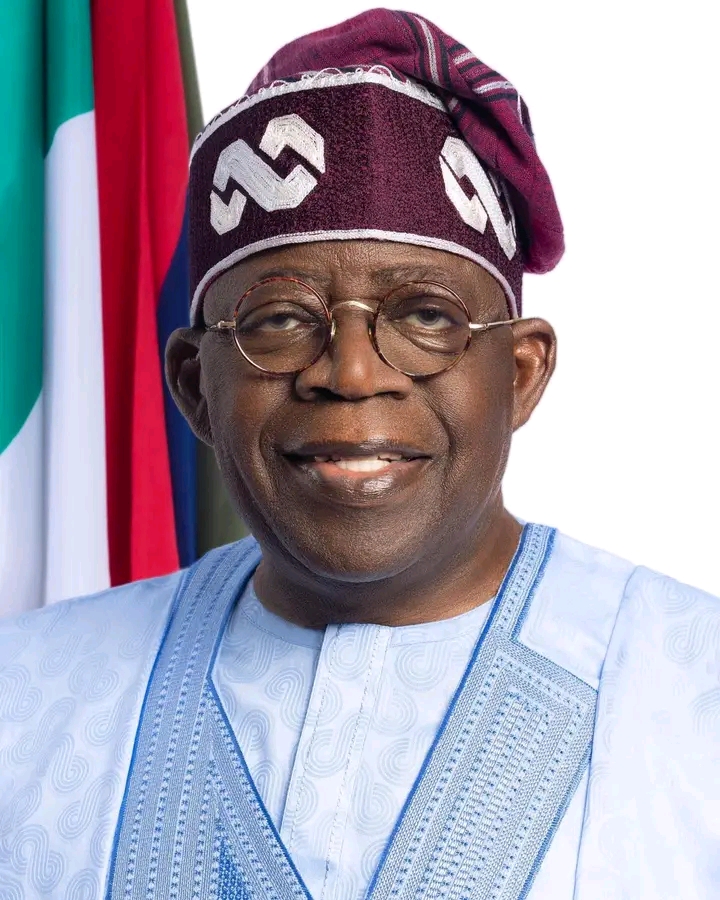
The ruling All Progressives Congress, APC, has declared President Bola Tinubu as its presidential candidate in the recently concluded primary election held across the nation.
Tinubu polled 10.99 million votes to defeat his only challenger, Stanley Osifo, who secured 16,504 votes.
DAILY POST highlights details of President Tinubu’s victory in the 36 states of the federation, including the Federal Capital Territory, FCT, Abuja.
Lagos: 814,988
Adamawa: 644,149
Kaduna: 618,914
Imo: 582,960
Kano: 500,852
Katsina: 467,003
Gombe: 450,517
Borno: 414,988
Delta: 407,646
Akwa Ibom: 389,197
Enugu: 383,382
Benue: 374,787
Plateau: 241,720
Bayelsa: 227,192
Ebonyi: 207,579
Jigawa: 206,520
Kogi: 197,370
Taraba: 183,698
Ondo: 181,996
Niger: 175,487
Abia: 161,005
Bauchi: 156,541
Ogun: 322,485
Zamfara: 321,579
Kwara: 310,990
Sokoto: 301,000
Kebbi: 292,972
Nasarawa: 285,436
Rivers: 280,082
Yobe: 253,804
Cross River: 113,911
Edo: 121,098
Oyo: 142,754
Osun: 100,888
Ekiti: 85,340
Anambra: 43,034
FCT: 36,103
dailypost.ng


Sokoto Hisbah arrests 17 in raids on alleged immoral activities
APC primary: ‘Tinubu owner of the game, should start school of politics, strategy’ – Abati

Red Bull’s Savage Tweet After George Russell’s Canadian GP Tantrum

Simi Sanya and Femi Dapson Are Now Legally Married and It Is Beautiful to See

FCT Area Council Election: Live results from polling units

Premier League Set-Piece Goals (2025/2026)
-

 Sports1 day ago
Tyson Fury and Zlatan Ibrahimovic ‘Planning’ to Buy Morecambe FC
-
 Sports2 days ago
Bernardo Silva Names Anfield as Premier League Stadium With Best Atmosphere
-

 Sports1 day ago
Rico Verhoeven Reacts to Judges’ Scorecards Following Oleksandr Usyk Defeat
-
 Sports2 days ago
Toto Wolff Names His F1 GOAT Out of Lewis Hamilton and Michael Schumacher
-
 Metro21 hours ago
Fire razes residential building in Kwara
-
 Health2 days ago
Can diabetics take lactulose for constipation?
-
 Health2 days ago
Why spicy foods cause diarrhea?
-
 Politics19 hours ago
Nasarawa 2027: Labour Party clears Labaran Maku, Gaza, others for primaries