
Business
Oyetola, others to discuss green ports, dockworkers’ welfare at 2026 SCAN day



By Cynthia Alo
The Minister of Marine and Blue Economy, Adegboyega Oyetola, immediate past President-General of the Maritime Workers Union of Nigeria(MWUN), Adewale Adeyanju, and President of the Nigerian Chamber of Shipping (NCS), Aminu Umar, among others, will gather at the 2026 Shipping Correspondent Association of Nigeria (SCAN) Dockworkers’ Day to discuss sustainable practices and improved welfare standards for dockworkers across Nigerian seaports.
The event organised by SCAN, is scheduled for 4th June at Rockview Hotels, Apapa with the theme: “Green Ports: Sustainable Practices for Dockworkers,” which is expected to drive conversations around environmentally responsible port operations, adoption of efficiency-enhancing technologies and the need to improve working conditions for dockworkers.
According to SCAN, the initiative is aimed at aligning Nigeria’s port operations with global environmental standards while ensuring dockworkers are not left behind in the transition towards greener and technology-driven maritime systems.
In a joint statement signed by SCAN President, Moses Ebosele, and Chairman of the Organising Committee, Yusuf Babalola, the association said the annual Dockworkers’ Day has remained a critical platform for recognising the contribution of dockworkers to the nation’s economy.
The statement noted that the event would also address emerging environmental and operational challenges facing Nigeria’s maritime sector.
“SCAN Dockworkers’ Day serves as a platform to acknowledge the essential contributions of dockworkers to our economy, while also addressing the urgent need for sustainable practices in our ports,” the statement said.
SCAN added that as the global maritime industry continues to evolve, there is an increasing need to equip dockworkers with relevant skills and tools required to adapt to green port initiatives and digital transformation in shipping operations.
Umar is expected to deliver the keynote address at the event, while Adeyanju, who is also Deputy President of the Nigeria Labour Congress, will chair the occasion.
Goodwill messages are also expected from the Managing Director of Nigerian Ports Authority, the Director-General of Nigerian Maritime Administration and Safety Agency, the Executive Secretary of Nigerian Shippers’ Council, the Acting Managing Director of National Inland Waterways Authority, as well as other stakeholders across the maritime value chain.
The post Oyetola, others to discuss green ports, dockworkers’ welfare at 2026 SCAN day appeared first on Vanguard News.

By Babajide Komolafe
For most of the past two decades, the question of which Nigerian banks were winning had a simple answer. The largest balance sheets generated the largest earnings. The largest branch networks captured the largest deposit bases.
The strongest lending relationships produced the most durable interest income. The hierarchy was settled and the competitive question was about scale. That answer is now becoming inadequate. The Nigerian banking sector has just completed an 18-month stretch that has reset the terms of competition in ways the market has not fully absorbed.
The Central Bank of Nigeria’s recapitalisation programme has materially recalibrated the capital base of every deposit money bank in the country. The withdrawal of pandemic-era forbearance and the tightening of loan classification frameworks has stress tested the disclosure culture of every institution.
Persistent inflation, elevated policy rates, and a foreign exchange market still finding its equilibrium have separated the institutions that generate operating leverage from those that do not.
HoldCo as capital allocatiob engine
Quietly, underneath all of it, the shift toward holding company structures has begun to reorganise the architecture through which Nigerian banks compete for capital and deploy it. The institutions that emerge as the winners of the next decade will not necessarily be the ones with the largest balance sheets today.
They will be the ones whose corporate architecture allows them to allocate capital across multiple regulated businesses according to where each additional unit of capital can generate the strongest long-term risk-adjusted return. This is what the holding company structure is for. It is not, despite how it is often described, a cosmetic upgrade to a commercial bank.
Done seriously, it is a capital-allocation engine. The same retained naira, sitting inside a holding company that owns several regulated subsidiaries – a conventional or non-interest bank, a wealth manager, a payments business – can be deployed across those businesses according to where the marginal opportunity is strongest at a given point in the cycle. That is a different decision tree from the binary one a single-line commercial bank faces: lend more, or distribute. It is a fundamentally different competitive proposition. The international evidence on this point is unambiguous.
***What makes this architecture particularly powerful is that different financial businesses respond differently to economic cycles. A high interest rate environment may slow credit creation in commercial banking while strengthening fixed-income investment income for wealth managers. Exchange-rate volatility may weaken consumer demand in some areas while accelerating transaction volumes in payments businesses. Non-interest banking, meanwhile, often behaves differently from conventional lending franchises during periods of macroeconomic stress. A diversified holding structure therefore gives management teams more flexibility to balance risk and returns over time.
Across emerging-market banking, the institutions that have compounded shareholder value most successfully over multi-decade horizons have shared three characteristics. They retained capital aggressively during their formative scaling phases, not occasionally, not as a defensive measure during stress periods, but as the deliberate operating posture of the institution while the underlying franchise was being built.
They diversified into adjacent businesses through holding-company structures rather than through bank-level expansion alone, recognising that conventional banking, non-interest banking, wealth management, asset management and insurance respond to different parts of the macro cycle and have structurally different return profiles. Additionally, they returned to distributing earnings only after those scaling phases had compounded the underlying franchise into something materially larger and more durable than the single-line commercial banks from which they began.
The strategic discipline required to execute this model is often underestimated. Expanding into adjacent financial services businesses before they become materially profitable requires patient capital, management depth and a willingness to tolerate periods where reported returns may not immediately reflect the scale of long-term investments being made underneath the surface. Yet the institutions that successfully navigate this period often emerge with earnings structures that are significantly more resilient than those of conventional banks.
Standard Bank Group, FirstRand, ICICI Bank, and Garanti BBVA each followed variants of this playbook. Each emerged from a formative scaling decade with a multi-line platform meaningfully larger than the bank it had been. Each then began returning earnings through a combination of dividends and buybacks, supported by an equity base that had been allowed to compound during the years that mattered most.
None of them were rewarded by their domestic markets, in the early years of that compounding, in proportion to the scale of the transformation underway. All of them were rewarded, eventually, by international institutional capital that recognised what the architecture was producing before the domestic narrative caught up.
This pattern is relevant because Nigerian banking equities are still largely analysed through near-term profitability metrics and dividend expectations. Yet the deeper drivers of long-term franchise value may increasingly sit beneath those headline numbers. The market tends to focus on current-year earnings; long-duration institutional investors tend to focus on what the earnings structure could become after a decade of disciplined capital deployment.
The Nigerian sector is now in the early years of the equivalent compounding window. Of the institutions that have made the transition to holding company structures over the past five years, the differences between them are no longer about whether the structure exists. They are about how seriously the structure is being used.
Some HoldCos remain, in operational reality, commercial banks with a holding company wrapper. Capital still flows along the path of least institutional resistance, which is back into the bank that already exists. The non-bank subsidiaries are talked about more than they are funded. The retained earnings that the corporate architecture is theoretically permitting to be allocated across the platform are, in practice, being allocated back into the line of business that has always received them.
The HoldCo, in those cases, is a label rather than a mechanism. Other HoldCos are doing something different. Capital is being moved across subsidiaries with deliberation. Subsidiaries are being scaled with retained earnings and new businesses are being built before their earnings contribution can be material, because patient capital invested in the right place at the right time compounds into structural advantage that the market will price later. The dividend conversation, for these institutions, is being framed not as a question of distribution today but as a question of what the retained earnings are buying.
That distinction is becoming increasingly important in the current regulatory environment. The recapitalisation exercise has effectively forced management teams to reveal their strategic priorities. Institutions focused narrowly on short-term shareholder appeasement may struggle to build the diversified platforms necessary for the next phase of competition. Those willing to absorb temporary market scepticism in exchange for long-term franchise expansion may ultimately emerge in stronger positions.
Sterling Financial Holdings Plc, which closed FY2025 with shareholders’ funds expanded by 40.5% to ₦428.7 billion, recapitalisation delivered, and the Group’s balance sheet crossing the ₦4 trillion threshold in Q1 2026, is one of the institutions visibly operating in this second mode. The Group did not recommend a dividend for FY2025, in alignment with the prevailing CBN posture across deposit money banks within the recapitalisation cycle.
Behind that disclosure sits an architecture that includes Sterling Bank Limited as the conventional banking franchise, The Alternative Bank Limited as one of a handful of national non-interest banking platforms in Nigeria, and SterlingFi Wealth Management as the Group’s emerging wealth and asset management business. The retained earnings are not, in any meaningful sense, capital deferred. They are capital deployed across the three businesses that the HoldCo structure was built to operate.
The significance of this approach lies not simply in diversification for its own sake, but in the ability to build earnings resilience over time. Wealth and asset management businesses typically generate fee income with lower balance-sheet risk intensity than commercial lending. Non-interest banking introduces exposure to customer segments and financial structures that behave differently across economic cycles. Payments and digital financial services create transaction-based revenue streams that scale differently from interest income. Together, these businesses can gradually reduce dependence on any single earnings engine.
The same observation could be made of other Nigerian financial holding groups that are using their corporate architecture rather than merely possessing it. The Nigerian banking landscape is gradually dividing into two cohorts. One cohort is using HoldCo structures to compound multi-line platforms during a window that, historically, has not lasted long. The other is treating the structure as a regulatory accommodation.
Historically, these windows of structural transition in banking sectors tend to close faster than markets initially expect. Once the leading platforms establish sufficient scale across multiple business lines, the competitive advantages become increasingly difficult for slower-moving institutions to replicate. Capital depth, technology investment, customer acquisition and distribution networks begin reinforcing one another across the group structure. By the time the broader market fully prices the shift, much of the compounding has already occurred.
The market does not yet appear to fully price the distinction. Over time, it will; and that gap is likely to narrow. For investors looking at the FY2025 reporting cycle and trying to determine which Nigerian financial institutions are structurally positioned to compound through the next decade, the dividend column on the results page is not the variable that matters most.
What matters more is whether the institution has the corporate architecture to allocate capital across multiple businesses, and the institutional discipline to actually use it. The headline numbers from this reporting season will be forgotten within months. The architectural choices being made underneath them will compound, or fail to compound, for the better part of a decade. That is the choice the sector is making. The market that prices it has yet to fully reflect what the choice is worth.
The post How HoldCos, capital architecture will define banking future appeared first on Vanguard News.

By Godwin Oritse
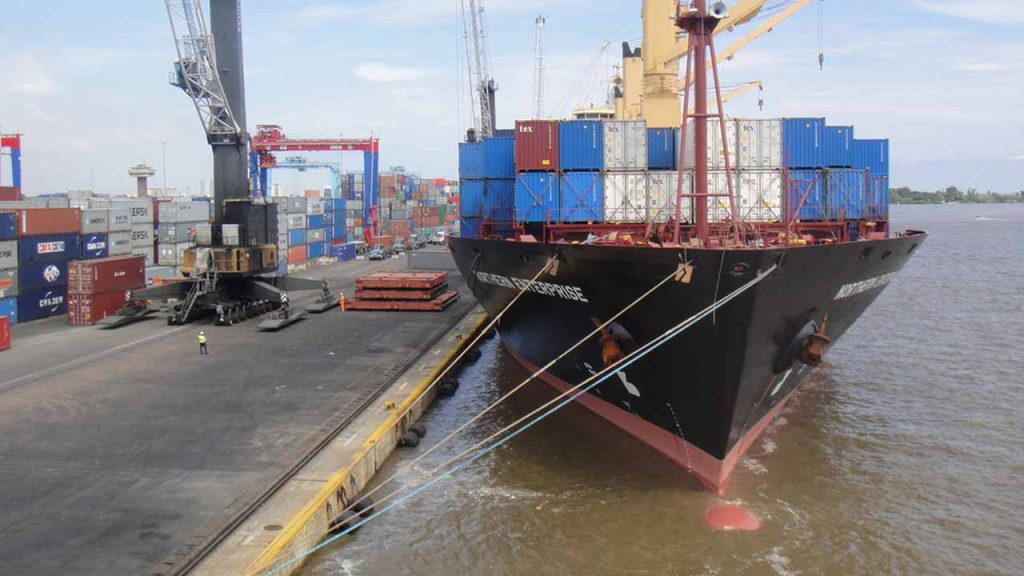
The Maritime Academy of Nigeria (MAN), Oron, in Akwa Ibom State, yesterday received the Integrated Management System (IMS) Certification facilitated by the Standard Organisation of Nigeria (SON), as part of efforts to strengthen institutional capacity and enhance human capital development.
Speaking at the presentation of the certificate, the Minister of Marine and Blue Economy, Adegboyega Oyetola, said the acquisition of the Integrated Management System (IMS) Certification goes beyond a mere procedural exercise, describing it as a clear demonstration of the Academy’s commitment to excellence, quality assurance, environmental sustainability, and occupational health and safety standards.
Oyetola noted that the certification reflects the Academy’s adherence to internationally recognised standards and global best practices, adding that it underscores a strong culture of continuous improvement, accountability, and operational efficiency qualities he described as essential in today’s highly competitive and safety-conscious maritime industry.
He said:”The Marine and Blue Economy sector remains a key pillar in Nigeria’s economic diversification agenda. As a Ministry, we are committed to strengthening institutional capacity, enhancing human capital development, and promoting the adoption of international standards across all maritime training institutions
“The significance of this certification cannot be overstated. It positions the Academy as a centre of excellence, equipped to produce highly skilled and globally competitive maritime professionals. This aligns with our broader objective of ensuring that Nigeria not only participates, but leads in maritime innovation, safety, and sustainability..
“I wish to particularly acknowledge the Standards Organisation of Nigeria for its unwavering dedication to the promotion of standardization and quality assurance across sectors. Its role in supporting institutions such as this Academy contributes immensely to national development and strengthens Nigeria’s international credibility.
Similarly, Engr. Kehinde Olayinka Akinola Chairman, Governing Council of the Academy said that the certification is a confirmation that the Maritime Academy of Nigeria is steadily aligning its operations; training standards, administrative systems, and institutional processes with globally accepted best practices in quality management, environmental responsibility, and occupational health and safety standards.
The post MAN Oron gets Integrated Management System Certification appeared first on Vanguard News.


By Rosemary Iwunze
In the quest for better management and significant return on investment for their pension savings, a total of 19,969 Retirement Savings Account, RSA, holders transferred their pension contributions from one Pension Fund Administrator, PFA, to another in the fourth quarter of 2025, Q4’25.
The value of funds transferred within the quarter stood at N153.31 billion.
However, the number of RSA holders that transferred their contributions in Q4’25 represented a decline of 41.8 per cent from 34,334 contributors recorded in Q3’25. The value of funds transferred in Q3’25 was N274.29 billion.
It will be recalled that the Pension Reform Act, 2024 allows RSA holders to transfer their account from one PFA to another once per year.
This, according to the National Pension Commission, PenCom, will promote service competition among the PFAs.
Meanwhile, PenCom said that the pension industry has commenced moves to establish an investment consortium aimed at bridging the huge infrastructural gap in the country.
Director General of PenCom, Ms. Omolola Oloworaran, who disclosed this noted that pension operators are proposing mobilising pension assets for infrastructure financing to channel funds into viable national projects while ensuring robust risk management and sustainable returns.
Oloworaran emphasised that increased investment in infrastructure would help close critical gaps in the economy, stimulate job creation, improve productivity, and ultimately deliver stronger long-term value for pension contributors.
She said: “It is critical to channel pension capital into infrastructure, create bankable investment pipelines, support national development, and preserve returns.
“The Investment and Financial Markets Committee has been set up to develop structured investment vehicles for infrastructure financing. These structures are being carefully designed to minimize risk exposure for pension funds while enabling participation in large-scale national projects. Implementation will follow once frameworks are finalised, with strong emphasis on risk management and capital preservation.”
The post 20,000 pension contributors move N153b savings around for better returns appeared first on Vanguard News.


Robbers invade Adamawa Poly female hostel, cart away phones

Novak Djokovic’s 6-Word Comment Overheard After Being Booed

Plateau 2027: Ex-Speaker steps down from senate race, focuses on re-election bid

Simi Sanya and Femi Dapson Are Now Legally Married and It Is Beautiful to See

FCT Area Council Election: Live results from polling units

Premier League Set-Piece Goals (2025/2026)
-
 Sports2 days ago
Alan Shearer Names England’s Starting 11 vs Croatia at 2026 World Cup
-
 Sports1 day ago
Why Arsenal Will Not Lift Premier League Trophy During Bus Parade
-
 Sports2 days ago
Southampton’s Head of UK Scouting Ben Chorley Leaves Amid Spygate Scandal
-

 Politics2 days ago
2027: Crisis hits Accord as Busari, Hamzat lay claim to guber ticket in Oyo
-
 Politics2 days ago
2027: Aisha Yesufu loses NDC senatorial primary in FCT
-
 Sports2 days ago
Venezuela Fury’s New Husband Asks Followers For Money During £30,000 Honeymoon
-
 Entertainment2 days ago
Nancy Isime Is Serving Gold Royalty, Dark Romance and Main Character Energy in Her Latest Breathtaking Outfit
-
 Entertainment2 days ago
Own Your Next Big Entrance in a Showstopping Red Sculptural Fashion Outfit Made to Steal the Show