
Business
How HoldCos, capital architecture will define banking future


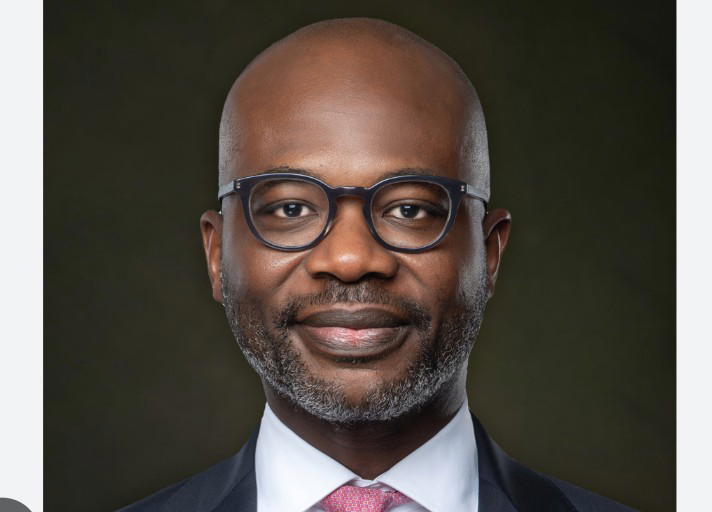
By Babajide Komolafe
For most of the past two decades, the question of which Nigerian banks were winning had a simple answer. The largest balance sheets generated the largest earnings. The largest branch networks captured the largest deposit bases.
The strongest lending relationships produced the most durable interest income. The hierarchy was settled and the competitive question was about scale. That answer is now becoming inadequate. The Nigerian banking sector has just completed an 18-month stretch that has reset the terms of competition in ways the market has not fully absorbed.
The Central Bank of Nigeria’s recapitalisation programme has materially recalibrated the capital base of every deposit money bank in the country. The withdrawal of pandemic-era forbearance and the tightening of loan classification frameworks has stress tested the disclosure culture of every institution.
Persistent inflation, elevated policy rates, and a foreign exchange market still finding its equilibrium have separated the institutions that generate operating leverage from those that do not.
HoldCo as capital allocatiob engine
Quietly, underneath all of it, the shift toward holding company structures has begun to reorganise the architecture through which Nigerian banks compete for capital and deploy it. The institutions that emerge as the winners of the next decade will not necessarily be the ones with the largest balance sheets today.
They will be the ones whose corporate architecture allows them to allocate capital across multiple regulated businesses according to where each additional unit of capital can generate the strongest long-term risk-adjusted return. This is what the holding company structure is for. It is not, despite how it is often described, a cosmetic upgrade to a commercial bank.
Done seriously, it is a capital-allocation engine. The same retained naira, sitting inside a holding company that owns several regulated subsidiaries – a conventional or non-interest bank, a wealth manager, a payments business – can be deployed across those businesses according to where the marginal opportunity is strongest at a given point in the cycle. That is a different decision tree from the binary one a single-line commercial bank faces: lend more, or distribute. It is a fundamentally different competitive proposition. The international evidence on this point is unambiguous.
***What makes this architecture particularly powerful is that different financial businesses respond differently to economic cycles. A high interest rate environment may slow credit creation in commercial banking while strengthening fixed-income investment income for wealth managers. Exchange-rate volatility may weaken consumer demand in some areas while accelerating transaction volumes in payments businesses. Non-interest banking, meanwhile, often behaves differently from conventional lending franchises during periods of macroeconomic stress. A diversified holding structure therefore gives management teams more flexibility to balance risk and returns over time.
Across emerging-market banking, the institutions that have compounded shareholder value most successfully over multi-decade horizons have shared three characteristics. They retained capital aggressively during their formative scaling phases, not occasionally, not as a defensive measure during stress periods, but as the deliberate operating posture of the institution while the underlying franchise was being built.
They diversified into adjacent businesses through holding-company structures rather than through bank-level expansion alone, recognising that conventional banking, non-interest banking, wealth management, asset management and insurance respond to different parts of the macro cycle and have structurally different return profiles. Additionally, they returned to distributing earnings only after those scaling phases had compounded the underlying franchise into something materially larger and more durable than the single-line commercial banks from which they began.
The strategic discipline required to execute this model is often underestimated. Expanding into adjacent financial services businesses before they become materially profitable requires patient capital, management depth and a willingness to tolerate periods where reported returns may not immediately reflect the scale of long-term investments being made underneath the surface. Yet the institutions that successfully navigate this period often emerge with earnings structures that are significantly more resilient than those of conventional banks.
Standard Bank Group, FirstRand, ICICI Bank, and Garanti BBVA each followed variants of this playbook. Each emerged from a formative scaling decade with a multi-line platform meaningfully larger than the bank it had been. Each then began returning earnings through a combination of dividends and buybacks, supported by an equity base that had been allowed to compound during the years that mattered most.
None of them were rewarded by their domestic markets, in the early years of that compounding, in proportion to the scale of the transformation underway. All of them were rewarded, eventually, by international institutional capital that recognised what the architecture was producing before the domestic narrative caught up.
This pattern is relevant because Nigerian banking equities are still largely analysed through near-term profitability metrics and dividend expectations. Yet the deeper drivers of long-term franchise value may increasingly sit beneath those headline numbers. The market tends to focus on current-year earnings; long-duration institutional investors tend to focus on what the earnings structure could become after a decade of disciplined capital deployment.
The Nigerian sector is now in the early years of the equivalent compounding window. Of the institutions that have made the transition to holding company structures over the past five years, the differences between them are no longer about whether the structure exists. They are about how seriously the structure is being used.
Some HoldCos remain, in operational reality, commercial banks with a holding company wrapper. Capital still flows along the path of least institutional resistance, which is back into the bank that already exists. The non-bank subsidiaries are talked about more than they are funded. The retained earnings that the corporate architecture is theoretically permitting to be allocated across the platform are, in practice, being allocated back into the line of business that has always received them.
The HoldCo, in those cases, is a label rather than a mechanism. Other HoldCos are doing something different. Capital is being moved across subsidiaries with deliberation. Subsidiaries are being scaled with retained earnings and new businesses are being built before their earnings contribution can be material, because patient capital invested in the right place at the right time compounds into structural advantage that the market will price later. The dividend conversation, for these institutions, is being framed not as a question of distribution today but as a question of what the retained earnings are buying.
That distinction is becoming increasingly important in the current regulatory environment. The recapitalisation exercise has effectively forced management teams to reveal their strategic priorities. Institutions focused narrowly on short-term shareholder appeasement may struggle to build the diversified platforms necessary for the next phase of competition. Those willing to absorb temporary market scepticism in exchange for long-term franchise expansion may ultimately emerge in stronger positions.
Sterling Financial Holdings Plc, which closed FY2025 with shareholders’ funds expanded by 40.5% to ₦428.7 billion, recapitalisation delivered, and the Group’s balance sheet crossing the ₦4 trillion threshold in Q1 2026, is one of the institutions visibly operating in this second mode. The Group did not recommend a dividend for FY2025, in alignment with the prevailing CBN posture across deposit money banks within the recapitalisation cycle.
Behind that disclosure sits an architecture that includes Sterling Bank Limited as the conventional banking franchise, The Alternative Bank Limited as one of a handful of national non-interest banking platforms in Nigeria, and SterlingFi Wealth Management as the Group’s emerging wealth and asset management business. The retained earnings are not, in any meaningful sense, capital deferred. They are capital deployed across the three businesses that the HoldCo structure was built to operate.
The significance of this approach lies not simply in diversification for its own sake, but in the ability to build earnings resilience over time. Wealth and asset management businesses typically generate fee income with lower balance-sheet risk intensity than commercial lending. Non-interest banking introduces exposure to customer segments and financial structures that behave differently across economic cycles. Payments and digital financial services create transaction-based revenue streams that scale differently from interest income. Together, these businesses can gradually reduce dependence on any single earnings engine.
The same observation could be made of other Nigerian financial holding groups that are using their corporate architecture rather than merely possessing it. The Nigerian banking landscape is gradually dividing into two cohorts. One cohort is using HoldCo structures to compound multi-line platforms during a window that, historically, has not lasted long. The other is treating the structure as a regulatory accommodation.
Historically, these windows of structural transition in banking sectors tend to close faster than markets initially expect. Once the leading platforms establish sufficient scale across multiple business lines, the competitive advantages become increasingly difficult for slower-moving institutions to replicate. Capital depth, technology investment, customer acquisition and distribution networks begin reinforcing one another across the group structure. By the time the broader market fully prices the shift, much of the compounding has already occurred.
The market does not yet appear to fully price the distinction. Over time, it will; and that gap is likely to narrow. For investors looking at the FY2025 reporting cycle and trying to determine which Nigerian financial institutions are structurally positioned to compound through the next decade, the dividend column on the results page is not the variable that matters most.
What matters more is whether the institution has the corporate architecture to allocate capital across multiple businesses, and the institutional discipline to actually use it. The headline numbers from this reporting season will be forgotten within months. The architectural choices being made underneath them will compound, or fail to compound, for the better part of a decade. That is the choice the sector is making. The market that prices it has yet to fully reflect what the choice is worth.
The post How HoldCos, capital architecture will define banking future appeared first on Vanguard News.

By Godwin Oritse & Efe Onodjae
There are indications of festering disagreements over the implementation of the National Single Window (NSW), a centralized digital portal launched by the Federal Government in March this year to address delays in import-export processing at the ports.
It allows importers and exporters to submit trade documents once, replacing duplicate paperwork across multiple agencies.
President of the National Council of Managing Directors of Licensed Customs Agents (NCMDLCA), Lucky Amiwero, told Vanguard that the system is not operating as envisaged, urging the government to hand over the implementation to the Nigeria Customs Service (NCS).
But Customs itself is saying there is no problem with the system presently, adding that it has recorded some early successes.
However, Amiwero said the current arrangement has failed to simplify trade documentation and cargo clearance, contrary to the objectives of a Single Window system.
“Instead of a single window, what we have are multiple windows that are complicating the process for importers and clearing agents,” he said.
He dismissed reports that the project had entered a second phase, insisting that challenges identified during the initial phase remained unresolved.
According to him, the NCS has the legal mandate, operational platform and technical expertise required to implement the project under the Customs Act.
Amiwero also disagreed with the plans for electronic transmission of cargo manifests outside the Customs framework, insisting that manifest administration is a statutory responsibility of the NCS.
He urged the government to harmonise all trade documentation on a single Customs platform instead of creating multiple systems that duplicate functions.
The freight forwarder further expressed concern over persistent cargo clearance delays, saying they continue to increase demurrage and other port charges borne by importers.
Meanwhile, the NCS has said that the NSW platform has enhanced trade facilitation, improved efficiency in goods clearing and Nigeria’s competitiveness in international trade.
Also the Customs, in collaboration with the National Single Window (NSW) Secretariat, has commenced stakeholder sensitisation on submission of electronic vessel manifest as implementation of the next phase of the NSW gathers momentum.
Addressing the stakeholders, Deputy Comptroller-General in charge of ICT/Modernisation, Oluyomi Adebakin, said the exercise builds on consultations held before and after the launch of Phase One of the NSW on March 27, 2026.
She described the NSW platform as a globally accepted trade facilitation tool that would improve efficiency, transparency and Nigeria’s competitiveness in international trade.
“Since the introduction of the National Single Window, the country has begun to experience its benefits. Nigeria’s standing in international trade is improving,” she said. Adebakin stressed that electronic manifest submission would not alter Customs’ statutory responsibilities but would simply provide a faster and more transparent method of processing documents.
She added that the platform would enhance trade facilitation, improve data integrity and strengthen anti-smuggling efforts.
National Coordinator of the National Single Window Project, Tola Fakolade, commended the NCS for supporting implementation of the initiative.
He disclosed that the platform has so far issued over 100,000 licences and permits while registering more than 1,000 users, describing the progress as a significant milestone in Nigeria’s trade modernisation programme.

By Elizabeth Adegbesan
Firms are expecting borrowing cost for banks’ loans to decline in the next three months deapite seeing rates elevated in July.
This was contained in the Central Bank of Nigeria’s, CBN, latest Business Expectation Survey Report.
CBN said: “Respondents expect borrowing rates to remain elevated across the same periods, as indicated by the consistently positive borrowing rate indices.
“The relatively stable indices, fluctuating around 18-19 points, suggest expectations of a marginal decrease in borrowing costs over the near – to medium term.”
The survey report also showed that the Business Confidence Index was 5.7 points, reflecting continued optimistic sentiment among formal businesses on the macro economy.
According to CBN, Respondents’ positive sentiment on macro economy was largely underpinned by increased demand (22.3 percent ), economic diversification (21.4 percent) and access to finance (15 percent ), while more guarded views were primarily driven by inflation (27.7 percent), insecurity (22.4 percent) ongoing energy-related challenges (23.4 percent) and elevated geopolitical uncertainties (16.5 percent).
The outlook over the next six months, CBN maintained remains strong, with confidence indices in all sectors reflecting positive sentiment over the review periods.
During the review period, businesses identified high/multiple taxation (70.8), insecurity (69.7) and high interest rate (66.3) as the top three business constraints.
These were followed by unfavourable political climate (62.2) and high bank charges (62.0).
But competition (61.1) and unclear Economic Laws (58.4) ranked lower but remain significant.
CBN noted that at the bottom of the top ten constraints were financial constraints (56.6) and poor infrastructure (55.1) reflecting relatively lower, though still significant factors.
On expansion outlook, the electricity, water and gas sector posted the highest expansion outlook at 85.7 index points.
Nonetheless, employment expectations in August 2026 were mostly cautious across sectors, with the Mining & Quarrying sector having the most optimistic hiring outlook.

By Yinka Kolawole
Manufacturers’ confidence in Nigeria’s business environment rebounded in the second quarter of 2026 (Q2’26) buoyed by expectations of improved government policies and a more favourable operating climate. But the sector operators have continued to grapple with high borrowing costs, inadequate power supply, foreign exchange constraints and multiple taxation.
The latest Manufacturers CEO Confidence Index (MCCI) released by the Manufacturers Association of Nigeria, MAN, showed that the aggregate index rose to 52.1 points in Q2 2026, up from 48.7 points in the first quarter (Q1’26) indicating a return to positive business sentiment.
Director General of MAN, Segun Ajayi-Kadir, said the improvement reflected manufacturers’ optimism about the direction of government reforms rather than any significant improvement in current operating conditions.
He stated: “The increase in the MCCI to 52.1 points signals renewed confidence among manufacturers, driven largely by expectations that recent policy initiatives, including the Nigeria Industrial Policy, the ‘Nigeria First’ Policy, Executive Orders 003 and 005, and the Nigeria Tax Act 2025, will improve the operating environment.”
He, however, noted that the optimism remained fragile as manufacturers continued to face severe operational challenges.
“The confidence expressed by manufacturers is largely forward-looking. Actual business and employment conditions during the second quarter remained weak, with both indicators still below the 50-point threshold, reflecting subdued business activity,” Ajayi-Kadir stated.
He listed limited access to finance, persistent electricity shortages, high production costs, inadequate foreign exchange availability, weak consumer demand and multiple taxation as the major constraints confronting manufacturers.
Ajayi-Kadir said manufacturers remained dissatisfied with the high cost of bank credit, attributing it to the Central Bank of Nigeria’s Monetary Policy Rate, MPR, of 26.5 per cent.
“Commercial lending rates remain prohibitively high for manufacturers. The current monetary policy stance continues to constrain access to affordable financing needed for investment and expansion,” he said.
The MAN DG further expressed concern over continued regulatory bottlenecks and uncertainty surrounding the implementation of the Nigeria Tax Act 2025, saying manufacturers were yet to enjoy the full benefits of the reforms aimed at reducing multiple taxation and easing regulatory burdens.
Ajayi-Kadir added that although local sourcing of raw materials had improved, government ministries, departments and agencies were yet to substantially increase patronage of Made-in-Nigeria products as envisaged under the “Nigeria First” policy.
He urged the Federal Government to ensure strict compliance with the directive requiring MDAs to source at least 80 per cent of their procurement locally, while calling on the CBN to reduce the MPR to below 20 per cent and prioritise foreign exchange allocation to manufacturers to stimulate production and accelerate industrial growth.


Man City Fans Hail Enzo Maresca For Transforming Antoine Semenyo

Police arrest 56-yr-old suspect for alleged distribution of illicit drugs in Delta community

It’s a charade – Aggrieved NDC members reject Utomi, Galadima reconciliation committee

Meaning Behind Egypt Manager’s ‘X’ Gesture vs Argentina

Premier League Set-Piece Goals (2025/2026)

Simi Sanya and Femi Dapson Are Now Legally Married and It Is Beautiful to See
-
 Metro1 day ago
Benue: Police arrest 5 Pakistanis, recover 35 phones in intelligence operations
-
 Sports1 day ago
Which Football Team Does Andy Burnham Support?
-

 Politics1 day ago
2027: Ortom denies plot to replace Aondoakaa as Benue PDP candidate
-

 Politics2 days ago
IPAC denies relocating Osun chapter election to Abuja
-

 Metro2 days ago
Niger: Police arrest 20-year-old over alleged midnight attack, attempted kidnap of two women
-
 Metro2 days ago
Man allegedly kills father, dumps corpse in well
-
 Sports1 day ago
‘I Played Golf With Donald Trump
-
 Sports2 days ago
Carabao Cup 2026/27: Draw, Fixtures & Results