
Business
TCN expresses concern over rising cases of vandalism in Niger State



By Obas Esiedesa, Abuja
The Transmission Company of Nigeria (TCN) has raised concerns over increasing vandalism of power transmission infrastructure in parts of Niger State, warning that the trend poses serious economic, safety and electricity supply challenges.
Speaking during a community engagement visit to Lambata in Gurara Local Government Area yesterday, the General Manager, Transmission, Abuja Region, Engr. Musa Shuaibu, said repeated attacks on transmission facilities had become a major concern.
According to him, vandalism, previously uncommon in the area, has resulted in significant financial losses and disruption to power supply.
“We have been having challenges with our transmission lines. These lines have been vandalised repeatedly. It has never happened before in this area, but now it has become worrisome to all of us,” he said.
Shuaibu disclosed that about 14 spans of conductors on the 132kV transmission line in Lambata were recently vandalised, adding that repairs would cost about N32 million.
“This is money that could have been used to improve power infrastructure and electricity supply elsewhere,” he said.
He explained that the over 40-year-old transmission line is a critical infrastructure transporting electricity from Shiroro through Minna, Bida and Suleja to Abuja, stressing that its destruction undermines economic activities, discourages investments and affects revenue generation.
He also warned of safety risks associated with fallen conductors, noting that residual voltage could endanger residents, farmers and livestock.
Shuaibu called on traditional rulers, community leaders, vigilante groups and security agencies to support efforts to protect critical national assets.
Representatives of the Nigeria Security and Civil Defence Corps (NSCDC) and the Police pledged continued collaboration in arresting and prosecuting vandals and their collaborators.
The post TCN expresses concern over rising cases of vandalism in Niger State appeared first on Vanguard News.

•Sector faces collapse under economic crunch, Labour laments
By Victor Ahiuma-Young, GENEVA
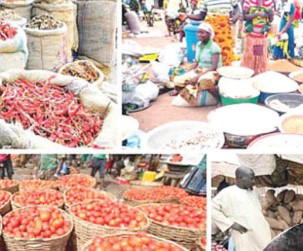
Nigeria’s food and beverage industry is facing worsening employment crisis as rising production costs, foreign exchange volatility and regulatory measures continue to force companies to cut jobs and scale down operations.
Read Also: Bullets Before Ballots: Insecurity threatens 2027 polls – 5,272 killed in 5 months
Consequently, the Food, Beverage and Tobacco Senior Staff Association, FOBTOB, has raised the alarm over increasing layoffs across the sector, warning that unless urgent interventions were implemented, more workers could be thrown into the labour market, while some businesses might be forced to shut down.
The union said the combined impact of soaring energy costs, poor infrastructure, weak consumer purchasing power and policy restrictions on certain product categories has placed unprecedented pressure on manufacturers struggling to remain afloat.
Speaking with journalists on the sidelines of the just concluded 114th Session of the International Labour Conference in Geneva, FOBTOB President, Oyibo Jimoh, said the industry’s dependence on imported raw materials had made it particularly vulnerable to exchange rate fluctuations and escalating production costs.
He said: “Most of our companies in the sector depend on imported raw materials. If you narrow it down to exchange rates, it is biting harder and that is understandable.
“The worsening foreign exchange situation has significantly increased the cost of doing business, compelling many companies to review their operations and workforce strength to survive.”
He expressed particular concern over restrictions on sachet products and beverages packaged in containers below 200 millilitres, saying the policy had already led to job losses and could further threaten the survival of a critical segment of the industry.
“As I am talking to you, many of our members have been thrown into the labour market. We are still engaging government to see how best we can resolve it,” he stated.
Jimoh argued that smaller package sizes remain the preferred choice for many consumers whose purchasing power has been severely eroded by inflation and economic hardship.
“Not everybody wants to go for the big pack sizes. The smaller pack sizes are the cash cow. Allowing that policy to continue could close that sub-sector,” he warned.
The FOBTOB President further noted that manufacturers were grappling with multiple operational challenges ranging from poor road infrastructure and unstable energy supply to declining consumer demand.
“The economy is very tough for every business. Whether it is roads, energy or purchasing power, there are great challenges facing companies, particularly in the food sector,” he said.
On workers’ welfare, Jimoh maintained that the current national minimum wage of N70,000 was grossly inadequate given the prevailing economic realities and the rising cost of living.
“There is no amount that can truly quantify labour, but in this economy, the national minimum wage of N70,000 cannot go anywhere,” he lamented.
He called on employers to improve workers’ remuneration where possible while balancing wage reviews against the economic pressures confronting businesses and investors.
Jimoh also urged workers to embrace continuous training and skills development to remain relevant in an increasingly technology-driven workplace.
“One thing workers can do is upgrade themselves. When you see changing trends, move along with them and avoid making yourself unemployable,” he advised.
He disclosed that FOBTOB would continue to educate its members through zonal meetings and capacity-building programmes focused on career advancement, retirement planning and adaptation to emerging workplace realities.
He reaffirmed FOBTOB’s commitment to protecting workers’ interests while supporting policies capable of ensuring the long-term sustainability and growth of Nigeria’s food and beverage industry.
The post Food industry on brink as rising costs, forex crisis trigger mass layoffs appeared first on Vanguard News.

•Provides benchmark for pricing loans, deposits
By Emma Ujah, Abuja Bureau Chief
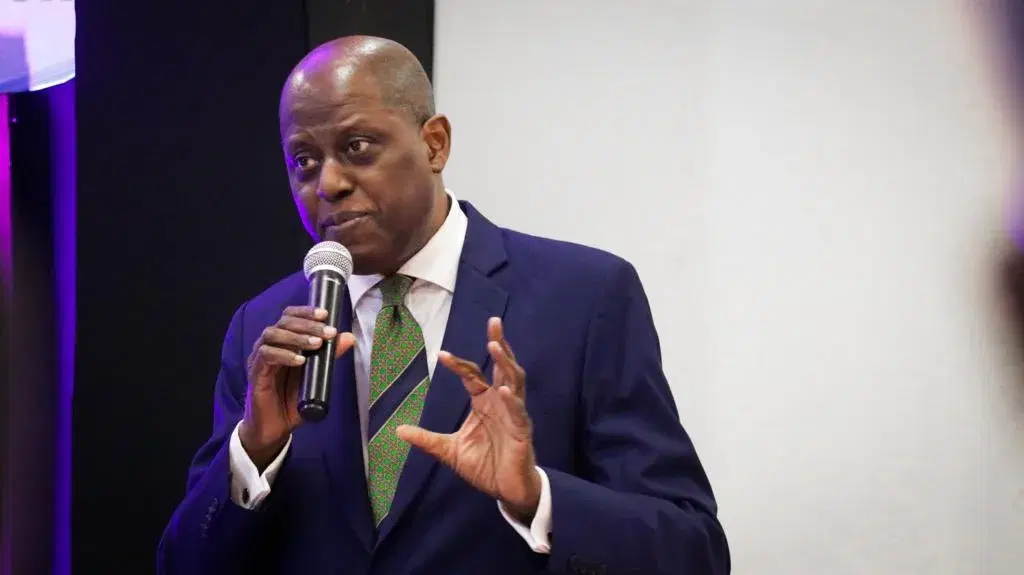
The Governor of the Central Bank of Nigeria (CBN), Mr. Olayemi Cardoso, yesterday, launched the Nigerian Overnight Financing Rate (NOFR), to guarantee greater transparency in the financial market.
The NOFR is a daily benchmark interest rate introduced by the CBN in collaboration with the Financial Markets Dealers Association (FMDA).
NOFR reflects the actual, real-time cost of secured, short-term borrowing between financial institutions.
Speaking at the launch in Abuja, Cardoso described the benchmark interest rates as, “The rate at which everyone agrees, represents a true reflection of the price of money at a particular point in time, and it is the backbone of any modern financial system.”
He said, however, “Before a benchmark can be widely accepted, it must be an output of a trusted, well-governed, and transparent financial market framework with an underlying administrative process and methodology that protects against any form of manipulation.”
The Governor argued that financial systems, much like economies themselves, cannot remain static, saying, “They must evolve continuously to reflect changing realities, respond to emerging opportunities and create stronger foundations for future growth.”
Recent global developments, Cardoso said, have underscored this need, resulting in financial systems transitioning from judgment-based or indicative rates to transaction-based benchmarks that reflect underlying market realities.
He said, the CBN, in collaboration with the Financial Markets Dealers Association, FMDA, and with technical support from the European Bank for Reconstruction and Development, EBRD, developed the NOFR as “a credible and robust benchmark derived from actual market transactions.”
“The NOFR has been designed as a transaction-based overnight secured interbank financing rate, reflecting the true cost of overnight funding in the Nigerian money market by anchoring the benchmark on observable transactions,” he added.
On the impact of the rate on the market, Mr. Cardoso said, “NOFR enhances market integrity and credibility, it reduces reliance on subjective estimates and it minimizes the risk of manipulation, and finally improves price discovery and transparency.”
He described the rate as, “a fundamental shift that aligns Nigeria with global best practices in benchmark rate reform and strengthens confidence in our financial markets.”
The outcome, he said, would be a deepening of Nigeria’s financial market which the regulators crave. The governor said that NOFR would create a basis for transparent pricing of loans and deposits in the money market.
The post Cardoso launches Nigerian Overnight Financing Rate appeared first on Vanguard News.


•Mandates beneficial ownership disclosure
•Sets 25% threshold, 15% cross-market cap
•Compliance deadline set for Dec. 31, 2026
By Babajide Komolafe
The Central Bank of Nigeria, CBN, has directed banks, fintechs and other operators in the payments ecosystem to store all payment transaction data generated in Nigeria within the country, while also introducing measures to curb excessive market dominance in the industry.
The apex bank disclosed this in a circular dated June 15, 2026, titled, “Introduction of Market Structure Requirements, Data Localisation, Ultimate Beneficial Ownership Disclosure, and Systemic Oversight Measures in the Nigeria Payments System.”
According to the CBN, “all financial institutions and participants facilitating payments within Nigeria shall ensure that payments transaction data generated within Nigeria are stored and managed in Nigeria in accordance with data protection laws and regulations applicable in Nigeria.”
The Bank added that “all affected financial institutions shall fully comply with this requirement effective January 1, 2027.”
On ownership transparency, the CBN said: “All Deposit Money Banks, Payment Service Providers and other financial institutions with digital payments footprints shall disclose the Ultimate Beneficial Ownership (UBO) of significant shareholders in accordance with applicable extant laws and regulations, including Anti-Money Laundering, Combating the Financing of Terrorism and Counter Proliferation Financing regulations.”
The apex bank further directed that institutions “shall maintain accurate and up-to-date UBO records and make such information available to the CBN upon request.”
Explaining the rationale for the new measures, the CBN stated: “The Nigerian payments ecosystem has witnessed significant structural developments characterised by rapid growth in electronic payments, increasing adoption of digital financial services and the emergence of operators with substantial market presence across key payment activities.”
It noted, however, that “these developments have also raised concerns relating to market concentration, operational dependence, systemic importance, transparency of ownership structures, and the localisation of critical payment data.”
To address these concerns, the Bank introduced market structure requirements under which “any licensed financial institution engaged in card issuing activities that holds more than 25 per cent market share in card issuing shall not hold more than 15 per cent market share in merchant acquiring activities during the same period.”
Similarly, it stated that “any licensed financial institution engaged in merchant acquiring activities that holds more than 25 per cent market share in merchant acquiring shall not hold more than 15 per cent market share in card issuing activities.”
The CBN directed all regulated entities to submit monthly market share returns and stated that “all affected financial institutions are required to take necessary measures to achieve full compliance not later than December 31, 2026.”
The post CBN orders fintechs, banks to localise payment data, caps market dominance appeared first on Vanguard News.


Ilia Topuria Medical Update After UFC Freedom 250

ADC Deregistration: ‘Mystery judgment recipe for national crisis in Nigeria’ — Timi Frank seeks Trump’s intervention

Arsenal Target Tottenham Defender Elijah Upson Amid Summer Move

Simi Sanya and Femi Dapson Are Now Legally Married and It Is Beautiful to See

FCT Area Council Election: Live results from polling units

Premier League Set-Piece Goals (2025/2026)
-
 Sports19 hours ago
FIFA Forced Into U-Turn on Spanish Press Conference Rule After Backlash
-
 Sports1 day ago
Uruguay Denied US Entry Day Before World Cup Opener
-
 Sports2 days ago
Gary Neville Calls Out FIFA ‘Dictatorship’ After World Cup Incident
-
 Sports1 day ago
Judges’ Scorecards and Punch Stats For Ilia Topuria vs Justin Gaethje at UFC Freedom 250
-
 Sports11 hours ago
US Denied World Cup Visa For Mum of Cape Verde Goalkeeper Vozinha
-
 Sports12 hours ago
FIFA Ban Pre-Revolutionary Iran Flags From World Cup Stadiums
-
 Sports10 hours ago
Emma Hayes Praised For Using Drinks Break For Tactical Analysis
-
 Sports21 hours ago
Manuel Neuer Breaks World Cup Kit Rules in Germany vs Curacao