
Business
Marketers retain high petrol prices as crude oil crashes to pre-war level


By Obas Esiedesa & Ediri Ejoh
Oil marketers across Nigeria have continued to sell Premium Motor Spirit (PMS), popularly known as petrol, at elevated prices despite a sharp decline in global crude oil prices to levels recorded before the outbreak of the US-Iran conflict.
Brent crude, the international benchmark against which Nigeria’s oil is priced, fell to about $72.48 per barrel on Thursday, down from nearly $120 per barrel at the height of the conflict, raising expectations of further reductions in petrol prices.
However, checks by Vanguard in Abuja showed that filling stations largely retained pump prices introduced during the period of soaring crude prices, leaving consumers burdened with high transportation and energy costs.
Before the conflict began on February 28, petrol sold for between N740 and N930 per litre in Lagos and Abuja. As crude oil prices surged amid fears of supply disruptions through the Strait of Hormuz, pump prices rose sharply, reaching as high as N1,403 per litre in parts of the Federal Capital Territory.
A survey of filling stations around Abuja’s Central Area on Thursday showed that the Nigerian National Petroleum Company Limited (NNPC Ltd.) sold petrol at N1,260 per litre, while TotalEnergies dispensed at N1,305 per litre. Conoil sold at N1,320 per litre, while AA Rano and AYM Shafa sold at N1,280 per litre. MRS outlets offered the lowest price among the stations surveyed at N1,240 per litre.
In Lagos, retailers also continued to maintain pump prices at elevated levels with petrol stations retaining old rates. Market survey showed that Peridot sold at N1,205 per litre with MRS dispensing at N1,205 per, Fatgbems at N1,206 per litre and Technoil at N1,200 per litre.
The development comes despite a recent reduction in ex-depot prices by Dangote Petroleum Refinery, which supplies a significant portion of the country’s petrol requirements.
Two weeks ago, the refinery cut its ex-gantry price by N75 per litre, or six per cent, reducing the price from N1,250 per litre to N1,175 per litre following a decline in crude oil prices to about $82.78 per barrel. However, the refinery has yet to announce another reduction despite crude prices falling by an additional $10 per barrel since then.
Industry analyst Henry Adigun of AHA Consultancy said that the sustained decline in crude oil prices should ordinarily translate into lower ex-depot and retail petrol prices, especially as supply concerns that drove the earlier increases have eased.
“It is not always straightforward with marketers who seek to maximise profits at every situation’’, Adigun stated.
Brent crude futures for August delivery fell by $1.06, or 1.44 per cent, to $72.68 per barrel on Thursday, while U.S. West Texas Intermediate crude declined by 76 cents, or 1.08 per cent, to $69.58 per barrel.
The latest decline reflects growing confidence among traders that oil shipments through the Strait of Hormuz will continue uninterrupted following the ceasefire agreement between the United States, Israel and Iran.
According to market reports, crude prices fell from $76.75 per barrel on Tuesday to $73.50 per barrel on Wednesday as concerns over disruptions to global oil supplies eased.
The decline has also been supported by expectations of increased Middle Eastern oil supplies and the prospect of higher Iranian exports following the easing of some U.S. sanctions.
Shipping activity through the Strait of Hormuz, through which about one-fifth of global oil supplies pass, has also improved following measures by Omani authorities and international maritime agencies to facilitate tanker movements.
Meanwhile, Dangote Petroleum Refinery yesterday announced a further reduction in the gantry price of Premium Motor Spirit (PMS), commonly known as petrol, from N1,175 to N1,125 per litre.
This latest adjustment reflects the refinery’s ongoing commitment to ensuring price stability, improving affordability, and supporting Nigeria’s energy security objectives. The price review underscores Dangote Refinery’s responsiveness to prevailing market conditions and its efforts to pass on cost efficiencies to downstream partners and consumers.
Dangote Refinery remains focused on its broader mission of contributing to economic growth, enhancing fuel availability, and fostering a more competitive and sustainable petroleum sector in Nigeria.

By Babajide Komolafe
FirstBank has thrown its weight behind the Imo State Government’s One Kindred One Business Initiative (ÓKÓBÌ), a community-based entrepreneurship programme designed to stimulate job creation, expand financial inclusion and promote sustainable wealth creation through collective business ownership.
The bank said its support aligns with its commitment to empowering small and medium enterprises, deepening financial inclusion and driving long-term socio-economic development across Nigeria.
ÓKÓBÌ, conceived by Imo State Governor, Hope Uzodimma, is built on traditional African values of communalism, kinship and collective responsibility. The initiative formalises groups of like-minded individuals into registered businesses, making them more resilient, easier to finance and better equipped to tackle poverty in rural and urban communities.
Launched in 2023, the initiative has registered over 600 businesses with about 20,000 members and is targeting the creation or support of 100,000 jobs within three years.
Speaking on the partnership, Chief Executive Officer of FirstBank Group, Olusegun Alebiosu, said: “Peer accountability remains a powerful driver of sustainable enterprise growth. The ÓKÓBÌ initiative exemplifies this by transforming existing social capital into tangible economic value for communities.”
He added: “FirstBank is proud to support the Imo State Government in this forward-looking programme, which goes beyond traditional financing to embed financial inclusion directly within group-based enterprises.
“By supporting these collectively owned businesses, we are helping to stimulate economic empowerment at scale, creating a self-sustaining ecosystem where wealth creation is inclusive, participatory and widely shared. This initiative aligns with our broader commitment to enabling small and medium enterprises, deepening financial inclusion, and driving long-term socio-economic development across Nigeria.”
Also commenting, Chief Economic Adviser to the Imo State Government, Professor Kenneth Amaeshi, described ÓKÓBÌ as a viable solution to unemployment and informality, saying the programme had demonstrated remarkable success within a short period.
He urged more corporate organisations to adopt and support the model, stressing that it empowers people to become business owners, strengthens group enterprises and promotes sustainable economic development.

By Providence Ayanfeoluwa
The European Union, EU, has donated a 200kW solar PV power system to the Standards Organisation of Nigeria, SON.
Speaking at the commissioning ceremony in Lagos, Head of Cooperation, EU Delegation to Nigeria and ECOWAS, Massimo De Luca, said the EU and Germany have been working closely with SON to deliver the solar project.
According to him, the EU has been supporting SON to develop innovations that improve energy performance in Nigeria, adding that the donation reflects its continued partnership with the agency.
Luca said that SON is a critical partner in domestic trade and reaffirmed the EU’s commitment to supporting Nigeria’s energy transition plan. Also speaking at the event, Head of Development at the German Embassy, Dr. Karin Jansen, said the commissioning reflects efforts to create an enabling environment for businesses to become more resilient.
“We are building strong bridges between both countries, as this facility will help SON verify energy performance standards. It is also an opportunity to strengthen the next phase of Nigeria’s energy future,” she said.
Earlier, Director-General of SON, Mr. Ifeanyi Okeke, described the project as another milestone in the longstanding partnership between SON and the Nigerian Energy Support Programme (NESP).
He described the partnership as a collaboration that has continued to strengthen Nigeria’s quality infrastructure in support of sustainable energy.
He noted that the partnership began in 2018 with the signing of a Memorandum of Understanding between SON and GIZ for the development and implementation of renewable energy and energy-efficiency standards.
According to him, the collaboration has since expanded beyond standards development to include laboratory infrastructure, conformity assessment, capacity building, and support for emerging sectors such as electric mobility.
Okeke disclosed that, with NESP’s support, SON has developed Minimum Energy Performance Standards (MEPS) and energy labelling requirements for key electrical appliances, paving the way for a mandatory energy-labelling scheme.
“This initiative will empower consumers to make informed choices while ensuring that only energy-efficient products gain access to the Nigerian market,
“When fully operational, it will be the first facility of its kind in Nigeria and a reference testing centre for the West African sub-region.
“On average, we spend close to N80 million on diesel annually and about N6.7 million on electricity. This is money we can save by having an alternative energy source,” he said.
“As an agency that is not primarily revenue-generating, whatever money we can save will be very helpful.”
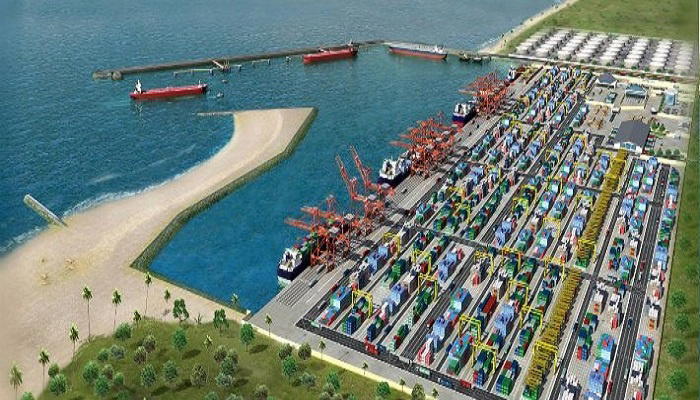
Lekki Deep Seaport.
By Providence Ayanfeoluwa
The Managing Director of Port and Terminal Multiservices Limited (PTML), Mr. Ascanio Russo, has unveiled plans to invest an additional $50 million in the terminal to strengthen port infrastructure, improve operational efficiency and support Nigeria’s ambition of becoming the leading maritime hub in West and Central Africa.
Russo disclosed the proposed investment during a visit to the Minister of Marine and Blue Economy, Dr. Adegboyega Oyetola, in Abuja.
According to a statement by the Minister’s Special Adviser, Dr. Bolaji Akinola, the investment by PTML, a member of the Grimaldi Group, will expand the terminal’s berthing capacity and provide additional state-of-the-art port equipment at the Tin Can Island Port Complex in Lagos.
Russo said: “The Grimaldi Group remains deeply committed to Nigeria and firmly believes in the country’s potential as the leading maritime and logistics gateway in West and Central Africa.
“This proposed investment of $50 million is designed to position PTML for the future by expanding our berthing capacity and deploying additional modern equipment that will significantly enhance operational efficiency, cargo handling capacity and service delivery.”
Responding, Oyetola welcomed the proposal, describing it as a strong vote of confidence in the Federal Government’s ongoing reforms in the maritime sector.
He reaffirmed the government’s commitment to creating an enabling environment for private investment and positioning Nigerian ports as the preferred hub for shipping, logistics and maritime services in West and Central Africa.


11 Boko Haram family members surrender as troops tighten grip on terrorists in Borno

Obasanjo meets Kwankwaso in Kano ahead of 2027 elections

FIFA Allow Rainbow Flags at World Cup ‘Pride Match’ Featuring Iran vs Egypt

Simi Sanya and Femi Dapson Are Now Legally Married and It Is Beautiful to See

FCT Area Council Election: Live results from polling units

Premier League Set-Piece Goals (2025/2026)
-
 Sports2 days ago
Bastian Schweinsteiger Sparks Outrage With Comments Ahead of Germany v Ivory Coast
-
 Sports2 days ago
Why Austria and Algeria May Both Want to Lose Their Final Group Game
-
 Sports18 hours ago
Thomas Partey Could Be Blocked From Knockout Tie
-
 Sports1 day ago
Steve Clarke Slammed For Interview After Scotland 0-3 Brazil
-
 Sports12 hours ago
Rory McIlroy Risks Breaking PGA Tour Rule That Led to One-Year Ban
-
 Sports2 days ago
Jude Bellingham Avoids Red Card For Banned Gesture vs Ghana
-
 Sports2 days ago
What Scotland Need To Qualify For World Cup Knockout Stage
-
 Sports2 days ago
World Cup Nation Submit Complaint to FIFA After Controversy in England vs Ghana