
Sports
The Cost of Relegation for West Ham as Nuno Boosted Ahead of January

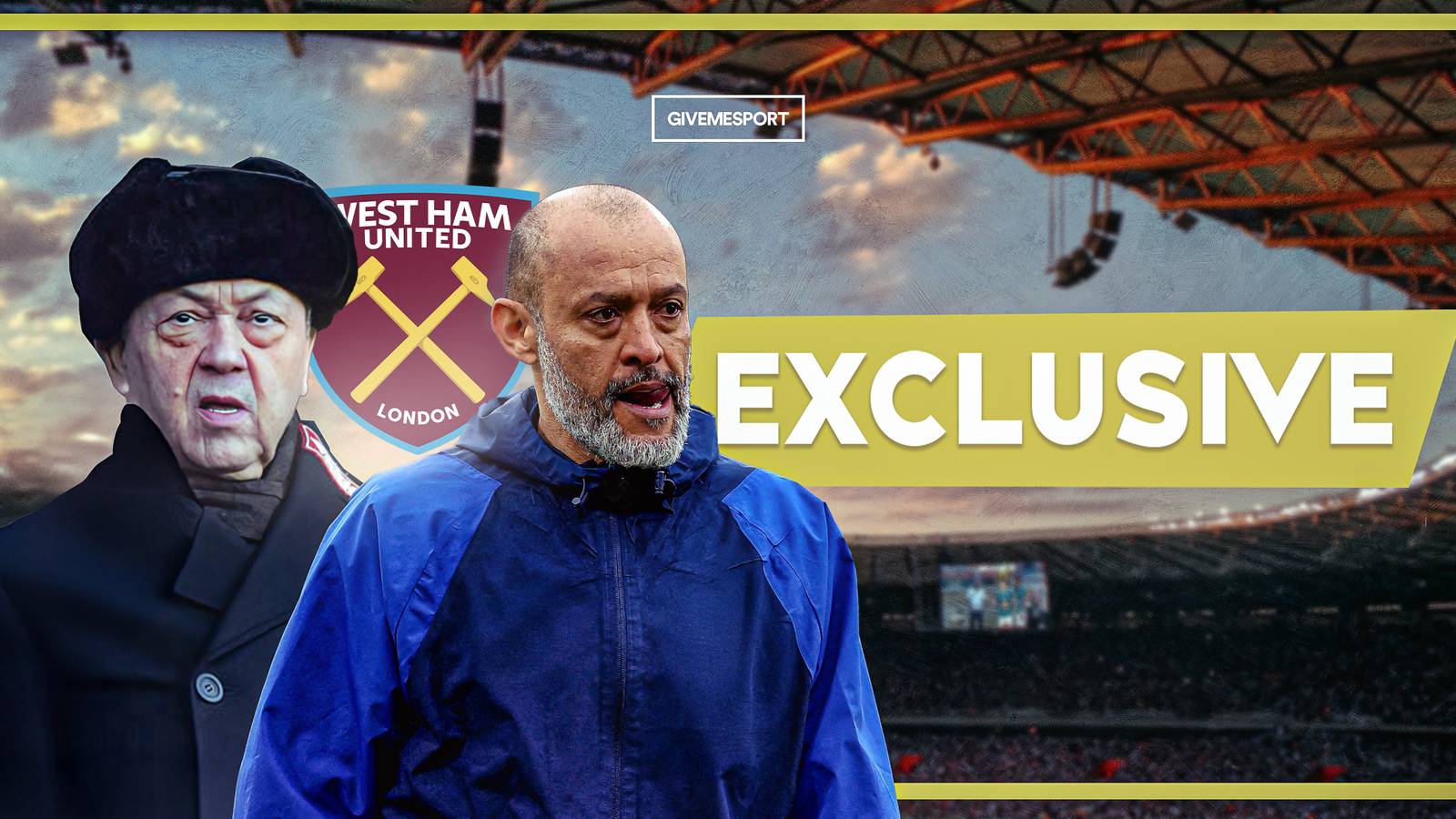
The season is just five games old but West Ham United became the second Premier League club this season to pull the trigger and replace their manager.
Graham Potter’s race at the Hammers, despite having only started back in January, was abruptly ended over the weekend following meetings by owners, and his replacement is already in situ, with former Nottingham Forest boss Nuno Espirito Santo, who was sacked by Forest at the start of September following a row with club owner Evangelos Marinakis, the man to take the helm at the London Stadium.
Nuno’s reign begins straightaway, with Monday night’s visit to Everton’s Hill Dickinson Stadium to face a Toffees side who have started the season strongly under David Moyes, still enjoying the feel-good factor that their new 52,888-seater stadium has delivered.
Potter’s position as boss had been under internal review, as GIVEMESPORT had previously reported, with the Hammers’ hierarchy knowing that they could ill afford to let a bad situation drag on indefinitely given the huge financial impact of relegation to the Championship, and how wasted time can be crucial when it comes to the picture at the end of the season.
Sullivan had to Act at West Ham With Relegation Hugely Impactful

Five games in, relegation shouldn’t be a consideration, but such is the financial need to remain a Premier League club, especially for those clubs who have been mainstays of English football’s top flight for some time, that preserving status as a member of the 20 elite clubs is crucial. That is why David Sullivan, West Ham’s long-standing owner, expedited the exit of Potter as boss, bringing in Nuno as his replacement, with the Portuguese seeing his stock high after a fine season with Forest last term. Off-field friction between him and Marinakis, and not poor performance, was the reason for him exiting the City Ground.
Relegation is hugely impactful for Premier League clubs. The reason for that is largely down to the drop in broadcast rights that clubs receive from the League, which are derived from the money that comes in from the sale of both the domestic and international media rights for the competition, which combined over the current four-year cycle equates to more than £12bn.
From both markets, clubs receive their money via an equal share distribution and merit payments determined by competitive performance. They are also in receipt of facilities fees from the domestic market in relation to how many live games they featured in, as well as taking an equal slice of the commercial revenue, which works out as £7.9m per club, per year.
In West Ham’s case, for the 2023/24 financial year the club brought in £167m from broadcast-related income. That was a figure up from £143m the previous year due to an improved position in the Premier League. That was the biggest sum of any club in the division outside of Arsenal, Chelsea, Liverpool, Manchester City, Manchester United and Tottenham Hotspur.
The immediate impact of clubs falling into the second tier is mitigated in no small way by the existence of parachute payments, a sum that comes from the Premier League and is designed to soften the landing for clubs exiting the lucrative nature of English football’s elite domestic men’s competition.
Parachute payments provide clubs with financial aid for a three-year period after relegation. Year one sees them in receipt of £40m, which is 55% of the broadcast revenue share they would expect from the Premier League, with it dropping to £35m in year two and £15m in year three, on the basis that the club had been a Premier League member for more than a season.
West Ham made £130.9m from central funding from the Premier League when factoring in merit payments, equal share and commercial share, meaning that a £45m sum received from the Championship would be a significant decline in centralised funding from the league.
It isn’t just the value of broadcast rights that takes a pretty hefty beating. Commercial income is also often significantly affected, with existing deals sometimes containing clauses to either break or reduce in value in the event of relegation.
The value of front-of-shirt sponsorship, if the club needs to go to market again, falls, as does the value of pitchside advertising through LED boards, which carries a premium price for most Premier League clubs as they can offer brands significant exposure to millions in both the domestic and international markets through games being broadcast.
Attendances can also suffer. While big clubs such as West Ham may well expect to keep hold of a bulk of their support and not see too much drop off for a campaign in the Championship, away attendance sometimes doesn’t meet what was expected in the Premier League due to smaller fan bases, while ticket prices often have to be looked at in terms of price reduction by owners due to the on-pitch product not being at a premium level.
The same could be said for hospitality and how much can be generated from selling boxes, suites and lounges, with the price point impacted by virtue of the club not being a member of the Premier League and not drawing the biggest names to the stadium.
Merchandising is another area which can be negatively impacted. Shirt sales can dip, while global exposure and interest can wane when clubs are out of the Premier League limelight, with the Championship getting far less shine on the world stage, thus less appealing to casual fans in other markets, and commercial partners alike.
To look at the kind of impact that can be felt, Leeds United’s relegation from the top flight back to the Championship in 2023 saw them fall from £189.7m to £127.6m, a drop of just over £62m, or 33%.
But that was deemed a relatively strong performance as the club had managed to player trade effectively, bringing in £33.7m profit on player sales, while slashing the wage bill by 42%, from £145.8m to £84m.
The difference is that Leeds weren’t fully established back in the Premier League at the time of their relegation. The infrastructure was built upon time in the Championship, and the increase in spending was driven by the extra cash available after promotion. Like most promoted clubs, relegation release clauses and wage reductions upon relegation featured heavily in summer recruitment, meaning some element of pain had already been planned for.
West Ham Not Set up for Championship-Level Revenue

West Ham have been setting their targets higher and have been a Premier League side since 2012. They are not set up for Championship-level revenue, and with a wage bill for 2023/24 of £161m, around 60% of revenue, they would need to shave that considerably.
Relegation is seldom the great reset that some fans might believe it is, and while there may be some elements of ‘cleaning house’ with the exit of high-earning, under-performing players, the reality is that it is an extremely costly failure, one that takes time to recover from, and one where the pressure exists to bounce back at the first attempt or risk being cast into EFL purgatory, as has happened to the likes of Reading, Portsmouth, Sheffield Wednesday, Watford and West Bromwich Albion, among others, down the years.
The reason why managerial changes occur with such regularity in the Premier League nowadays is that owners want to act as soon as they can to protect themselves from the risk of relegation and the financial losses that come with it, not to mention the significant impact it has on the overall value of the football club, which is the chief reason why owners acquire these clubs in the first place.
Forbes magazine ranks West Ham as the 18th most valuable football club in the world at £900m. That is something that is predicated to no small extent on them being part of the elite 20 clubs, and with that in mind the club’s owners weren’t minded to provide many more opportunities to Potter.
Having signed a two-and-a-half-year contract in January, Potter had two years remaining, although quite how much compensation will be is difficult to ascertain with Potter’s deal, which the Hammers had initially wanted to be six months at the start of the year, included a number of performance-based break clauses.
In hiring Nuno, West Ham have avoided having to pay any compensation, with any severance due to Potter likely to be considerably lower than what would usually be expected to have to be shelled out. That will be beneficial for the Hammers and their plans for January, something that will provide a boost for their plans to make sure a survival battle is not on the cards.

Arsenal and Liverpool could be about to be embroiled in a transfer battle for one of Europe’s most highly-rated full-backs.
The Premier League rivals have spent much of the summer chasing the same targets, including Paris Saint-Germain’s Bradley Barcola. The Gunners have reportedly paved the way for the Merseysiders to land the French winger, but he’s not the only player linked with both clubs.
While Mikel Arteta is well-stocked at left-back, he could look to add more depth and move Myles Lewis-Skelly into midfield. Andoni Iraola is looking to replace Andy Robertson following the veteran Scotsman’s move to Tottenham Hotspur.
Arsenal and Liverpool Offered Maxi Araujo

Arsenal and Liverpool have reportedly both been handed the chance to sign Sporting CP’s Maxi Araujo, per SunSport. Intermediaries are said to have reached out to potential suitors and informed them that the Uruguayan is available for the right price.
Sporting are asking for at least £51.5 million to sell the 26-year-old, who has shone in Liga Portugal. Last season, he registered seven goals and six assists in 47 games across competitions, earning his status as one of the most admired attacking full-backs in Europe.
The Premier League rivals are weighing up potential moves for Araujo and deciding whether his price is reasonable. He is thought to be dreaming of a move to the English top flight and, as such, personal terms will most likely be able to progress quickly.
While Arteta and Iraola’s main focus has been on adding a new winger to their squads, a move for Araujo, dubbed “superb”, might appeal. While he has spent most of his spell at Sporting at left-back, he can play on the wing.
Fees correct prior to summer 2026
All 10 found — excellent!
A Move to Liverpool Makes The Most Sense

Liverpool are the club who would benefit most from signing Araujo, as they clearly need another option at left-back. Milos Kerkez has been reunited with his former Bournemouth boss Iraola, and he’ll be hoping he can get back to his best under the Spaniard.
It’s crucial that the Hungarian is handed competition though and Robertson’s departure needs addressing. Konstantinos Tsimikas has failed to impress during his time at Anfield and moving the Greek defender on is probably a wise decision.
Arsenal have Lewis-Skelly competing with Riccardo Califiori for the left-back starting berth in Arteta’s team. An injury crisis could prove problematic, but given how much Sporting are demanding, it doesn’t make sense to spend that much money on a third left-back.

Donald Trump has denied discussing FIFA’s plans to sell World Cup investment stakes with FIFA president Gianni Infantino, despite growing scrutiny over their seemingly close relationship.
Speaking to reporters at Camp David on Friday, Trump said the topic had not come up between the pair, even as FIFA’s proposals continue to incite fury across world football.
The denial comes at a sensitive moment for both men, whose relationship has developed closely since the 2026 World Cup, and follows a period in which Infantino gifted Trump the inaugural FIFA Peace Prize.
With UEFA threatening a boycott and several other confederations voicing serious concerns, the timing of Trump’s comments has done little to quiet speculation over his own level of involvement.
What FIFA is Proposing and why it’s Causing a Boycott Threat

FIFA confirmed plans this week to launch a new $20 billion subsidiary to oversee the World Cup and its other competitions, offering up to 20% of shares to outside investors. The investment group is reportedly being led by a fund that was founded by Joshua Kushner, the brother of Trump’s son-in-law, Jared Kushner.
The backlash has been swift and significant. UEFA has said its national teams will refuse to take part in any FIFA competition unless the plans are dropped entirely, with assurances that private ownership will never again be considered. CONCACAF and the Asian Football Confederation have also come out against the proposals, with the AFC saying trust in FIFA’s leadership has been damaged. Reports suggest as many as 143 countries, including England, France, Germany, Italy and the latest world champions, Spain, now back some form of boycott.
Internally, things look just as shaky for Infantino. Long-time adviser Carlos Cordeiro has resigned in protest, and FIFA’s own chief operating officer has accused Infantino of misleading staff over his true intentions. Infantino has defended the plan, insisting it’s designed to grow the game’s revenues and benefit member associations rather than hand over control of the sport.
A vote on the proposals is set for the 19th of September, though with three major confederations now opposed, Infantino appears to be running out of support and a vote may only make for embarrassing reading.
FIFA Eyeing a 64-Team World Cup for 2030

Alongside the investment row, FIFA looks to be pushing ahead with plans to expand the World Cup even further. A leaked internal document shows FIFA wants to appoint an independent agency to examine increasing the tournament from 48 to 64 teams in time for 2030, despite this summer’s tournament being the first ever played with 48.
That 2030 edition will be a historic one regardless, co-hosted by Morocco, Portugal and Spain to mark the World Cup’s 100th anniversary, running for a record 44 days. Three centenary matches will also be staged in Argentina, Paraguay and Uruguay, hosts of the original 1930 tournament, with all six nations automatically qualifying.
You scored
out of 20


Liverpool are preparing a major move for Bradley Barcola, Mykhailo Mudryk is cleared to return, and FIFA is facing an unprecedented backlash over its World Cup plans.

Arsenal and Liverpool Offered Chance to Sign £51.5M Left-Back
Donald Trump Breaks Silence on Gianni Infantino’s World Cup Plan
Romano Joins with the Latest Transfer News & FIFA’s Big Gamble

Meaning Behind Egypt Manager’s ‘X’ Gesture vs Argentina

Premier League Set-Piece Goals (2025/2026)

Simi Sanya and Femi Dapson Are Now Legally Married and It Is Beautiful to See
-
 Politics2 days ago
Osun guber: Police raids targeting senior officials — State govt
-
 Sports2 days ago
Stamford Bridge Could Still Host Champions League Football This Season
-
 Metro2 days ago
Police nab Umuahia barbar for allegedly using customers’ hairs for ritual
-
 Sports2 days ago
Liverpool Fans Slam Curtis Jones For Clashing With Teammates After Pre-Season Tie
-
 Sports2 days ago
Czech Republic Back Gianni Infantino’s FIFA World Cup Plan
-
 Sports2 days ago
Eddie Howe To Leave Newcastle
-
 Sports2 days ago
Sickening Details Emerge About Ex-UFC Fighter’s Arrest
-
 Business14 hours ago
NGX Group declares N1.30 per share interim dividend in H1’26