
Business
Toxic harvest: Hazardous pesticides harm food production, exports — Experts

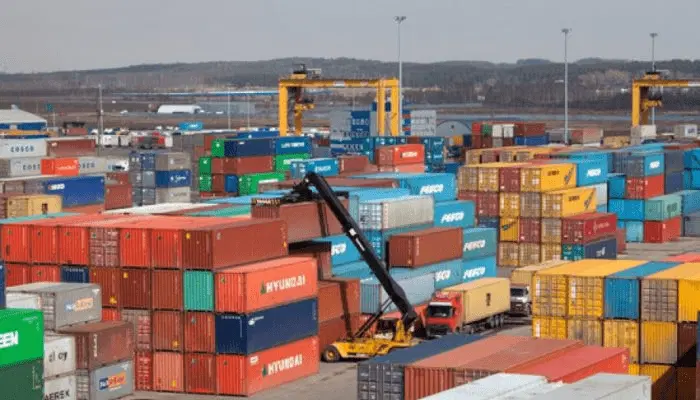

Loses over $362.5m to export rejects
•Over 23,400MT pesticides imported annually
•We banned pesticides injurious to health- DG, NAFDAC
•Agric ministry keeps mum on impact of pesticides
•Experts express deep concerns, counsel FG
By Gabriel Ewepu
Nigeria’s crop fields may look lush, but beneath the green cover is a terrifying truth: deadly pesticides are poisoning the nation’s food, impoverishing farmers and disappointing the economy.
Every year, over $362 million worth of Nigeria’s food exports are rejected overseas because of pesticide residues, while back home, millions of people unknowingly consume chemicals that are already banned elsewhere.
What were meant to boost harvests are now a slow poison, threatening well-being, food security, and Nigeria’s international credibility.
So, Nigeria’s agricultural sector is facing a silent but dangerous crisis, as there is rising apprehension over the severe impact of over-dependence on pesticides on Nigeria’s food production and export revenue, with the country losing over $362 million due to rejection of exports.
Currently, over 23,400 metric tonnes of pesticides are imported into the country annually while 90 per cent of farmers use highly hazardous pesticides in food production and preservation chemicals, including Paraquat, Chlorpyrifos and Atrazine.
With more than 23,400 metric tonnes of pesticides imported annually, the country’s food systems are increasingly contaminated by highly hazardous chemicals, development experts say is threatening public health, export opportunities and long-term food security.
According to the Alliance for Action on Pesticides in Nigeria, AAPN, more than 90 per cent of Nigerian farmers use highly hazardous pesticides, HHPs, such as Paraquat, Chlorpyrifos, and Atrazine chemicals already banned in several countries because of their toxic effects on humans, soil and the environment.
Over 65 per cent of active ingredients in pesticides registered in Nigeria fall into the highly hazardous category, yet they remain widely available in local markets.
Efforts by Financial Vanguard to obtain official comments from the Federal Ministry of Agriculture and Food Security on measures to curb the practice were unsuccessful.
$362.5m lost annually to export bans.
Lead Coordinator of AAPN, Donald Ofoegbu, revealed that pesticide residues are at the heart of the repeated rejection of Nigerian food exports.
“More than 76 per cent of Nigeria’s agricultural exports are rejected by the European Union on safety grounds. For beans alone, Nigeria loses $362.5 million every year due to pesticide contamination,” he said.
He added that even sesame, one of Nigeria’s top export crops, faces possible restrictions from Japan, saying “Japanese authorities raised concerns that Nigerian farmers are now using pesticides to dry sesame. If unresolved, this could lead to another export ban.”
Soil, health, and environmental risks
Environmental expert, Prof. Babatunde Bolaji Benard, explained that while pesticides had helped increased yields, their long-term costs outweighed short-term gains.
“Overuse of pesticides disrupts ecosystems, destroys pollinators, contaminates soil and water, and exposes farmers and consumers to chronic illnesses like respiratory diseases, hormonal disorders, kidney failure, and cancer,” he warned.
He advocated Integrated Pest Management, IPM, a mix of biological, cultural and chemical practices, as a safer alternative.
ActionAid raises alarm
Speaking on the issue, the Country Director of ActionAid Nigeria, Dr. Andrew Mamedu, disclosed that more than 65 per cent of pesticides in circulation were hazardous, while over 50 per cent of those approved in Nigeria were already banned in Europe.
He linked their overuse to worsening soil fertility, biodiversity loss, and rising health burdens, including 20 million Nigerians living with chronic kidney disease and 72,000 annual cancer deaths.
“These chemicals persist in soil and water, and their residues in crops compromise food safety. Weak regulations have turned Nigeria into a dumping ground for pesticides banned in Europe and China,” he said.
Mamedu recalled the 2020 Oye-Obi tragedy in Benue State where 273 residents, including children, died from a mysterious disease linked to pesticide exposure.
Farmers’ bitter experiences
Farmers across the country confirmed that pesticides had damaged their soils, reduced yields, and posed health risks.
Zainab Isah Arah, Chair of the Small-Scale Women Farmers Organisation in Nigeria, SWOFON, Niger State, said: “We are exposed to danger because most farmers lack knowledge of safe pesticide use. Soil fertility has been destroyed, forcing us to return to compost manure. Nigerian produce cannot compete internationally because of these chemicals.”
From Kano, Muhammed Kura, a smallholder farmer, admitted: “Many of these chemicals remain in farm produce as harmful residues. Unfortunately, enforcement in Nigeria is very weak and porous borders make matters worse.”
Agribusiness firms speak out
For Sandra Victor-Gwafan, Co-founder of Kaduna-based DeBranch Farmers Ltd, pesticides are silently killing both farmers and markets.
“Our farmers’ hard work is wasted when produce is rejected abroad due to residues. The way forward is bio-pesticides and agroecology,” she said.
Similarly, Gologolo Global Views Enterprise in Bayelsa State urged farmers to embrace natural pest-control methods such as neem extracts, rabbit urine and crop rotation.
In Abuja, farm consultancy, FutuX Agri-consult, warned that continued rejections undermined Nigeria’s reputation, saying “supermarkets now prefer imports to local foodstuff.
”Nigeria is no longer trusted as a reliable supplier,” said Damian Ugbede, Deputy Team Lead of the firm.
Civil society interventions
Groups such as ActionAid and Health of Mother Earth Foundation, HOMEF, are training farmers on agroecology and bio-pesticides.
HOMEF alone has trained more than 1,000 farmers in natural pest control, while ActionAid said it had reached over 50,000 farmers across 20 states.
HOMEF’s Programme Director, Joyce Brown, urged the government to immediately ban all pesticides already prohibited abroad.
“Over 70 per cent of Nigeria’s exports are rejected for safety reasons, including pesticide residues. This represents a huge financial loss,” she stressed.
Policy and enforcement gaps
Although regulatory agencies, such as NAFDAC, SON, and NESREA have banned some toxic chemicals in recent years, enforcement remains weak due to corruption, poor funding and porous borders.
Many pesticides banned abroad are still smuggled into Nigeria from neighboring countries, while untrained agrochemical dealers flood rural markets.
Experts insist that without strong political will, Nigeria risked becoming a global dumping ground for toxic chemicals.
NAFDAC reacts to rejection of Nigerian exports over pesticide residues
Reacting to enquiries from Financial Vanguard, the Director General of the National Agency for Food and Drug Administration and Control, NAFDAC, Prof. Christianah Adeyeye, assured that the agency was taking decisive steps to address the rejection of Nigerian products abroad due to pesticide residues.
Adeyeye described the rejection of sesame seed exports over Paraquat residue as “an unfortunate incident,” stressing that such cases often occurred because exporters bypassed NAFDAC’s checks.
“We ensure that the issue is not handled with levity. The agency gives frantic regulatory efforts towards putting a stop to the worrisome challenge,” she said.
She explained that NAFDAC had already banned harmful pesticides, such as Paraquat, and had continued to monitor markets to ensure safety, adding, however, that exporters must engage the agency to meet international standards.
“Different countries have different standards. Exporters may not know what Europe, America or Asia wants. It is NAFDAC that know, and we educate,” she noted.
NAFDAC, according to Adeyeye, works closely with the Nigeria Export Promotion Council, NEPC, to sensitise exporters.
She said the agency’s Food Safety and Applied Nutrition Directorate also engaged with exporters to ensure compliance.
“If they do not come to NAFDAC, they may think it is okay for this country, let’s just export it. But what is acceptable for another country may not be acceptable elsewhere. Coming to NAFDAC will solve all the problems,” she explained.
On export processing, the NAFDAC boss clarified that testing was straightforward and timely. “Maximum, I believe, 21 days or 20 days to process your export. If we have inspected the site for good hygiene practices or the product has already been approved, it takes even much shorter time,” she said, urging exporters to make Nigeria proud by complying.
Adeyeye emphasised the need for exporters to understand market requirements, warning that “different countries have strict maximum residue levels that these products must not contain. If it is above those levels, certainly those products will be rejected.”
She also noted that pesticides approved in Nigeria might not be acceptable abroad, advising exporters to study foreign regulations.
Highlighting documentation requirements, the NAFDAC boss stressed the importance of certificates of analysis.
“If you don’t analyse your product and you take it abroad, there may be a problem. You also need to know the capacity of the testing lab because some labs may not have the capacity to test to required residue levels,” she explained.
On best practices for farmers, Adeyeye cautioned against indiscriminate use of pesticides, cautioning “you don’t apply pesticide anyhow. There are time and conditions that you must meet as stated on the label,”
Adeyeye, who condemned frequent and careless applications, noted that pesticides needed time to work.
She further advised farmers to use protective equipment, observe safety intervals, and respect re-entry periods after spraying.
“When you apply, you have to leave the farm, let the chemicals do what they have to do before you come back there for your own health,” she cautioned.
The way forward
Experts and farmers agree on urgent steps needed to save Nigeria’s agribusiness, including ban on importation of highly hazardous pesticides; strengthening of NAFDAC, SON, and NESREA regulations and enforcement; promotion of agroecology and bio-pesticides as safer alternatives;
investment in farmer education and integrated pest management; as well as support for research and organic inputs for smallholder farmers.
Failure to act, they warned, would continue to cost Nigeria hundreds of millions of dollars annually, erode soil fertility and expose farmers and consumers to deadly health risks.
The post Toxic harvest: Hazardous pesticides harm food production, exports — Experts appeared first on Vanguard News.
•Maintains forecast for Nigeria’s GDP at 4.1% in 2026, 4.3% in 2027
•Says improved macroeconomic stability supports Nigeria’s economy
By Babajide Komolafe, Economy Editor
The International Monetary Fund, IMF, has warned that rising prices of essential goods will deepen poverty and food insecurity in Nigeria despite improved macroeconomic stability, even as it maintained growth forecasts for the economy in 2026 and 2027 at 4.1 per cent and 4.3 per cent.
In its July 2026 World Economic Outlook Update, the IMF also lowered its forecast for global economic growth to 3.0 per cent in 2026 from the average 3.5 per cent recorded in 2024 and 2025, citing the impact of the Middle East conflict and uneven benefits from the artificial intelligence-driven technology boom.
Commenting on Nigeria and Sub-Saharan Africa, the IMF stated: “Growth in sub-Saharan Africa is expected to remain broadly stable at 4.3 percent in 2026, though this masks substantial divergence across countries, reflecting differences in policy space, reform implementation, and exposure to external shocks.
“Oil-importing, non-resource-intensive economies are more adversely affected by higher energy and food prices, whereas some larger economies continue to benefit from earlier stabilization and reform efforts, even though they are largely absent from the AI-driven global technology upswing and face headwinds from the decline in official development assistance.
“Nigeria is supported by improved macroeconomic stability and favorable terms-of-trade effects, though higher prices for essentials are expected to further aggravate poverty and food insecurity.”
The IMF projected Nigeria’s economy to expand by 4.1 per cent in 2026 and 4.3 per cent in 2027, while Sub-Saharan Africa is expected to record growth of 4.3 per cent in 2026 and 4.5 per cent in 2027.
On the global economy, the IMF said: “Global growth is projected to be 3.0 percent in 2026 and 3.4 percent in 2027, down from the average of 3.5 percent observed in 2024–25.”
“The modest slowdown reflects the effects of the war in the Middle East being partly offset by accelerated demand-driven momentum in the global technology cycle thanks to advances in artificial intelligence (AI) and its adoption.”
The IMF further warned: “Global headline inflation is expected to increase from 4.1 percent in 2025 to 4.7 percent in 2026 before declining to 3.9 percent in 2027,” adding that the earlier disinflation trend has stalled.
Highlighting risks to the outlook, the IMF said: “The possibility of renewed Middle East conflict looms large and could extend commodity price volatility, further threaten supply chains, raise prices, and weigh on financial conditions.”
It added that “Trade fragmentation could accelerate, possibly hurting output and increasing prices,” stressing that governments should restore price stability, rebuild fiscal buffers and pursue structural reforms to strengthen energy security, AI readiness and international cooperation.”

Laments poor financing, weak governance in the sector
By Cynthia Alo
The Cooperative Federation of Anambra State Limited, COFAS, has called on the State Government to establish a Cooperative Development Fund, CDF, and integrate cooperatives into the state’s economic planning.
COFAS also disclosed that poor access to finance, weak governance structures, and low digital literacy among member societies are threatening the growth of cooperatives across the state.
President of COFAS, Dr. Ogochukwu Soludo, who spoke at the 2026 International Day of Cooperatives in Awka, Anambra State capital, said the proposed fund would help unlock affordable, tailored financing for the state’s many micro and small cooperative enterprises.
Representing cooperatives drawn from 179 communities across the state’s 21 local government areas, Soludo added that fragmented market access, regulatory bottlenecks, youth disengagement, and barriers facing persons with disabilities pose as challenges limiting the sector’s impact.
He warned that these constraints, if left unresolved, would prevent cooperatives from contributing meaningfully to the state’s Gross Domestic Product (GDP).
According to him, to close the gaps, COFAS had drawn up a three-year roadmap built around six priority areas, including governance and capacity building, inclusive access to finance, market linkages, youth and women inclusion, digital transformation, and advocacy for stronger partnerships.
He noted that the federation was already in talks with microfinance banks, community finance institutions and impact investors to design cooperative-friendly loan products with flexible collateral terms, particularly for women, youth and persons with disabilities.
Soludo, also disclosed plans to pilot affordable digital tools for member registration, accounting and mobile-based savings tracking in selected local government areas before a statewide rollout.
He urged financial institutions, development partners, and the private sector to design flexible credit products, support governance training, and open up supply chains to cooperative-produced goods.
He stated further: “We will measure our success by increased incomes, jobs created, businesses formalized, and communities transformed.
“Cooperatives are instruments of social cohesion and shared prosperity. With urgency, discipline, and imagination, they can be central to Anambra’s inclusive growth strategy delivering development from the grassroots upward.”

By Emma Ujah, Abuja Bureau Chief
The Central Bank of Nigeria (CBN) has stated that the Standard N100 note is still a legal tender and must be accepted for all transactions.
The apex bank, in a statement by its Ag. Director, Corporate Communications, Mrs. Hakama Sidi-Ali, yesterday, said the clarification became necessary, following reports that some members of the public were rejecting the note.
The statement reads in full, “The attention of the Central Bank of Nigeria (CBN) has been drawn to reports of the rejection of the standard N100 banknote by some members of the public, businesses, and other stakeholders, apparently due to doubts about its continued legal tender status.
“For the avoidance of doubt, the CBN hereby reiterates that both the commemorative N100 banknote and the standard N100 banknote remain legal tender in Nigeria and must be accepted for all transactions nationwide.
“The commemorative N100 banknote, which was introduced to mark Nigeria’s centenary, did not replace the existing standard N100 banknote. The CBN strongly cautions individuals, businesses, financial institutions, and other economic agents against rejecting the standard N100 banknote. Such rejection constitutes a violation of the provisions of the CBN Act and undermines confidence in the national currency.
“The Bank will not hesitate to apply appropriate enforcement measures against any person or entity found to be in breach. The Bank remains committed to safeguarding the integrity of the Naira, ensuring confidence in all duly issued banknotes, and promoting smooth currency circulation across the country. Accordingly, members of the public are urged to accept and transact with all banknotes legally issued by the Central Bank of Nigeria.”


Two die in Ogun road accident

2027: Opposition should unite under Peter Obi – Aisha Yesufu

New Footage Showing Mo Salah’s Actions After Argentina 3-2 Egypt Emerges

Meaning Behind Egypt Manager’s ‘X’ Gesture vs Argentina

Simi Sanya and Femi Dapson Are Now Legally Married and It Is Beautiful to See

Premier League Set-Piece Goals (2025/2026)
-
Sports2 days ago
Meaning Behind Egypt Manager’s ‘X’ Gesture vs Argentina
-
 Sports1 day ago
Ian Wright Claims Argentina Winning Goal vs Egypt Should Have Been Disallowed
-
 Sports22 hours ago
Arsene Wenger Says Only Spain Can Stop France Winning the 2026 World Cup
-
 Sports2 days ago
‘Real Reason’ Why Sami Zayn Lost His Title to CM Punk
-
 Sports11 hours ago
France Boss Didier Deschamps Praises Argentina vs Egypt Referee
-
 Sports2 days ago
VAR Expert Claims Egypt Should Have Had Penalty vs Argentina
-
 Sports17 hours ago
Thierry Henry Drops Verdict on Lionel Messi’s Argentina Tears vs Egypt
-
 Sports2 days ago
The ‘Real Reason’ Roger Federer Was Sitting Alone at Wimbledon