
Business
Non-oil exports: Local investors lose out of N4.8trn boom


By John Alechenu, ABUJA
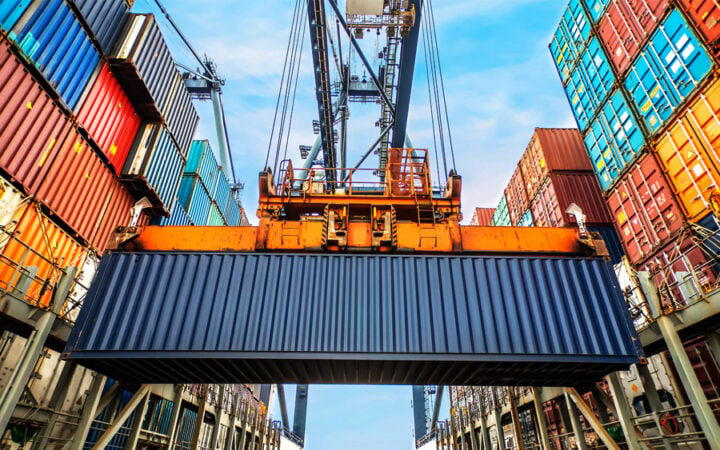
Amid rapid expansion in Nigeria’s non-oil exports, there are indications that local operators in the sector are losing out to their foreign counterparts, especially those from Asian countries, notably, Indians, Chinese, Lebanese and Vietnamese.
Also industry operators have indicated that the expected economic benefits of a diversification from oil-dependent to non-oil export are being lost to the business model deployed by the foreign operators.
Reports from the National Bureau of Statistics, NBS, and appraisal by the Nigerian Exports Promotion Council, NEPC, has shown that with steady growth, Nigeria’s non-oil earnings had surged to N4.8 trillion in the first half of 2025, up by over 391% from N977 billion recorded in the corresponding period of 2021.
For the NEPC, this result validates President Bola Tinubu’s “Renewed Hope Agenda.”
NEPC’s Director General, Nonye Ayeni, speaking on the H1 2025 report, stressed:
“We are seeing positive dividends of the President’s policies. Our mandate is to sustain momentum by working with the Ministry of Trade and Industry, the players and stakeholders to provide incentives that encourage more exports.”
Yet, most stakeholders in the industry are now painting a different picture, showing that the actual state of the sector was not as rosy as the numbers suggest.
While some point to predominance of non-value added component of the statistics, others are more concerned with trade practices that have clearly undermined Nigeria’s interest in the sector.
Capital, administrative bottlenecks stifling real growth – NCAN:
Dr, Ojo Ajanaku, the President, National Cashew Association of Nigeria, NCAN, the umbrella body of cashew farmers, processors, marketers and exporters, painted a disturbing picture of the odds stacked against members.
He told Financial Vanguard that members had the capacity to grow more and were willing to contribute to Nigeria’s Gross Domestic Product, GDP, through export, but were handicapped.
He stated: “We have so many challenges. First, there is the issue of funding. We would have done more than we are doing currently but so many potential exporters among us are handicapped.”
According to him, the prohibitive interest rates remain a huge huddle.
He also disclosed that foreigners currently dominate the Nigeria export trade, adding that they had better funding with foreign currency, supported by better deal from Nigeria’s financial institutions in funding their exports.
Ajanaku stated: “These foreigners come with cheaper funds, both from their home countries and from Nigerian banks, which they get at reasonable interest rates.
“Sometimes, they simply come with a portfolio of documents to access funds in Nigerian banks. We as Nigerians, cannot access such funds because of collateral.
“These foreigners that buy cashew and other export commodities from potential Nigerian exporters and producers, export these products without filling the Nigerian Export Proceed Form which is called NXP form.”
Ajanaku explained that by doing so, the Nigerian economy is worse off because the bulk of the money they make goes out to their country’s economies since they don’y fill NXP Form that would have compelled them to repatriate all the proceeds to Nigeria.
“We also have foreigners in the field putting pressure on our local farmers who believe that, if those foreigners leave the country, they’ll not get buyers to sell their products thereby harvesting the crops prematurely.
“This reduces the potential of the seed because when you forcibly harvest cashew before maturity, you cut down the flower that is originally supposed to bud and produce another set of cashew,’’ he said.
Moreover, he disclosed that the foreigners out-bid Nigerian operators in the quest to get product supplies from the local suppliers because they are better funded.
Ajanaku also identified the challenge of administrative bottlenecks imposed by various agencies of government at the ports.
Lamenting the consequences, he stated: “We are not able to meet with contractual terms sometimes, due to logistics challenge and administrative bottlenecks.
‘’Your goods will not enter the ports when it’s supposed to enter the ports and when it gets to the ports, it’s not shipped when it’s supposed to be shipped due to one administrative bottle necks or the other.
“If we process what we produce in the country, we add more value and sell at a better price than exporting raw nuts. The challenge here is that, the cost of processing in Nigeria is high. And for that, Nigerian processors are not able to process and compete with countries such as Vietnam and India.
“We are hoping and believing that if government can give what we call Special Agro-Processing Loans with minimal collateral, that will help our processors to compete favourably with others internationally. The interest on the loan should not be more than. 3-5 per cent maximum, if not less.
“We are also saying government can give energy incentives to agro processors in the country to encourage farmers to produce more. That way, farmers are not left to struggle with processing, government would have taken the bull by the horns to deal with this. Remember Energy incentives and agro-processing loans with minimal collateral.
“These are the areas we have challenges in the export of non-oil products. We believe that when these are taken care of, we will produce more because we are currently producing far below our capacity.
“Take cashew for instance, we were the leading producer in the world but today, we have dropped to number four. Meanwhile, we have land that criminals have taken over, which can be converted to cashew farms and other commodities such as palm trees, cocoa, rubber etc.
“If we encourage local processing, more Nigerians will go into farming because they’ll make more money and oil will take the back seat. Agriculture can generate the kind of jobs needed in Nigeria because of the value chain.”
Analysts demand shift to value addition:
However, Dr. Mark Ojobi, lecturer at Yakubu Gowon University, Abuja, explained that the non-oil sector was experiencing strong growth, though with challenges.
He stated: “Subsidy removal and floating the naira increased import costs while making exports more attractive. Exporters suddenly saw opportunities because their earnings in foreign currency converted into more naira yields much more profits.”
He also noted that Nigeria’s membership of African Continental Free Trade Agreement, AfCFTA, was beginning to open new regional markets, especially for agro-products.
But Ojobi warned: “We are still largely exporting raw commodities, such as cocoa beans, cashew nuts, sesame seeds. These earn less than processed goods. Value addition is the only way to unlock full potential.
“We must shift from raw commodity exports to value-added products. That’s the difference between Nigeria earning $13 billion in 2025 and earning $50 billion for the same quantity of exports.”
Economist and Public Affairs Analyst, Chief Peter Ameh, pointed to gaps: “A huge chunk of our exports, especially agricultural produce and solid minerals, go through informal channels due to the bottlenecks in the trade administrative system. NBS itself admits its figures are estimates.
“Trade across Benin, Niger, Cameroon and Chad is largely unrecorded. The true non-oil export figure could be much higher or lower.”
But watchdog groups such as the Civil Society Legislative Advocacy Centre, CISLAC, argue that Nigeria’s export was still “operating below capacity.”
Its Executive Director, Auwal Musa, said: “We are sub-optimal in every value chain. Statistics must reflect the impact on ordinary Nigerian exporters. The ultimate goal is to improve lives, not just publish export figures.”
NEPC reacts
Reacting to issue raised by players in the non-oil sector, spokesperson of the Nigeria Export Promotion Council, NEPC, Mr. Ndubueze Okeke, explained that most of issues especially those relating to interest rates and delays experienced by exporters at the ports were not within the council’s jurisdiction.
He said: “These areas are within the purview of the CBN and commercial banks as well as the Nigerian Ports of Authority and probably the ministry of finance.”
The post Non-oil exports: Local investors lose out of N4.8trn boom appeared first on Vanguard News.
•Maintains forecast for Nigeria’s GDP at 4.1% in 2026, 4.3% in 2027
•Says improved macroeconomic stability supports Nigeria’s economy
By Babajide Komolafe, Economy Editor
The International Monetary Fund, IMF, has warned that rising prices of essential goods will deepen poverty and food insecurity in Nigeria despite improved macroeconomic stability, even as it maintained growth forecasts for the economy in 2026 and 2027 at 4.1 per cent and 4.3 per cent.
In its July 2026 World Economic Outlook Update, the IMF also lowered its forecast for global economic growth to 3.0 per cent in 2026 from the average 3.5 per cent recorded in 2024 and 2025, citing the impact of the Middle East conflict and uneven benefits from the artificial intelligence-driven technology boom.
Commenting on Nigeria and Sub-Saharan Africa, the IMF stated: “Growth in sub-Saharan Africa is expected to remain broadly stable at 4.3 percent in 2026, though this masks substantial divergence across countries, reflecting differences in policy space, reform implementation, and exposure to external shocks.
“Oil-importing, non-resource-intensive economies are more adversely affected by higher energy and food prices, whereas some larger economies continue to benefit from earlier stabilization and reform efforts, even though they are largely absent from the AI-driven global technology upswing and face headwinds from the decline in official development assistance.
“Nigeria is supported by improved macroeconomic stability and favorable terms-of-trade effects, though higher prices for essentials are expected to further aggravate poverty and food insecurity.”
The IMF projected Nigeria’s economy to expand by 4.1 per cent in 2026 and 4.3 per cent in 2027, while Sub-Saharan Africa is expected to record growth of 4.3 per cent in 2026 and 4.5 per cent in 2027.
On the global economy, the IMF said: “Global growth is projected to be 3.0 percent in 2026 and 3.4 percent in 2027, down from the average of 3.5 percent observed in 2024–25.”
“The modest slowdown reflects the effects of the war in the Middle East being partly offset by accelerated demand-driven momentum in the global technology cycle thanks to advances in artificial intelligence (AI) and its adoption.”
The IMF further warned: “Global headline inflation is expected to increase from 4.1 percent in 2025 to 4.7 percent in 2026 before declining to 3.9 percent in 2027,” adding that the earlier disinflation trend has stalled.
Highlighting risks to the outlook, the IMF said: “The possibility of renewed Middle East conflict looms large and could extend commodity price volatility, further threaten supply chains, raise prices, and weigh on financial conditions.”
It added that “Trade fragmentation could accelerate, possibly hurting output and increasing prices,” stressing that governments should restore price stability, rebuild fiscal buffers and pursue structural reforms to strengthen energy security, AI readiness and international cooperation.”

Laments poor financing, weak governance in the sector
By Cynthia Alo
The Cooperative Federation of Anambra State Limited, COFAS, has called on the State Government to establish a Cooperative Development Fund, CDF, and integrate cooperatives into the state’s economic planning.
COFAS also disclosed that poor access to finance, weak governance structures, and low digital literacy among member societies are threatening the growth of cooperatives across the state.
President of COFAS, Dr. Ogochukwu Soludo, who spoke at the 2026 International Day of Cooperatives in Awka, Anambra State capital, said the proposed fund would help unlock affordable, tailored financing for the state’s many micro and small cooperative enterprises.
Representing cooperatives drawn from 179 communities across the state’s 21 local government areas, Soludo added that fragmented market access, regulatory bottlenecks, youth disengagement, and barriers facing persons with disabilities pose as challenges limiting the sector’s impact.
He warned that these constraints, if left unresolved, would prevent cooperatives from contributing meaningfully to the state’s Gross Domestic Product (GDP).
According to him, to close the gaps, COFAS had drawn up a three-year roadmap built around six priority areas, including governance and capacity building, inclusive access to finance, market linkages, youth and women inclusion, digital transformation, and advocacy for stronger partnerships.
He noted that the federation was already in talks with microfinance banks, community finance institutions and impact investors to design cooperative-friendly loan products with flexible collateral terms, particularly for women, youth and persons with disabilities.
Soludo, also disclosed plans to pilot affordable digital tools for member registration, accounting and mobile-based savings tracking in selected local government areas before a statewide rollout.
He urged financial institutions, development partners, and the private sector to design flexible credit products, support governance training, and open up supply chains to cooperative-produced goods.
He stated further: “We will measure our success by increased incomes, jobs created, businesses formalized, and communities transformed.
“Cooperatives are instruments of social cohesion and shared prosperity. With urgency, discipline, and imagination, they can be central to Anambra’s inclusive growth strategy delivering development from the grassroots upward.”

By Emma Ujah, Abuja Bureau Chief
The Central Bank of Nigeria (CBN) has stated that the Standard N100 note is still a legal tender and must be accepted for all transactions.
The apex bank, in a statement by its Ag. Director, Corporate Communications, Mrs. Hakama Sidi-Ali, yesterday, said the clarification became necessary, following reports that some members of the public were rejecting the note.
The statement reads in full, “The attention of the Central Bank of Nigeria (CBN) has been drawn to reports of the rejection of the standard N100 banknote by some members of the public, businesses, and other stakeholders, apparently due to doubts about its continued legal tender status.
“For the avoidance of doubt, the CBN hereby reiterates that both the commemorative N100 banknote and the standard N100 banknote remain legal tender in Nigeria and must be accepted for all transactions nationwide.
“The commemorative N100 banknote, which was introduced to mark Nigeria’s centenary, did not replace the existing standard N100 banknote. The CBN strongly cautions individuals, businesses, financial institutions, and other economic agents against rejecting the standard N100 banknote. Such rejection constitutes a violation of the provisions of the CBN Act and undermines confidence in the national currency.
“The Bank will not hesitate to apply appropriate enforcement measures against any person or entity found to be in breach. The Bank remains committed to safeguarding the integrity of the Naira, ensuring confidence in all duly issued banknotes, and promoting smooth currency circulation across the country. Accordingly, members of the public are urged to accept and transact with all banknotes legally issued by the Central Bank of Nigeria.”


Two die in Ogun road accident

2027: Opposition should unite under Peter Obi – Aisha Yesufu

New Footage Showing Mo Salah’s Actions After Argentina 3-2 Egypt Emerges

Meaning Behind Egypt Manager’s ‘X’ Gesture vs Argentina

Simi Sanya and Femi Dapson Are Now Legally Married and It Is Beautiful to See

Premier League Set-Piece Goals (2025/2026)
-
Sports2 days ago
Meaning Behind Egypt Manager’s ‘X’ Gesture vs Argentina
-
 Sports1 day ago
Ian Wright Claims Argentina Winning Goal vs Egypt Should Have Been Disallowed
-
 Sports22 hours ago
Arsene Wenger Says Only Spain Can Stop France Winning the 2026 World Cup
-
 Sports2 days ago
‘Real Reason’ Why Sami Zayn Lost His Title to CM Punk
-
 Sports11 hours ago
France Boss Didier Deschamps Praises Argentina vs Egypt Referee
-
 Sports2 days ago
VAR Expert Claims Egypt Should Have Had Penalty vs Argentina
-
 Sports17 hours ago
Thierry Henry Drops Verdict on Lionel Messi’s Argentina Tears vs Egypt
-
 Sports2 days ago
The ‘Real Reason’ Roger Federer Was Sitting Alone at Wimbledon