
Sports
Leeds Wait on Premier League Vote as £73m Call Highlights Past Errors

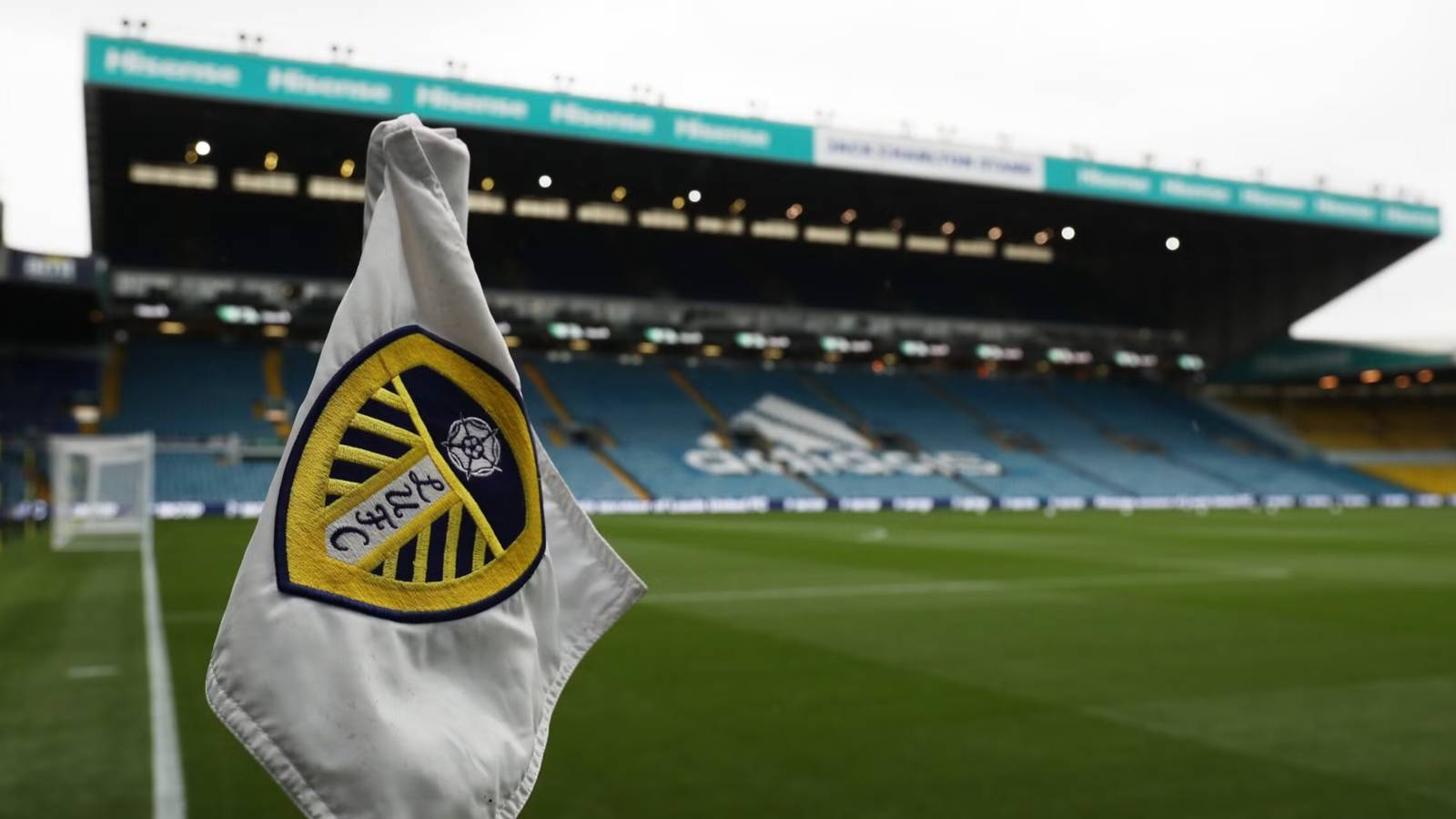
Leeds United are members of the Premier League once again, returning for 2025/26 under the guidance of boss Daniel Farke and with ownership that has bold plans for the future.
But the financial landscape they’ve returned to is more restrictive than ever and looks set to undergo even more changes, some that may impact the Whites more than others.
Anchoring, Profit and Sustainability Regulations (PSR), and the regulatory cliff edge facing clubs like Leicester City and Sheffield United, who have moved into the territory of ‘yo-yo’ clubs flitting between the Premier League and the Championship, means promotion is no longer a license to spend. It’s a compliance gauntlet.
Premier League’s Proposed Model to be Discussed

The Premier League’s proposed anchoring model which will be discussed at the next shareholders meeting in November for potential adoption, is designed to cap squad costs – wages, amortised transfers, agent fees – at five times the revenue of the league’s bottom club. In 2023/24, that would’ve meant a ceiling of around £550m. The model is intended to promote competitive balance and curb excessive spending, but its impact on clubs outside the elite remains a subject of debate.
Anchoring ties spending power to the weakest financial performer in the division. For clubs like Leeds – backed by 49ers Enterprises and aiming to scale quickly – it introduces a ceiling that may not reflect their commercial potential. Whether anchoring protects the league’s integrity or restricts upward mobility depends on how it’s implemented and what safeguards exist for clubs transitioning between divisions.
Leeds’ 2023/24 accounts, filed with Companies House, show the financial impact of relegation. Revenue fell to £128.1m, down from £189.6m. Wages dropped to £84.4m, something that the club managed to do effectively post relegation to limit damage. Amortisation hit £60.1m, while the club posted a pre-tax loss of £61.1m – up from £34m. Transfer fee payables stood at £142.3m, with receivables at £69.2m. Despite wage reduction clauses and outbound loans, Leeds posted the largest financial loss in the Championship. Their wage bill was double Norwich City’s and four times that of Ipswich Town. Promotion has restored top-flight income, but the club remains exposed.
To their credit, the Whites responded with precision. Wage reduction clauses were activated across the squad, slashing the wage bill by 42 per cent and aligning spend with income. That alone helped avoid an immediate PSR breach. But the club didn’t just cut costs – they traded smart. Georginio Rutter is a standout example of Leeds’ strategic player trading. Signed for a club-record fee in January 2023, Rutter initially struggled to justify the outlay but rebuilt his value with a strong Championship campaign. Rather than hold or offload at a discount, Leeds capitalised on his resurgence and agreed a permanent deal with Brighton & Hove Albion in 2024. The sale helped offset amortisation costs and will be reflected in the as yet unpublished accounts for 2024/25. It was a commercially sound exit – timed to support compliance and reinvestment without triggering a fire sale.
Elsewhere, high earners like Rodrigo and Tyler Adams were moved on permanently. Crucially, Leeds recouped loan fees for the likes of Brenden Aaronson, Luis Sinisterra and Jack Harrison, two of whom joined Premier League clubs on structured temporary deals. The result: £69.2m in receivables against £142.3m in payables. No fire sale. No panic. Just disciplined asset management.
Expanding Elland Road Remains Key to Whites’ Plans

Leeds chairman Paraag Marathe had promised to “leave no stone unturned” in backing Leeds under PSR restrictions. His approach is one that can be viewed as aggressive but calculated: invest heavily, grow revenue, and compete sustainably. But anchoring changes the rules of engagement.
While Marathe hasn’t publicly endorsed anchoring, his behaviour and that of ownership suggests caution. The club’s owners look to possibly prefer frameworks like PSR or Squad Cost Ratio (SCR) that reward commercial growth. Anchoring, which ties squad costs to the bottom club’s income, could restrict Leeds even as their revenue rises. That’s why Elland Road matters.
Leeds are planning a major stadium expansion at their long-time home – taking the capacity from 37,000 to more than 50,000, with upgraded hospitality, retail, and event facilities. According to projections, the redevelopment could generate up to £30m in additional annual revenue. That’s not just matchday uplift, it’s compliance headroom. Under anchoring, where spending is tied to income, every extra pound earned is a pound they can spend. Matchday income, which stood at £19.3m in 2023/24, could nearly double. Hospitality and non-football events would add further flexibility.
Whether anchoring supports or stifles this kind of organic growth remains to be seen.
Promotion demands reinvestment. Leeds need Premier League-level depth, experience, and tactical flexibility to increase their odds of remaining a part of European football’s most lucrative domestic league for the long-term, something closely tied to being able to grow revenues to a point to become less concerned with restrictive regulation. But anchoring means every pound spent must be justified against the cap. Even with 49ers’ backing, overspending risks points deductions – six points for a second breach, plus one point per £6.5m overspend. For Leeds, the challenge is not just surviving, but scaling without breaching.
Whites Must be Cautious After Leicester Problems

This is the dilemma facing any ‘yo-yo’ club. Leicester offer a cautionary parallel. After nine consecutive seasons in the top flight, Leicester were relegated in 2023 and spent the 2023/24 season in the Championship. Their Companies House accounts showed revenue fell to £105.3m, down from £177.3m. Despite strong gate receipts (£18.4m) and commercial income (£9.8m), the club posted a pre-tax loss of £19.4m – a sharp improvement on the £89.5m loss in 2022/23, but still enough to trigger scrutiny.
In March 2024, Leicester were charged with breaching PSR based on financial activity during their final Premier League season. But crucially, the club successfully argued that the breach occurred after relegation – placing it outside the Premier League’s enforcement window. No points deduction followed, but the case exposed how timing can shield or expose clubs depending on which division they are in.
That defence delayed any immediate sanction, but the case hasn’t gone away. A formal hearing is expected before the end of 2025, and the Premier League maintains that Leicester exceeded the £105m loss threshold and failed to cooperate fully with the investigation. A points deduction remains possible this season, while the club competes in the Championship.
For clubs like Leeds and Leicester, this sets a precedent: compliance isn’t just about totals – it’s about timing. Anchoring and PSR don’t just regulate ambition – they create a potential cliff edge where one season of overspend can either be punished or ignored depending on jurisdiction.
The core issue with anchoring for clubs that move between the Premier League and Championship is that it ties their spending power to the financial performance of the league’s weakest club – regardless of their own commercial potential. For clubs like Leeds, Leicester, or Southampton, who may have strong matchday income, global fanbases, and ambitious ownership, anchoring introduces a ceiling that doesn’t reflect their actual capacity to invest.
Even if they grow revenue through stadium expansion, sponsorship, or player trading, their squad costs remain capped by a figure they can’t control. This creates a disconnect between ambition and allowable spend, particularly in the first season after promotion when reinvestment is critical.
The second issue is volatility. Clubs that flit between divisions face dramatic swings in revenue – Premier League broadcast income can exceed £100m, while Championship distributions hover around £8-10m. Anchoring doesn’t account for this. A club relegated one season and promoted the next may find its squad cost cap shaped by a bottom club with minimal income, despite having just returned to a league with vastly higher financial demands. That mismatch can force underinvestment, limit squad depth, and increase relegation risk – creating a cycle where compliance is achieved, but competitiveness is compromised.
Sheffield United’s 2023/24 season offers a clear example of the limitations anchoring can impose on a newly-promoted club. Their Companies House filings show a wage bill of £65m – among the lowest in the division – and a net transfer spend of just £29m. Despite access to Premier League broadcast income, the Blades operated with extreme caution, prioritising short-term solvency over squad investment. The result: a squad ill-equipped for top-flight demands, culminating in a 20th-place finish, 104 goals conceded, and relegation.
Mid-season, the club was sold to American investment firm COH Holdings in a £111m deal, but the ownership change came too late to alter the trajectory. A two-point deduction for late transfer payments further compounded the situation. Sheffield United’s approach may have satisfied financial compliance, but it left them not being competitive. For clubs like Leeds, the contrast is stark: anchoring might protect against overspend, but without parallel revenue growth and strategic investment, it risks locking ambitious clubs into survival mode.
Ridsdale Has Been Publicly Critical of Anchoring

Peter Ridsdale, former Leeds chairman and now an advisor at Preston North End, has emerged as one of anchoring’s most vocal critics. Speaking to talkSPORT last week, he questioned the logic behind the model and its impact on clubs trying to break into the top six. He pointed to Manchester United’s wage bill – over £300m last season – compared to the Championship average of just £26m. Anchoring, he argued, doesn’t fix that disparity; it codifies it.
During his tenure as Leeds chairman from 1997 to 2003, the club reached the semi-finals of the UEFA Champions League, finished third in the Premier League, and assembled one of the most exciting young squads in English football. But behind the scenes, Leeds were living far beyond their means, with plenty of wild tales of overspending having done the rounds in football circles for years. Ridsdale’s strategy was built on leveraged growth – spending heavily on transfers and wages with the expectation of consistent Champions League qualification. Leeds borrowed against future broadcast and gate receipts, committing to long-term contracts and transfer instalments that assumed top-four finishes would become the norm. That wasn’t to be the case and one of the biggest financial unravellings in English football history took the club to the brink.
At its peak, Leeds had debts exceeding £100m, and when the club failed to qualify for the Champions League in 2002, the financial model collapsed. The shortfall in revenue triggered a fire sale of assets, including Rio Ferdinand to Manchester United, and the club spiralled into crisis.
Within two years, Leeds were relegated, and the financial damage took over a decade to repair. Ridsdale later admitted that mistakes were made, famously telling reporters: “We lived the dream.” That phrase became shorthand for the era – one of bold ambition, but reckless financial planning. It’s a cautionary tale that still echoes in today’s debates around anchoring and financial regulation.
His recent comments reflect broader concerns around revenue distribution and associated party transactions. “Some clubs have got very close relationships with people… which I would argue is artificially inflating their income,” he said. This is especially relevant for clubs like Manchester City, who’ve faced scrutiny over sponsorship deals. Leeds, by contrast, must rely on organic commercial growth – matchday income, merchandising, and global partnerships.
Ridsdale also flagged the disparity between divisions: “There is a gap between £110m for the bottom team in the Premier League and £11m for the teams in the Championship.” This gulf fuels the very problem anchoring claims to solve. Whether anchoring addresses that imbalance or reinforces it is still up for debate.
The Premier League will vote on November 21 to decide whether to adopt anchoring, SCR, both, or stick with PSR. The outcome will shape the financial future of English football – and determine whether clubs like Leeds and Leicester can compete on ambition, or be capped by regulation.
For now, the question remains open: is anchoring a safeguard – or a ceiling?

British No.1 Emma Raducanu has been spotted enjoying some time off with a new love interest in Battersea Park, and it has come to light that her new ‘boyfriend’ has undergone some significant personal heartbreak over the years.
The 23-year-old tennis star was photographed with 32-year-old public relations executive John Friend on a park bench and the pair appeared to be comfortable in each other’s company, even sharing an embrace.
They are rumoured to be dating, and it is hoped that the relationship will add some stability for the 2021 US Open champion after some turbulent years with injuries and coaching changes.
Who is Emma Raducanu’s New Boyfriend
Friend is the director of his own public relations company, JSGF, and previously served in the British Army as a paratrooper in the elite 4 Para reserve regiment.
Earlier in life, he attended the prestigious private Harrow School in London. He’s also said to have connections to British tennis as his father reportedly served as a committee member on the Queen’s Club real tennis committee. Raducanu finished as the runner-up at this year’s Queen’s.
Raducanu’s Boyfriend’s Personal Tragedy

In 2022, Friend’s brother Will died at the age of 33 after being struck by lightning in the United States.
Will had been living in the US at the time, and it occurred while he was boating near Masonboro Island in North Carolina. Paramedics attended the scene, but they were unfortunately unable to revive him.
The incident attracted media coverage at the time as Will was married to actress Bevin Prince, who is best known for playing Bevin Mirskey on the series One Tree Hill. The couple had been married since 2016.
In 2018, Friend also lost his mother to breast cancer, and in 2024, his other brother also passed away aged 33. After the death of his mother, the family formed a charity in her memory to raise money for Action Against Cancer.
Emma Raducanu’s Wimbledon Heartbreak

Raducanu just yesterday withdrew from Wimbledon after scans revealed she had a stress fracture in her lower leg.
“I can’t believe I’m saying this, but sadly I’ve had to withdraw from this year’s Wimbledon,” she confirmed on her Instagram page.
Beer Prices at This Year’s Wimbledon Emerge – They Are Seriously Eye-Opening
If you’re going to Wimbledon this year, be prepared to spend a lot of money on refreshments and food.
“I’ve done everything possible to try to get to the start line tomorrow, but after a final scan tonight, the niggle I’ve been managing has developed into a stress fracture.
🎾
Wimbledon History Quiz
You scored
out of 20
“Playing at Wimbledon, in front of a home crowd, means everything to me, so this is really difficult to process.”
Despite her withdrawal from the tournament, she has secured a £40,000 pay day.


Ayyoub Bouaddi is set to be sold this summer with Manchester City, Manchester United, Arsenal, Liverpool among the teams interested, but Lille are hoping for a one-year loan-back or pre-agreement to try and keep the player with them for an extra year.
GMS understands Lille want a minimum of €80m for the Moroccan midfielder, but that price could rise to €100m+ for clubs seeking an immediate sale. Bouaddi has also been tracked by PSG, but the French champions are currently prioritising adding an attacker, with Yan Diomande their top priority.
Manchester City, Manchester United, Arsenal, Liverpool, Bayern Munich and Real Madrid are all interested in the 18-year-old, who has impressed so far at the World Cup, including in Morocco’s opening draw with Brazil.
GMS understands Manchester City are one of Bouaddi’s most active suitors, but Lille anticipate several approaches after the World Cup. City want to add another midfielder, even after the £116m arrival of Elliot Anderson from Nottingham Forest.
Arsenal are also intent on signing a new midfielder. Along with Bouaddi, Bruno Guimaraes, Sandro Tonali and Alex Scott are all on their radar.
Manchester United will sign at least one more midfielder following the arrival of Ederson from Atalanta. The club are in talks with West Ham over Mateus Fernandes, and face competition from Spurs. Scott and Brighton’s Carlos Baleba are two other options.
And Liverpool could reinforce in central midfield, especially if Curtis Jones or Alexis Mac Allister are sold. The former has drawn interest from Inter and Nottingham Forest, but clubs must meet a £40m asking price.
Chelsea are another Premier League club assessing the midfield market and have seen a £8m bid rejected for Sunderland’s Granit Xhaka. And Spurs want to sign two midfielders, with West Ham’s Fernandes and Tonali two active deals they are working on.
Bouaddi has already made 96 appearances for Lille across three seasons having come through the club’s Academy. In January 2026, he became the youngest player to make 50 Ligue 1 appearances for Lille, breaking a record previously held by Eden Hazard.
Lille are aware he will be difficult to keep hold of, but are hoping to strike a deal seeing the teenager stay for one more year.

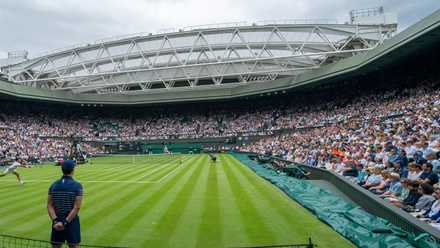
A breakdown of prices has been revealed for classic food and drink items at Wimbledon this year, including the iconic punnet of strawberries and cream, and a glass of Pimms.
Strawberries and cream are the delicacy most synonymous with Wimbledon, and are believed to have been served at the tournament as early as the Victorian era, when they were only available in the country for a few weeks in summer.
The price of this seasonal snack has always remained affordable, but has risen this year by 15p to £2.85.
The classic treat was held at £2.50 for 14 years between 2010 and 2024, rising to £2.70 last year before another slight increase for 2026.

Another British classic strongly associated with Wimbledon is Pimms, a gin-based liquor usually topped with lemonade and filled with fruit and herbs such as strawberries, cucumber, oranges, lemon, and fresh mint.
The summer garden party staple was first served at Wimbledon in 1971 when the tournament opened its first Pimms dedicated bar, and every year well over 80,000 pints are drunk by spectators.
This year, one glass will reportedly set you back £13.45, up £1.20 from last year, meaning a combo of the two Wimbledon classics will cost £16.30.
Price jumps are happening across the beverage menu too, with a pint of Wimbledon’s lager sponsor, Stella, reported at £8.95, up 10p from last year.

Champagne drinkers are not safe from inflation either, with a mini bottle of Lanson Le Rose rising by £1.50 to £31.35, while a full-sized bottle is priced at a whopping £102, up £1.10 from the previous year. However, the price of a refillable bottle of Evian water will remain unchanged at £5.
Wimbledon Spokesperson Explains Pricing

How Much Emma Raducanu Will Earn From Wimbledon This Year Despite Withdrawing Through Injury
The Brit had to withdraw from the Grand Slam the night before it was set to get underway.
A spokesperson for the All England Lawn Tennis Club (AELTC) told The Sun: “Food and drink inflation continues to be a challenge nationwide, and we are not immune.
“However, we pride ourselves on creating a menu that utilises British, seasonal produce to keep costs to a minimum wherever possible, and offering a variety of food and drink to help ensure there is an option for every budget.”

To limit your spending, Wimbledon also allows spectators to bring their own drinks, with each person restricted to the equivalent of either one bottle of wine or Champagne (750ml), two cans of beer/lager (500ml each), or two cans of premixed aperitifs.
The tournament runs from the 29th of June, through to the 12th of July, at the All England Lawn Tennis and Croquet Club in SW19.

Emma Raducanu’s New Boyfriend Suffered Heartbreak When Brother Was Killed

Police foil robbery attack in Uyo, arrest suspect

BREAKING: Bandits kill teacher, abduct students writing NECO exam in Borno

Simi Sanya and Femi Dapson Are Now Legally Married and It Is Beautiful to See

FCT Area Council Election: Live results from polling units

Premier League Set-Piece Goals (2025/2026)
-
 Sports21 hours ago
Statement Released as Lucas Trejo’s Wife and Children Die in Earthquake
-
 Sports2 days ago
Cody Gakpo’s Son Passes Away During Pregnancy, Girlfriend Confirms
-
 Sports15 hours ago
Jesse Marsch’s Full Speech After Canada vs South Africa
-
 Sports2 days ago
2026 World Cup Nation Punish Players By Cancelling Their Flight Home
-
 Sports1 day ago
Spain’s Nico Williams Calls Out Uruguay Ace After He Suffers Injury
-
 Sports1 day ago
Pele and Diego Maradona’s Private Chat About Lionel Messi in 2016
-
 Sports2 days ago
Supercomputer Predicts Entire F1 Race After Qualifying
-
 Sports2 days ago
World’s Richest Tennis Player Refuses to Stay at Same Hotel as Other Players