
Sports
5 Real Madrid Players Unhappy With Xabi Alonso

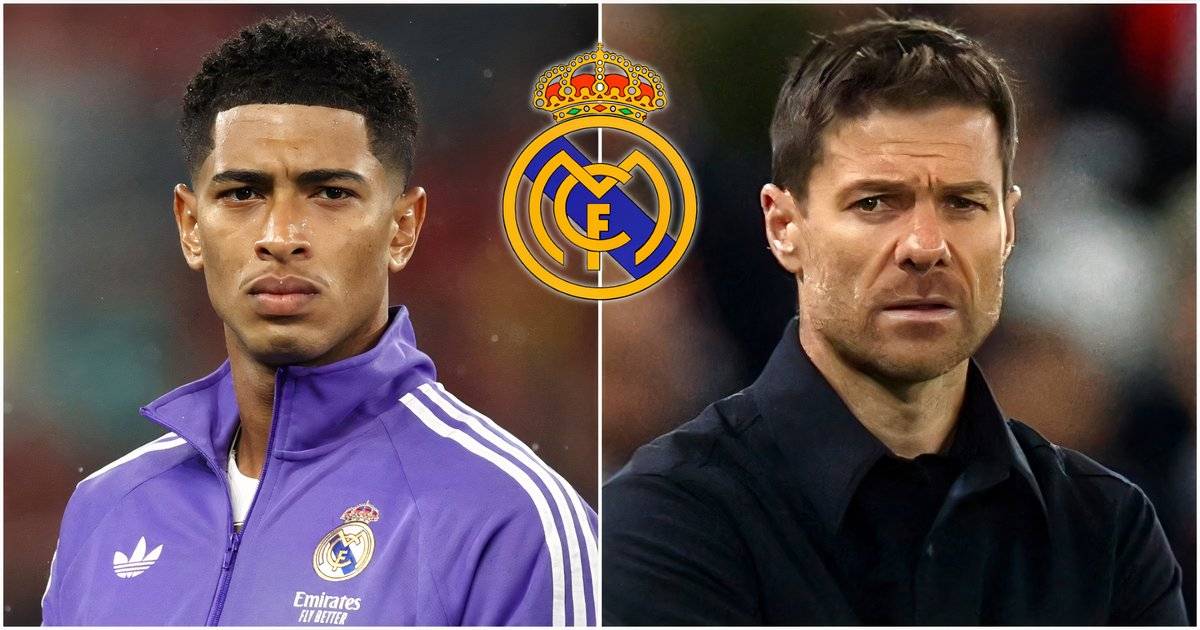
It was all change in the Spanish capital over the summer for Real Madrid as Carlo Ancelotti, who oversaw 234 matches across his second spell in charge of Los Blancos, moved onto pastures new. Xabi Alonso, who had previously worked his magic in Germany with Bayer Leverkusen, replaced the wily Italian – but there are five players reportedly unhappy with the new boss.
As things stand, 12 matches into the 2025/26 campaign, Alonso’s men are sat top of La Liga and three points ahead of their arch-rivals, Hansi Flick’s Barcelona. In fact, Alonso’s maiden four months have gone pretty swimmingly, it must be said, with him winning 10, drawing just once and losing the same number of matches in the Spanish top flight.
In the Champions League, it’s been pretty smooth too. Looking past their 1-0 defeat to Liverpool at Anfield recently, the record winners of the competition – who continued to be spearheaded by the in-form Kylian Mbappe – have won three of their four matches. But Alonso’s methods have not been well received by all members of his star-studded squad, it has been reported.
|
La Liga Top Four – As of 12/11/2025 |
||||
|---|---|---|---|---|
|
Position |
Team |
Played |
W/D/L |
Points |
|
1. |
Real Madrid |
12 |
10/1/1 |
31 |
|
2. |
Barcelona |
12 |
9/1/2 |
28 |
|
3. |
Villarreal |
12 |
8/2/2 |
26 |
|
4. |
Atletico Madrid |
12 |
7/4/1 |
25 |
Five Players Reportedly Unhappy with Xabi Alonso at Real Madrid

Succeeding such a legendary figure in Ancelotti is no easy feat, but Alonso’s pedigree as a classy, albeit inexperienced, manager – combined with his terrific results thus far – would, from the outside looking in, excite those that work with him on a day-to-day basis. That is far from the case, however, and Real’s recent result has uncovered some true feelings.
Last weekend, the Spanish juggernauts dropped points on the road in a goalless draw with 0-0 Rayo Vallecano – and that was despite Alonso fielding a team capable of returning to the capital after picking up all three points at a relative canter. The midfielder-turned-manager urged his side to “keep growing, improving and engaging in positive self-reflection” after the match. “We were ready for a demanding game. It’s always been hard for us [in Vallecas]. Rayo ask a lot of you. They take you to a place where the games have a frenetic rhythm,” he said.
According to popular Spanish outlet Mundo Deportivo, after sharing the spoils with their city rivals, there are a quintet of players who are all struggling to come to terms with Alonso’s style of management – and that includes goalkeeper Thibaut Courtois, the fleet-footed Vinicius Jr and Jude Bellingham, the club’s talismanic presence in midfield. Journalist Mario Caledron wrote:
“It was clear that several players, such as Vinicius Jr, [Jude] Bellingham and [Thibaut] Courtois, weren’t entirely happy with the coach’s decisions regarding playing the ball out from the back.”

With the scoreline poised at 0-0 and Los Blancos pushing to open and close the scoring, the above triumvirate were unconvinced by his set-up. Caledron continued, “Others, like Fede Valverde and [Eduardo] Camavinga, who haven’t secured a regular starting spot and move around to different positions, also seem disconnected from Xabi Alonso.”
Why many in the Real squad are unhappy with Alonso’s methods is because the Spaniard – widely regarded as one of the best young managers in world football – has set the cat among the pigeons in training. He is, according to Caledron, much more ‘demanding’ of his players compared to Ancelotti at the club’s training base.
The aforementioned report has claimed that he is doing everything in his power to control the sessions by using an array of methods – including the use of video analysis, drones and in-depth tactical work – to ensure that his men are in tip-top condition when they eventually take to the grass in La Liga and Champions League fixtures.
Some players, though, have a preference for the much-looser approach of Ancelotti and Zinedine Zidane – two former managers who saw their relatively chilled attitudes result in the Champions League success. Up next for La Liga’s league leaders, following the international break, is a trip to 11th-placed Elche as they look to get back to winning ways domestically.

We’ve all seen it; countless footballers across the world love to sport wrist tape when they play and nobody has ever really explained why.
Everyone from Phil Foden, Karim Benzema, Neymar — and even Jamie Vardy — have been known to do so and many more can be seen week in, week out doing the same.
But the reason isn’t always the same: here’s what’s actually going on.
Reason 1: Injury Prevention

Safety first, there are multiple ways in which a player can succumb to injuries of the wrist and hands. The high-energy, high-contact nature of the sport sees players regularly come into contact with one another, risking damage to the joints, wrists and fingers.
An expert voice — former Cardiff City physio Ben Warbuton — explained that there are two functions: preventive and protective. One helps to reduce the risk of injury from falling, whilst it can also help reduce extension of the wrist too.
Reason 2: Playing Through Existing Injuries

One high-profile example of this is Manchester City‘s Foden. Having fractured his hand in early 2024, he became synonymous with it throughout their Premier League title run, across Euro 2024 and into the following campaign.
Referring back to Warburton’s previous comments, “Taping can give reassurance after an injury. This can give massive confidence to a player, making them feel they can play aggressively — and should they fall, their wrist is slightly protected.”
Neymar was a prime example. He used zinc-oxide athletic tape to support his wrist joints. As one of the most fouled players in football history, it was certainly a protective measure.

Why Cristiano Ronaldo Paints His Toenails Black
Football fans were baffled when they spotted Cristiano Ronaldo’s black toenails, but there’s a very good reason he paints them…
Reason 3: Psychology and Rituals

For some players, it is akin to a pre-match ritual. Most players have some kind of personal routine. From a physical standpoint, it may not be required if they have no current injury or risk, but the routine itself can provide a sense of focus and readiness.
One famous ritual – or good luck charm – was Vardy’s blue wrist strap. Originally there to help him recover from two broken bones, delaying surgery ensured he had to wear the lightweight cast, but it coincided with a generational run of form that saw him match a goalscoring record before making history with the 2015/16 title win.
Reason 4: Goalkeepers and Tactics

One position that hasn’t been referenced yet is the one that typically utilises it the most: goalkeepers. As already covered, protecting fingers and wrists is a key reason for tape, but it takes on added importance for keepers to combat the force of shots and awkward dives.
It can also be tactical; they can also place notes on their tape for penalty situations. That’s if it hasn’t been printed off and stuck to their water bottle, of course.
Reason 5: Style

This final one certainly lies within personal preference. Sometimes the look is all about aesthetics rather than function. For some, it forms part of a visual identity, or a way to differentiate from the crowd.
Others, such as Cristiano Ronaldo and Luis Suárez, looked to hide certain objects such as a fitness tracker and a good luck bracelet under the strapping.

England’s next World Cup opponents will be the DR Congo as Thomas Tuchel’s squad look to advance from the Round of 32. England and the DR Congo will face off for the very first time, with the encounter taking place in Atlanta, Georgia.
England remain one of the tournament favourites after qualifying from the group stage unbeaten. But does the African nation pose a threat to the Three Lions’ World Cup crusade?
Who are DR Congo?

|
Country: |
Democratic Republic of Congo |
|---|---|
|
Continent: |
Africa |
|
Population: |
124 million |
|
Capital City: |
Kinshasha |
Formerly named Zaire, the Democratic Republic of Congo is the second-largest country in Africa, with a population of approximately 124 million. The country was renamed the DR Congo in 1997 after President Mobutu Sese Seko was overthrown by rebel forces.
The country’s relatively new name is in reference to the great Congo River that flows through the country. The river’s name is derived from the historic African Kingdom of Kongo and the indigenous Bakongo people who lived in the region.
⚽
England World Cup Quiz
You scored
out of 20
DR Congo Record at World Cup 2026
|
DR Congo 2026 World Cup Record |
||
|---|---|---|
|
Date |
Result |
DR Congo Scorer(s) |
|
17/6/2026 |
Portugal 1-1 DR Congo |
Yoane Wissa |
|
24/6/2026 |
Colombia 1-0 DR Congo |
None |
|
28/6/2026 |
DR Congo 3-1 Uzbekistan |
Yoane Wissa (2), Fiston Mayele |
Who are the Best DR Congo Players?

Northern-based England fans will be all too familiar with two of the DR Congo’s biggest threats. Newcastle striker Yoane Wissa is rediscovering his form after an injury-plagued start to life on Tyneside. He has netted three times in the World Cup already, making him the top scoring African player in the group stage.
Noah Sadiki was a pivotal part of Sunderland’s excellent 7th-place finish in the Premier League, earning them Europa League qualification. An energetic and forward-thinking midfielder, expect him to link well with Wissa.
DR Congo’s rearguard offers significant top-level pedigree too. Team captain and all-time leading appearance maker Chancel Mbemba is incredibly experienced at club and international level. The 31-year-old previously played for Newcastle as part of the squad that won the Championship in 2017. He is supported ably by West Ham’s Aaron Wan-Bissaka and Burnley’s Axel Tuanzebe in defence.
But the wildcard for the DR Congo is their veteran striker Cedric Bakambu. The 35-year-old is well travelled and has previously won the Golden Boot in both the Chinese and Greek Super Leagues. Bakambu contributed four goals in World Cup qualifying and is now just one goal behind the country’s all-time leading goalscorer, Dieumerci Mbokani.
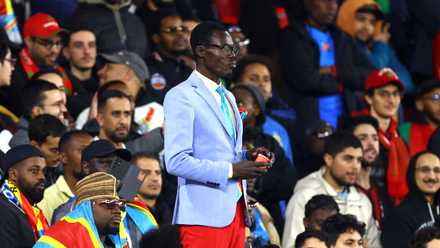
The Reason Why DR Congo Fan Stood Stood Completely Still During AFCON Matches
The viral supporter stood motionless in each of DR Congo’s five matches throughout this year’s AFCON.
DR Congo Manager and Style of Play

- Manager: Sebastien Desabre
- Style of Play/Tactics: 5-3-2 or 4-4-2
Manager Sebastien Desabre is well-versed in international football, having coached both Uganda and the DR Congo during a 20-year managerial career. The Frenchman guided the DR Congo to the semi-finals of the 2023 Africa Cup of Nations. He also led them to impressive victories over Cameroon and Nigeria in World Cup qualification.
Desabre has shown tactical fluidity during the World Cup. The DR Congo adopted a five-man backline against Portugal and Colombia, earning a well-deserved point against Roberto Martinez’s side. But for their 3-1 win over Uzbekistan, Desabre was more offensive, opting for a 4-4-2.
With 29 clean sheets in their previous 57 games under Desabre, the African nation can soak up the pressure when required. This has paired well with a strong counter-attacking style boosted by the pace of Wissa and Sadiki.
World Cup on GIVEMESPORT

Lionel Messi and Cristiano Ronaldo have just become the first two men in history to play at six World Cups. The natural next question writes itself: could there be a seventh?
Their chances are low, but it isn’t impossible, and both men have left enough daylight for the question to be asked and to keep the hopes alive. The two careers have run in parallel for two decades, and now share this milestone in the same tournament.
Four years is a long time at the best of times, let alone in your forties, and will both players be able to hold on and feature on the world’s biggest stage again in four years?
Cristiano Ronaldo Issues 9-Word Response About Lionel Messi as He Storms Out of Interview
Ronaldo issued a nine-word response as he’s asked about Messi – while storming out of the interview
Will Lionel Messi Play at the Next World Cup?

Messi has been typically professional and guarded on the subject. Asked directly about 2030 after his Algeria hat-trick, he laughed off the idea before more considered answers followed later in the tournament.
Pressed again after his Austria performance, in which he became the World Cup’s all-time leading scorer, he settled into a familiar noncommittal stance, claiming he isn’t thinking that far ahead.
He told reporters: “I don’t know. The truth is, I’m not thinking about that right now.”
“It seems a bit far off, but as I said, I’m living one day at a time and focused on the present. I will continue for some time, as long as I can contribute, feel good physically, and help my teammates, then I will keep playing.”
It’s the kind of answer you expect from a professional, media-trained footballer. The kind of answer that commits to nothing whilst also ruling out nothing either.
How Old Will Messi Be at the Next World Cup?
Messi is 39 during this tournament, not that it has had an effect on his performances. By the 2030 finals, he will be 43. There is a genuine pull factor for the 2030 World Cup: it is the centenary edition, and as part of celebrations Argentina will host a one-off match in Buenos Aires, a country that hasn’t staged a World Cup game since 1978. So for a player who has never been able to play in a World Cup on home soil, that could be a real incentive for him to keep going.
However, his Inter Miami contract does expire in 2028, and it remains to be seen whether he will extend, move clubs, or call time altogether on his stellar career. And surviving and playing in the MLS is a lot different to playing in a World Cup campaign at the age of 43.
Will Cristiano Ronaldo Play at the Next World Cup?

Ronaldo has been more open and pessimistic about his own timeline. Speaking at a Tourism Summit in Riyadh, when asked whether this would be his last World Cup, he said: “Definitely yes. I will be 41 years old, and I think this will be the moment in the big competition. It’s probably one or two more years. I’ll still be at the game.”
His contract at Al Nassr runs out in 2027, with reports circulating about an executive role at the Saudi Club upon its expiration.
⚽
World Cup History Quiz
You scored
out of 20
What Age Will Ronaldo Be at the Next World Cup?
The case against Ronaldo at 2030 is steeper than Messi’s. He’d be 45 by then, Portugal’s attack has begun to lean less on him for goals than it once did, and he has repeatedly framed this tournament as a farewell. However, you couldn’t put it past Ronaldo to keep playing until 2030.
The ex-Real Madrid forward has confirmed he wants to keep playing until he reaches 1,000 career goals. Whilst he isn’t far away from that milestone, he might need an extended contract to reach the target, and he may well keep going until 2030 to play in one last tournament, especially considering Portugal are one of the hosts.
Who Are the Oldest Players to Play at a World Cup?

The record book offers some perspective on just how rare this would be. Egyptian goalkeeper Essam El Hadary holds the record, turning out for Egypt against Saudi Arabia in 2018 at 45 years and 161 days, marking the occasion with a penalty save.
Colombia’s Faryd Mondragon is next, coming on as a substitute in 2014 at 43 years and 3 days, in what was also his farewell appearance. Cameroon’s Roger Milla remains the record-holder among outfield players, being 42 years and 39 days when he scored against Russia in 1994.
The Verdict

Most names on the list are goalkeepers, bar one. Milla’s record still sits three years younger than Ronaldo would be if he was to make it. History suggests longevity at this level belongs almost exclusively to those in the posts, which is precisely why one more World Cup campaign remains a long shot for two of the world’s greatest ever players.
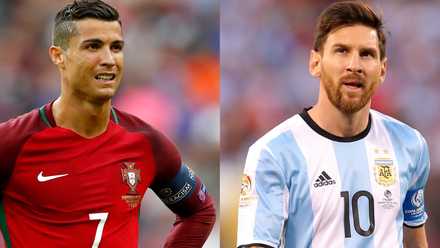
Cristiano Ronaldo’s Eye-Opening Reaction to Lionel Messi’s Argentina Retirement in 2016
Messi announced his international retirement in 2016, sparking a response from his long-term rival Ronaldo.


2027: Opposition party members form coalition to support APGA Reps candidate in Anambra
Delta Assembly declares lawamker’s seat vacant for defecting from APC to NDC
Reason Footballers Wear Wrist Tape

Simi Sanya and Femi Dapson Are Now Legally Married and It Is Beautiful to See

FCT Area Council Election: Live results from polling units

Premier League Set-Piece Goals (2025/2026)
-
 Sports9 hours ago
Virgil van Dijk Slammed For Comments After Netherlands’ World Cup Exit v Morocco
-
 Sports11 hours ago
Zlatan Ibrahimovic Blames Netherlands’ Shock World Cup Exit on Ronald Koeman
-
 Sports2 days ago
Jesse Marsch’s Full Speech After Canada vs South Africa
-
 Sports7 hours ago
Carlo Ancelotti Explains Why He Didn’t Celebrate Brazil’s Winner v Japan
-
 Sports8 hours ago
Kevin Pietersen Causes Stir With Tweet About His International Cricket Retirement
-
 Sports1 day ago
How Much Emma Raducanu Will Earn Despite Withdrawing Through Injury
-
 Sports1 day ago
Roger Federer Names His Top 5 Tennis Players of All Time
-
 Sports20 hours ago
FIFA Make Decision on Investigating 2026 World Cup ‘Match-Fixing’