
Business
FG targets stronger gas-to-power linkage to boost electricity supply

By Obas Esiedesa
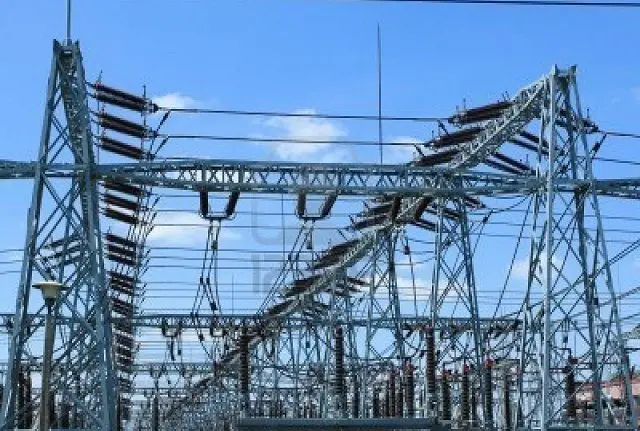
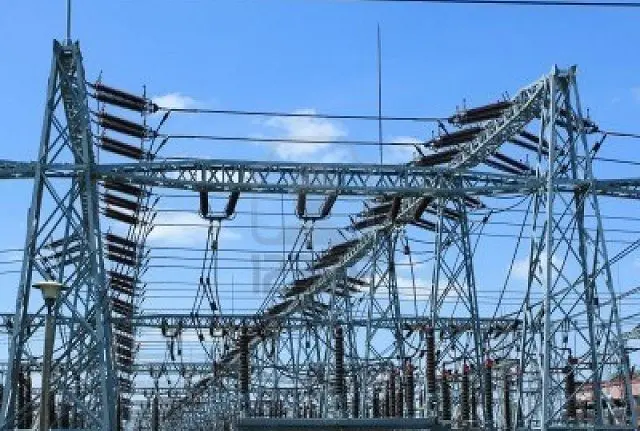
The Federal Government (FG) has reaffirmed its commitment to strengthening Nigeria’s gas-to-power value chain as part of efforts to expand electricity supply, drive industrial growth and reduce energy poverty.
Minister of State for Petroleum Resources (Gas), Ekperikpe Ekpo, stated this while delivering his address at the National Gas Day session of the 9th Nigeria International Energy Summit (NIES 2026).
Ekpo said natural gas currently accounts for over 70 per cent of Nigeria’s on-grid electricity generation, describing it as the backbone of the country’s power sector and a critical enabler of economic development.
He stated: “With proven natural gas reserves of over 210 trillion cubic feet, Nigeria is uniquely positioned to leverage gas not just as a resource, but as a catalyst for power delivery, industrialisation and national growth”.
He noted that while Nigeria’s gas reserves are among the largest globally, the real measure of success lies in the ability to translate those resources into megawatts delivered to homes, industries, hospitals and schools.
Ekpo stated that the federal government has prioritised gas as a transition fuel to guarantee reliable electricity supply while supporting climate commitments.
He said, “As a cleaner and more affordable energy source, gas enables us to expand electricity access, deepen industrialisation and reduce energy poverty in a pragmatic and development-focused manner”. The minister disclosed that one of the major breakthroughs recorded under the current administration was the resolution of longstanding gas-to-power debts owed to gas producers, following presidential approval and ratification by the National Economic Council (NEC).
He explained that the settlement of the legacy debts has restored confidence in the domestic gas market and is already unlocking fresh investments in gas supply for power generation.
“For decades, unpaid gas-to-power obligations discouraged investment and constrained supply. Resolving this issue has removed a major bottleneck and laid the foundation for a more sustainable gas-to-power framework,” Ekpo said.
The post FG targets stronger gas-to-power linkage to boost electricity supply appeared first on Vanguard News.
By Yinka Kolawole, with agency report
The International Monetary Fund (IMF) has disclosed that the Federal Government (FG) failed to capture public expenditure equivalent to about two per cent of Nigeria’s Gross Domestic Product (GDP) in recent national budgets, creating a mismatch between the country’s reported fiscal deficit and its actual financing needs.
IMF’s Resident Representative in Nigeria, Christian Ebeke, made the disclosure on Wednesday during a meeting with business executives in Lagos.
Vanguard Newspaper’s findings indicate that in 2025, Nigeria’s nominal GDP was N441.5 trillion. Government expenditure accounted for approximately 11.73% of this GDP. However, an additional N8.83 trillion in public spending—equivalent to about 2% of the GDP—was unrecorded in official budgets, distorting the country’s actual fiscal deficit and borrowing needs
According to Ebeke, the omission has made Nigeria’s fiscal deficit appear lower than its true borrowing requirement, as some capital expenditure was excluded from budget documents and implementation reports.
Ebeke explained that the unreported spending was largely tied to major government projects executed outside the budget framework, making it more difficult to accurately assess the country’s fiscal position and the scale of public investment.
“So far, we think that there are about two per cent of GDP of expenditure that were not reported that should be reported and should be recorded, so that this statistical discrepancy will disappear,” he said.
He noted that incomplete fiscal reporting also complicates coordination between fiscal and monetary authorities, as policymakers may be working without a complete picture of the government’s financing obligations.
The IMF official said the Nigerian authorities had begun addressing the gap by revising budget legislation to accommodate previously unrecorded expenditure. However, he stressed that updated budget implementation reports would be required to fully reflect the changes.
Ebeke emphasised that greater fiscal transparency is critical to strengthening public financial management, warning that off-budget spending raises concerns over procurement practices, accountability and oversight.
His remarks come on the heels of the IMF’s latest Article IV consultation on Nigeria, which commended the Federal Government’s macroeconomic reforms for improving economic stability and boosting investor confidence.
The Fund, however, cautioned that while the reforms have stabilised the economy, they are yet to deliver broad-based improvements in living standards and remain vulnerable to external shocks, including the ongoing conflict in the Middle East.

By Yinka Kolawole
The Lagos Chamber of Commerce and Industry (LCCI) has urged the Nigeria Revenue Service (NRS) to immediately extend the June 30, 2026 deadline for filing Company Income Tax (CIT) returns by one month.
This, according LCCI, follows what it saw as widespread technical failures on the newly deployed Rev360 tax platform that left thousands of companies unable to comply with the statutory deadline.
In a statement, yesterday, Director General of LCCI, Dr. Chinyere Almona, argued that while some businesses waited until the final day to file their returns, the prolonged disruption of the portal on the deadline day made compliance impossible for many taxpayers.
According to her, Rev360, which was launched barely two months ago, suffered prolonged downtime on June 30, triggering login failures, validation errors and unsuccessful submissions as companies raced to meet the filing deadline.
“The failure was that of the platform, not the taxpayers,” she said, stressing that deploying a new digital tax system shortly before a major compliance deadline inevitably comes with operational challenges, particularly under heavy traffic.
Almona noted that the predictable surge in last-minute filings exposed the platform’s inadequate capacity, leaving many businesses locked out of the system at a critical period.
She called on NRS to take three immediate steps to restore confidence in the tax administration process: extend the CIT filing deadline by one month; waive all penalties for companies that attempted to file on or before June 30 but were prevented by the system outage; and urgently strengthen the capacity and stability of the Rev360 platform before the next filing cycle.
The LCCI DG said a prompt announcement of the deadline extension and penalty waiver would calm growing anxiety within the business community and prevent unnecessary disputes arising from a failure beyond taxpayers’ control.

By Providence Ayanfeoluwa
The Africa Association of Professional Freight Forwarders and Logistics of Nigeria (APFFLON) has challenged the Minister of Power, Joseph Tegbe, to translate recent assurances on electricity sector reforms into visible improvements in power supply.
The group maintained that Nigerians can no longer afford the economic consequences of persistent electricity failures.
In a statement signed by its National President, Otunba Frank Ogunojemite, on Tuesday, APFFLON described the electricity crisis as one of the biggest impediments to Nigeria’s economic growth, industrialisation and investment drive. According to him, no nation can build a globally competitive economy while grappling with chronic power shortages.
He stated: “No nation can build a globally competitive economy while operating in darkness. Stable electricity is not a luxury—it is the foundation upon which industries grow, investors gain confidence, jobs are created and businesses flourish.
“The cost of inadequate electricity is being paid daily by manufacturers, freight forwarders, importers, exporters and ordinary Nigerians. Businesses are shutting down, investors are relocating to countries with more reliable infrastructure, and unemployment continues to rise.”
Ogunojemite lamented that businesses across the country still rely heavily on diesel and petrol generators to sustain operations, a situation that has significantly increased production costs and weakened the competitiveness of Nigerian enterprises. He noted that the cost of doing business in Nigeria remains among the highest on the African continent, largely because of inadequate electricity supply.
“The Minister has an opportunity to leave a lasting legacy. Nigerians will judge this administration not by the number of conferences held or policies announced, but by whether electricity becomes stable, affordable and accessible”.


Liverpool Now ‘Really Keen’ to Sign Arsenal Target Bradley Barcola

2027: Oyo APC guber candidate Alli unveils Adedeji as running mate

Troops repel ISWAP terrorists’ attack in Borno

Simi Sanya and Femi Dapson Are Now Legally Married and It Is Beautiful to See

FCT Area Council Election: Live results from polling units

Premier League Set-Piece Goals (2025/2026)
-
 Sports1 day ago
Rayan Cherki Appears to Ignore Didier Deschamps After 3-0 Win vs Sweden
-
 Sports2 days ago
Diego Maradona Slammed New FIFA and USA World Cup Rule in 2018
-
 Sports21 hours ago
Gary Neville Names Only Team That Can Stop France From Winning the 2026 World Cup
-
 Sports2 days ago
Lamine Yamal Names 3 Most Impressive 2026 World Cup Players
-
 Sports11 hours ago
VAR Expert Casts Clear Verdict on Folarin Balogun Red Card vs Bosnia
-
 Sports2 days ago
‘Real Reason’ Why Van Dijk Didn’t Take Penalty vs Morocco
-
 Sports1 day ago
Serena Williams Slammed For Actions After Losing to Maya Joint
-
 Sports19 hours ago
Roy Keane Names the Two Teams That Will Contest the 2026 World Cup Final