
Business
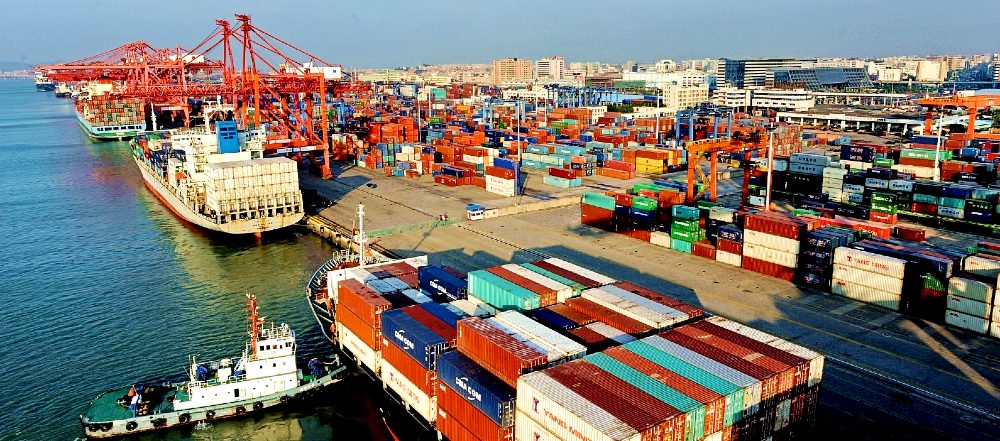
FG issues ultimatum to maritime agencies on performance


By Godwin Oritse
The Federal Government (FG) has issued a strong warning to heads of agencies under the ministry, demanding strict accountability and measurable results.
Minister of Marine and Blue Economy, Adegboyega Oyetola, issued the warning during the signing of performance bonds with heads of maritime agencies at the Ministerial Management Retreat, held alongside the 2026 first-quarter stakeholders’ engagement in Lagos, yesterday, where he emphasised the need for performance-driven governance.
“Let me emphasise that all Departments and Agencies under the Ministry must remain firmly focused on delivering tangible results,” he said.
In a statement by Dr. Bolaji Akinola, Special Adviser to the Minister, Oyetola noted that the performance bonds are binding commitments that will be closely monitored and rigorously evaluated.
Oyetola reiterated the need for data-driven decision-making, robust monitoring and evaluation frameworks, and alignment with the Ministry’s strategic objectives.
The agencies include the Nigerian Ports Authority, Nigerian Maritime Administration and Safety Agency, Nigerian Shippers’ Council, National Inland Waterways Authority, Maritime Academy of Nigeria, and the Council for the Regulation of Freight Forwarding in Nigeria.
The post FG issues ultimatum to maritime agencies on performance appeared first on Vanguard News.

By Etop Ekanem
Guinness Nigeria Plc has reaffirmed its confidence in the strength and future of its business, as the Company enters a new phase of growth underpinned by improved profitability, a significantly stronger balance sheet and continued investment in its brands, manufacturing capabilities and route to market.
The company shared this outlook during its first half 2026 (H1’26) Investors and Analysts Call, where Managing Director/Chief Executive Officer, Girish Sharma, Finance and Strategy Director, Mayank Kabra, and Corporate Relations and Legal Director, Rotimi Odusola, provided investors and analysts with an update on Guinness Nigeria’s financial performance, strategic priorities and outlook.
Guinness Nigeria delivered a strong performance for the six months ended 30 June 2026, reporting approximately N265 billion in revenue, while profit after tax grew 53 percent to N25.3 billion.
The performance reflects the company’s continued focus on driving quality growth while improving operational efficiency and strengthening its financial position.
A key highlight of the period was Guinness Nigeria’s significant progress in deleveraging and rebuilding its balance sheet. Shareholders’ equity increased from N43.3 billion to N64.2 billion, while net debt declined substantially from approximately N37 billion to about N19 billion.
Speaking during the call, Sharma said the company’s progress reflected a deliberate focus on building a stronger and more resilient business.
He stated: “We have made significant progress in strengthening our financial position while continuing to invest in the growth of the business. The days of operating with a weak balance sheet are behind us. Today, we are in a much stronger position to pursue growth, improve returns and create sustainable value for our shareholders and other stakeholders.”

The Federal Government (FG) is set to introduce performance scorecards for operators across Nigeria’s electricity value chain, with underperforming distribution and generation companies (DisCos and GenCos) to face sanctions while high-performing operators will be rewarded.
Meanwhile, Nigerians spent an estimated N16.5 trillion on self-generated electricity in 2023, compared with about N1 trillion in revenue generated by the national grid, underscoring the enormous economic cost of Nigeria’s unreliable power supply.
The Minister of Power, Joseph Olasunkanmi Tegbe, disclosed this in a policy brief presented by his Special Adviser, Martins Olajide, at the Nigerian Economic Summit Group (NESG) Industrialisation and Competitiveness Forum on Wednesday.
Tegbe said the ministry would introduce performance scorecards for power sector personnel, DisCos and GenCos as part of efforts to strengthen accountability and enforce clear performance standards across the electricity value chain.
According to him, the framework will reward excellence and penalise underperformance, thereby restoring discipline and improving service delivery in the sector.
He also announced plans for tariff reforms aimed at protecting vulnerable consumers while ensuring that electricity supply obligations are met across the value chain.
The minister said the measures formed part of the ministry’s eight-point agenda to stabilise the power value chain, restore market discipline and strengthen governance.
He noted that Nigeria currently has 13,625 megawatts (MW) of installed grid capacity, but average daily available capacity is only 4,854MW, leaving about 62 per cent of installed capacity idle.
This, he said, was occurring despite realistic peak electricity demand of about 20,000MW.
“The power arithmetic does not add up,” Tegbe said, stressing that the persistent gap between available supply and demand had forced households and businesses to increasingly rely on self-generation.
He stated: “Nigerians spent an estimated N16.5 trillion on self-generated electricity in 2023, compared with about N1 trillion in revenue generated by the national grid.”
Citing World Bank estimates, Tegbe said inadequate electricity supply costs the Nigerian economy about $25 billion annually, equivalent to between five and seven per cent of Gross Domestic Product (GDP).
“Improving the performance of electricity operators and reforming tariffs were critical to creating a reliable power market capable of supporting industrialisation and boosting productivity,” he stated.
The minister said the government would also strengthen existing power infrastructure and improve the utilisation of assets across the value chain.
According to him, the ministry plans to enhance the Lagos, Enugu-Port Harcourt and Abuja-Kaduna-Kano transmission corridors, with the Lagos corridor serving as a proof of concept for the broader grid stabilisation programme.

The Nigeria Ports Economic Regulatory Agency (NPERA) has formally commenced operations, ushering in a new era designed to make Nigeria’s ports more transparent, competitive, predictable and efficient.
The commencement follows President Bola Ahmed Tinubu’s assent to the Nigeria Ports Economic Regulatory Agency Bill, 2026, which established NPERA as the statutory authority responsible for the economic regulation of the nation’s ports.
Chairman of the NPERA Governing Board, Dr. Ibrahim Shema, traced the evolution of port economic regulation to the establishment of the Nigerian Shippers’ Council in 1978 and the concessioning of port terminals in 2006. He noted that the Shippers’ Council was subsequently designated as the interim Port Economic Regulator in 2014. Under that arrangement, the Council undertook key economic regulatory functions, including tariff regulation, dispute resolution and protection of port users.
Shema described the legislation as a fundamental reform of Nigeria’s port governance, saying the new agency represents the culmination of nearly five decades of institutional evolution in port economic regulation.
Shema said NPERA’s emergence would not result in institutional rivalry with the Nigerian Ports Authority (NPA), which retains responsibility for port infrastructure and its landlord functions.
“This is not about creating competing authorities. It is about establishing a coherent system in which institutions work together, each within its statutory responsibilities,” he said.
According to him, NPERA will focus on reducing uncertainty and unnecessary regulatory barriers, while promoting faster cargo movement and strengthening Nigeria’s competitiveness as a trading and investment destination.
He identified transparency, fairness, predictability, efficiency and accountability as the five core principles that will underpin the agency’s regulatory philosophy.
On port tariffs, Shema said the new regulatory framework would enable port users to better understand the basis for regulated charges, while service providers would have clearer expectations regarding compliance and regulatory requirements.
Also speaking, the Executive Secretary/CEO of NPERA, Dr. Pius Akutah, expressed optimism that the new law and agency would, within the next one to two years, significantly clarify the regulatory environment governing Nigeria’s ports.
Akutah said the agency would work towards ensuring fair pricing, promoting competition, improving trade facilitation and strengthening government revenue.
He added that the NPERA Act provides the agency with stronger powers to improve commercial dispute resolution and protect the welfare and interests of port users and other stakeholders.
For port users and operators, the new framework is expected to bring greater clarity around tariffs, charges, licensing, service standards and commercial disputes, while supporting a more predictable business environment.


Why I left Kwara APC for PDP — Mustapha

Alisson Won’t Wear Captain’s Armband Despite Being Vice-Captain

Fans Claim ‘Electric’ Tzolis Ended Martinelli’s Career

Meaning Behind Egypt Manager’s ‘X’ Gesture vs Argentina

Premier League Set-Piece Goals (2025/2026)

Simi Sanya and Femi Dapson Are Now Legally Married and It Is Beautiful to See
-
 Sports2 days ago
Erling Haaland Reacts to Real Madrid’s Bizarre Bernardo Silva Video
-

 Metro2 days ago
Lagos: EFCC arraigns two over alleged sale of bank credentials for $15,000
-
 Sports2 days ago
Ex-WWE Superstar Dawn Marie Reveals Real Reason She’s Making Adult Content
-

 Sports1 day ago
Man Utd in Talks to Sign Barcelona Star Alejandro Balde
-
 Politics2 days ago
2027: I pity Tinubu because they’ll say he rigged after he wins - Sowunmi
-
 Sports1 day ago
Romano Reveals Two More Signings Man Utd Signings Could Make After Baleba
-
 Politics2 days ago
‘Obasanjo has no electoral value’ – Atiku
-
 Sports1 day ago
Roy Keane Tips Bruno Fernandes For 2026-27 Premier League Award