
Health
List of drugs for patent medicine store in Nigeria


List of drugs for patent medicine store in Nigeria.
What is the difference between a pharmacy and a patent medicine store?
In a patent medicine store, you can only get over-the-counter medications like aspirin, paracetamol, etc but at the pharmacy, you can not only get the OTC but also some restricted medications on prescription.
Secondly, pharmacist is available at the pharmacy for counselling , and advice one on how to take medications and when to take it.
Many persons especially those interested in setting up a chemist always write me to ask the drugs permitted by law in patent medicine stores. Patent medicine dealers are a key part of the health care system and their importance can’t be ignored. Even though they most times go beyond their boundaries, they are the ones set up chemist shops in most rural communities where community pharmacies have not been able to penetrate. They are very close to the local populace.
To set up a patent medicine store in Nigeria, you need to pay a certain amount day #200,000 and register with the Patent Medicine Dealers of Nigeria for a licence.
Patent medicine store is the same thing as a chemist shop and this article also covers the list of drugs to start a chemist shop as you may have googled it.
Pharmacy has a licence for supplying and selling of control drugs while patient store are restricted to a limited drugs.
You want to open a patent medicine store in Nigeria? Check the list of drugs you are permitted by law to stock in your patent drug store or chemist shop.
List of drugs for patent medicine store in Nigeria
Analgesics and antipyretics
Acetylsalicylic acid (Aspirin)- capsules/tablet 300mg
Paracetamol – capsules/tablet- 125mg (Paediatric) 500mg adults
syrups/suspension- 125mg/5ml (60ml/100ml)
Ibuprofen capsules/tablets- 200mg, 400mg
Diclofenac tablets
Antacid Drugs
Magnesium trisilicate mixture – 100ml-200ml
Magnesium trisilicate compound tablets
Aluminum hydroxide, mixture/tablets
Antidiarrhea drugs
Low osmolarity oral rehydration salts
Zinc (sulphate)+ Low osmolarity oral rehydration salts
Loperamide
imodium
Anthelmintic Medicines
Levamisole tablets/syrup- Tablets 40mg, Syrup 40mg/5ml
Pyrantel – Tablets/syrup
Tablets, 125mg
Syrup 125mg/5ml
Albendazole
Mebendazole
Antimalarial medications
Chloroquine- capsules/tablets/syrup
Capsules/tablets 50mg base (Pediatric) 150m (adult)
Pyrimethamine 25mg plus Sulphadoxine (fansidar) 500mg tablets/ syrup (per 5ml)
Pyrimethamine Tablets 12.5mg, 25mg
Artemisinin- combination therapy (ACT)
Artemether +Lumefantrine
Artesunate +sulphadoxine+Pyrimethamine
Quinine
Antiseptic and disinfectant solutions
Benzoin compound tincture
Chloroxylenol 5% solution (for dilution)
Dichloroxylenol plus chlorophenol soap solution
Iodine solution 30ml, 60ml
Methylated spirit 50m, 100ml
Sodium hypochlorite (1-10%) , 250ml, 500ml
Savlon
Povidone Iodine
Anti-anemia drugs – hematinics
Ferrous salts- capsules/tablets – as fumarate, gluconate, sulphate, succinate, fesolate
Ferric ammonium citrate mixture 400mg/5ml
Folic acid tablets 5mg
Antipruritic and astringent drugs
Calamine lotion
Calamine plus zinc oxide lotion/plaster
Loratadine tablets
Piriton tablets and syrup
Cold relief preparations
Chlorpheniramine maleate tablets 4mg/10s
Syrup – 2mg/ 5ml
Diphenhydramine preparation
Contraceptives
C.ondoms
Forming tablets -spermicides
Emergency contraceptive pills like postpill, postinor, plan b
Dermatological (anti-infective) drugs
Gentian violet tincture 1%
Silver sulphadiazine cream 1%
Antiseptic and disinfectant solutions
Wound Dressing materials
Absorbent gauze
Cotton /crepe bandages
Cotton wool
Elastic plaster dressings
Dusting powder
Zinc, starch and talc dusting powder with or without menthol
Antifungal drugs.
Benzoic acid (6%) plus salicylic acid ( 3% ) ratio 2: 1 cream ,
Clotrimazole cream, ointment 1%; aerosol spray 1%; dusting powder 1%
Funbact A, baby Tribotan, dermazin , skineal, etc
keratolytic and keratoplastic drugs
coal tar solutions/ ointment
coal tar ointments USP
salicylic acid, ointment /solution
ointment 2.5% solutions , 12% in flexible collodion
Mouthwashes
Hexetidine solution 0.1%
Non-specific (general) antidotes
Charcoal, activated
Powder /granules /tablets
Powder /granules 5mg/sachet
Tablets 1g
Nutritional drugs see vitamins, minerals, and nutritional drugs
Magnesium hydroxide mixture- hydrated magnesium oxide, 550mg/10ml
Magnesium sulphate
Granules/sachets/mixture
Granules/sachet 5g. mixture 4g/10ml
Senna Granules/ tablets
rubefacients and inhalers
Methyl salicylate compound preparations
Balms, creams, embrocation’s
Liniments, rubs, ointments, Oils and inhalers
Scabicides and pediculicides
Benzyl benzoate emulsion 25%
Monosulfiram solution/soap 25%
Throat antiseptic preparation
Dequalinium hydrochloride- 250mg lozenges
Domiphen bromide (0.5mg)
Hexetidine mouthwash/gargle 0.1%
Menthol plus eucalyptus oil plus camphor plus thymol (0.207%plus 0.069% plus 0.0007% respectively
Menthol plus ascorbic acid plus anhydrous citric acid (0.09% plus 2.9412% plus 0.8332 respectively ) lozenges
Vitamins, minreals, and nutritional drugs
Ascorbic acid (vitamin C ) – tablets
Tablets, 100mg, Syrup 100mg per 5ml
B complex vitamins
Capsules/tables/syrup
Cod liver oil – capsules, syrup
Multivitamins- capsules/ tablets/ syrup/ drops
Calcium salts
Calcium gluconate tablets, 500mg
Calcium lactate – tablets , 300mg
Folic acid- tablet 5mg
Glucose powder for oral use.
Diabetics
Metformin
Glucose test strips
This article is the intellectual property of www.nimedhealth.com.ng

Why you feel dizzy when you stand up?
A young, healthy patient asked me: “Doc, sometimes when I stand up from the bed too fast, my vision goes completely black for two seconds and I get dizzy. Am I having a mini-stroke?”
No, it is actually proof that your nervous system is working perfectly.
The exact neurovascular cascade behind why your vision blacks out when you stand up too fast and why you don’t actually pass out. 👇
• The Gravity Drop: When you are lying down, your heart pumps blood easily on a flat plane. The moment you stand up abruptly, gravity instantly pulls about 500 to 800 mL of your blood straight down into your legs.
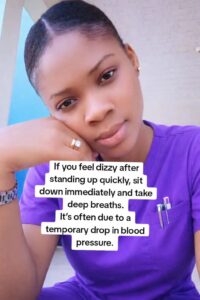
• The Transient Drain: This sudden pooling means less blood returns to your heart, which temporarily means less blood is pumped up to your head. For a split second, your brain experiences a drop in pressure.
• The Visual Blackout: The retina (the back of your eye) is incredibly sensitive to oxygen and pressure changes. When the blood pressure dips, the retina temporarily shuts down to conserve energy which is exactly why your vision goes black or static.
• The Baroreceptor Rescue: Luckily, you have pressure sensors (baroreceptors) in your neck. Within milliseconds, they detect the blood pressure drop and fire a panic signal to your brainstem.
• The Sympathetic Snap: Your autonomic nervous system instantly kicks in. It violently constricts the blood vessels in your legs and spikes your heart rate, physically squeezing the blood right back up to your brain. Vision restored.
Summary:
First time this happened to me I genuinely thought I was dying.
Turns out my body was just buffering.
Knowing the science changes everything
Here’s what’s actually happening:
When you stand up quickly, gravity pulls blood downward. Your body briefly has less blood reaching the brain. Your nervous system — specifically the baroreceptors –detects this drop and rapidly triggers your heart to beat faster and your blood vessels to constrict, restoring blood flow within seconds.
The momentary blackout and dizziness is just that brief gap before the correction kicks in.
👉Hi, I am Dr. Priyam. I break down complex medical science and advocate for Evidence-Based Medicine. FOLLOW ME for more clinical facts.

can a+ and a+ give birth to o+ or O negative?
Itâs a panic that lands in clinics and WhatsApp groups far too often: âBoth of us are A positive⦠how is our child O negative? Did the lab mess up? Or is something else going on?â
The short, reassuring answer is no lab error, no mystery, and no betrayal. This outcome is completely possible under normal genetics. Hereâs why the âmathâ actually maths perfectly once we look at what blood-type tests really reveal.
Your blood type is decided by two separate systems that most people only see the final phenotype of, not the hidden genes.
ABO system ð©¸ð©¸ð©¸ð©¸ð©¸ð©¸ð©¸ð©¸ð©¸
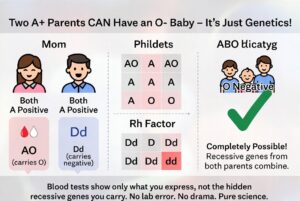
Type A means you carry at least one A allele. You could be AA or AO. The O allele is recessive and invisible in your test result. If both you and your partner are AO (very common), each of you has a 50 % chance of passing the O allele. When both pass O, the child is blood group O. Roughly 45â50 % of people with type A are actually AO carriers, so this pairing happens every day.
Rh (positive/negative) system ð©¸ð©¸ð©¸
âPositiveâ means you have the dominant D antigen. You can still be heterozygous Dd and carry the recessive d allele. If both parents are Dd, there is a 25 % chance the child inherits d from both and is Rh negative. About 15 % of people are Rh negative, which means a large portion of âpositiveâ people quietly carry the d gene.
When both parents are A positive but heterozygous for both traits (AO and Dd), an O-negative child is not only possible â it is mathematically expected in a predictable percentage of pregnancies. The child simply received the two recessive alleles that were hiding in plain sight in both parents.
Blood-group reports show only what antigens are expressed on red cells. They do not sequence your DNA or tell you whether you are homozygous or heterozygous. That hidden information is what allows âimpossibleâ combinations to appear regularly in perfectly ordinary families.
This is basic Mendelian inheritance, not infidelity or laboratory failure. The same recessive-gene logic explains blue-eyed children born to brown-eyed parents or curly-haired kids from straight-haired couples. It is science doing exactly what it is supposed to do.
If the result still feels unsettling, a simple conversation with your doctor or a genetics counsellor can walk you through your specific probabilities. In the overwhelming majority of cases, however, the only thing that needs updating is the outdated assumption that blood types behave like simple labels instead of the elegant, recessive-carrying system they actually are.
Your O-negative child is not evidence of a mistake. They are proof that genetics loves surprises â and that love (and science) are doing just fine.ââââââââââââââââââââââââââââââââââââââââââââââââââ
Dr Parveen Yograj

Why does BCG vaccine leave a scar?
That scar on your arm is a battlefield, and the chemistry of how it forms is completely different from any other vaccine you’ve ever received.
Most vaccines inject dead or weakened pathogens into your muscle. Your immune system sees the threat, builds antibodies, done. No lasting damage to the tissue. The BCG tuberculosis vaccine does something radically different. It injects live Mycobacterium bovis bacteria directly into the top layer of your skin, the dermis, and then lets them multiply.
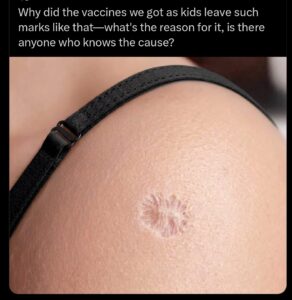
For the first six weeks, those bacteria are actively replicating at the injection site. Your immune system detects them and sends macrophages to engulf the invaders. T-cells get recruited to the area. Then something happens that no other routine vaccine triggers: your body builds granulomas. Those are organized clusters of immune cells that physically wall off the bacteria like a biological quarantine zone. The immune system can’t fully kill every bacterium, so it builds a containment structure around them instead.
That containment war destroys tissue. The granulomas break down the dermis. A blister forms, then an open ulcer that weeps for weeks. The entire process from injection to final scar takes about three months. What you’re left with is the structural aftermath of your immune system demolishing a section of its own skin to contain a live bacterial colony.
The wild part: 4 billion doses administered since 1921. 100 million newborns receive it every year. And the size of your scar correlates with how strong your immune response was. Studies in West Africa found that infants who developed a visible scar had half the mortality rate of infants who didn’t. Not just from TB. From everything. The scar tissue itself became a marker that your immune system trained correctly.
That circular mark is the one vaccine scar that actually means something went right. Your body fought a live infection in a controlled space, won, and left the evidence on your skin for life.
Aakash Gupta


Thomas Tuchel Lost it With England Star Jordan Pickford vs Croatia

How He Reacted to Red Bull Contract Extension Offer

Food and Drink Prices For England’s 2026 World Cup Match vs Croatia

Simi Sanya and Femi Dapson Are Now Legally Married and It Is Beautiful to See

FCT Area Council Election: Live results from polling units

Premier League Set-Piece Goals (2025/2026)
-
 Sports13 hours ago
Ilia Topuria Said Just 9 Words to His Agent After Justin Gaethje Defeat
-
 Sports1 day ago
Saudi Arabia the Only 2026 World Cup Flag That Cannot Touch Ground
-
 Sports16 hours ago
Clip of Zinedine Zidane in the Stands During Argentina 3-0 Algeria Goes Viral
-
 Sports2 days ago
Rodri Labelled ‘Salty’ For Cape Verde Comments After Spain Draw
-
 Sports1 day ago
Federico Chiesa U-Turns on Liverpool Exit After Andoni Iraola’s Appointment
-
 Sports1 day ago
Petition Demands FIFA Probe into Scotland 1-0 Haiti World Cup Match
-
 Sports1 day ago
Ilia Topuria Said 2 Words to Corner Before Retiring vs Justin Gaethje
-
 Sports1 day ago
2 Premier League Clubs Can’t Activate Marcus Rashford’s Release Clause