
Business
Alfred Temile: Advancing Africa’s place in global energy transition


By Jeremiah Urowayino
In an era where energy security and responsible growth are shaping global priorities, Alfred Temile has distinguished himself as one of the quiet but decisive forces advancing Africa’s participation in the international gas value chain. As Chief Executive Officer of Temile Development Company, he leads one of the few fully indigenous African firms operating at scale in the specialised and capital-intensive area of gas shipping – a space traditionally dominated by multinational operators.
A defining marker of the company’s ambition came in April 2025, when Temile Development Company signed an agreement with HD Hyundai Heavy Industries for the construction of two 88,000-cubic-metre Very Large Gas Carrier (VLGC). When completed, they will be two of the largest Panamax-beam VLGCs in the world, underscoring Africa’s growing voice in global maritime energy logistics and signallingconfidence in Nigeria’s long-term role in the gas economy.
This milestone builds on progress made since 2020, when the company introduced its first 23,000-cubic-metre LPG carrier, improving the domestic movement of liquefied petroleum gas and easing bottlenecks in Nigeria’s distribution network. The company now operates a fleet of vessels – including LPG/C Alfred Temile and LPG/C Alfred Temile 10 – strengthening supply chains, and reinforcing the case for natural gas as a transition fuel.
Behind these investments is a carefully built organisation that has grown into a major employer, creating and sustaining more than 3,000 Nigerian jobs across maritime services, upstream assets, logistics, engineering, financial services, and professional services value chain. Temile has consistently emphasised indigenous participation not only as a moral imperative, but as an economic one. His philosophy is clear: Nigerians must be principal actors in the industries shaping the nation’s future.
Beyond shipping, Temile Development Company has also invested in upstream oil and gas assets and maintains interests across sectors that contribute to national productivity.
With total capital commitments exceeding $1 billion, the company stands among the most substantial indigenous contributors to Nigeria’s gas export activity. This scale of investment aligns strongly with the country’s ambition to deepen its non-oil export base and strengthen foreign-exchange earnings.
What distinguishes Alfred Temile goes beyond the balance sheet. It is the deliberate, long-term outlook that frames his decisions. He represents a new generation of African business leaders – commercially disciplined, globally engaged, yet firmly rooted in the development priorities of their home countries. His leadership extends beyond corporate spaces. Through the Okpeyo Temile Foundation, he supports philanthropic and community-focused initiatives in education, skills transfer, and local enterprise development in local communities – reinforcing his belief that the prosperity created by industry must find real expression in people’s lives.
Temile’s intellectual grounding reflects his breadth of interest. A graduate from the University of Ibadan with an MBA from the University of Benin, complemented by multiple professional certifications, he brings together policy fluency, commercial discipline, and a strong sense of national responsibility in his approach to building Nigerian enterprise.
As Nigeria and Africa navigate the realities of the energy transition, leaders such as
Alfred Temile illustrate what indigenous vision, patient capital, and disciplined execution can deliver. Anchored in long-term value creation, his work is contributing to energy security, strengthening export capacity, building local industrial capability.
It is for these reasons that the Vanguard Board of Editors nominated Alfred Temile as Businessman of the Year in the Vanguard Personality of the Year Award.
The award recognises his leadership, scale of investment, and enduring contribution to Nigeria’s energy security, indigenous capacity development, and economic growth.

The Manufacturers Association of Nigeria (MAN) has raised alarm over the worsening state of manufacturing activities in the South-East, warning that rising energy costs and poor access to finance are forcing many companies in the region to shut down.
Chairman of MAN for Anambra, Enugu and Ebonyi states, Lady Ada Chukwudozie, disclosed this during the MAN South-East Stakeholders’ Industry Conversation held in Awka, Anambra State.
The forum was convened to address concerns surrounding electricity regulation, billing transparency and declining industrial productivity across the region.
Chukwudozie said the few factories still operating were doing so at less than 30 per cent of installed capacity due to soaring electricity tariffs, high energy costs and limited access to credit facilities.
According to her, the harsh operating environment informed the decision to convene the stakeholders’ roundtable, stressing that the manufacturing sector remains critical to economic growth, industrialisation and job creation.
She warned that unless urgent measures are taken to address the challenges confronting manufacturers, industrial activities in the South-East could further deteriorate, with serious implications for employment and regional economic stability.
“The manufacturing sector cannot thrive in an environment of uncertainty,” she said.
She called for reforms in the power sector to be driven by transparency, accountability and measurable performance standards, including agreed electricity supply hours, actual delivery levels and compensation mechanisms where supply consistently falls below expectations.
Chukwudozie also urged regulatory authorities to strengthen oversight of electricity providers and improve power supply to industrial clusters across the South-East.
Stakeholders at the forum expressed concern that manufacturers were increasingly struggling to cope with escalating production costs, worsened by unreliable electricity supply and the rising cost of alternative energy sources.
They noted that without affordable and stable energy, many more companies could either scale down operations or shut down completely.
In his keynote address, former Chairman and Chief Executive Officer of the Nigerian Electricity Regulatory Commission, NERC, Dr. Sam Amadi, urged governments in the South-East to adopt deliberate policies aimed at prioritising electricity supply to industrial clusters.
Amadi also advocated pricing frameworks that would encourage manufacturers to expand production and invest in growth.
The stakeholders’ meeting brought together manufacturers, regulators and other industry players to explore practical solutions to revive industrial output and tackle persistent power challenges affecting businesses in the region.
The post S/East companies shutting down over rising energy costs — MAN appeared first on Vanguard News.


By Elizabeth Adegbesan
Nigeria’s Gross Domestic Product (GDP) rose to 3.89 per cent in the first quarter of this year, Q1’26, representing a 0.76 percentage point increase from the 3.13 per cent recorded in the same period of 2025, Q1’25.
However, the GDP growth in Q1’26, represents a 0.18 percentage points decline from the 4.07 per cent recorded in the fourth quarter of 2025, Q4’25.
Disclosing these yesterday, the National Bureau of Statistics, NBS, stated: “Gross Domestic Product (GDP) grew by 3.89% (year-on-year) in real terms in the first quarter of 2026, higher than the 3.13% recorded in the first quarter of 2025. During the quarter under review, agriculture grew by 3.15%, an improvement from the 0.07% recorded in the corresponding quarter of 2025.
“The growth of the industry sector stood at 3.50% from 3.42% recorded in the first quarter of 2025, while the services sector recorded a growth of 4.31% from 4.33% in the same quarter of 2025.
“In terms of share of the GDP, the services sector contributed more to the aggregate GDP in the first quarter of 2026 at 57.73% compared to the corresponding quarter of 2025 at 57.50%.
“Gross Domestic Product (GDP) grew by 3.89 percent (year-on-year) in real terms in the first quarter of 2026, higher than the 3.13 percent recorded in the first quarter of 2025.”
NBS noted that during the quarter under review, the services sector contributed more to the aggregate GDP at 57.73 percent.
“The real growth of the oil sector was 2.57 (year-on-year) in Q1 2026, indicating an increase of 0.70% points relative to the rate recorded in the corresponding quarter of 2025 (1.87%). Growth decreased by 4.22% points when compared to Q4 2025, which was 6.79%. On a quarter-on-quarter basis, the oil sector recorded a growth rate of 9.31% in Q1 2026.
“The Oil sector contributed 3.92% to the total real GDP in Q1 2026, down from the figure recorded in the corresponding period of 2025 at 3.97%. and up from the preceding quarter, where it contributed 2.87%.
“The non-oil sector grew by 3.94% in real terms during the reference quarter (Q1 2026). This rate was higher by 0.75% points compared to the rate recorded in the same quarter of 2025, which was 3.19%, and lower than the 3.99% recorded in the fourth quarter of 2025.
“In real terms, the non-oil sector contributed 96.08% to the nation’s GDP in the first quarter of 2026, higher than the share recorded in the first quarter of 2025, which was 96.03%, and lower than the fourth quarter of 2025, recorded as 97.13%.”
The post Nigeria’s GDP growth rises 3.89% in Q1’26 appeared first on Vanguard News.

By Yinka Kolawole
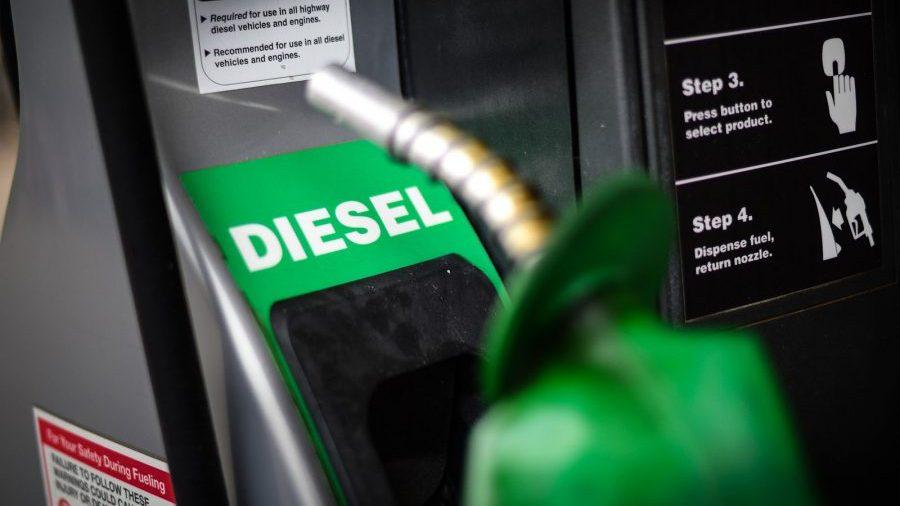
Manufacturing firms across Nigeria are increasingly turning to natural gas as rising diesel prices continue to push up production costs and threaten profitability in the industrial sector.
Industry stakeholders said the shift has become necessary as manufacturers grapple with high energy costs, unstable power supply and foreign exchange pressures that have worsened the operating environment for businesses.
Chairman of the Board of the Niger Delta Chambers of Commerce, Industry, Trade, Mines and Agriculture, Idaere Gogo Ogan, said effective utilisation of gas could transform industrial operations and revive struggling businesses in the Niger Delta region.
Speaking through the Board Secretary, Chief Solomon Edebiri, at a business and investment forum organised by Shell Nigeria Gas in Port Harcourt, Rivers State, Ogan lamented that more than 500 companies in the Niger Delta had shut down operations in recent years due to harsh economic and operational conditions.
“Effective utilisation of gas can significantly reshape industrial practices and revive business activity in the region,” he stated.
The forum brought together stakeholders in the energy and manufacturing sectors to explore ways of reducing operating costs and improving productivity through gas adoption.
The growing shift toward gas-powered operations comes amid sustained increases in diesel prices, driven partly by tensions in the Middle East and volatility in global energy markets.
According to the environmental certification organisation, Gold Standard, developing countries account for between 350 gigawatts and 500 gigawatts of diesel generator capacity spread across an estimated 20 million to 30 million sites, with generator output in many cases exceeding the capacity of national grids.
The organisation noted that diesel-generated power remains expensive, averaging about $0.30 per kilowatt-hour and significantly higher in remote areas with poor electricity access. It added that annual global spending on generator fuel ranges between $30 billion and $50 billion.
At the forum, Shell Nigeria Gas disclosed that two new industrial customers – Intercontinental Distillers Limited II and Rumbu Industries Limited – had been added to its gas distribution network in Agbara, Ogun State.
The company said the development increased the number of firms using its gas solutions to more than 150 across Abia, Bayelsa, Ogun and Rivers states.
Speaking on behalf of the Managing Director of Shell Nigeria Gas, Ralph Gbobo, the company’s Head of Gas Distribution, Chukwuka Amos-Ejesi, said manufacturers switching to gas were already benefiting from lower and more stable energy costs.
According to him, firms adopting natural gas enjoy reduced exposure to volatile fuel prices, improved operational efficiency, better planning certainty and stronger competitiveness.
“Companies that transition to natural gas consistently benefit from lower and more predictable energy costs, reduced exposure to liquid fuel price volatility, enhanced operational uptime, improved planning certainty and a stronger competitive offering for their customers,” he said.
Shell Nigeria Gas added that natural gas offers both economic and environmental advantages over diesel, especially as manufacturers continue to battle soaring energy costs and unreliable electricity supply.
The company disclosed that gas supply to Intercontinental Distillers Limited II and Rumbu Industries Limited was equivalent to about four megawatts of electricity, a development expected to improve production efficiency and lower operating costs.
Stakeholders at the forum included representatives of the Nigerian Midstream and Downstream Petroleum Regulatory Authority, Bank of Industry, Manufacturers Association of Nigeria and the Port Harcourt Chamber of Commerce.
The post Manufacturers dump diesel for gas as energy costs soar appeared first on Vanguard News.


Why Arsenal Will Not Lift Premier League Trophy During Bus Parade

Man Utd Eye £100m Aston Villa Forward Morgan Rogers

Liverpool Open Talks to Sign Yan Diomande

Simi Sanya and Femi Dapson Are Now Legally Married and It Is Beautiful to See

FCT Area Council Election: Live results from polling units

Premier League Set-Piece Goals (2025/2026)
-
 Politics1 day ago
BREAKING: Ex-Chief of Staff to APC National Chairman joins NDC after losing 2027 ticket
-
 Sports1 day ago
Nottingham Forest’s Evangelos Marinakis Involved in Fight at Basketball Game
-
 Politics2 days ago
Gombe PDP aspirants oppose Pantami’s alleged entry into governorship race
-
 Sports1 day ago
Arsenal and Spurs Stars Celebrate End of Season in Same Nightclub
-
 Entertainment1 day ago
Be the Best Dressed Guest With These 10 Elegant WeddingFlow Outfits That Deliver Pure Glamour
-
 Entertainment1 day ago
After Party? Make It Chic and Glam With This Stunning Bridal Look
-
 Sports2 days ago
George Russell’s First Tweet After Being Fined €5,000 For His Canadian GP Actions
-
 Sports2 days ago
Red Bull’s Savage Tweet After George Russell’s Canadian GP Tantrum