
Business
LEDU projects N73.15tr GDP for Lagos in 2026


By Seth Ukochukwu
The Lagos Development Update, LEDU, 2026 report has projected significant expansion in the state’s economy, with nominal Gross Domestic Product (GDP) expected to rise to N73.15 trillion this year from N62.66 trillion in 2025, supported by easing inflation, stronger consumption, and improved revenue mobilisation.
Speaking at the presentation of the report, Commissioner, Ministry of Economic Planning and Budget, Lagos State, Mr. Ope George, said that the LEDU 2026 report, with the theme, “Lagos Economic Outlook 2026: Consolidating Resilience, Advancing Competitiveness, Delivering Shared Prosperity”, provides a comprehensive assessment of Lagos State’s economic performance, fiscal position, structural dynamics, and forward-looking policy direction.
He added that, “Lagos State’s economy continued to expand, with Nominal Gross Domestic Product estimated at N62.66 trillion in 2025. Growth, though moderating relative to the immediate post-pandemic rebound, reflects a normalization toward sustainable expansion rather than a slowdown.
“Looking ahead to 2026, the outlook is cautiously optimistic. Nominal GDP is projected to rise to N73.15 trillion, representing growth of approximately 16.7 percent. Inflation is expected to moderate further to 17.59 percent, with food inflation easing to 17.14 percent. These projections provide a stronger macroeconomic foundation for fiscal operations under the 2026 Budget of Shared Prosperity.”
According to the LEDU 2026 report, the projected GDP expansion is expected to strengthen revenue performance and increase the government’s capacity to finance infrastructure development.
The report noted that stronger economic activity would enhance Internally Generated Revenue (IGR), VAT receipts, and other consumption-based taxes, thereby increasing fiscal space for capital projects under the 2026 budget framework.
To achieve the projected growth in GDP, the report recommended that, “The immediate policy priority for 2026 is macroeconomic and service-delivery stabilization, particularly in the context of rising population pressures and growing demand for public services.
“In the short term, government policy is expected to focus on completion of ongoing infrastructure projects, particularly in transport, energy, housing, and urban services, to avoid cost overruns and unlock economic returns.
“Stabilization of core social services, especially healthcare and education, supported by substantial nominal increases in sectoral allocations.
“Managing recurrent expenditure growth, which rose sharply to N2.11 trillion in 2026, to ensure that rising personnel and overhead costs do not crowd out capital investment. The emphasis on infrastructure sustainability and service continuity reflects the expectation that the government must first stabilize systems and delivery platforms before pursuing more ambitious reforms.”
•As currency outside banks drops 12% to N5.08tr
By Babajide Komolafe & Elizabeth Adegbesan
Credit to the government rose by 65.6 per cent year-on-year, YoY, to N39.6 trillion in April 2026 from N23.9 trillion in April 2025, driven by increased borrowing to finance the 2026 budget deficit.
The Central Bank of Nigeria, CBN, disclosed this in its latest Money and Credit Statistics.
Under the Appropriation Act 2026, the Federal Government plans to borrow N29.2 trillion, to fund the gap between the revenue of N68.32 trillion and expenditure of N36.87 trillion.
Vanguard analysis showed that the Federal Government increased borrowing from domestic investors by 7.4 per cent to N8.1 trillion in the first quarter of 2026 from N7.5 trillion in the same period of 2025.
The CBN data also showed that credit to the private sector rose by 3.25 per cent to N80.6 trillion in April 2026 from N78.06 trillion in April 2025.
Consequently, net domestic credit rose by 17.8 per cent to N120.2 trillion in April 2026 from N102 trillion in the corresponding period last year.
Following the same trend, Nigeria’s broad money supply (M2) increased by 4.8 per cent YoY to N124.98 trillion in April 2026 from N119.2 trillion recorded in April 2025, reflecting improved liquidity in the financial system.
Further breakdown of the money supply components showed that currency outside banks declined by 12.2 per cent to N5.08 trillion in April 2026 from N5.7 trillion in the corresponding period of 2025, indicating increased use of banking channels and electronic payment systems.
However, demand deposits (current accounts) increased by 6.3 per cent to N38.7 trillion from N36.4 trillion during the review period.
Also quasi-money increased by 3.8 per cent to N81.2 trillion in April 2026 from N78.2 trillion in April 2025. Quasi money includes money in savings accounts, time deposits, treasury bills and other money market instruments.
Narrow money, which includes currency in circulation and current accounts, also grew by 7.09 per cent to N43.8 trillion from N40.9 trillion.
The post Credit to government surges 65.6% to N39.6trn appeared first on Vanguard News.

By Godwin Oritse
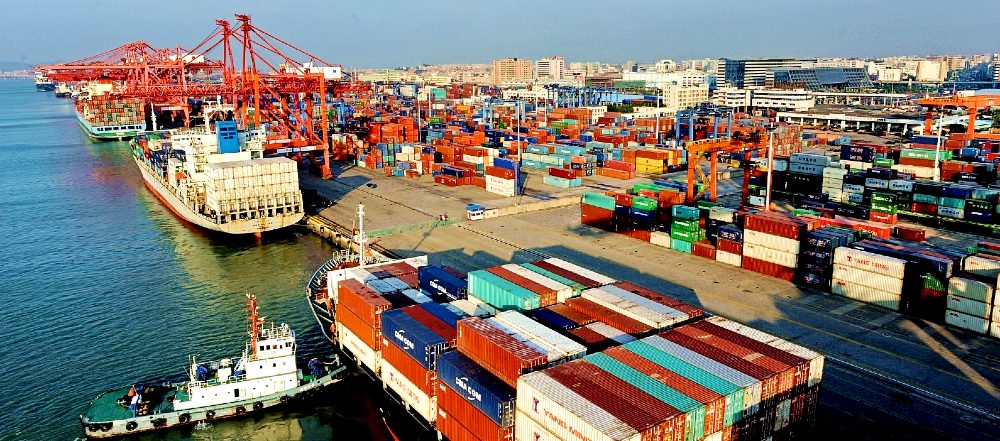
The Nigerian Maritime Law Association, NMLA, has called for a robust legal and regulatory framework to ensure the successful implementation of the National Single Window, NSW, project in Nigeria.
According to the association, the National Single Window initiative of the Federal Government is designed to improve operational efficiency through faster cargo clearance processes, greater transparency in regulatory procedures, and enhanced coordination among government agencies involved in maritime trade and port operations.
Speaking at the 4th Breakfast meeting of the NMLA, Mr. Mike Igbokwe, Senior Advocate of Nigeria, SAN, who is also President of the group said that the initiative represents a major shift towards the digitalisation of processes within the maritime sector and is expected to promote ease of doing business, reduce bottlenecks at the ports, and strengthen Nigeria’s trade competitiveness.
Speaking on the theme of the meeting, “Regulatory Reforms and the National Single Window (NSW) Project,” Igbokwe noted that Nigeria’s maritime sector is characterised by the involvement of multiple regulatory agencies with overlapping responsibilities, resulting in duplication of functions, efforts and costs.
He further observed that the traditional processes within the sector remain fragmented and largely manual, leading to delays in cargo clearance, increased cost of doing business, rising inflation, and higher prices of imported raw materials and manufactured goods.
He said: “NSW will be of benefit to members of NMLA as maritime lawyers and IT experts as there will be a need to update regulatory frameworks, data governance and cybersecurity considerations, contractual and liability adjustments in trade transactions and greater reliance on electronic records and systems.”
“Nigeria does not lack good regulatory frameworks but usually lacks the political will and determination for implementing, monitoring and supervising the legislation.
“The National Single Window Project represents a transformative regulatory reform capable of modernizing Nigeria’s trade and maritime sector. If effectively implemented, it can significantly improve efficiency, transparency, revenue generation, and ease of doing business.
“However, its success will depend not only on technology, but also on strong political will, institutional cooperation, legal reforms, and sustained stakeholder engagement.”
The post Maritime lawyers seeks stronger legal framework for NSW appeared first on Vanguard News.

By Gabriel Ewepu
Nigeria, Türkiye Deepen Mining Cooperation Through New MoU”
The Federal Republic of Nigeria and the Republic of Türkiye have signed a Memorandum of Understanding (MoU) aimed at strengthening mining operations, deepening technical collaboration, and expanding investment flows between both countries in the solid minerals and energy sectors.
“The MoU signed by the Nigerian Minister of Solid Minerals Development, Dr Dele Alake and Türkiye’s Minister of Energy and Natural Resources, Alparslan Bayraktar, also marks a significant step towards deepening economic collaboration between both countries,” according to a statement signed by the Special Assistant on Media to the Minister, Lara Owoeye-Wise.
Alake said Nigeria is positioning itself to benefit from Türkiye’s technological strength and industrial experience in mining development. “Nigeria is ready to leverage Türkiye’s technological advancement and expertise in mining exploration, training, digitisation, licensing systems, and capacity building to accelerate reforms and growth within the sector.”
He added, “Türkiye is one of the countries we are confident of building strong bilateral cooperation with, particularly in the area of solid minerals development. Nigeria is open to working with the Turkish government to strengthen governance structures, improve technical capacity, and advance sustainable mining development in our country.”
The minister noted that President Bola Ahmed Tinubu has fully endorsed efforts to deepen cooperation with Türkiye in mining and energy. “President Bola Ahmed Tinubu has given full backing to efforts aimed at strengthening bilateral relations with Türkiye in the mining and energy sectors.”
Alake also highlighted ongoing reforms in Nigeria’s mining sector. “We have significantly improved the ease of doing business and strengthened institutional support for investors. Investors can now repatriate profits after due process,” he said, adding that “the reforms have already triggered increased inflows of Foreign Direct Investment (FDI) into the sector.”
On enforcement, he stated: “Over 300 illegal mining operators, including foreign nationals, have been arrested, while more than 150 prosecutions are currently ongoing. In addition, over 100 illegal mining sites have been recovered and returned to legitimate licence owners.”
Responding, Türkiye’s Minister, Alparslan Bayraktar, described the partnership as strategic. “We are ready to invest in Nigeria because of the remarkable initiatives your government has put in place. We look forward to cooperation, support, and guidance that will enable both countries to achieve meaningful results.”
He added that “global energy security now demands stronger international cooperation and connectivity,” while also noting Türkiye’s interest in expanding investments into Nigeria’s mining, energy, and hydrocarbon sectors.
“Nigeria is a major player in the hydrocarbon industry. We would appreciate it if you convey to your President our desire to renew energy cooperation and contracts with Nigeria,” he said.
Alake also stressed that global stability is essential for energy security, stating: “Without reducing conflicts around the world, economic imperatives and global energy security efforts will continue to face significant challenges.”
The post Nigeria, Türkiye move to strengthen mining operations with MoU signing appeared first on Vanguard News.


Credit to government surges 65.6% to N39.6trn
Maritime lawyers seeks stronger legal framework for NSW

Nigeria, Türkiye move to strengthen mining operations with MoU signing

Simi Sanya and Femi Dapson Are Now Legally Married and It Is Beautiful to See

FCT Area Council Election: Live results from polling units

Premier League Set-Piece Goals (2025/2026)
-
 Politics1 day ago
BREAKING: Ex-Chief of Staff to APC National Chairman joins NDC after losing 2027 ticket
-
 Sports2 days ago
Nottingham Forest’s Evangelos Marinakis Involved in Fight at Basketball Game
-
 Sports1 day ago
Arsenal and Spurs Stars Celebrate End of Season in Same Nightclub
-
 Politics2 days ago
Gombe PDP aspirants oppose Pantami’s alleged entry into governorship race
-
 Entertainment2 days ago
After Party? Make It Chic and Glam With This Stunning Bridal Look
-
 Entertainment2 days ago
Be the Best Dressed Guest With These 10 Elegant WeddingFlow Outfits That Deliver Pure Glamour
-
 Business2 days ago
Cardoso recommits to orthodox monetary policy, transparency
-
 Entertainment2 days ago
Soft Glam, Regal Style and Rich Yoruba Bridal Energy, Bolaji Ogunmola Ate Up the Ajosepo Premiere in This Stunning Look