
Politics
We will avoid political traps – Kwankwasiyya Movement reacts to ADC judgment

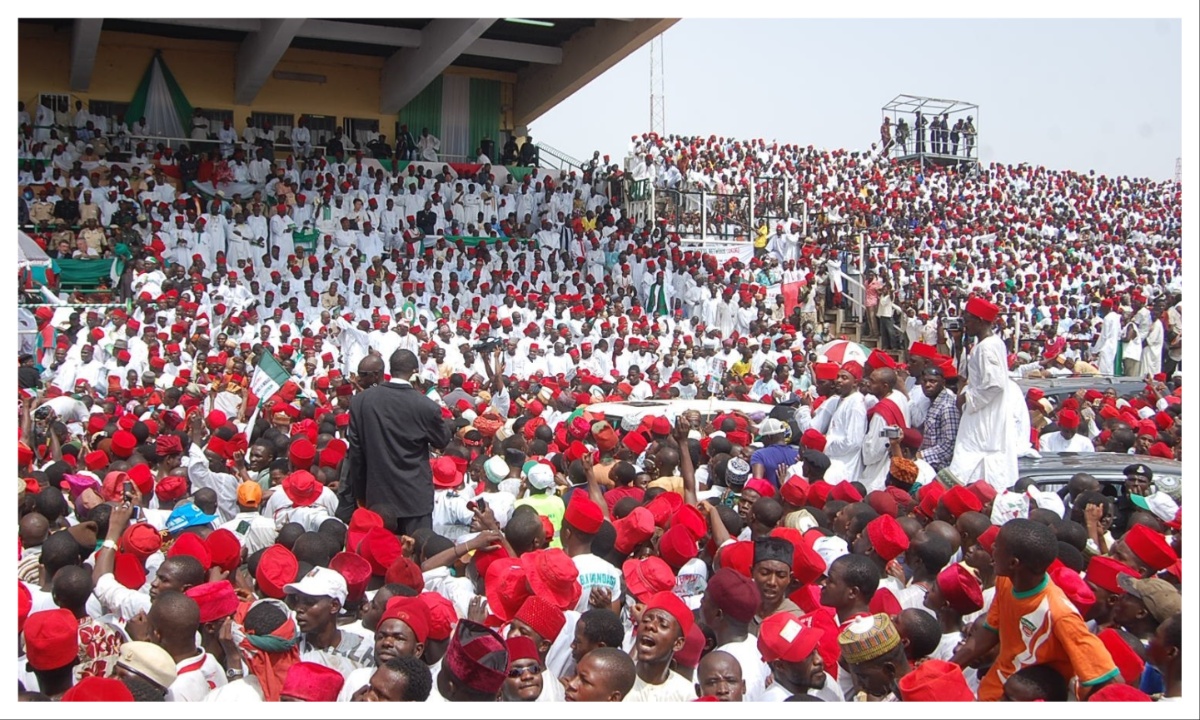
The Kwankwasiyya Movement has reacted to the recent Supreme Court judgment on the leadership dispute within the African Democratic Congress (ADC), saying it is carefully studying the ruling to avoid any political or legal trap.
This was contained in a press statement issued on Friday, and signed by its spokesperson, Dr. Habibu Sale Mohammed.
The movement praised the Supreme Court for what it described as courage and clarity in handling the matter.
It said the judgment, which set aside earlier orders that created confusion, is a victory for due process and a sign of the judiciary’s role as a stabilising force in democracy.
According to the statement, “by correcting the procedural irregularities that led to the artificial suspension of party leadership, the court has restored order and reaffirmed that institutions must operate within the bounds of the law.”
While noting that the substantive case has been sent back to the trial court, the group expressed confidence that the ruling has laid a solid foundation for justice and fairness in the next stage of the case.
“At this critical juncture, we are carefully studying the judgment and rigorously analysing its implications, particularly in light of the limited time within the electoral cycle,” the statement said.
It added, “this is necessary to ensure that we do not inadvertently fall into any political or legal trap that could undermine or prevent our principal and other key actors within the opposition from effectively participating in the 2027 general elections.”
The movement also revealed that it is exploring different lawful and strategic options, including possible alliances with other political platforms.
“We are actively exploring all lawful and strategic options available to neutralise any such obstacles,” it stated.
It mentioned potential engagements with parties like the National Democratic Congress and the People’s Redemption Party.
The Kwankwasiyya Movement said its main goal is to protect democratic participation and ensure Nigerians are not disenfranchised.
“Our objective remains clear: to safeguard our political rights, protect democratic participation, and ensure that no contrived circumstances are allowed to silence the voice of the people,” the statement added.
It assured its supporters that a final decision on its political direction will be made known soon, saying, “in no distant time, an official position of our leader regarding a new political alignment will be communicated.”
The group also stressed the importance of strong institutions and citizen participation in sustaining democracy.
“Nigeria’s democracy must be protected not only by the strength of its institutions but by the courage of its people to stand firm in the face of uncertainty,” it said.
It urged members to remain calm and focused while consultations continue, adding that the movement remains resolute, united, and committed to the democratic process.
dailypost.ng

National Secretary, Nigeria Democratic Congress, NDC, Ikenna Enekweizu, has given a major reason, the court judgement against the party’s registration by the Independent National Electoral Commission, INEC, would not stand.
DAILY POST reported that a Federal High Court judgment in Lokoja, Kogi State, on Friday set aside its earlier judgment directing the Independent National Electoral Commission, INEC, to register the Nigeria Democratic Congress, NDC, as a political party.
Speaking on Arise News, Enekweizu pointed out that the court had already established the fact that Peace Movement Party, PMP, does not exist and is not even among the political parties that applied to INEC for registration.
He said, “In fact, we’re not just registered. The original substantive judgment of the court was that we’re deemed to have been registered by INEC, deemed registered.
“But if you read the entirety of that judgment, a lot of consequential orders were made that made it made it look like we were actually registered by INEC from when we actually applied.
“INEC had a duty to register us, refused for no justification to register us after we had met all the requirements for registration. That is what drove us to court, and the court held that we, when INEC, in course of hearing, admitted that the only reason for which we had refused to reach us, which was that our logo resembled that of APC, not Peace Movement Party.
“The letter they wrote to us, and on the basis of which we went to court, stated that our logo resembled that of APC, All Progressives Congress, that is why we went to court, and that is why it was not necessary at the time we went to court, to join any other party other than the other than INEC.
“In fact, we’ve had any reason to have joined anybody at that stage, it will have been APC itself, because the reason for refusing to register us was that our logo resembled that of APC, not a non-existing PMP.
“Now it was only when we got to court, after we had filed and served our originating summons, that INEC, in their response to originating summons, mentioned the name PMP, stating that our logo looked like that of PMP. It is a fundamental principle of law that you cannot, reprobate and approbate.
“If it has given one reason for refusing to register NDC, and for which we have gone to court, the moment you abandoned that reason in the course of the trial and actually admitted before the court that reason you gave originally did not actually exist, you had conceded to that judgment, and so we had no reason from the beginning to have joined PMP.
“Now, basically, when they raised PMP as a reason, a new reason for which we were never told, our response was very simple: one, as at the time we went to court, there were 18 registered political parties, PMP was not one of them. Two, 171 political associations applied to be registered as political parties, PMP was not one of them.
“So there was no reason for you to use a non-existing PMP as a justification for not wanting to register us. In fact, during the hearing, a judge asked first, does INEC now admit that our logo does not look like that of APC? INEC said yes. Now is PMP a registered political party? INEC said no. Is PMP one of the 171 that applied for registration? INEC said no.
“One would wonder if PMP was one of the registered political institutions during that registration process, in what way were the rights breached?”
dailypost.ng

By Egufe Yafugborhi
Ughelli South Local Government Area, Delta State, should have been basking in euphoria as the Independent National Electoral Commission (INEC) restored suppressed state constituencies.
Of the 22 restored seats announced on 10 June by the Commission, alongside Benue, Jigawa and Kogi, Delta got six seats back: Aniocha North II, Ika North East II, Sapele II, Ethiope West II, Warri South West II, and Warri North II. “Democracy is expanding,” INEC said.
Painfully, in Ughelli South LGA, no drums were rolled out. Constituents were left with one bitter question: “If INEC can obey 2026 court orders in days, why has it ignored a 2015 Court of Appeal judgment bearing our name for 11 years?”
Ughelli South II was not on the list for restoration. Yet a decade earlier, the locality had won the same legal battle on the same grounds that compelled INEC to restore other seats. That is the wound. The intrigue.
The Original Sin
Before 1996, like Isoko North, Ughelli South LGA had two voices in the Delta State House of Assembly (DTHA): Ughelli South I and II. Each brought projects and oversight closer to communities.
In 1999, INEC merged them. “Constituency I” was suppressed in a national “delimitation exercise.” Bureaucratic language. Brutal effect: Ughelli South went from two representations to one.
When Both Constituencies Functioned
Ughelli South had been structured and recognised as two distinct state constituencies. Social justice advocate, Zik Gbemre, captured the timelines from post-independence democracy through the Third Republic.
First Republic: At the creation of the Midwest Region, modern-day Ughelli South maintained two constituencies.
Chief Patrick K. Tabiowo (from Otokutu, Ughievwen Bloc) represented Ughelli South I, emerging as the first Speaker of the Midwestern House of Assembly, while a second lawmaker represented the joint Ewu, Okparabe, Arhavwarien, Effurun-Otor and Olomu bloc.
Second Republic (1979–1983):
Under President Shehu Shagari, the dual-constituency structure was preserved. Sir Harrison Jefia (from Ughevwughe, Ughievwen Bloc) was elected to represent Ughelli South I. Chief Sylvanus Omaruaye (from Ewu clan) was elected into the Ughelli South II seat, serving until the military coup in late 1983.
Third Republic (1991–1993):
Following the creation of Delta State, under Olorogun Felix Ibru as governor, the 1st Delta Assembly was inaugurated on 30 January 1992. Ughelli South maintained its two seats.
Hon. Wilson Jighwu (from Usiefrun, Ughievwen Bloc) represented Ughelli South I. Hon. George Dogood Mokpo (from Gbaragolor, Ewu clan) represented Ughelli South II.
Vexed Suppression
At the activation of the Fourth Republic on 29 May 1999, INEC froze Ughelli South Constituency I. For 15 years, the LGA had one representative for its population of over 150,000 – estimated at 315,284 today.
The area is home to oil-bearing towns and dozens of communities. The merger was convenient for INEC. It was never legal.
The Victory That Failed
Patience broke for the people on 12 May 2014. Chief Godwin Sito and five others sued INEC at the Federal High Court, Warri, in suit FHC/WR/CS/59/2014. Their prayer: “Restore what INEC illegally took away.”
On 31 October 2014, Justice Mohammed Shitu Abubakar delivered judgment. His language cut through bureaucracy: “The Defendant does not have any power and/or discretion whatsoever to suppress the existing Ughelli South Constituency I with constituency code No. SC/33/DT in the Delta State House of Assembly lawfully created and approved by the National Assembly.”
The court didn’t suggest. It ordered: “Restore forthwith” Ughelli South I. Conduct a by-election. Stop denying citizens their constitutional right.
Appellate Confirmation
On 28 May 2015, the Court of Appeal, Benin Division, ruled on the Commission’s appeal. Justice H. Barka led the panel’s verdict: INEC’s appeal was dismissed “for lack of merit in its entirety.” Barka reminded INEC of history: “The constituency had existed separately before 1996.”
Reaction was swift from Olorogun Taleb Tebite (late), then member-elect for the merged constituency. He said the judgment was “emphatic and clear. It reaffirmed our strong belief in God and the nation’s judiciary.” Eleven years later, he remains the sole representative for the entire LGA.
When INEC still stalled, plaintiffs served Form 48 and Form 49 — notice of consequence of disobedience. Contempt proceedings followed against then INEC Chairman Prof. Attahiru Jega. Court papers warned: “Unless you obey… you will be guilty of contempt of court and will be liable to be committed to prison.”
INEC climbed to the Supreme Court. In 2017, the apex court in _INEC v. Chief Godwin Enasito_ affirmed the earlier judgments of the Federal High Court in Warri and the Court of Appeal, Benin. Three courts, one conclusion: INEC acted illegally in 1999. Restore the seat. Yet today, Ughelli South II is still missing from INEC’s register.
Most Hurting Exclusion
On 10 June 2026, INEC National Commissioner Mohammed Kudu Haruna stated, “The Commission has restored State Constituencies… following judgments of the courts directing that certain constituencies be brought back into the electoral map.”
For Delta, six seats “previously suppressed” were restored by “recent court judgments.” Party primaries were fixed for 16–25 June 2026. Fresh delineation. New voters.
The crux is Ughelli South’s absence from the list. INEC obeyed 2026 court orders within days. But it has not obeyed 2015 orders after 11 years. Both orders concerned suppressed constituencies. What changed?
Critical Questions
Why the selective obedience by INEC? Is there an expiry date on justice? The Commission’s statement cited “powers conferred by the 1999 Constitution and Electoral Act 2026.” The same powers existed in 2015. Section 287(1) says “all authorities… shall obey” court decisions. No time limit.
So why did INEC obey the Warri South West II judgment from 2024 but not Ughelli South I from 2015? “When INEC obeys a 2024 judgment and ignores a 2015 one, it sends a message: justice is only justice if it’s fresh,” a senior lawyer observed.
Warri got attention, Ughelli got silence. INEC’s 2026 restoration coincided with the final “Warri delineation report.” There is a thinking that INEC prioritized Warri in response to years of ethnic conflicts, protests, and media pressure.
Ughelli South had no protests. Just a quiet court judgment. A Delta Assembly source said: “Crisis gets you a seat. Court judgment alone does not. That’s the lesson Ughelli South has learned.”
Impunity By Administrative Convenience
In the numbers game, restoring Ughelli South II plus Isoko North II would take the Delta Assembly from 29 to 31 members.
The 2026 restoration kept the Assembly at 29 because the six seats were swaps, not additions. Adding Ughelli South II meant real expansion: more salaries, more offices, more budget.
The 2014 FHC judgment declared the 29-member Assembly “not properly constituted.” INEC ignored that too.
Apparently for administrative convenience, an 11-year-old judgment, for INEC, is “stale.”
Restoring Ughelli South II meant new ward delineation, new polling units, fresh primaries. INEC must redo 1999 work.
An INEC official, speaking off record, admitted, “Old judgments are messy. You have to trace old boundaries, deal with new settlements. Easier to work with recent cases where records are digital.”
“Lame excuse. Administrative difficulty is not a defence in law. Contempt of court doesn’t accept that. Besides, the boundaries were there before suppression. It’s simply to pronounce the same restored,” responded Gbemre
The 2014 court relied on Sections 6, 36, 91 and 112. INEC’s own lawyers conceded the seat was “lawfully created” in 1991. The suppression had no constitutional backing.
Human Cost
It’s one representative, but many voices in Ughelli South LGA speak of constituency development projects that never came. Of wards that feel “too far” from Asaba.
The burden feels heavy on incumbent Hon. Festus Otuama, a single voice speaking for two supposed constituencies today.
“When one man speaks for 30 communities, 15 voices are silent. That was the plan in 1999. The court said stop. INEC refused. Now INEC restores other people’s seats and leaves ours. What do we call that?” a constituent lamented.
Core Takeaway
Ughelli South could not have lost out in 2026 when it won in 2014. What it lost was implementation. The June 2026 restoration didn’t create new inequality. It exposed impunity.
Extraneous to the law, it proved INEC’s willingness to obey courts depends on timing, politics, and convenience.
Until the Commission gazettes the 2015 Court of Appeal judgment and delineates Ughelli South II, the LGA remains Nigeria’s most latent constituency — existing only in statutes but never captured on election ballots.
A stakeholder summed it up: “INEC will restore seats when courts force it now. When forced much earlier, INEC went to sleep.
“For Ughelli South people, the wait for their second voice sustains. The seat won in court, yet lost on the ground. And the people are still waiting.”
Gbemre added, “Ughelli South is a major hub churning oil and gas wealth that sustains the nation. To marginalise such a critical economic and cultural engine is unacceptable.”
A different set of litigants are said to be pursuing a separate pending legal battle with INEC over the same Ughelli South I suppression.
www.vanguardngr.com

By Luminous Jannamike, ABUJA
Nigeria’s opposition has been handed another reminder that the road to the 2027 general elections may be shaped as much in the courtroom as on the campaign trail. The Federal High Court’s decision in Lokoja to set aside its earlier order compelling the Independent National Electoral Commission (INEC) to register the Nigeria Democratic Congress (NDC) has injected fresh uncertainty into an opposition already grappling with shifting alliances and legal disputes. By directing that the case start afresh after ruling that the Peace Movement Party (PMP) was denied a fair hearing over a disputed logo, the court has effectively left the NDC in legal limbo.
Read Also: Obi slams ‘bizarre’ court order, NDC heads to appeal
For the opposition, the ruling is more than a legal twist; it threatens the viability of the political platform painstakingly assembled in recent months. The NDC became the vehicle on which Peter Obi and former Kano State Governor Rabiu Kwankwaso anchored their presidential ambitions after its court-backed registration. However, if the party ultimately loses the substantive case and any subsequent appeals, its registration could be nullified, leaving its candidates without a legally recognised platform. Given INEC’s tight nomination timetable, there would be little room for fresh registrations, party switches or political reorganisation. What now appears to be a courtroom dispute could ultimately reshape the presidential contest.
The NDC’s predicament mirrors the turbulence within the African Democratic Congress (ADC). While the David Mark-led faction remains confident despite ongoing litigation over the party’s status, rival camps continue to challenge its leadership and legitimacy. A separate legal battle seeking the ADC’s deregistration has only deepened those divisions. Should the party eventually lose its appeals, leading figures aligned with the Mark faction, including Atiku Abubakar and Rotimi Amaechi, could face the same electoral hurdles confronting the NDC.
Together, the NDC and ADC crises expose a deeper challenge confronting Nigeria’s opposition. While enormous effort has gone into coalition-building and political realignments, far less certainty surrounds the legal and organisational stability of the platforms expected to carry those ambitions. In an election cycle defined by tight timelines, legal vulnerability can become a political liability.
That reality has elevated judicial and regulatory processes into decisive battlegrounds. Every delay narrows the opposition’s strategic options and increases the premium on political certainty. By contrast, the ruling APC enters the race with the institutional advantage of an established platform largely untouched by comparable registration disputes. That advantage does not guarantee electoral success, as Nigerian elections are ultimately shaped by multiple political, regional and electoral dynamics, but it does spare the party one layer of uncertainty confronting its rivals.
Critics may see these courtroom battles as obstacles deliberately placed in the opposition’s path. Yet there is another perspective. Courts exist to ensure that political parties comply with due process and that competing claims receive a fair hearing. If parties are permitted to sidestep legal requirements in the name of political expediency, today’s convenience could become tomorrow’s constitutional crisis. From that standpoint, judicial scrutiny may ultimately strengthen, rather than weaken, Nigeria’s democratic order.
The broader irony is difficult to ignore. The opposition’s biggest challenge may not ultimately be the APC, but its own inability to secure stable, legally unassailable platforms on which to build a united front. In 2027, the first decisive contest may not be at the ballot box but in the courtroom. The opposition cannot afford to lose either.
www.vanguardngr.com


Spurs Make Strange Request to Newcastle During Tonali Talks
Deregistration: PMP does not even exist anywhere – NDC
INEC’s Suppressed Constituencies Restoration: Delta’s seat that never came back

Simi Sanya and Femi Dapson Are Now Legally Married and It Is Beautiful to See

FCT Area Council Election: Live results from polling units

Premier League Set-Piece Goals (2025/2026)
-
 Sports20 hours ago
FIFA Allow Rainbow Flags at World Cup ‘Pride Match’ Featuring Iran vs Egypt
-
 Sports2 days ago
Thomas Partey Could Be Blocked From Knockout Tie
-
 Sports2 days ago
Steve Clarke Slammed For Interview After Scotland 0-3 Brazil
-
 Sports13 hours ago
Raphinha’s Wife Debunks ‘Financial Problems’ Claim From World Cup Winner
-
 Sports1 day ago
Rory McIlroy Risks Breaking PGA Tour Rule That Led to One-Year Ban
-
 Sports21 hours ago
Uruguay Players ‘Revolt Against Marcelo Bielsa’ Ahead of Spain Game
-
 Sports2 days ago
Jon Jones Names UFC Opponent Who Hit Him the Hardest
-
Sports2 days ago
Jon Jones Names UFC Opponent Who Hit Him the Hardest