
Business
LPG price to hit N1,500/kg as depot stocks dry up


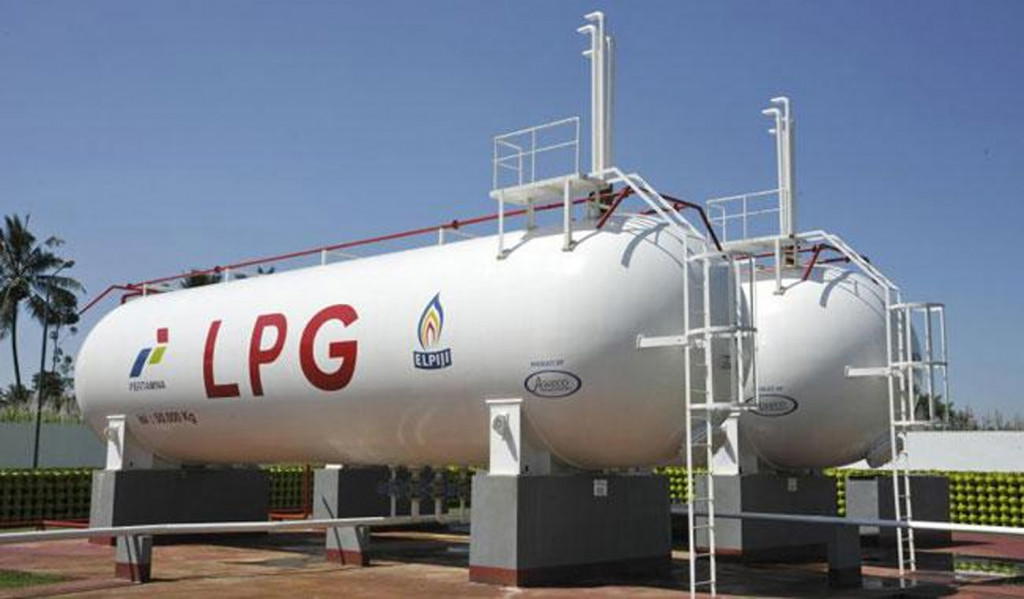
•Only Dangote Refinery, Ardova, Navgas have supplies
By Udeme Akpan, Energy Editor
There are indications that the price of Liquefied Petroleum Gas, LPG, also known as cooking gas, may rise sharply across country as depot stocks dry up amid increasing domestic demand. Checks by Vanguard yesterday showed that only the Dangote Petroleum Refinery, Ardova Plc and Navgas had commercial volumes of LPG available for sale in the domestic market.
Market sources attributed the development to rising demand for the product in Lagos and other parts of the country, as more households and businesses switch to cooking gas.
Depot pricing monitored yesterday showed that Dangote Petroleum Refinery sold LPG at N1,060 per kilogramme, while Ardova Plc and Navgas sold at N1,065/kg and N1,085/kg respectively.
Operators warned that the retail price of LPG could rise to N1,500/kg from the current average of about N1,300/kg if the supply situation persists.
Speaking with Vanguard, the Chief Executive Officer of Petroleumprice.ng, Olatide Jeremiah, said the current supply pressure could trigger further increases in cooking gas prices.
“There is the likelihood that the price of cooking gas will rise in the coming days because of high demand. Many homes and other users have shifted to cooking gas,” he said.
Meanwhile, the latest report by the Nigerian Midstream and Downstream Petroleum Regulatory Authority showed that Nigeria’s domestic gas utilisation increased in March 2026, reinforcing the Federal Government’s push to deepen local consumption of natural gas for power generation, industries and other commercial uses.
Data released by the Nigerian Upstream Petroleum Regulatory Commission showed that domestic gas sales rose to 55,903.72 million standard cubic feet, MMSCF, in March 2026 from 52,300.45 MMSCF recorded in February 2026. The increase came amid higher national gas production during the period.
The figures indicate that more gas was supplied to domestic users, especially gas-fired power plants and industrial consumers, at a time Nigeria continues to battle electricity shortages and seek cleaner alternatives to diesel and fuel oil.
The March gas utilisation data also showed that Nigeria utilised 224,935.06 MMSCF out of the 240,510.62 MMSCF produced during the month, translating to a utilisation rate of 93.5 per cent.
The post LPG price to hit N1,500/kg as depot stocks dry up appeared first on Vanguard News.

•As PMI rebounds to 50.1pts •Business confidence moderates to 7.2pts •Households shun houses, cars, investments
•Food remains top spending priority
By Babajide Komolafe
Nigeria’s economy exited contraction in June as the Purchasing Managers’ Index, PMI, rebounded to 50.1 points from 49.6 points in May, driven by sustained expansion in the agriculture sector despite continued weakness in industry and services, the Central Bank of Nigeria, CBN, has said in its latest PMI Report released yesterday.
But, according to another report, Household Expectations Survey (HES), also released yesterday by the apex bank, Nigerians remained pessimistic about prevailing economic conditions in June despite growing optimism about the medium-term outlook.
PMI Reports focuses on corporate organizations while HES is basically a household survey.
Meanwhile, a third report released by CBN yesterday also indicated that business confidence among Nigerian firms fell for the fourth consecutive month in June.
According to the apex bank, “The composite PMI rose to 50.1 points in June 2026, signalling a return to expansion in overall economic activity after the contraction recorded in May 2026.” The report added: “Of the 36 subsectors surveyed, 19 reported expansion, while 17 recorded declines in business activity.”
The CBN attributed the recovery entirely to agriculture, stating: “The Agriculture PMI increased to 52.1 points in June 2026 from 50.9 points in May 2026, indicating stronger growth momentum and marking the twenty-third consecutive month of expansion in the sector.” It further noted that “all five agricultural subsectors surveyed recorded growth during the review period,” with Forestry reporting the strongest growth.
The report, however, showed that manufacturing and services remained under pressure. It stated: “The Industry PMI stood at 49.5 points in June 2026, indicating a contraction in industrial activity,” while “The Services PMI registered 49.4 points in June 2026, reflecting a contraction in business activity within the sector.”
On the outlook for the broader economy, the CBN said: “Overall, the June 2026 PMI points to a modest recovery in overall economic activity, driven by sustained expansion in the Agriculture sector, which offset the contractions recorded in the Industry and Services sectors.”
The report added: “The return of the Composite PMI to expansionary territory, coupled with easing input and output price pressures, suggests improving business conditions and provides a cautiously optimistic outlook for economic growth in the near term.”
Providing further evidence of easing cost pressures, the apex bank stated: “The composite input and output price indices declined by 2.5 and 0.8 points, respectively, in June 2026, suggesting a moderation in cost and selling price pressures.”
The report also noted: “The Industry PMI edged up to 49.5 points in June 2026 from 49.3 points in May 2026, indicating a slower pace of contraction in industrial activity,” while “The Services PMI improved marginally to 49.4 points in June 2026 from 49.3 points in May 2026. Although the sector remained in contractionary territory for the third consecutive month following fourteen months of sustained expansion, the uptick suggests a moderation in the pace of decline.”
Pessimism still pervades
But Nigerians remained pessimistic about prevailing economic conditions in June despite growing optimism in PMI outcomes about the medium-term outlook.
According to the CBN’s, Household Expectations Survey (HES) households have continued to prioritise spending on food while deferring purchases of houses, vehicles and other major assets.
The apex bank in its HES June 2026 report, stated: “The Overall Consumer Sentiments in June 2026 stood at -14.6 index points compared to -16.8 index points recorded in May 2026, indicating still a pessimistic but improving outlook on the macroeconomy.” It added that “The Economic Conditions index recorded –18.5 points in June 2026, also indicating a pessimistic outlook on current economic conditions among households.”
The report, however, pointed to improving expectations, stating: “In September 2026, consumer confidence was positive at 3.1 points, driven by positive outlook on family income and economic conditions.” It further noted: “Over the next six months, the Consumer Confidence Index was optimistic at 11.7 points, reflecting optimism anchored on positive outlook on family income, economic conditions, and improving family financial situation.”
On spending priorities, the CBN said: “Across all periods, respondents consistently prioritized basic expenditures such as food, transportation, other household goods, Electricity & Water, etc.” It added: “Food consistently accounted for the highest expected spending and is projected to remain the primary focus over the next six months.” Transportation, other household goods and education were identified as the next major spending priorities.
The survey also showed continued caution toward major purchases. According to the report, “Households showed reluctance to spend large parts of their income on major purchases like House, car/motor vehicles, investments, as indicated by negative sentiment indices across all periods.”

By Peter Egwuatu
The Nigerian stock market recorded a strong rebound closing bullish last week’s trading with investors gaining N9.342 trillion.
The Nigerian Exchange Limited, NGX, had recorded a loss of over N1.8 trillion previous week following a wave of selloffs that had hit the market since last week of June, 2026.
Breakdown of trading last week shows that the NGX market capitalisation, which reflects the total value of stocks listed on the Exchange, closed at N156.444 trillion from N147.102 trillion the previous week.
Similarly, another strong market performance indicator, NGX All Share Index, ASI, which shows the price movements of all stocks surged by 6.4% to close at 243,798.76 points from 229,240.34 points.
The positive performance was largely driven by gains in heavyweight stocks such as Dangote Cement, which rose by 17.51%, Airtel Africa 10%, MTNN 8% and ARADEL 19.67% .
Consequently, the market’s Year to Date ,YtD return strengthened to 56.8%.
Analysts noted that the market maintained its upward trajectory throughout the trading session last week except for Friday trading, as investors continued to rotate funds into fundamentally sound large and medium-cap stocks. The sustained inflow of funds into blue-chip equities underscores confidence in Nigeria’s stock market despite heightened geopolitical risks in the global economy.
A total turnover of 3.648 billion shares worth N220.568 billion in 251,861 deals was traded
last week by investors on the floor of the Exchange, in contrast to a total of 3.821 billion shares valued at N154.393 billion that exchanged hands penultimate week in 258,567 deals.
The Financial Services Industry (measured by volume) led the activity chart with 2.899 billion shares valued at N147.360 billion traded in 106,603 deals: thus contributing 79.48% and
66.81% to the total equity turnover volume and value respectively. The Services
By Babajide Komolafe
Deposit Money Banks (DMBs) slashed lending to oil and gas, information and communication technology (ICT) and six other key sectors of the economy by N5.45 trillion or 14.8 per cent, year-on-year (YoY), in 2025, reflecting the impact of the Central Bank of Nigeria’s (CBN) withdrawal of regulatory forbearance and banks’ loan portfolio clean-up.
Read Also: Troops kill ISWAP cameraman, identify Palestinian terrorist trainer, Moroccan doctor in Borno
Regulatory forbearance is a central bank policy that temporarily allows financial institutions to maintain operations and restructure bad loans even if they fall below strict capital or asset-quality requirements. It is designed to prevent bank failures and widespread credit crunches during economic crises.
As at first quarter of 2025 the total amount of money tied up in the CBN’s regulatory forbearance loans for seven major banks was $4.01 billion (over ¦ 6 trillion). This figure represents high-risk credit exposures and breaches of the Single Obligor Limit (SOL) that the apex bank had temporarily permitted. The withdrawal in 2025 compelled the banks to pay the monies to CBN, leaving them with reduced capacity to grant loans.
Affected sectors
In addition to the oil and gas and ICT sector, other affected sectors are Construction, Education, Manufacturing, Real Estate and General Services.
Latest CBN data on Deposit Money Banks’ Sectoral Distribution of Credit showed that credit to the eight sectors declined to N31.31 trillion in 2025 from N36.77 trillion in 2024.
According to the CBN data, General Services recorded the steepest decline, with credit falling by 25.02 per cent to N4.35 trillion from N5.80 trillion, representing a reduction of N1.45 trillion. Manufacturing followed with a 22.52 per cent decline as credit dropped to N6.61 trillion from N8.53 trillion, translating to a contraction of N1.92 trillion.
Real Estate also recorded a 17.2 per cent decline, with bank credit dropping to N792.71 billion from N957.38 billion. Credit to Oil and Gas (Services) fell by 12.35 per cent to N4.85 trillion from N5.53 trillion, while Oil and Gas (Industry) declined by 8.77 per cent to N10.59 trillion from N11.61 trillion.
Other sectors that witnessed lower credit allocation include Information and Communication, where lending fell by 7.51 per cent to N1.76 trillion from N1.90 trillion; Education, which recorded a 5.73 per cent decline to N84.13 billion from N89.25 billion; and Construction, where credit dropped by three per cent to N2.29 trillion from N2.36 trillion.
Explaining the development, Head of Equity Research at Quest Merchant Bank, Tunde Abioye, attributed the contraction mainly to the CBN’s decision to end regulatory forbearance on troubled loans.
He said: “The major reason for the decline in loans to certain sectors was the removal of regulatory forbearance on challenged loans by CBN. This lifting of forbearance resulted in sizable write-offs of loans by banks, which ultimately resulted in a contraction in banks’ and the industry’s loan book. The most affected sectors were the oil and gas and manufacturing sectors.”
Abioye added: “A likely implication is that banks will tighten their risk management frameworks and credit approval processes. There will be increased scrutiny of prospective loans.”
Corroborating the position, Head of Financial Institutions Ratings at Agusto & Co, Ayokunle Olubunmi, said: “The industry loan book was largely shaped by the write-offs associated with the forbearance termination.
“Similarly, improved liquidity in the foreign exchange market moderated the demand for trade loans, which formed a significant proportion of the loans to the manufacturing sector.”
It reflects structural challenges — MAN
The Manufacturers Association of Nigeria (MAN), however, argued that the sharp decline in manufacturing credit reflects deeper structural challenges confronting the sector beyond the recent loan clean-up by banks.
MAN’s Director-General, Segun Ajayi-Kadir, in response to Financial Vanguard, described the 22.5 per cent contraction in manufacturing credit as disturbing, warning that it threatens Nigeria’s industrialisation drive.
It noted that while manufacturing credit fell by N1.92 trillion in 2025, countries such as India and Vietnam deliberately expanded bank lending to industry to stimulate production, underscoring Nigeria’s widening competitiveness gap.
MAN blamed the development on prohibitively high lending rates, stringent banking conditions, elevated Cash Reserve Ratio (CRR), the CBN’s suspension of direct development finance interventions and the delayed implementation of the proposed N1 trillion Manufacturing Stabilisation Fund.
According to the association, manufacturers continue to face average prime lending rates of about 27 per cent and maximum lending rates exceeding 35 per cent, making long-term investment in factories commercially unviable.
It added that banks’ increasing preference for lower-risk financial assets over productive sectors has further constrained access to credit by manufacturers.
The association warned that shrinking credit to manufacturing could reduce capacity utilisation, delay technology upgrades, trigger factory closures and job losses, while increasing Nigeria’s dependence on imports and worsening supply-side inflation. It also cautioned that inadequate financing could frustrate implementation of the Nigeria Industrial Policy and undermine efforts to diversify the economy away from oil.
To reverse the trend, MAN urged the CBN and the Federal Government to further reduce interest rates, lower the CRR for banks supporting manufacturers, recapitalise the Bank of Industry, operationalise the N1 trillion Manufacturing Stabilisation Fund and introduce government-backed credit guarantees to encourage lending to the real sector.
Agric, finance, others get more
But despite the decline in lending to several sectors, banks increased credit to agriculture, finance and several others by N11.42 trillion during the period.
Agriculture recorded a 26.4 per cent, YoY increase to N3.61 trillion from N2.85 trillion, while Finance, Insurance and Capital Market attracted N9.24 trillion from N7.75 trillion, representing a 19.29 per cent YoY increase.
The most dramatic expansion occurred in the “Others” category, where bank credit surged by 722.19 per cent YoY to N9.11 trillion from N1.11 trillion, accounting for N8.01 trillion or about 70 per cent of the total additional credit extended to the nine sectors that recorded growth.
Government credit rose by 13.51 per cent YoY to N3.27 trillion from N2.88 trillion, while lending to Power and Energy (Industry) increased by 31.29 per cent YoY to N1.49 trillion. Transportation and Storage also rose by 18.12 per cent YoY to N1.77 trillion.
Abioye linked the rise in lending to finance and insurance to the prevailing high interest rate environment.
He said: “Credit expansion to finance and insurance can be linked to the elevated market rates due to the CBN’s tight monetary posture. Banks and other financial institutions, including pension funds and asset management companies, have benefited greatly from the level of interest rates. As such, credit allocation to the sector continues to grow. The sector is also one of the best-performing sectors of the economy, delivering double-digit GDP growth.” Looking ahead, Olubunmi expressed optimism that lending will rebound this year. “With the conclusion of the portfolio clean-up exercise and the recapitalisation of the banks, we anticipate a significant increase in exposure to the crucial sectors of the economy in 2026,” he said.
Abioye also expects banks to redirect lending to sectors with stronger growth prospects, including telecommunications and ICT, manufacturing, oil and gas, real estate and construction.


Gombe-led ADC asks INEC to immediately remove Mark’s NWC from portal, warns Atiku

Cristian Romero Will Leave Tottenham, Inter and Barcelona in Talks

Chelsea Could Cost Tottenham Djed Spence Amid Inter Milan Interest

Meaning Behind Egypt Manager’s ‘X’ Gesture vs Argentina

Simi Sanya and Femi Dapson Are Now Legally Married and It Is Beautiful to See

Premier League Set-Piece Goals (2025/2026)
-
 Sports22 hours ago
England vs Argentina: Referee and Assistants Announced
-
 Sports2 days ago
Alfie Haaland’s 6-Word Insult to Roy Keane After England vs Norway
-
 Sports2 days ago
Lionel Messi Missed Training Session Ahead of Argentina vs England
-
 Sports2 days ago
Argentina ‘Make Special Request to FIFA’ Before England World Cup Clash
-
 Sports2 days ago
Alexander Sorloth’s Girlfriend Releases Statement After Online Backlash
-
 Sports2 days ago
Concerning Jude Bellingham Footage Sparks England Injury Fears
-
 Politics2 days ago
2027: Nafiu Bala’s ADC faction uploads presidential candidate, others on INEC portal
-
 Sports2 days ago
Fresh FIFA Data Emerges Following Controversial England Goal vs Norway