
Business
SIFAX Chairman urges African firms to build global-scale corporations


By Babajide Komolafe
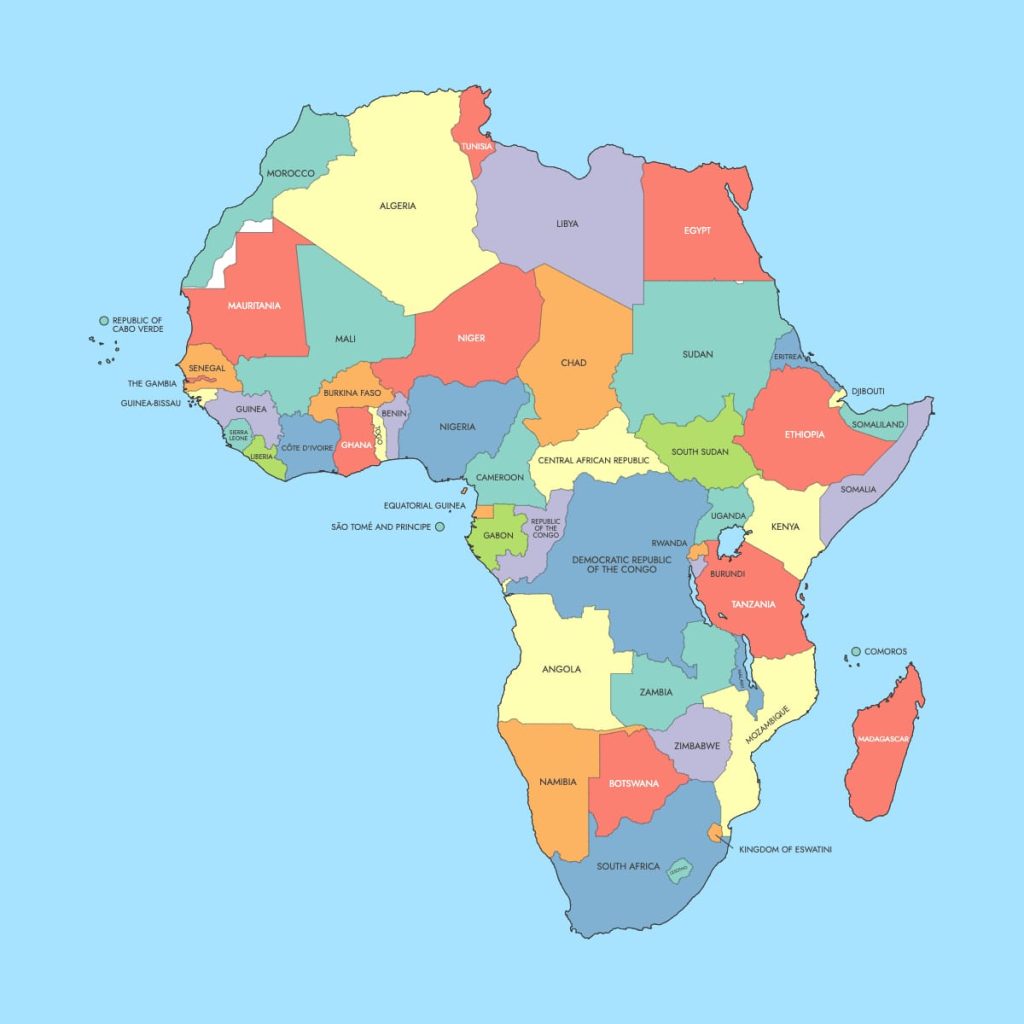
Chairman, SIFAX Group, Dr. Taiwo Afolabi, has called on African entrepreneurs, investors, and business leaders to prioritise the growth of large, sustainable corporations capable of competing globally, rather than operating fragmented and small-scale enterprises that limit the continent’s economic potential.
Speaking at the sidelines of the Africa CEO Forum held in Kigali, Rwanda, Afolabi said Africa’s economic transformation would depend significantly on the emergence of strong indigenous corporations with the scale, structure, and capacity to drive industrialisation, create jobs, attract investment, and compete internationally.
According to him, discussions at this year’s forum reinforced the urgent need for African businesses to embrace collaboration, long-term thinking, regional integration, and strategic expansion.
He said: “Africa cannot achieve its full economic potential with thousands of weak and fragmented businesses operating in silos. What the continent needs are strong institutions and large corporations that can survive beyond their founders, scale across borders, attract global capital, and compete with the best companies around the world.”
Afolabi noted that while entrepreneurship remains critical to Africa’s growth story, the continent must deliberately move beyond subsistence and lifestyle businesses towards building enduring enterprises with robust governance systems, innovation capacity, and continental reach.
“The conversations at the Africa CEO Forum clearly showed that Africa’s future lies in integration and scale. The African Continental Free Trade Area (AfCFTA) presents a historic opportunity for businesses to expand beyond national borders and build truly pan-African enterprises,” he added.
The post SIFAX Chairman urges African firms to build global-scale corporations appeared first on Vanguard News.

By Godwin Oritse
The Nigeria Customs Service (NCS) has released 36 trucks belonging to members of the Association of Maritime Truck Owners (AMATO) that were impounded during an investigation into alleged trade infractions at Zarmmak Bonded Terminal in the Amuwo Odofin area of Lagos.
The trucks were detained by Customs Police attached to the Zone ‘A’ Federal Operations Unit (FOU) after the terminal was sealed over suspected violations of Customs regulations.
While the nature of the alleged infractions has not been disclosed by the Service, the incident disrupted trucking operations and raised concerns among transport operators over mounting business losses.
The Secretary-General of AMATO, Mr. Sani Mohammed, confirmed the release of the trucks, attributing the development to the intervention of the Comptroller-General of Customs (CGC), Adewale Adeniyi, following repeated appeals by the Association. According to him, the affected truck owners maintained that they had no involvement in the alleged infractions under investigation and should not bear the consequences of actions linked to the terminal’s operations.
“The intervention of the Comptroller-General has brought significant relief to our members who had suffered avoidable financial losses as a result of the prolonged detention of their trucks,” Mohammed said.
In a statement, AMATO expressed appreciation to the Customs boss for what it described as a prompt and compassionate response that demonstrated the Service’s commitment to trade facilitation and stakeholder engagement.
The association said the release of the trucks would enable affected operators to resume business and minimise the financial impact of the disruption.
Commenting on the enforcement action, the Controller in charge of Zone ‘A’ Federal Operations Unit, Comptroller Aliyu Gambo, said the operation was carried out to ensure compliance with extant Customs laws.
Efforts to obtain comments from the management of Zarmmak Bonded Terminal were unsuccessful, while calls and text messages sent to the FOU Controller before filing this report were not responded to.

By Obas Esiedesa
Engineers under the Institute of Appraisers and Cost Engineers (IACE) have called for stronger application of engineering valuation, cost engineering and engineering economy principles to address cost overruns, waste and inefficiencies in project execution in Nigeria.
The call was made at the 2026 National Technical Conference of the IACE, held in Abuja, with the theme: “Engineering Valuation, Cost Engineering and Engineering Economy Solutions in Emerging Economies.”
The President of the Nigerian Society of Engineers (NSE), Engr. Ali Rabiu, said nations across the world were increasingly confronted with the challenge of maximising limited resources while meeting growing demands for infrastructure, economic growth and improved quality of life.
Rabiu who was represented by Engr. Dauda Musa, said that in emerging economies such as Nigeria, engineering evaluation, cost optimisation and sound economic analysis had become indispensable to ensuring that public and private investments delivered maximum value and sustainable outcomes.
He said the conference provided a unique opportunity for participants to exchange ideas, share experiences and explore innovative approaches to support the efficient management of scarce resources, accelerate infrastructure delivery and promote sustainable national development.
In his speech, outgoing National Chairman of the Institute, Engr. Ike Iwenofu, said the combination of engineering valuation, cost engineering and engineering economy provided a framework for improving efficiency, reducing waste and maintaining tighter control over project budgets and timelines.

By Udeme Akpan, Energy Editor
Nigeria may be heading for another round of inflationary pressure as crude oil prices climb above $100 per barrel following the escalating conflict between the United States and Iran, raising fears of higher petrol prices, increased transport fares and cost of living.
However, the Federal Government stands to earn significant unbudgeted oil revenue as a result of the development.
Nigeria’s Bonny Light crude traded above the $100 per barrel mark for the first time since May this year amid concerns that the Middle East crisis could disrupt global oil supplies. The region accounts for nearly one-third of the world’s crude exports, and any prolonged disruption is expected to keep prices elevated.
While the surge in oil prices offers a fiscal windfall for Nigeria, economists say the gains may be outweighed by the rising cost of living, as Nigerians are likely to bear the burden of higher fuel prices under the deregulated downstream petroleum market.
The 2026 Federal Government budget was benchmarked at a crude oil price of $64.85 per barrel, daily production of 1.84 million barrels and an exchange rate of N1,400 to the USDollar.
At current prices, Nigeria is earning about $35 more per barrel than projected, potentially generating billions of naira in additional revenue if production and exports remain stable.
However, the revenue gains may be moderated by lower-than-budgeted output. According to the Nigerian Upstream Petroleum Regulatory Commission (NUPRC), current oil production stands at about 1.7 million barrels per day, including condensate.
For consumers, the immediate concern is the likely increase in petrol prices. As international crude prices rise, import costs also increase, pushing up landing costs for imported fuel and forcing marketers to review pump prices upward.
Any increase in petrol prices is expected to trigger fresh hikes in transport fares, with knock-on effects on the prices of food, manufactured goods and other essential commodities across the country.
Commenting on the development, Managing Director of Petroleumprice.ng, Jeremiah Olatide, said the downstream sector has become increasingly volatile.
“With the resumption of loading by Dangote Petroleum Refinery in naira at N1,215 per litre on Wednesday, we expected fuel importers to reduce prices, and some actually did. However, the sudden spike in crude oil prices due to the Middle East crisis has disrupted that trend. We should expect more price instability in the coming weeks,” he said.
Similarly, National President of the Oil and Gas Services Providers Association of Nigeria (OGSPAN), Mazi Colman Obasi, noted that while depots and filling stations had yet to implement widespread price increases, the impact could soon be felt across the economy.
“The implications will be far-reaching for households, businesses and the wider economy once operators across the value chain adjust their prices,” he warned.
Data from Petroleumprice.ng showed that before the latest crude price surge, several depots in Lagos, Warri and Calabar had reduced loading prices to attract customers, while prices in Port Harcourt remained largely unchanged. Pump prices at filling stations in Lagos and its environs currently range between N1,300 and N1,400 per litre, depending on location.


Ondo APC: How Aiyedatiwa’s consensus gamble on NASS candidates backfired

Neymar Denies Clashing With Young Santos Teammates

Liverpool Make Enquiry to Sign PSG Forward Ibrahim Mbaye

Meaning Behind Egypt Manager’s ‘X’ Gesture vs Argentina

Premier League Set-Piece Goals (2025/2026)

Simi Sanya and Femi Dapson Are Now Legally Married and It Is Beautiful to See
-
 Sports17 hours ago
Fabrizio Romano Issues ‘Here We Go’ for Arsenal’s Axel Donczew Transfer
-

 Politics2 days ago
Osun PDP senatorial ticket dispute deepens over factional candidacy
-
 Entertainment2 days ago
EscapeMag Issue 15 Spotlights Mercy Eke’s Growth Through a Fashion Story Worth Watching
-
 Sports23 hours ago
Simon Jordan Claims Anthony Joshua vs Kristian Prenga was ‘Fixed’
-
Metro2 days ago
Lagos Taskforce arrests 46 suspected offenders in Island, Lekki raids
-
 Sports2 days ago
Argentine TV Names 10 People Responsible for ‘Argentinophobia’
-
 Metro1 day ago
Troops intensify hunt for abducted Zamfara council chairman
-
 Politics2 days ago
Delta LG 2nd Anniversary: Citizens demand greater transparency