
Entertainment
Is Fashion School Still Worth It in 2026? Here’s What Every Aspiring Designer Should Know


There was a time when enrolling in fashion school was seen as the first and most important step toward becoming a fashion designer. It was where aspiring designers learned how to sew, draft patterns, understand fabrics, and build the technical foundation needed to succeed in the industry. For many people, earning a certificate from a respected fashion school was almost a badge of credibility.
Fast forward to 2026, and the fashion industry looks very different.
Today, someone can learn pattern making on YouTube, watch masterclasses from international designers, use artificial intelligence to generate design ideas, take online fashion business courses, and even build a clothing brand from a smartphone. Knowledge is no longer locked inside classrooms, and opportunities to learn have never been more accessible.
That has sparked an important conversation within the industry. If so much information is available online, is fashion school still worth it the time and money?

The answer is yes, but only if you understand what fashion school can and cannot do for you.
Fashion School Is No Longer the Only Way to Learn
One of the biggest changes in the fashion industry over the past decade is how people acquire skills. Years ago, your options were limited. You either attended fashion school or found an experienced tailor or designer willing to train you. Today, the internet has changed that completely.
A determined learner can spend months studying garment construction, pattern drafting, textile knowledge, and fashion illustration without paying tuition. Platforms like YouTube and online learning websites have opened doors that were once closed to many aspiring designers.
However, access to information is not the same as mastering a skill. Watching someone sew a dress and actually producing a perfectly finished garment are two very different things. Fashion remains a practical craft, and practical skills are often developed through repetition, correction, and hands-on experience.

That is where fashion school still has an advantage.
Fashion School Offers More Than Technical Skills
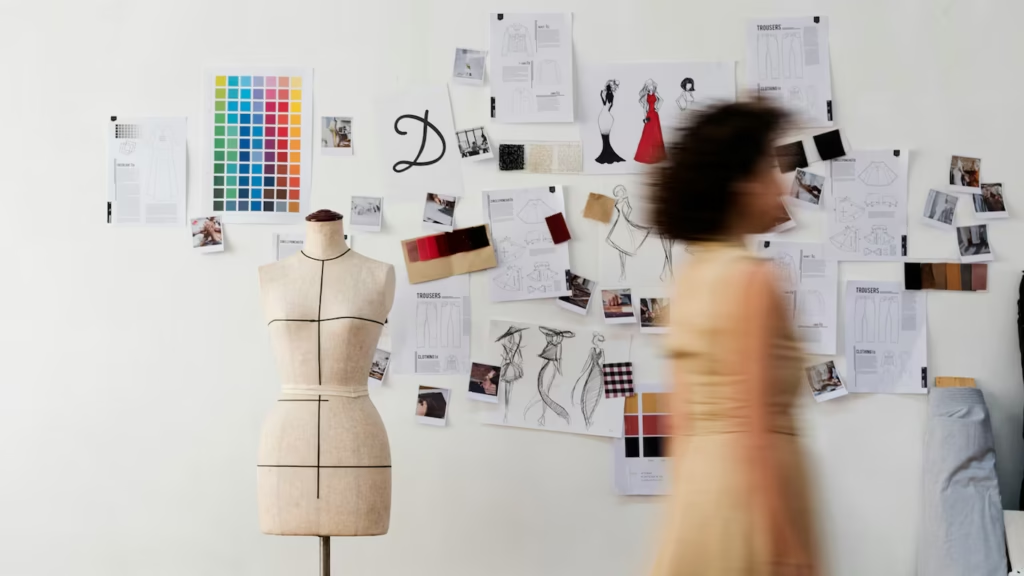
Many people assume fashion school exists only to teach students how to sew. In reality, a good fashion school does much more than that.
Students learn why certain techniques matter, how different fabrics behave, how garments are constructed for durability, and how to solve problems that arise during production. They work under deadlines, receive constructive criticism, and improve through continuous practice.
These experiences are difficult to replicate when learning alone.
An experienced instructor can identify mistakes that a beginner may never notice, while classmates often expose students to new ideas, different approaches, and healthy competition. Those interactions help shape not just better designers but more disciplined professionals.
For many aspiring designers, that structured environment becomes just as valuable as the lessons themselves.
The Fashion Industry Has Changed Faster Than Fashion Schools
While fashion schools continue to play an important role, the industry they prepare students for has changed dramatically.
Running a fashion business in 2026 requires much more than making beautiful clothes. Designers are expected to create content for social media, respond to customers online, accept digital payments, manage orders efficiently, understand branding, and market themselves in an increasingly competitive environment.
Artificial intelligence has also entered the conversation. Designers now use AI to brainstorm concepts, generate mood boards, write marketing copy, and organise content for their brands. Technology has become part of the creative process, whether designers choose to embrace it or not.
Unfortunately, many fashion schools still spend most of their time teaching technical skills while giving far less attention to the business side of fashion.
That creates a gap between education and reality. Graduates may leave school knowing how to construct excellent garments but struggle with attracting customers, pricing their work, or growing a profitable brand.
A Certificate Alone Is No Longer Enough
The fashion industry has also changed the way it evaluates talent.
Years ago, where you studied often carried significant weight. Today, many employers and clients are far more interested in what you can actually produce.
A strong portfolio, excellent craftsmanship, creativity, and consistency usually matter more than the certificate hanging on the wall. Customers rarely ask where a designer studied. They care about whether the outfit fits perfectly, arrives on time, and meets their expectations.
Social media has accelerated this shift. Designers now showcase their work directly to thousands of potential clients, allowing their finished garments to speak louder than their qualifications.
That does not make certificates irrelevant, but it does mean they are no longer enough on their own.
The Most Successful Designers Never Stop Learning
Perhaps the biggest misconception about fashion school is that graduation marks the end of education. The reality is quite different.
Fashion changes constantly. Trends evolve, customer preferences shift, new technologies emerge, and business strategies continue to develop. Designers who stop learning often find themselves struggling to keep up with an industry that never stands still.
The most successful fashion entrepreneurs continue learning long after they leave school. They attend workshops, study international fashion markets, follow emerging technologies, experiment with new techniques, and constantly improve both their creative and business skills.
Whether someone started in fashion school, learned through apprenticeship, or taught themselves online becomes less important than their willingness to keep growing.
So, Is Fashion School Still Worth It?
The answer depends on what you expect from it.
If you believe fashion school alone will guarantee a successful career, you are likely to be disappointed. The industry has become too competitive and too dynamic for technical skills alone to be enough.
However, if you see fashion school as a place to build a strong technical foundation while understanding that you must continue learning about business, marketing, technology, and customer experience, then it remains one of the best investments you can make.
Fashion school is no longer the only path into the industry, but it is still a valuable one.
In 2026, the designers who stand out are not necessarily those with the most certificates or the largest social media following. They are the ones who combine craftsmanship with curiosity, creativity with business knowledge, and traditional skills with modern technology.
The future of fashion belongs to designers who understand that learning does not end when they leave the classroom. It simply takes on a different form.

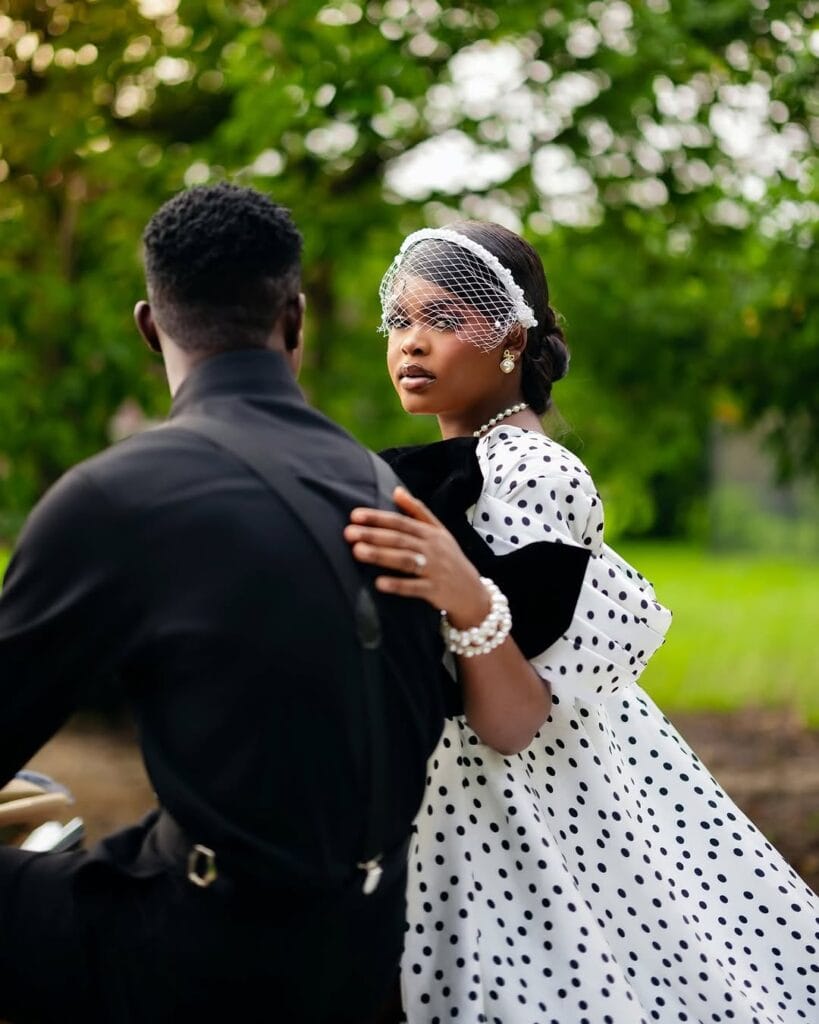
The countdown is officially on. With only a few days left before they exchange vows, Nigerian TikTok stars Peller and Jarvis have shared their official pre-wedding photos, giving fans another reason to look forward to what is already shaping up to be one of the biggest celebrity weddings of the year.
The couple, whose real names are Habeeb Hamzat Adelaja and Elizabeth Aminata, posted the stunning images on their verified social media pages, instantly drawing thousands of reactions from excited followers.
The elegant photos capture the couple sharing warm smiles, playful moments and affectionate poses, highlighting the chemistry that has made them one of Nigeria’s most beloved internet couples.
The release of the photos comes after months of wedding preparations that have unfolded in the public eye. Since announcing their August 1 white wedding earlier this month, Peller and Jarvis have consistently shared updates with fans, from outfit fittings and invitation deliveries to behind-the-scenes moments leading up to their big day.
Their openness has made supporters feel like they have been part of the entire journey.
Long before their wedding countdown began, Peller and Jarvis had already established themselves as one of Nigeria’s most talked-about social media couples. Their relationship blossomed through livestreams, comedy skits and collaborative content, attracting millions of followers who watched their friendship gradually turn into romance and eventually an engagement.
In the weeks leading up to the ceremony, the couple completed their traditional marriage rites after Peller formally visited Jarvis’ family. They also held a civil wedding, making the August 1 church ceremony the final celebration of their union.
The wedding preparations have also generated plenty of conversation online. One of the biggest talking points came after Peller revealed that the premium version of the wedding aso ebi would cost ₦700,000. While many fans admired the luxurious celebration, others debated the increasing costs often associated with high-profile celebrity weddings.
The event has also received support from several well-known personalities. Celebrity businessman Cubana Chief Priest publicly pledged financial support after receiving his wedding invitation, while entertainers, influencers and digital creators are expected to attend what many are calling one of the biggest influencer weddings Nigeria has seen.
With excitement continuing to build across social media, fans have already started counting down to the ceremony. Many are eager to see the couple’s wedding outfits, celebrity guests, and memorable moments that are likely to dominate conversations online long after the celebrations are over.
If the beautiful pre-wedding photos are anything to go by, Peller and Jarvis’ white wedding promises to be one of the most talked-about events of the year.
See the pre-wedding photos below.

Age may be just a number, but Kate Henshaw continues to make a convincing case for it. As the celebrated Nollywood actress marks her 55th birthday, her latest photos have everyone talking, not just because of the milestone, but because of how effortlessly youthful, elegant, and confident she looks.
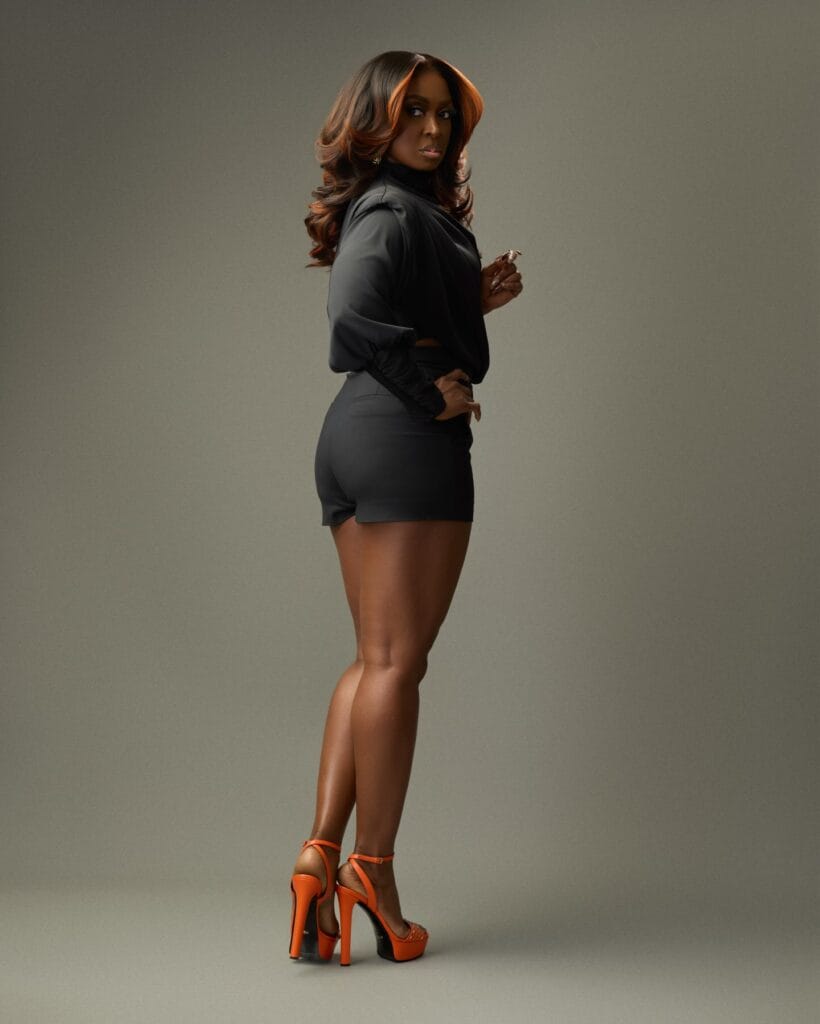
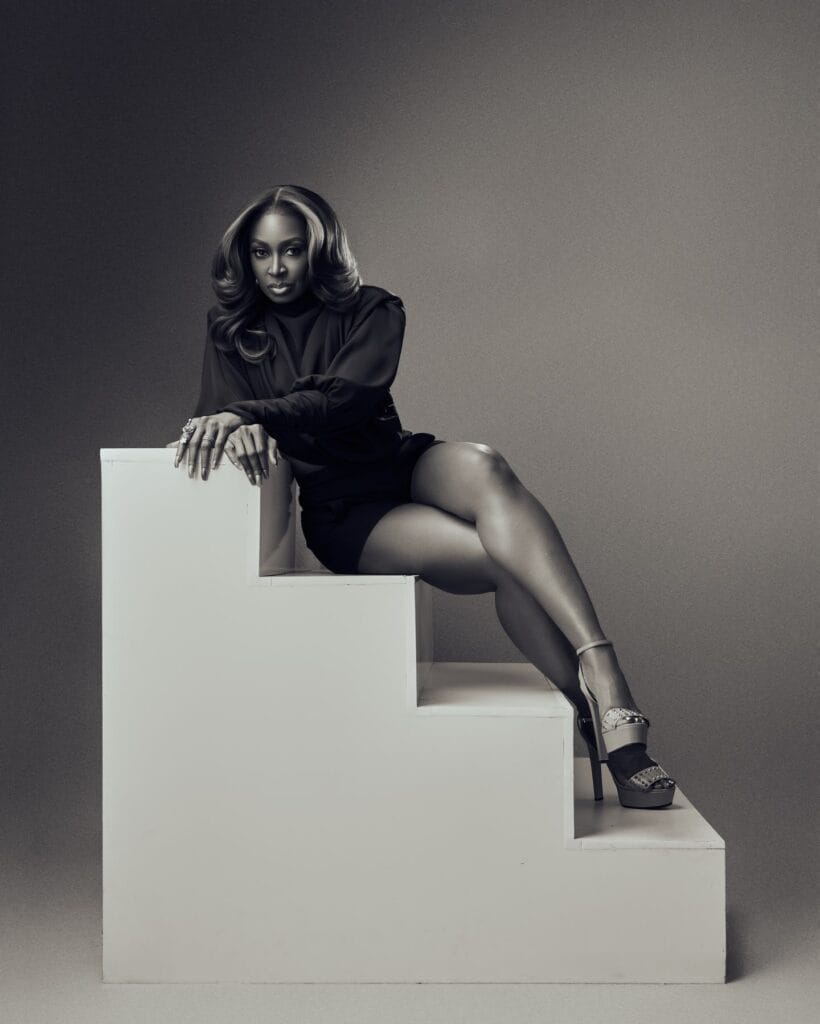
For the special occasion, Kate stepped in front of the camera wearing a sophisticated black ensemble that perfectly reflected her timeless sense of style. She chose a black high-neck draped top paired with matching shorts, creating a look that was both modern and effortlessly chic. The monochrome outfit allowed every detail to stand out without feeling overdone.
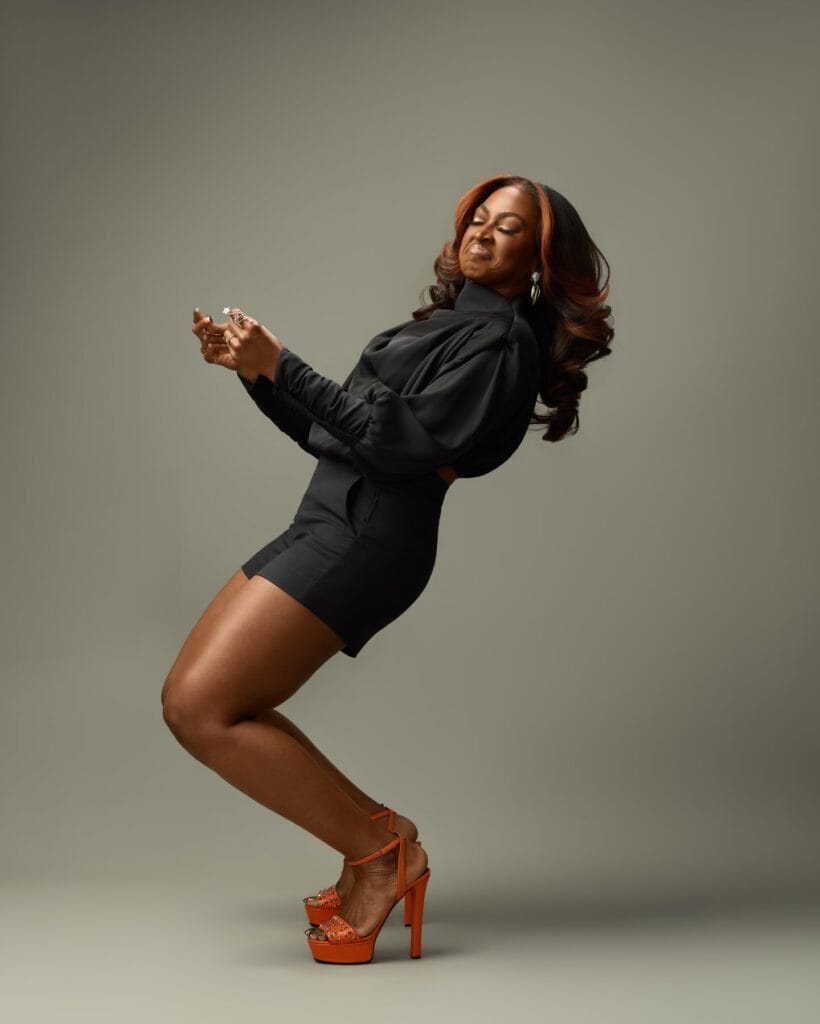
The real burst of personality came from her footwear. Kate paired the look with striking bright orange platform heels that instantly lifted the outfit, adding a vibrant pop of colour against the all-black look. It was a bold styling choice that proved sometimes all an outfit needs is one standout piece.
Keeping the accessories minimal, she wore elegant gold earrings and a selection of statement rings that complemented the outfit without taking attention away from it. Her voluminous hairstyle, featuring soft waves with warm auburn highlights, framed her face beautifully, while her flawless makeup completed the polished look.
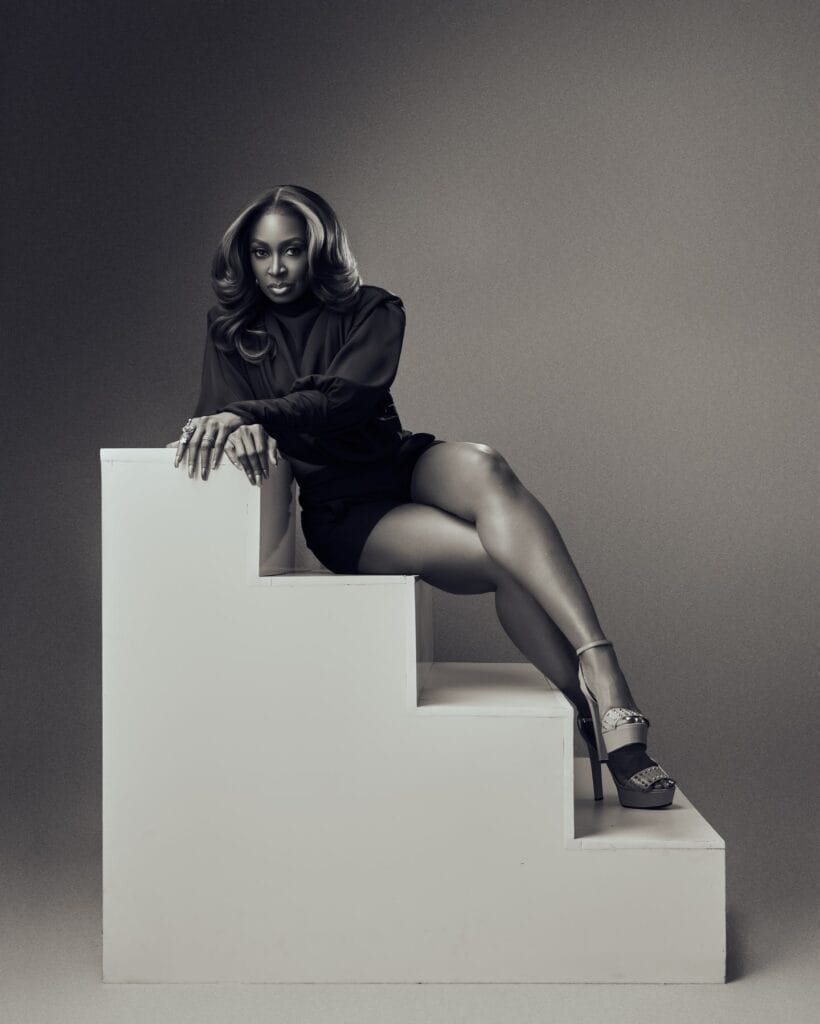
The birthday portraits also captured something that has become synonymous with Kate Henshaw over the years: confidence. Posing with ease and grace, she reminded fans that true style isn’t just about what you wear but how you carry yourself. Every image reflected the poise and self-assurance that have made her one of Nigeria’s most admired actresses.
Kate has long been celebrated for her commitment to fitness, healthy living and self-care. Over the years, she has consistently inspired fans by showing that looking good isn’t about chasing youth but about embracing a lifestyle that prioritises health, discipline and confidence. Her latest birthday photos are another reminder that elegance doesn’t fade with age.
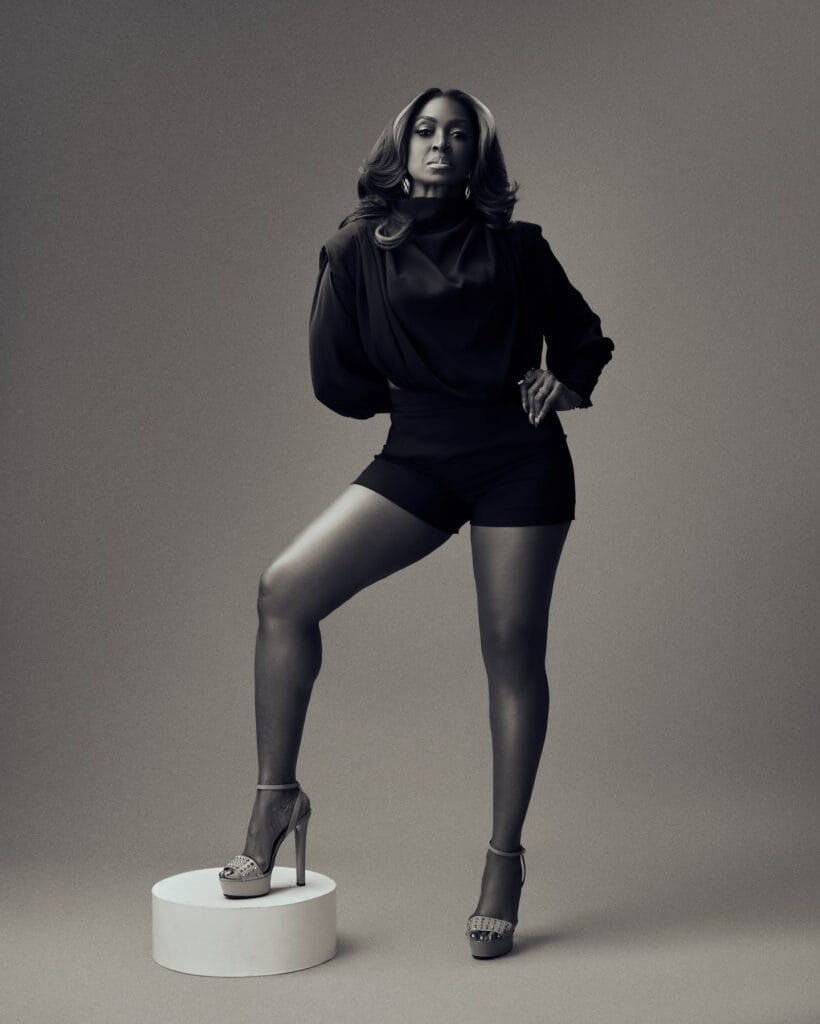
At 55, Kate Henshaw continues to redefine what ageing gracefully looks like. Her birthday look wasn’t just fashionable; it was a celebration of confidence, timeless beauty, and the idea that personal style only gets better with experience.

When Spain defeated Argentina 1-0 to lift the 2026 FIFA World Cup trophy, football was naturally the centre of attention. The victory marked another unforgettable chapter in Spain’s football history, rewarding a tournament filled with discipline, consistency, and moments of brilliance. Around the world, fans celebrated the new champions, while millions reflected on the goals, saves, and stories that defined the competition.
But beneath the celebrations was another success story that had little to do with tactics or trophies.
The 2026 FIFA World Cup fashion story was almost as captivating as the football itself. While Spain celebrated its victory over Argentina and lifted the famous trophy, luxury houses, sportswear brands, designers, and athletes were also shaping a global conversation about style. What was once simply a sporting event has evolved into a cultural spectacle where fashion is no longer a supporting act. It has become part of the main event.
The FIFA World Cup has always had the power to bring people together, but today’s tournament extends far beyond what happens during ninety minutes on the pitch.
For brands, it is one of the largest marketing opportunities in the world. For designers, it is a chance to place their work in front of billions of viewers. For athletes, it has become another platform to express their personality, while for fans, it has become an event that influences not only how they support their teams but also how they dress.
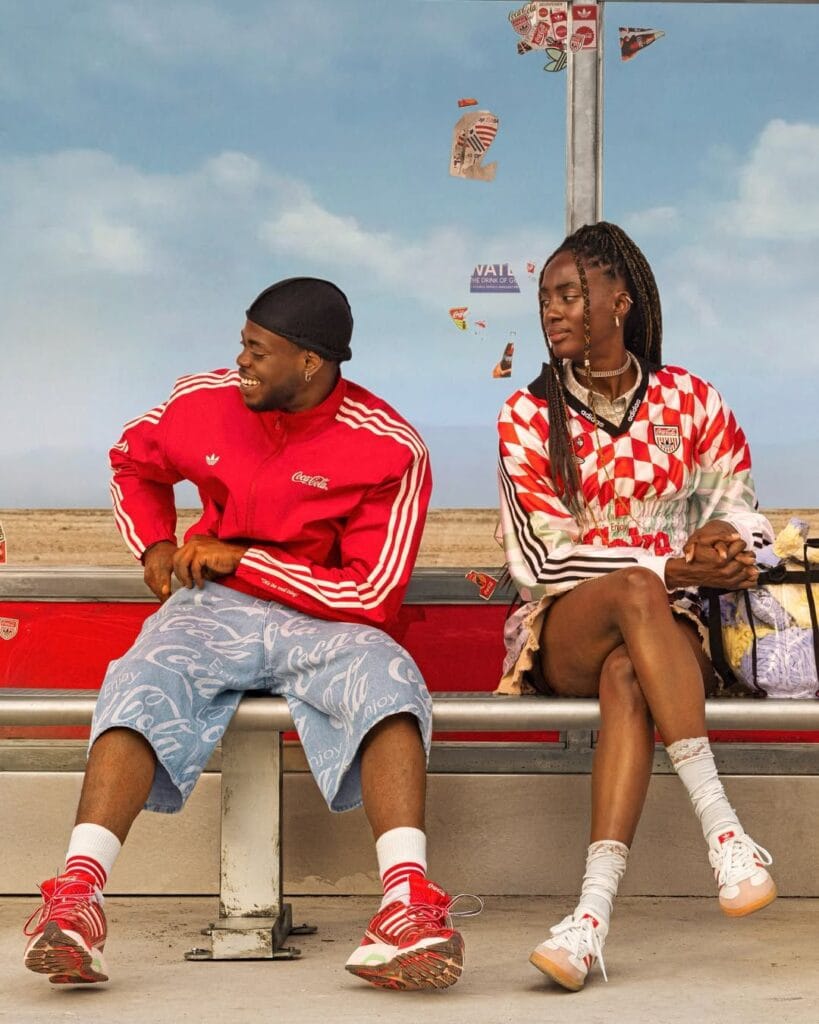
This shift reflects the growing relationship between sport and fashion. The two industries no longer operate independently. They influence one another, creating moments that travel far beyond stadiums and into popular culture. The rise of 2026 FIFA World Cup fashion perfectly reflected this evolution, as luxury brands, sportswear companies, and designers became just as visible throughout the tournament as the players themselves.
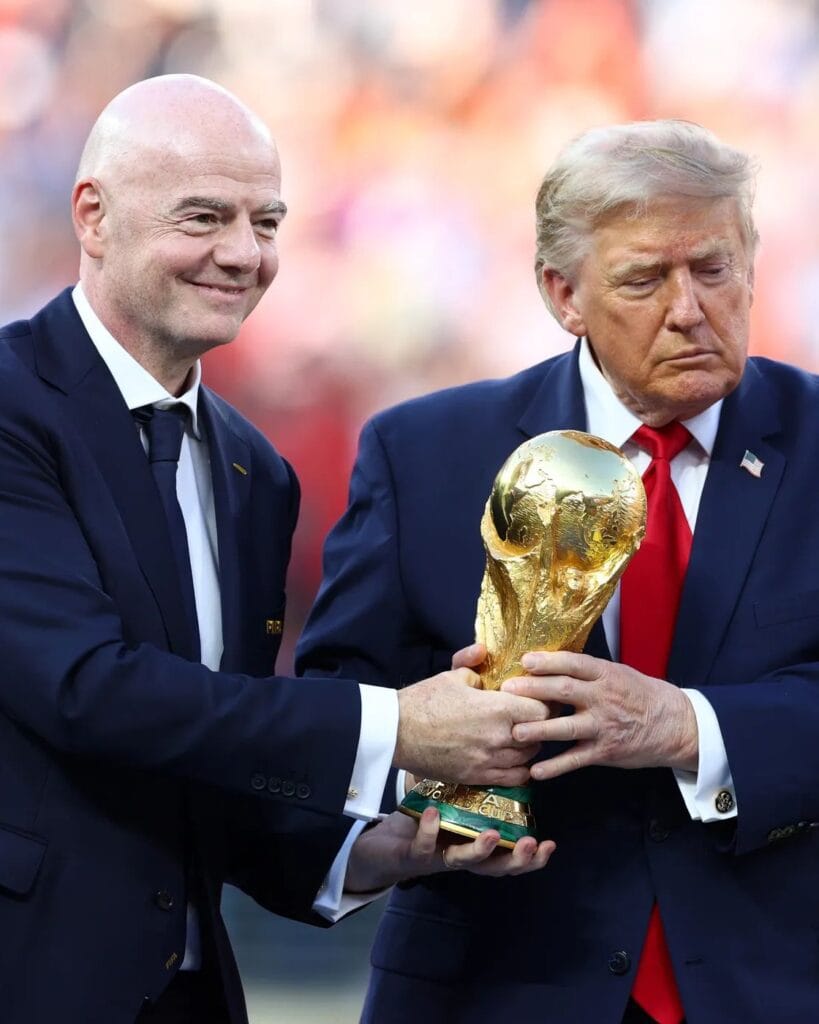
Perhaps no image captured that evolution better than the arrival of the FIFA World Cup Trophy.
The Louis Vuitton Trophy Trunk Became Part of the Story
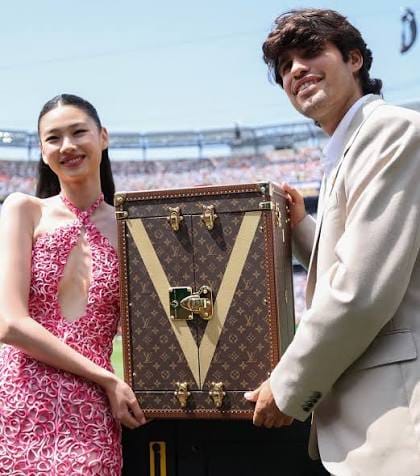
Before the final even kicked off, one of the tournament’s most memorable visuals had already unfolded.
The FIFA World Cup Trophy arrived inside a custom-made Louis Vuitton Trophy Trunk, continuing the luxury fashion house’s long-standing partnership with FIFA. Designed using Louis Vuitton’s signature craftsmanship and instantly recognisable monogram canvas, the trunk transformed the simple act of carrying the trophy into a carefully choreographed moment of luxury and prestige.
It would have been easy to dismiss it as just an elegant case, but it represented something much bigger.
The world’s most famous football trophy was introduced not simply as a prize waiting to be won, but as an object of heritage, craftsmanship, and global prestige. In many ways, the Louis Vuitton trunk symbolised how luxury fashion has become part of football’s visual identity. Every photograph of the trophy, every television broadcast, and every social media post featuring that moment also placed one of the world’s biggest fashion houses at the centre of the conversation.
Spain’s Victory Was Also a Win for Adidas
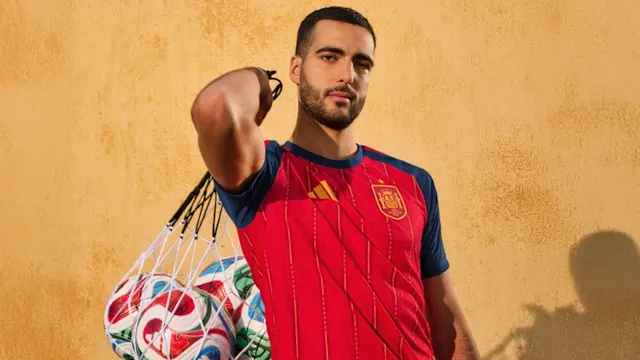
When Spain celebrated becoming world champions, another winner quietly shared the spotlight.
The Spanish national team lifted football’s most prestigious trophy wearing Adidas, giving the German sportswear company one of the most valuable moments any brand could hope for.
Every celebration inside the stadium, every medal ceremony, every team photograph, and every image shared across newspapers, television broadcasts, and social media became a lasting reminder of the brand behind the champions.
That is one of the unique powers of the World Cup. Winning teams become part of football history, and so do the jerseys they wear. Fans rush to buy them, collectors preserve them, and years later they continue to represent unforgettable moments in sport.
For Adidas, Spain’s victory was more than another successful sponsorship. It was a global showcase of its brand on football’s biggest stage.
The Competition Extended Beyond the Pitch
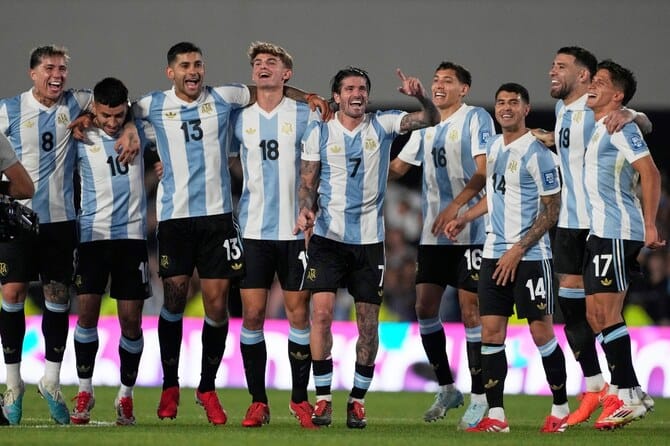
While supporters watched nations compete for football’s highest honour, another contest was unfolding in the background.
Some of the world’s biggest sportswear companies were competing for visibility.
Spain, Argentina, and Germany all wore Adidas kits during the tournament, reinforcing the company’s strong presence among football’s elite nations. France and England represented Nike, while Portugal and Morocco wore Puma, ensuring that three of the world’s largest sportswear brands remained visible throughout the competition.
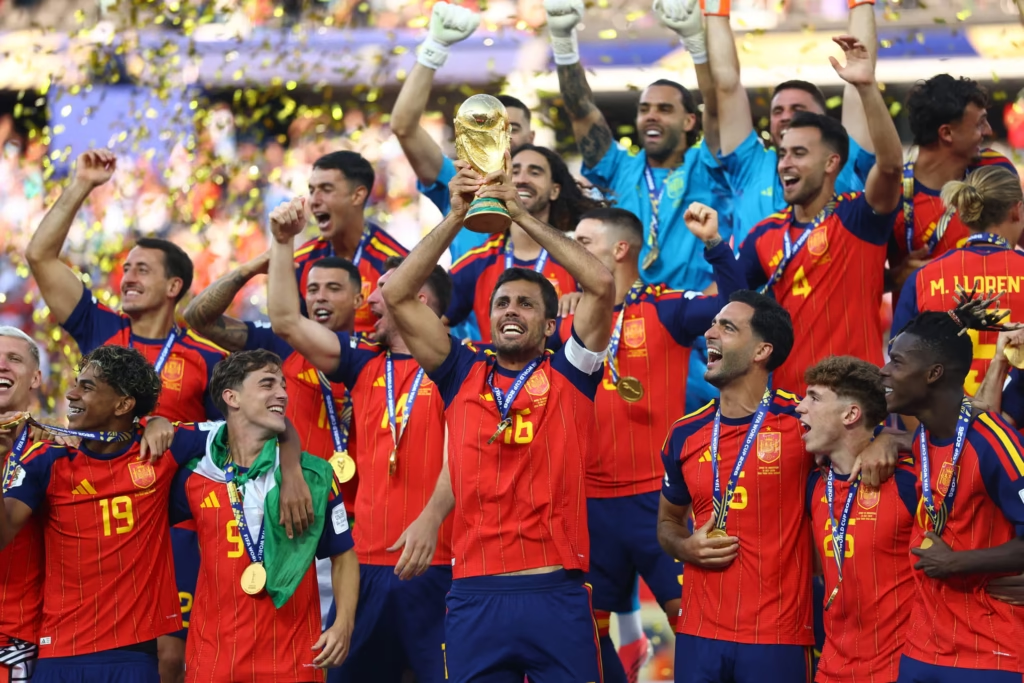
Every dramatic goal, emotional celebration, and unforgettable victory became valuable exposure. Unlike traditional advertising campaigns that last only a few weeks, World Cup moments remain part of football history. Images from the tournament are revisited for years, allowing the brands behind those iconic jerseys to benefit long after the final whistle.
The tournament reminds us that sportswear companies are not simply manufacturing kits. They are investing in stories, emotions, and moments that shape how fans remember football.
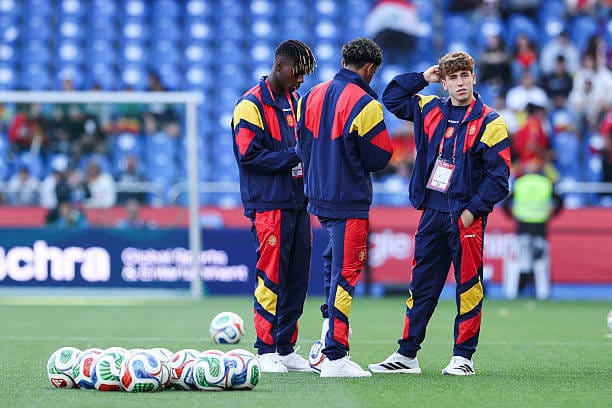
Footballers are no longer recognised only for what they do during matches.
Today’s players influence fashion almost as much as they influence sport. Throughout the World Cup, cameras followed players from the moment they stepped off team buses. Arrival photos quickly spread across social media, showcasing tailored suits, luxury travel bags, statement sneakers, designer sunglasses, and carefully chosen accessories. What players wore before entering the dressing room often generated as much discussion as the tactical decisions made by their coaches.
This growing interest has transformed footballers into valuable ambassadors for luxury brands. Companies such as Louis Vuitton, Dior, Gucci, Prada, Hermès, and Bottega Veneta have increasingly collaborated with elite footballers because they understand the reach these athletes now command. Every appearance creates another opportunity for millions of fans to discover brands that may never have been associated with football in the past.
One of the clearest examples of football’s growing influence on fashion is the evolution of the football jersey itself.
There was a time when supporters wore national team shirts almost exclusively on match days. Today, they have become part of everyday fashion.
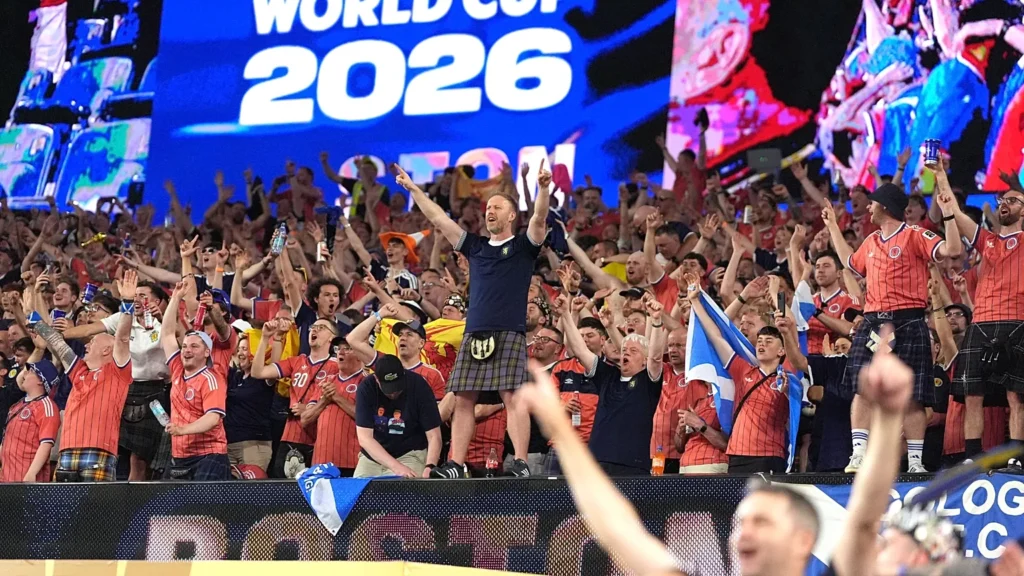
Throughout the World Cup, jerseys were styled with denim, tailored trousers, oversized jackets, cargo trousers, skirts, and fashionable sneakers. They appeared at concerts, airports, cafés, festivals, and on social media feeds long before the tournament reached its conclusion.
Spain’s victory is likely to make its 2026 Adidas jersey one of the most memorable football shirts of this generation. Just like iconic World Cup kits from previous champions, it has already become more than sportswear. It represents a moment in history that fans will continue wearing for years to come.
Social Media Turned Every Fashion Moment Into Global Content
Much of fashion’s growing influence during the World Cup can be traced to social media.
Every player arrival, every celebration, every behind-the-scenes photograph, and every trophy presentation became content within minutes. Fans identified designer brands, discussed outfits, recreated looks, and shared their favourite moments across Instagram, TikTok, Pinterest, and X.
Fashion publications covered football, while sports pages discussed luxury brands and player style. The boundaries between both industries became increasingly blurred.
For fashion brands, this kind of exposure is difficult to replicate elsewhere. A single photograph from the World Cup can reach millions of people organically, creating conversations that extend far beyond the tournament itself.
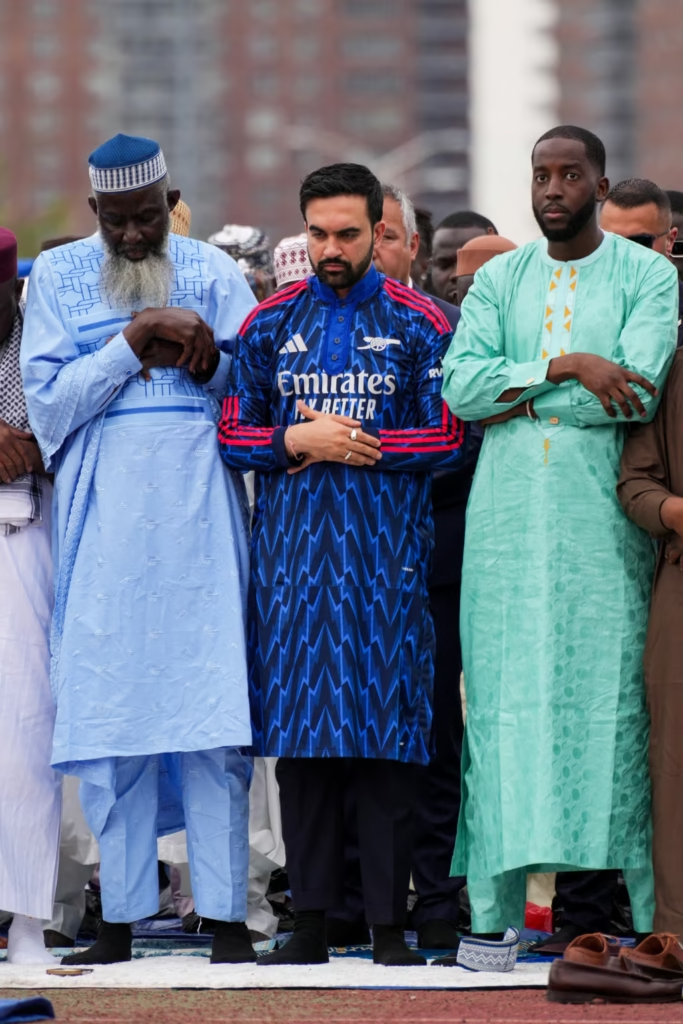
The 2026 FIFA World Cup will be remembered for Spain’s triumph, unforgettable matches, and the stories that unfolded on the pitch. It will also be remembered as another tournament that highlighted how closely football and fashion have become connected.
Luxury houses found new ways to participate in football’s biggest occasion. Sportswear companies turned national teams into global ambassadors for their brands. Players embraced their growing influence as style icons, while supporters continued to prove that football jerseys have become an important part of contemporary fashion.
The modern World Cup is no longer defined solely by the team that lifts the trophy. It is also shaped by the images, brands, and cultural moments that surround it. Looking back, 2026 FIFA World Cup fashion became one of those defining stories.
From Louis Vuitton’s iconic trophy trunk to Adidas celebrating alongside world champions Spain, and from Nike and Puma’s presence throughout the tournament to the growing popularity of football jerseys as everyday fashion, style became an essential part of football’s biggest event.
The beautiful game still sits at the heart of the FIFA World Cup, but fashion has become one of its most influential companions. Every four years, the tournament proves that what people wear, carry, and celebrate can become just as memorable as the football itself.


‘You got it wrong’ – Obasanjo fires back at Osoba over claim of deceit in 2003

Arsenal to Make £70 Million Offer for Newcastle Midfielder Bruno Guimaraes

Obasanjo rejects Osoba’s 2003 ‘deception’ claim, defends political strategy

Meaning Behind Egypt Manager’s ‘X’ Gesture vs Argentina

Simi Sanya and Femi Dapson Are Now Legally Married and It Is Beautiful to See

Premier League Set-Piece Goals (2025/2026)
-
 Sports2 days ago
Leandro Paredes’ Sister Goes on England Rant After World Cup Final
-
 Sports2 days ago
Every World Cup Nation Ranked Best to Worst by ‘Fair Play’ Record
-
 Sports1 day ago
Argentina’s Flaco Lopez Praised For Actions During Spain’s World Cup Trophy Lift
-
 Sports10 hours ago
Thomas Muller Causes Stir With Lionel Messi Comments After World Cup Final
-

 Politics2 days ago
Sokoto APC bans candidates from pasting campaign posters on roundabouts
-
 Politics1 day ago
‘Dead on arrival’- Ganduje says Obi-Kwankwaso ticket will fail in Kano
-

 Metro1 day ago
ISWAP confirms death of propagandist, Salim al-Barnawi during failed attack on military base
-
 Sports11 hours ago
FIFA Issue Statement Amid Match-Fixing Concerns at 2026 World Cup