
Politics
‘You got it wrong’ – Obasanjo fires back at Osoba over claim of deceit in 2003


Former Nigerian President, Olusegun Obasanjo, has rejected claims by former Ogun State Governor, Olusegun Osoba, that he “deceived” South-West leaders in 2003, describing Osoba’s account as “far-fetched” and full of omissions.
Obasanjo, on Thursday, in a letter addressed to Osoba in response to his article, “How Obasanjo Deceived Us in 2003,” published online, took “strong and serious objection” to being called deceitful.
The former president traced his entry into politics to 1999, revealing that he was approached by multiple groups after his release from prison, including one led by the late Chief Bola Ige and another by Martins Kuye.
He said he embarked on nationwide consultations with leaders across the South-West, North and East before joining the PDP.
“There are many things you got wrong and many things you omitted, advertently or inadvertently, in your write-up carried in The Legal Observer of July 20, 2026. Your presentation in your write-up was far-fetched, to put it mildly.
“But before I go further, I take strong and serious objection to your calling me deceitful because I deceived nobody. I always presented my case and all issues as I had them and as I understood them, no matter whose ox is gored. There were issues you did not know or understand because, as you pointed out, they were above your head. They were handled by your elders in the Alliance for Democracy (AD) and Afenifere.
“And there were issues that you governors of the South-West kept away from me which normally should be discussed or raised with me but were raised or discussed somewhere else. I would not say that you were diabolical or deceitful. You chose what you would do and you did what you chose.
“With these approaches, I decided to consult in the South-West, East and North. In the South-West, my first call was Ibadan to consult Chief Akinloye, Chief Bola Ige, Chief Richard Akinjide and Professor Oyeleye. In the North, I consulted two close friends, Sunday Awoniyi and Adamu Ciroma. In the East, I consulted Professor Anezi Okoro and Arthur Mbanefo. That quick consultation was like a sounding board. It gave me a quick and good feel.
“From that sounding, I decided to take interest in what was going on in party formations and the special role that Bola Ige was playing at that time. The Peoples Democratic Party (PDP) attracted my attention and my interest, and I was being regularly updated. After the formation of the parties, I formally joined the PDP. I continued my consultation and campaigns at the same time.”
“For me, politics is for the welfare and well-being of the people and there should be no personal bitterness or acrimony in it. And if you do not do my politics or play it my way, that should not lead to hatred, enmity or antagonism.”
Obasanjo also dismissed Osoba’s claim that AD governors and Afenifere could dictate to his government, recalling meetings with Papa Abraham Adesanya and Papa Onasanya, and insisted that bringing the PDP and AD into a national government was “out of strength, not weakness.”
“Bringing the PDP and AD to join me for a sort of national government was not out of weakness; rather, it was out of strength and for the unity and progress of the country.
“For you to present such to me was to grossly underrate me. It was the second time.”
The former president further alleged that his then vice president initiated the impeachment move against Speaker Ghali Na’Abba and even plotted a 2007 takeover with the support of AD governors.
“From the first day as vice president, he raised campaigners for his presidency… he gave him 5 million naira to begin his impeachment work,” Obasanjo claimed.
Concluding, Obasanjo said politics should be about ideas, not bitterness, and acknowledged Osoba’s role in allocating land for the Olusegun Obasanjo Presidential Library (OOPL), calling it “the most significant landmark in Abeokuta.”
dailypost.ng
Politics
0sun guber, 2027 elections: Results management must be open, transparent – Yiaga Africa to INEC
Yiaga Africa has urged the Independent National Electoral Commission, INEC, to establish a result transmission protocol that clarifies the journey of election results from polling units to their final destination.
Yiaga Africa emphasized the necessity for the public to be informed about the handling of results, asserting that Nigerians require explanations to comprehend the entire result management system.
During a Policy Roundtable on the Electronic Transmission and Collation of Election Results held in Abuja on Thursday, Samson Itodo, the Executive Director of Yiaga Africa, advocated for a transparent and open results management process in anticipation of the Osun State governorship election and the 2027 general elections.
Itodo referenced Yiaga Africa’s policy brief titled “Securing the Vote through Electronic Transmission and Collation of Election Results,” which analyzes the results management framework established by the Electoral Act 2026, along with the INEC Regulations and Guidelines for the Conduct of Elections, 2026.
Yiaga Africa pointed out that Section 60(3) of the Electoral Act 2026 mandates the electronic transmission of polling unit results (Form EC8A) to the INEC Result Viewing (IReV) portal, transforming the portal from merely a public viewing platform into a legal record instrument. It also stipulates a second, direct transmission of results and accreditation figures to the next level of collation for verification.
Yiaga Africa expressed concern that significant elements of the results management process remain obscured from public view, stating: “For example, results sent from polling units do not appear instantly on the IReV; they undergo an internal backend validation process that INEC has not publicly clarified, leading to results being displayed in batches rather than in real time.
“While the IReV publishes polling unit results (Form EC8A), it does not publish ward (Form EC8B) or local government (Form EC8C) collation results, preventing citizens from independently verifying how polling unit results are collated. In addition, the introduction of the electronic EC8A creates three versions of the same result: the physical result sheet, the scanned image on the IReV, and the electronically transmitted record. Yet there is no clear rule on which version prevails if discrepancies arise.”
Yiaga Africa urged INEC to take measures such as to “publish a protocol on results transmission explaining the full journey of a result from the polling unit to the IReV, including the purpose, operators, and expected duration of the backend validation process, and provide for independent assessment of the upgraded BVAS and IReV.
“Publish ward and local government collation results (Forms EC8B and EC8C) on the IReV, and fulfil the Commission’s longstanding promise to publish polling unit accreditation figures alongside the images of Form EC8A.
“State clearly which result prevails in the event of a discrepancy between the physical EC8A, the scanned copy on the IReV, and the electronically transmitted e-EC8A, and establish a transparent procedure for resolving discrepancies before collation proceeds.
“Redraft Paragraph 40 of the Regulations and Guidelines to state expressly where the validated polling unit result is transmitted to, and to prescribe the form, particulars, procedure, and timeline for recording instances of communication failure.
“Develop a dedicated manual on results management for the training of all personnel involved in the results process, clarifying roles, procedures, and processes at each level of collation and in the event of transmission failure.
“Conduct a robust and publicly observable mock exercise covering accreditation and results transmission for all categories of election, in good time for any necessary changes to be made before the general election, and disclose procurement, technical specifications, and stress-test results.
“Gazette the Regulations and Guidelines in compliance with Section 70 of the Electoral Act 2026, so that their legal status is beyond doubt and all stakeholders understand the rules under which the election will be conducted.”
Yiaga Africa noted that these measures require no legislative amendment and fall squarely within INEC’s existing constitutional and statutory powers.
It added, “Accordingly, they can be implemented in advance of the 2026 Osun Governorship Election and the 2027 General Election. Yiaga Africa further calls on political parties, candidates, election observers, the media, and citizens to sustain vigilant oversight and consistently advocate for a transparent, accountable, and verifiable results management process as an essential safeguard for electoral integrity in future elections.”
dailypost.ng

.says he neither misled anyone nor acted in bad faith
By James Ogunnaike, Abeokuta
Former President Olusegun Obasanjo has responded to former Ogun State Governor, Chief Olusegun Osoba, over claims that he deceived leaders of the Alliance for Democracy (AD) during the political realignments leading to the 2003 general elections, insisting that he neither misled anyone nor acted in bad faith.
In a lengthy letter dated July 23, 2026, titled “Reply to Your Inaccurate Posture: ‘How Obasanjo Deceived Us in 2003′”, Obasanjo described Osoba’s account, published in The Legal Observer on July 20, as “farfetched” and riddled with inaccuracies, omissions and misconceptions.
The former President took particular exception to Osoba’s allegation that he deceived Yoruba political leaders, insisting that his political engagements had always been guided by openness and national interest.
“I take strong and serious objection to your calling me a deceiver because I deceived nobody. I always presented my case and all issues as I had them and as I understood them, no matter whose ox is gored,” Obasanjo wrote.
Obasanjo argued that several political developments preceding his emergence as President in 1999 were unknown to Osoba because they were handled by senior leaders of Afenifere and the AD.
He disclosed that after his release from prison, several groups from across the country urged him to contest for the presidency, including delegations led by Lawan Katsina, the late Chief S.M. Afolabi and Chief Martins Kuye.
According to him, those consultations informed his eventual decision to join the Peoples Democratic Party (PDP) after extensive consultations with political leaders across the South-West, North and South-East.
Recalling his engagements with the late Afenifere leader, Chief Abraham Adesanya, Obasanjo said despite being repeatedly told that Yoruba people would not vote for him, he continued to maintain cordial relations with the elder statesman.
“There was no time I called on Papa Adesanya that I was not well entertained. Yet Papa stood on no vote for me, and I stood on my respect and what was due to him,” he stated.
The former President defended his decision to invite the AD into what he described as a broad-based national government after winning the presidency, saying it was motivated by a desire to promote national unity rather than political weakness.
“Bringing PDP and AD to join me for a sort of national government was not out of weakness; rather, it was out of strength and for the unity and progress of the country.”
Obasanjo also rejected Osoba’s account of events surrounding the attempted impeachment of then Speaker of the House of Representatives, Ghali Na’Abba, alleging instead that the impeachment plot originated from within his own administration.
He claimed that his then Vice-President had encouraged the move while simultaneously pursuing his own presidential ambition.
“The game continued to be played on with me treating it with contempt as I had committed no impeachable offence,” he wrote.
On the 2003 elections, Obasanjo disputed Osoba’s suggestion that the defeat of AD governors resulted from political manipulation by the Presidency.
Instead, he maintained that the electoral outcome reflected the political realities at the time.
“Your loss or defeat in 2003 was genuine in all the six states except the one where the figures were successfully and murderously changed,” he asserted.
The former President further accused some AD leaders of embracing what he described as an anti-democratic political arrangement allegedly promoted by his Vice-President without verifying the claims with him.
He maintained that he had consistently rejected ethnic politics, insisting that Nigeria’s presidency should never be viewed through a tribal lens.
“I have never believed in tribal politics,” Obasanjo declared.
While criticising Osoba’s interpretation of events, Obasanjo nevertheless acknowledged the former governor’s contributions to Ogun State and to the establishment of the Olusegun Obasanjo Presidential Library (OOPL) in Abeokuta.
He commended Osoba for allocating the land on which the library stands, describing it as a landmark project that has benefited the state.
“The greatest service you rendered for me and for Abeokuta is the land allocated by you for Olusegun Obasanjo Presidential Library. It has become the most significant landmark in Abeokuta.”
Obasanjo concluded by urging Osoba to embrace humility, gratitude and enduring political relationships, stressing that politics should never destroy personal bonds.
“Politics may end, relationships may live till life’s end… there is no end to humility and thanksgiving.”
www.vanguardngr.com

The African Democratic Congress (ADC) has told President Bola Tinubu that foreign recognition will not secure him another term in office, insisting that Nigerians will judge his administration by its performance, not by diplomatic gestures from other world leaders.
In a statement issued on Thursday by its National Publicity Secretary, Bolaji Abdullahi, the opposition party reacted to the Presidency’s celebration of a purported letter from United States President Donald Trump to Tinubu.
The ADC said presenting the letter as an endorsement of Tinubu’s administration was misleading, stressing that diplomatic correspondence between world leaders is a normal part of international relations.
“The Presidency’s attempt to present President Donald Trump’s letter to President Bola Ahmed Tinubu as though it were a referendum on the state of the nation is not correct,” the party said.
According to the ADC, countries cooperate, leaders exchange views and letters regularly, adding that such communication does not amount to an endorsement of a government’s performance.
The party accused the Tinubu administration of being desperate for international validation instead of focusing on solving Nigeria’s challenges.
“It is apparent that this administration is desperate to seize upon any gesture of international recognition as proof of success at home,” the statement said.
The ADC maintained that “a letter from a foreign president, however well-intentioned, cannot substitute for the verdict of the Nigerian people.”
It added that the true measure of any government is not what foreign leaders say about it, but what citizens experience daily.
The opposition party argued that Trump’s letter had not changed the reality facing millions of Nigerians, especially those affected by insecurity.
“For the millions of Nigerians still living with the consequences of this government’s failures, President Trump’s communication changes nothing. It did not say that insecurity has been overcome or that Nigerians can once again travel freely, farm safely and sleep without fear,” the party stated.
The ADC also pointed to the continued captivity of hundreds of women and children in parts of Borno State and Kaiama in Kwara State, while many communities in Benue and other parts of the country still live in constant fear because of insecurity.
The party further noted that, despite the Presidency’s celebration of the letter, the United States Department of State has not changed its travel advisory for Nigeria.
According to the ADC, several Nigerian states remain under Level 3 and Level 4 travel advisories, with American citizens still being urged to reconsider or avoid travel because of crime, terrorism, kidnapping and civil unrest.
“We therefore wonder how correspondence from a government that designates several Nigerian states as ‘Do Not Travel’ areas can be regarded as an endorsement,” the party said.
It argued that the travel advisory shows the international assessment of Nigeria’s security situation remains different from the image the Presidency is trying to project.
The ADC said Nigerians are more concerned about their safety than diplomatic exchanges between presidents.
“The daily reality of Nigerians is shaped not by diplomatic correspondence, but by the guarantee that they can go about their lives without falling victim to violent crime or terrorism,” it said.
The party stressed that Trump’s letter was simply communication between two presidents and “does not amount to an endorsement of this government’s overall performance.”
It urged the Tinubu administration to focus less on celebrating diplomatic courtesies and more on delivering measurable improvements in the lives of Nigerians.
“Ultimately, Nigerians will not judge this government by the letters it receives from foreign capitals. They will judge it by whether it improved the lives of the people it was elected to serve,” the statement added.
dailypost.ng

One feared killed, two rescued in attack on Kwara community
0sun guber, 2027 elections: Results management must be open, transparent – Yiaga Africa to INEC

Tottenham’s Jamie Donley Impresses New Manager De Zerbi in Pre-Season

Meaning Behind Egypt Manager’s ‘X’ Gesture vs Argentina

Simi Sanya and Femi Dapson Are Now Legally Married and It Is Beautiful to See

Premier League Set-Piece Goals (2025/2026)
-
 Sports2 days ago
Leandro Paredes’ Sister Goes on England Rant After World Cup Final
-
 Sports2 days ago
Every World Cup Nation Ranked Best to Worst by ‘Fair Play’ Record
-
 Sports1 day ago
Argentina’s Flaco Lopez Praised For Actions During Spain’s World Cup Trophy Lift
-
 Sports11 hours ago
Thomas Muller Causes Stir With Lionel Messi Comments After World Cup Final
-

 Politics2 days ago
Sokoto APC bans candidates from pasting campaign posters on roundabouts
-
 Sports12 hours ago
FIFA Issue Statement Amid Match-Fixing Concerns at 2026 World Cup
-
 Politics2 days ago
‘Dead on arrival’- Ganduje says Obi-Kwankwaso ticket will fail in Kano
-
 Metro1 day ago
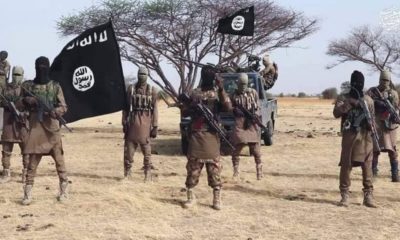
ISWAP confirms death of propagandist, Salim al-Barnawi during failed attack on military base