
Business
ELECTRICITY: NDPHC restores 450MW Alaoji plant


By Obas Esiesesa
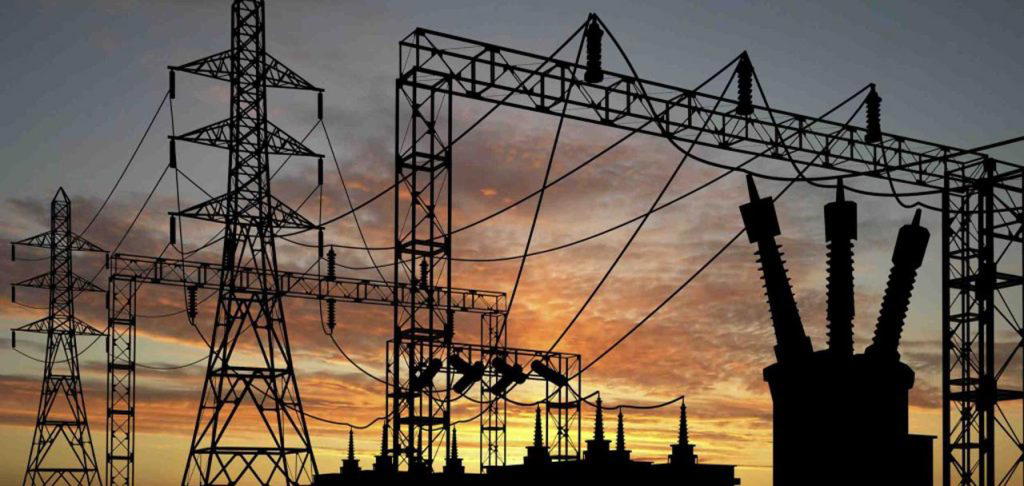
The Managing Director and Chief Executive Officer of the Niger Delta Power Holding Company, Engr. Jennifer Adighije has disclosed that operations at the 450 megawatts Alaoji Open Cycle Power Plant in Abia State has been restored after it was shut down in 2023 over gas supply and metering disputes.
Adighije disclosed this during a meeting with the Governor of Abia State, Alex Otti, where she briefed the governor on efforts taken by the company to revive the power plant.
She explained that the plant was shut down after disparities emerged between metering and trading points, leading gas supplier TotalEnergies to suspend supply to the facility, while debts also accumulated.
She noted that upon assuming office in 2024, the restoration of the Alaoji plant became a priority for the company.
According to her, “The good news is that we have carried out and fixed all the remedial works on the defective gas line. We’ve also been able to completely defray our past due obligations to Total, and Total has restored gas supply to the plant”.
Adighije added that extensive electromechanical works had also been completed on the plant, leading to the restoration of three generating units, GT1, GT22 and GT23, which are now available to dispatch about 375 megawatts to the national grid.
She also disclosed that the plant has adequate transmission infrastructure with no major evacuation constraints, describing it as a viable generation facility for grid-imported electricity.
The NDPHC boss also commended the Abia State government for reforms in the electricity sector, especially the Aba ring-fenced power arrangement and the establishment of the state electricity regulatory agency.
She said the company was leveraging the Electricity Act and the evolving bilateral electricity market to partner with states and eligible customers to improve power supply across the country.
“We would love to form a strategic alliance with Abia State considering the fact that you are very driven and determined to secure uninterruptible electricity for the good people of Abia State,” she said.
Responding, Governor Otti praised the management of NDPHC for bringing the Alaoji plant back to life, describing the development as critical to economic growth and industrial development in the state.
Otti revealed that the plant could eventually be expanded to 800 megawatts and later to about 1,100 megawatts, subject to the availability of funds.
He reiterated that power remained one of the most critical drivers of economic development, noting that his administration prioritised electricity infrastructure since assuming office in 2023.
The governor also disclosed that the state government had ring-fenced the Umuahia electricity market and entered into an agreement with the Enugu Electricity Distribution Company to acquire electricity distribution assets covering Umuahia and surrounding areas.
According to him, the state would require about 100 megawatts to service the eight local government areas under the Umuahia ring-fence, while investments in renewable energy and mini-grid projects were also ongoing.
The post ELECTRICITY: NDPHC restores 450MW Alaoji plant appeared first on Vanguard News.

By Godwin Oritse & Efe Onodjae
There are indications of festering disagreements over the implementation of the National Single Window (NSW), a centralized digital portal launched by the Federal Government in March this year to address delays in import-export processing at the ports.
It allows importers and exporters to submit trade documents once, replacing duplicate paperwork across multiple agencies.
President of the National Council of Managing Directors of Licensed Customs Agents (NCMDLCA), Lucky Amiwero, told Vanguard that the system is not operating as envisaged, urging the government to hand over the implementation to the Nigeria Customs Service (NCS).
But Customs itself is saying there is no problem with the system presently, adding that it has recorded some early successes.
However, Amiwero said the current arrangement has failed to simplify trade documentation and cargo clearance, contrary to the objectives of a Single Window system.
“Instead of a single window, what we have are multiple windows that are complicating the process for importers and clearing agents,” he said.
He dismissed reports that the project had entered a second phase, insisting that challenges identified during the initial phase remained unresolved.
According to him, the NCS has the legal mandate, operational platform and technical expertise required to implement the project under the Customs Act.
Amiwero also disagreed with the plans for electronic transmission of cargo manifests outside the Customs framework, insisting that manifest administration is a statutory responsibility of the NCS.
He urged the government to harmonise all trade documentation on a single Customs platform instead of creating multiple systems that duplicate functions.
The freight forwarder further expressed concern over persistent cargo clearance delays, saying they continue to increase demurrage and other port charges borne by importers.
Meanwhile, the NCS has said that the NSW platform has enhanced trade facilitation, improved efficiency in goods clearing and Nigeria’s competitiveness in international trade.
Also the Customs, in collaboration with the National Single Window (NSW) Secretariat, has commenced stakeholder sensitisation on submission of electronic vessel manifest as implementation of the next phase of the NSW gathers momentum.
Addressing the stakeholders, Deputy Comptroller-General in charge of ICT/Modernisation, Oluyomi Adebakin, said the exercise builds on consultations held before and after the launch of Phase One of the NSW on March 27, 2026.
She described the NSW platform as a globally accepted trade facilitation tool that would improve efficiency, transparency and Nigeria’s competitiveness in international trade.
“Since the introduction of the National Single Window, the country has begun to experience its benefits. Nigeria’s standing in international trade is improving,” she said. Adebakin stressed that electronic manifest submission would not alter Customs’ statutory responsibilities but would simply provide a faster and more transparent method of processing documents.
She added that the platform would enhance trade facilitation, improve data integrity and strengthen anti-smuggling efforts.
National Coordinator of the National Single Window Project, Tola Fakolade, commended the NCS for supporting implementation of the initiative.
He disclosed that the platform has so far issued over 100,000 licences and permits while registering more than 1,000 users, describing the progress as a significant milestone in Nigeria’s trade modernisation programme.

By Elizabeth Adegbesan
Firms are expecting borrowing cost for banks’ loans to decline in the next three months deapite seeing rates elevated in July.
This was contained in the Central Bank of Nigeria’s, CBN, latest Business Expectation Survey Report.
CBN said: “Respondents expect borrowing rates to remain elevated across the same periods, as indicated by the consistently positive borrowing rate indices.
“The relatively stable indices, fluctuating around 18-19 points, suggest expectations of a marginal decrease in borrowing costs over the near – to medium term.”
The survey report also showed that the Business Confidence Index was 5.7 points, reflecting continued optimistic sentiment among formal businesses on the macro economy.
According to CBN, Respondents’ positive sentiment on macro economy was largely underpinned by increased demand (22.3 percent ), economic diversification (21.4 percent) and access to finance (15 percent ), while more guarded views were primarily driven by inflation (27.7 percent), insecurity (22.4 percent) ongoing energy-related challenges (23.4 percent) and elevated geopolitical uncertainties (16.5 percent).
The outlook over the next six months, CBN maintained remains strong, with confidence indices in all sectors reflecting positive sentiment over the review periods.
During the review period, businesses identified high/multiple taxation (70.8), insecurity (69.7) and high interest rate (66.3) as the top three business constraints.
These were followed by unfavourable political climate (62.2) and high bank charges (62.0).
But competition (61.1) and unclear Economic Laws (58.4) ranked lower but remain significant.
CBN noted that at the bottom of the top ten constraints were financial constraints (56.6) and poor infrastructure (55.1) reflecting relatively lower, though still significant factors.
On expansion outlook, the electricity, water and gas sector posted the highest expansion outlook at 85.7 index points.
Nonetheless, employment expectations in August 2026 were mostly cautious across sectors, with the Mining & Quarrying sector having the most optimistic hiring outlook.

By Yinka Kolawole
Manufacturers’ confidence in Nigeria’s business environment rebounded in the second quarter of 2026 (Q2’26) buoyed by expectations of improved government policies and a more favourable operating climate. But the sector operators have continued to grapple with high borrowing costs, inadequate power supply, foreign exchange constraints and multiple taxation.
The latest Manufacturers CEO Confidence Index (MCCI) released by the Manufacturers Association of Nigeria, MAN, showed that the aggregate index rose to 52.1 points in Q2 2026, up from 48.7 points in the first quarter (Q1’26) indicating a return to positive business sentiment.
Director General of MAN, Segun Ajayi-Kadir, said the improvement reflected manufacturers’ optimism about the direction of government reforms rather than any significant improvement in current operating conditions.
He stated: “The increase in the MCCI to 52.1 points signals renewed confidence among manufacturers, driven largely by expectations that recent policy initiatives, including the Nigeria Industrial Policy, the ‘Nigeria First’ Policy, Executive Orders 003 and 005, and the Nigeria Tax Act 2025, will improve the operating environment.”
He, however, noted that the optimism remained fragile as manufacturers continued to face severe operational challenges.
“The confidence expressed by manufacturers is largely forward-looking. Actual business and employment conditions during the second quarter remained weak, with both indicators still below the 50-point threshold, reflecting subdued business activity,” Ajayi-Kadir stated.
He listed limited access to finance, persistent electricity shortages, high production costs, inadequate foreign exchange availability, weak consumer demand and multiple taxation as the major constraints confronting manufacturers.
Ajayi-Kadir said manufacturers remained dissatisfied with the high cost of bank credit, attributing it to the Central Bank of Nigeria’s Monetary Policy Rate, MPR, of 26.5 per cent.
“Commercial lending rates remain prohibitively high for manufacturers. The current monetary policy stance continues to constrain access to affordable financing needed for investment and expansion,” he said.
The MAN DG further expressed concern over continued regulatory bottlenecks and uncertainty surrounding the implementation of the Nigeria Tax Act 2025, saying manufacturers were yet to enjoy the full benefits of the reforms aimed at reducing multiple taxation and easing regulatory burdens.
Ajayi-Kadir added that although local sourcing of raw materials had improved, government ministries, departments and agencies were yet to substantially increase patronage of Made-in-Nigeria products as envisaged under the “Nigeria First” policy.
He urged the Federal Government to ensure strict compliance with the directive requiring MDAs to source at least 80 per cent of their procurement locally, while calling on the CBN to reduce the MPR to below 20 per cent and prioritise foreign exchange allocation to manufacturers to stimulate production and accelerate industrial growth.


Troops ambush Boko Haram tax collectors, recover AK-47 in Borno
2027: APC completes 100% upload of governorship, State Assembly candidates to INEC portal

Backstage Reaction to His WWE Retirement Emerges

Meaning Behind Egypt Manager’s ‘X’ Gesture vs Argentina

Premier League Set-Piece Goals (2025/2026)

Simi Sanya and Femi Dapson Are Now Legally Married and It Is Beautiful to See
-

 Metro2 days ago
Kidnap trial: Defence laments absence of witnesses as three suspects close case
-

 Politics2 days ago
Osun guber: ‘Allow free election to hold’ – Accord to Tinubu after EFCC action
-
 Politics2 days ago
2027: Watch it, God may call you like Abacha before election – Dino
-
 Sports2 days ago
World Cup-Winning Captain Cafu Went Bankrupt Despite Earning Millions
-
 Metro2 days ago
Agada’s death: NSCDC sacks two operatives, clears mining commander
-

 Metro2 days ago
Crane kills three in Ogun road accident
-
 Politics2 days ago
Lagos never had govt that prioritizes its people in last two decades – Rhodes-Vivour
-
 Sports2 days ago
England’s ‘Team of the Future’ Was Predicted in 2007