
Health
Two A+ Parents, One O- Baby? The Blood Type âScandalâ Thatâs Actually Just Science


can a+ and a+ give birth to o+ or O negative?
Itâs a panic that lands in clinics and WhatsApp groups far too often: âBoth of us are A positive⦠how is our child O negative? Did the lab mess up? Or is something else going on?â
The short, reassuring answer is no lab error, no mystery, and no betrayal. This outcome is completely possible under normal genetics. Hereâs why the âmathâ actually maths perfectly once we look at what blood-type tests really reveal.
Your blood type is decided by two separate systems that most people only see the final phenotype of, not the hidden genes.
ABO system ð©¸ð©¸ð©¸ð©¸ð©¸ð©¸ð©¸ð©¸ð©¸
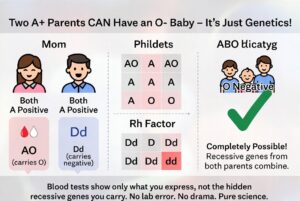
Type A means you carry at least one A allele. You could be AA or AO. The O allele is recessive and invisible in your test result. If both you and your partner are AO (very common), each of you has a 50 % chance of passing the O allele. When both pass O, the child is blood group O. Roughly 45â50 % of people with type A are actually AO carriers, so this pairing happens every day.
Rh (positive/negative) system ð©¸ð©¸ð©¸
âPositiveâ means you have the dominant D antigen. You can still be heterozygous Dd and carry the recessive d allele. If both parents are Dd, there is a 25 % chance the child inherits d from both and is Rh negative. About 15 % of people are Rh negative, which means a large portion of âpositiveâ people quietly carry the d gene.
When both parents are A positive but heterozygous for both traits (AO and Dd), an O-negative child is not only possible â it is mathematically expected in a predictable percentage of pregnancies. The child simply received the two recessive alleles that were hiding in plain sight in both parents.
Blood-group reports show only what antigens are expressed on red cells. They do not sequence your DNA or tell you whether you are homozygous or heterozygous. That hidden information is what allows âimpossibleâ combinations to appear regularly in perfectly ordinary families.
This is basic Mendelian inheritance, not infidelity or laboratory failure. The same recessive-gene logic explains blue-eyed children born to brown-eyed parents or curly-haired kids from straight-haired couples. It is science doing exactly what it is supposed to do.
If the result still feels unsettling, a simple conversation with your doctor or a genetics counsellor can walk you through your specific probabilities. In the overwhelming majority of cases, however, the only thing that needs updating is the outdated assumption that blood types behave like simple labels instead of the elegant, recessive-carrying system they actually are.
Your O-negative child is not evidence of a mistake. They are proof that genetics loves surprises â and that love (and science) are doing just fine.ââââââââââââââââââââââââââââââââââââââââââââââââââ
Dr Parveen Yograj


Toothpick side effects: What are the disadvantages of toothpicks?
I can technically think of potential risks regarding nearly every medical specialty, including ophthalmology, ENT and urology.

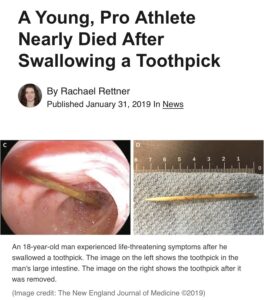
They may look harmless but can be surprisingly dangerous. Accidental ingestion (often unnoticed) lets the sharp ends perforate the GI tract—most commonly the ileum, duodenum, or sigmoid colon. This can cause peritonitis, abscesses, sepsis, or even injury to nearby organs like the liver. Wooden ones are hard to spot on plain X-rays, so CT is often needed, and endoscopic or surgical removal may be required.
Be extra careful with finger foods, club sandwiches, and appetizers.
Why doctors dont find the use of toothpicks amusing
Toothpicks are more dangerous than they look.
1. Accidental toothpick ingestion is uncommon but can be life-threatening because the sharp ends can pierce the gastrointestinal tract.
2. The most frequent sites of perforation are the ileum, duodenum, and sigmoid colon, leading to peritonitis, abscess formation, or sepsis.
3. Many patients don’t remember swallowing the toothpick, making the diagnosis easy to miss.
4. Wooden toothpicks are poorly visible on plain X-rays, so CT scan is often required if ingestion is suspected.
5. A migrating toothpick can injure nearby organs, causing liver abscess, pancreatitis, fistulas, or even vascular injury in rare cases.
6. Endoscopic removal is preferred if the toothpick is still within reach. Once perforation occurs, surgical intervention may be necessary.
7. An unexplained acute abdomen after eating finger foods, club sandwiches, or appetizers should always raise suspicion for an ingested toothpick, even if the patient denies swallowing one.
You’ll be surprised how many toothpicks are accidentally swallowed, with potentially catastrophic consequences.

Why do Male footballers wear “sports bras” during matches?
The “sports bras” male soccer players wearing are usually not bras at all. They are GPS performance tracking vests. They are electronic, for GPS tracking their positions in the pitch
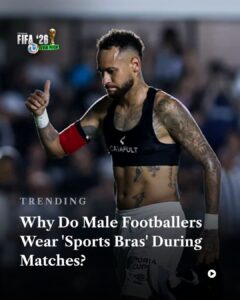
The black elastic vest fits tightly around the chest, which is why it resembles a sports bra. It contains a small device between the shoulder blades that collects performance data.
It helps coaches measure things like:
Distance covered during a match or training.
Top speed and sprint frequency.
Acceleration and deceleration.
Heart rate (when paired with a heart-rate sensor).
Player workload and fatigue, helping reduce the risk of injury.
Teams analyze this data to:
Decide when a player should be rested.
Monitor recovery after injuries.
Improve fitness and training plans.
Compare performance over time.
players wear these vests in:
Under their jerseys during training.
In some matches, if the competition allows GPS tracking devices.
During warm-ups before games.
So, despite the appearance, they’re high-tech monitoring equipment, not sports bras.
Other names:
People usually colloquially call it sports bra, but it ain’t a bra
It has plenty names, yo’ can call it
* GPS Tracking Vest
* Performance Tracking Vest
* Athlete Monitoring Vest
* Player Tracking Vest
Summary:
These garments are not bras, but specialized electronic performance tracking vests worn by athletes. The tight crop-top design holds a lightweight GPS tracking pod securely between the shoulder blades.The pod tracks precise physical metrics like total distance, top speeds, acceleration, and heart rate.

*CONSULTANT PAEDIATRIC SURGEON, DR. ILUOBE INEGBENOSUN, DISTINGUISHES HIMSELF AT NIGERIAN SURGICAL RESEARCH SOCIETY CONFERENCE*
Excellence, innovation, and academic distinction once again took center stage as Dr. Iluobe Inegbenosun, MBBS, MHPM, FWACS, Consultant Paediatric Surgeon at the University of Benin Teaching Hospital (UBTH) and State Secretary of the Edo State Branch of the Nigerian Medical Association (NMA), made a remarkable impact at the just-concluded Scientific Conference of the Nigerian Surgical Research Society (NSRS), held in Benin City.

Dr. Inegbenosun was among the distinguished surgeons whose insightful research presentation enriched deliberations on emerging trends, groundbreaking innovations, and the future of surgical practice and research in Nigeria. His scholarly contribution drew commendation from colleagues and experts, reinforcing his reputation as one of the nation’s leading voices in paediatric surgery and clinical research.

The conference, which brought together eminent surgeons, researchers, and healthcare professionals from across the country, provided a vibrant platform for the exchange of cutting-edge ideas, professional collaboration, and the advancement of evidence-based surgical care aimed at improving patient outcomes nationwide.
In recognition of his commitment to surgical scholarship and research excellence, Dr. Inegbenosun was formally inducted into the prestigious Nigerian Surgical Research Society (NSRS) alongside other accomplished surgeons. The induction marks another significant milestone in his distinguished career and underscores his unwavering dedication to advancing surgical science, mentoring future generations of surgeons, and strengthening healthcare delivery in Nigeria.
Dr. Inegbenosun’s achievements continue to bring pride to the University of Benin Teaching Hospital, the Edo State medical community, and the Nigerian Medical Association, serving as an inspiration to young medical professionals committed to excellence in patient care, research, and innovation.
He is Married to his lovely beautiful wife Dr. Ann Inegbenosun and blessed with 3 lovely children and currently undergoing a PhD program in Healthcare Administration UNIBEN.


BREAKING: Court of Appeal dismisses ADC, Accord Party deregistration suit

Troops rescue kidnap victim, recover 126 rustled livestock in Katsina

Crystal Palace Eyeing Free Agent and Former Arsenal Star Takehiro Tomiyasu

Meaning Behind Egypt Manager’s ‘X’ Gesture vs Argentina

Premier League Set-Piece Goals (2025/2026)

Simi Sanya and Femi Dapson Are Now Legally Married and It Is Beautiful to See
-
 Metro2 days ago
Troops rescue 48 kidnap victims in Zamfara
-

 Metro1 day ago
Collapsed three-storey building traps occupants in Anambra
-

 Metro2 days ago
Bandits abduct Kebbi High Court judge
-
 Metro2 days ago
Troops arrest soldier declared wanted for supplying military uniforms to terrorists
-

 Metro2 days ago
One feared dead as armed robbers operate on Onitsha–Enugu Expressway
-
 Entertainment1 day ago
Veekee James and Femi Atere Deliver Their Most Heartwarming Fashion Moment Yet at Baby Eliana’s Child Dedication
-
 Sports2 days ago
Emma Jones Speaks Out on ‘Wardrobe Malfunction’ at York Races
-
 Metro2 days ago
Lagos trader arrested over cocaine concealed in food cartons bound for UK