
Business
Education, medical tourism drive foreign travel spending to $6bn


•Education-related travel gulps $2.84bn
•Foreign airlines dominate travel tickets
•This highlights systemic failures – experts
By Babajide Komolafe, Economy Editor & Dickson Omobola
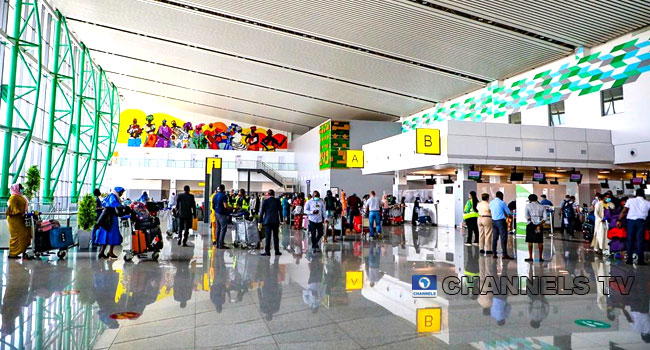
Nigerians spent $5.996 billion on airline tickets for foreign travels in 2025, a 32 per cent rise, year-on-year, YoY, amid increases in education related travels and a surge in international business engagements.
Other increases are in connection with medical tourism and personal travels.
Meanwhile, aviation industry experts said the sharp rise in foreign travel spending underscores deep structural weaknesses in Nigeria’s economy, education, healthcare and tourism sectors, warning that unless urgent reforms are implemented, the country would continue to lose huge foreign exchange to overseas medicals, education and tourism-related services.
They specifically called for massive investment in infrastructure, improved security, stronger support for local airlines, and comprehensive reforms in the health and tourism sectors to reduce pressure on foreign travel spending.
Data obtained by Financial Vanguard from the Central Bank of Nigeria, CBN, showed that total foreign travel expenditure rose to $5.996 billion in 2025 from $4.544 billion in 2024.
Analysis of the quarterly data showed that spending growth was concentrated largely in the first nine months of the year before moderating in the final quarter. Quarter-on-quarter, total travel spending rose by 33.2 per cent in Q2’25 and by 7.0 per cent in Q3’25 before declining by 31.6 per cent in Q4’25.
In Q1’25 Nigerians spent $1.267 billion on foreign travel, representing a 20.2 per cent increase from $1.054 billion recorded in the corresponding period of 2024, Q1’24.
The second quarter, Q2’25 recorded a much sharper increase as spending shot up to $1.688 billion from $1.096 billion in Q2’24, representing a 54.0 per cent YoY increase, while Q3’25 expenditure reached the yearly peak of $1.806 billion compared with $1.175 billion in Q3’25, indicating a 53.7 per cent YoY increase.
However, growth moderated significantly in Q4’25 as total expenditure stood at $1.235 billion, only 1.3 per cent higher than the $1.219 billion recorded in Q4’24.
Education related travels
Sectoral breakdown shows that despite the slowdown in Q4’25, education-related travel remained the single largest component of foreign travel spending by Nigerians.
According to the CBN, Nigerians spent $2.845 billion on foreign education-related expenses in 2025, indicating a 14.5 per cent increase against $2.484 billion in 2024.
In Q1’25 Nigerians spent $592.71 million on foreign education travel, up by 6.0 per cent YoY from $559.16 million in Q1’24.
The figure rose sharply by 33.1 per cent YoY to $800.16 million in Q2’25, from $601.10 million in Q2’24. The upward trend persisted in Q3’25, by another 33.1 per cent YoY increase to $880.17 million in Q3’25, from $661.21 million in Q3’24.
However, spending on education-related travel dropped to $572.11 million in Q4’25, representing a 13.6 per cent decline from the $662.38 million in Q4’24.
Business travels
Business travel spending rose to $231.75 million in the Q1’25 from $77.33 million in Q1’24 representing a 199.7 per cent YoY increase.
In Q2’25, expenditure on business trips jumped by 403.1% YoY to $234.56 million from $46.62 million in Q2’24, while Q3’25 spending surged 924% to $207.26 million compared with only $20.24 million Q3’24.
Similarly, Q4’25 business travel expenditure rose to $171.88 million from $36.61 million in Q4’24, indicating a 369.5 per cent YoY increase.
Medical travels
Medical-related travel expenditure also increased significantly, rising to $684.72 million in 2025 from $643.15 million in 2024, indicating a 6.5 per cent YoY increase.
Medical-related travel also recorded increases in the first three quarters before declining in the final quarter.
In Q1’25, medical travel expenditure rose to $151.53 million from $142.95 million in Q1’24, representing a 6.0 per cent YoY increase, while Q2’25 spending increased to $189.41 million from $153.67 million Q2’24, indicating a 23.3 per cent YoY rise.
In Q3’25, medical travel expenditure rose further to $208.35 million from $169.04 million in Q3’24, also representing a 23.3 per cent YoY increase, before declining by 23.7 per cent, YoY to $135.43 million in Q4’25 from $177.49 million recorded in Q4’24.
Personal travels
Meanwhile, expenditure under personal travel for tourism and other purposes remained elevated throughout the year. It rose by 31.3 per cent YoY to $1.62 billion in 2025 from $1.235 billion in 2024
This category rose to $290.65 million in the Q1’25 from $274.19 million in Q1’24, representing a 6.0 per cent YoY increase. It rose further to $463.86 million in Q2’25 from $294.76 million in the Q2’24, representing a 57.4 per cent YoY increase, and peaked at $510.25 million in Q3’25 up from $324.24 million in Q3’24, also representing 57.4 per cent YoY increase. This trend continued Q4’25, with a further increase of 3.8 per cent, YoY to $355.53 million from $342.56 million in Q4’24.
Experts’ comments
Commenting on the development, Director of Research at Zenith Travels and Consult Ltd, Mr. Olumide Ohunayo, said foreign airlines remained the major beneficiaries of the surge in overseas travel by Nigerians.
He stated: “The major beneficiaries of the increased foreign travel are the foreign airlines. For the majority of the flights, we only have Air Peace on the international route, while on the West Coast route, we have our airlines and some other African airlines competing.
“Major beneficiaries are Ethiopian Airlines. Even Air Maroc, which maltreated Nigerian passengers, was fully booked. It shows that there is the potential of a strong national carrier or flag carrier for us, especially if we are able to put that together and get strong airlines to operate out of Nigeria.”
He added: “As foreign airlines benefited, so also did their ecosystem, the hotels and all.”
Speaking on the development, Ohunayo blamed the rising education-related travel on the declining focus on local institutions.
He said: “Most of the institutions are just out to make money rather than providing educational services because almost all the courses you see everywhere are what they are offering.
“Some of the private institutions that are providing specialised courses now, the cost of the tuition fees is almost at par with those outside the country. They practically put their fees in dollars, or convert from dollars directly.”
He added: “I think, just like for the airlines, they should suspend issuance of licences for new universities, except if it is a specialised one that we do not have in the country.”
Also speaking, Chief Executive Officer of Belujane Konzult, Mr. Chris Aligbe, said the declining standard of education in Nigeria was worsening the pressure on foreign exchange.
According to him, “People no longer rely on what we produce from that sector. Standards are now being questioned, and it was not like that in the past.
“When we were in school, people came from outside the country to attend our universities. However, it is no longer the situation. Until we improve that sector, which will take quite a long time, we may never return to those days.”
Commenting on rising medical tourism, Ohunayo said the country must urgently address infrastructure challenges and insecurity.
“We just need to build infrastructure. Power is in shambles at the moment, making the cost of providing those services by organisations more expensive. Again, there’s insecurity that has not allowed our core professionals to come back home to work. We need to correct some of these errors,” he said.
According to him, “The most important thing is power. Other things include provision of infrastructure, taxes to encourage new companies and, generally, securing lives and properties.”
He further stated: “You will find that they put their bill in dollar form and just convert directly. Some would say, why would I take that risk if it is the same as going abroad where I can just add the cost of a ticket and travel?”
“For some, treatment in India or China is cheaper than even in Nigeria. The cost of the ticket is even cheaper than in Nigeria,” he added.
Aligbe also blamed the weak health sector for the rising foreign medical trips.
“Our health system has dropped as well. Doctors are leaving because the pay is quite low. There have also been complaints that the total budget for health was not released. If the resources are not provided, nothing can be done to change the health sector,” he said.
On tourism-related travel, Aligbe said insecurity and lack of policy direction were limiting the growth of Nigeria’s domestic tourism industry.
“We have not developed our tourism sector, and insecurity plagues our country. So, insecurity is an impediment. We don’t have a firm policy in Nigeria to develop tourism, otherwise it is a place that should earn us a lot of money with the vast land space we have and the sites, which are largely undeveloped,” he said.
He also linked the rise in foreign travel to fare developments in the aviation sector during the year.
“Do you recall what happened in the aviation sector in Q4? Nigerian airlines increased fares and people complained. For foreign travel, it remained relatively steady. It didn’t witness that kind of meteoric increase in prices.
“Because it is usually a festive period, people are always prepared to travel during that period, so they keep their money ahead. Take a look at Detty December, there was an influx of Nigerians into the country from overseas. So, it is a period of travel boom.
“If we didn’t have the kind of fare increase we had among domestic airlines, we might also have experienced a boom in passengers on domestic routes,” he stated.
The post Education, medical tourism drive foreign travel spending to $6bn appeared first on Vanguard News.

By Peter Egwuatu
The Nigerian stock market sustained its bullish momentum in May 2026 as investors gained over N4.514 trillion during the month.
Meanwhile, Week-on-Week, WoW, the market, last week, also recovered from the losses it recorded previous week to post a N431 billion gain at close of trading last Friday.
In the month of May, the NGX market capitalisation, which represents the total value of stocks listed on the Exchange, surged to N160.077 trillion from N155.994 trillion recorded at the end of April 2026.
Similarly, another major market indicator, NGX All Share Index, ASI, which measures the changes in the market price level of stocks surged by 3.43% to close in May at 250,385.47 points from 242,077.81 points in April.
Analysts attributed the positive momentum in the market to sustained buying interest in selected large-cap and mid-cap stocks, which outweighed profit-taking activities triggered by the recent market rally.
They noted that investors continued to position in fundamentally strong counters across the banking, telecom, energy and industrial sectors, pushing the benchmark index further into positive territory.
Rising from a negative position previous week the market activity showed that capitalisation which grew by over N431 billion, drove the NGX ASI up by 0.3%.
A total turnover of 2.398 billion shares worth N111.480 billion in 241,313 deals was traded last week by investors on the floor of the Exchange, in contrast to a total of 3.875 billion shares valued at N161.757 billion that exchanged hands the previous week in 334,745 deals.
The Financial Services Industry (measured by volume) led the activity chart with 1.656 billion shares valued at N48.229 billion traded in 94,812 deals: thus contributing 69.07% and 43.26% to the total equity turnover volume and value respectively. The Services Industry followed with 265.448 million shares worth N4.530 billion in 19,443 deals. Third place was the ICT Industry, with a turnover of 101.848 million shares worth N9.163 billion in 24,858 deals.
Commenting on market outlook, analysts at InvestData Consulting Limited stated: “ In the near term, investors are expected to monitor macroeconomic developments, crude oil price movements, corporate earnings expectations and policy signals that could influence market direction.
“However, the sustained inflow into fundamentally strong stocks suggests that the market may continue to witness bargain hunting and strategic accumulation, especially in sectors considered resilient under the current economic conditions. Investors are therefore advised to remain selective and focus on fundamentally sound stocks with strong growth potential and attractive valuations.”
The post Stock market sustains bullish run, recovers from previous week’s losses appeared first on Vanguard News.


By Efe Onodjae
The Nigerian Safety Investigation Bureau, NSIB, has commenced investigation into the collision involving container vessel, MV Maersk Valparaiso, and oil tanker, MT Lady Martina, at Bonny Anchorage in Rivers State.
The incident, which occurred on May 20, 2026, has been classified by the Bureau as a “Very Serious Marine Casualty.”
In a statement issued yesterday by the Director, Public Affairs and Family Assistance of NSIB, Mrs Funke Adebayo-Arowojobe, the Bureau said it had immediately activated its marine occurrence response protocols after receiving notification of the incident.
According to the statement, an investigation Go-Team was deployed to Onne and Bonny on May 22 to commence evidence preservation and preliminary investigative activities.
“The team boarded both vessels and carried out critical evidence collection, including detailed interviews with the Masters and key crew members. Operational records and navigational data relevant to the casualty were also secured and documented,” the statement read.
NSIB further disclosed that data from the Voyage Data Recorder, VDR, and Electronic Chart Display and Information System, ECDIS, of MV Maersk Valparaiso had been successfully downloaded for forensic and navigational analysis.
The Bureau also noted that, in line with the International Maritime Organization, IMO, Casualty Investigation Code and international obligations, it had formally notified the Transport Safety Investigation Bureau, TSIB, of Singapore as a substantially interested State.
It added that collaborative engagements had commenced with relevant local and international stakeholders.
The Bureau reassured the public and maritime stakeholders that the investigation would be conducted with professionalism, independence and
It stated that the objective of the probe was to establish the causal and contributory factors behind the occurrence and enhance maritime safety standards.
NSIB, however, cautioned against speculation on the possible causes of the collision, saying investigations were still ongoing.
“It would be premature to speculate on the probable causes at this stage. The Bureau therefore strongly urges the public and all stakeholders to refrain from speculation while the investigative process continues,” the statement added.
The agency also said that should urgent safety concerns arise during the investigation, immediate safety recommendations would be issued to prevent similar incidents.
According to the Bureau, the final investigation report will be made public upon completion of the exercise in line with national regulations and international obligations.
The post NSIB probes Bonny Anchorage vessel collision appeared first on Vanguard News.


….Accuses Customs, NAFDAC, SON of enforcement failure
By Cynthia Alo
Despite the retention of vegetable oil on the Federal Government’s prohibition list under the 2026 fiscal policy measures, the National Chairman of the Vegetable/Edible Oil Producers Association of Nigeria (VEOPAN), Okey Ikoro, said the local market is still dominated by more than 100 imported oil brands, warning this threatens investments and discourages backward integration in the sector.
Speaking on Arise News, Ikoro disclosed that association members intercepted three trailers two days ago transporting smuggled vegetable oil through the Badagry axis.
Ikoro, while reviewing the effect of the 2026 fiscal policy measures on the vegetable oil sector of the Nigerian economy, accused the Nigeria Customs Service, National Agency for Food and Drug Administration and Control (NAFDAC), and the Standards Organisation of Nigeria, (SON) of failing to enforce ban.
He said: “The 2023 fiscal policy definitely placed vegetable oil under prohibition and a lot of milestones were gained because it was a long-time policy from 2023 to 2026. A lot of companies went into backward integration, huge companies like Okomu, Presco, and PZ Wilmar, all of them went into major expansion because the policy gave protection to the industry.
“But two years later, entering 2024 and 2025, there was a total collapse of implementation on the side of the agencies that were supposed to monitor the fiscal policy, especially in the area of prohibition of items. We noticed that the markets were flooded with imported vegetable oil despite the fact that the item was under prohibition. If you go into the local market, you will see more than 100 brands of vegetable oil coming in from outside the country, in yellow jerry cans with funny labels. Nobody is monitoring. NAFDAC is not doing its job.
“This resulted in a lot of losses and setback to the companies. Companies would have borrowed huge sums of money to put into their backward integration because oil palm is a long gestation investment. Before you can start getting returns, it takes a minimum of five years.
He questioned the quality and safety of the imported products saying, “All the vegetable oils produced in Nigeria are regulated. NAFDAC visits the factories regularly and tests the products to ensure they meet fortification and quality standards. But the imported oil just comes in and nobody is monitoring it. They do not carry NAFDAC numbers or labels, yet they are all over the market.”
The post Over 100 imported vegetable oil brands dominating local market despite ban — Ikoro appeared first on Vanguard News.


‘No evidence’ — Atiku dismisses Babachir Lawal’s ADC rigging claim

Edo: Police arrest officer for alleged killing with tear-gas

ADC: Babachir Lawal handed Atiku stinging rebuke – Presidency mocks

Simi Sanya and Femi Dapson Are Now Legally Married and It Is Beautiful to See

FCT Area Council Election: Live results from polling units

Premier League Set-Piece Goals (2025/2026)
-
 Sports1 day ago
Arsenal v PSG Ref Blasted For ‘Nonsense’ Decision During Champions League Final
-
 Sports2 days ago
Erling Haaland’s Post After Arsenal Lose Champions League Final Goes Viral
-
 Sports1 day ago
Why Ousmane Dembele Takes Penalties With His Weak Foot
-
 Sports1 day ago
Tommy Fury Forgot the Rules of Football at Soccer Aid 2024
-
 Sports1 day ago
Chelsea Issue Statement After Tweet Backlash Following Arsenal UCL Final Defeat
-
 Sports1 day ago
Premier League Legend Was Banned From Soccer Aid After ‘String of Complaints’
-
 Politics2 days ago
Lagos APC picks Sonayon-James as Hamzat’s running mate
-
 Sports2 days ago
Joao Neves Criticises Arsenal After PSG’s Champions League Final Victory