
Sports
World Cup Sweepstake: Step-by-Step Guide


There are plenty of ways to watch the World Cup, but doing so with a sweepstake and a vested interest in the tournament may take it to the next level.
A sweepstake takes participants and throws them into a random draw to decide who will get a certain team to follow throughout the competition in hopes of winning.
There is often a prize pool of money available to participants (though it isn’t necessary to have fun), adding an extra layer of competitiveness to the World Cup, as fans cheer on the team they have been drawn in this game of chance.
Considering putting one together for your office or friends? GIVEMESPORT brings you a step-by-step guide on how to play a World Cup sweepstake.
How To Do A World Cup Sweepstake

2026 World Cup Nation Sack Manager 72 Days Before Tournament Begins
1. Set An Entry Fee Or Prize
The first step is to set up an entry fee or a prize for the participants. This will give people an idea of what is at stake and whether they want to join.
The prize can be money, an item, or simply bragging rights (which, for some people is the most important!) Pick whatever is comfortable. It’s also worth considering how to divide the prize pot, and whether there will be a prize on offer for second and third place, or simply the winner.
2. Determine Entrants
It’s then important to find who is going to take part in the World Cup sweepstake, as this will likely determine how the teams are drawn out.
With it being a 48-team tournament, as many as 48 people could join in to make sure everyone has an individual team selected to cheer on.
If there are fewer than 48 people, it may be worth looking at if there could be multiple teams that could be drawn per person to ensure that there are as many teams being cheered on as possible. I.e. 24 participants may have two teams drawn out randomly each, 12 participants may have three teams drawn out each etc.
3. Draw The Teams
The next task to consider is how to draw out the teams to ensure that it is done randomly, and with some trust from those involved in the process.
One option is to do it physically. Each team can be written down on a piece of paper and torn into individual pieces, put into a hat, and drawn out at random. There are also kits online that can be printed out and cut to skip the writing part.
Another option is to use a random generator app or website to help pick which person has each team.
4. Keep Track
As the draw is ongoing, it’s worth keeping track of what team, or teams, each person receives so it is easier to see who is still in contention, and who is knocked out of the competition.
This may be done in a physical notebook, an online chart, or on a spreadsheet to keep track of who takes on who in the following rounds.
5. Reward The Winner!
Once the tournament has come to a close, make sure that whatever prize was set out at the start is given to the winner, and the other participants, if there is more than just one person who lands a prize.
World Cup Sweepstake Apps

If it’s difficult to do a physical drawing of teams for a sweepstake, then using an app or online tool may be best to help pick sides for every participant.
Sweeper is a popular app used for such occasions, as it features several different sports and formats that can be drawn.
Beyond that lineupbuilder, Sweepzy, and Sweepstake Generator all have the function as online websites that can create a sweepstake for fans.
There are also several random name pickers that can be used, such as Wheel of Names, with one wheel spin being for the participant, and another for the team they will receive.
Useful Links for a World Cup Sweepstake
Below are some useful World Cup links to bookmark if you’re doing a sweepstake. Good luck!

Best Young Players to Watch at World Cup 2026
Plenty of wonderkids will be keen to announce themselves to the world in the United States, Canada and Mexico this summer

If there is one thing that brings out pride unlike anything else in Australia, it’s national sports. The nation has become synonymous with its sporting achievements on the global stage, whether it’s in cricket or football, athletics or rugby.
Some of the country’s greatest exports have been athletes, who wear the gold and green of Oz with respect, satisfaction, and joy at the nation they represent.
But one question that surrounds the national teams, whichever sport Australia competes in, surrounds the colour combination on the jerseys and uniforms they participate in.
Here’s a look at why Australia wear gold and green in sports, and everything you need to know about the country’s sporting background.
Australia’s Green And Gold Kits

While Australia’s national flag features a predominantly blue background, with red and white on it for the Union Jack, as well as white for the stars, none of these colours are represented by the sports teams in their kit colours.
Instead, there is a gold and green mix, which is actually in reference to the Golden Wattle, also known as the Acacia Pycnantha, which is a flower often spotted in the south-east of the country.
The Australia Coat of Arms includes a wreath of Golden Wattle, which may not be accurate to how they look in real life, but bases the image off of them regardless.
This then translates to the team colours in sports, where the gold and green of the plant in bloom are often used to explain the decision to pick the combination.
That may not be the only symbolism related to the gold and green, however, as Australia’s government has completed a deep dive into the national colours.
The gold is said to represent: “The symbol of Australia’s sporting victories, and the colour of our mineral wealth, beaches, the golden fleece of Australian wool and the harvests of golden grains across every state.”
As for the green, that represents: “The colour of the Australian forests, gum trees, pastures and the endless horizons of growing crops.”
When Did Sports Teams Adopt Australia’s Colours?

It has taken some time for there to be some uniformity across sports for Australia to wear gold and green, with several variations coming before the change.
In football, the men’s national team originally played in a light blue kit in 1922, before they changed to green and gold in 1924, which stayed in place until the 1960s.
From the 1960s onwards, Australia’s football teams have worn predominantly gold and green shirts, along with green shorts and yellow socks.

Raygun Makes Shock Career Move That Shows How Far She’s Fallen Since Olympics
Raygun broke the internet in the summer of 2024, with her breakdancing performance at the Olympic Games in Paris.
Cricket has taken slightly longer, as traditional test matches were played in cricket whites, with teams distinguished by who is batting and bowling. This meant that neither side needed to stand out in the same way as other sports, and whites continue to be used today in the test cricket format.
However, short-form cricket is where the change to coloured kits gets involved in cricket, with One Day International (ODI) and Twenty20 (T20) matches requiring teams to wear colours for each side.
The change to kits came with the limited-overs formats from the 1970s, when ODI cricket started, while T20s were introduced from 2003 onwards.
Australian cricket uses green as the primary colour for T20 matches, with gold used as the secondary colour, while that is inversed for the ODI kits.
In rugby union, Australia would often change their kit depending on where they were playing, but eventually switched to gold and green in 1961.
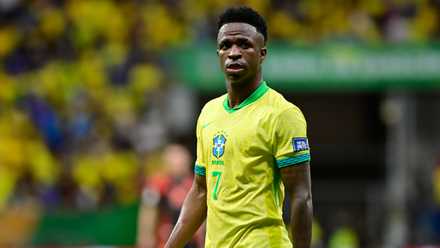
The Fascinating Reason Why Brazil Wear Yellow Kits
Brazil’s famous yellow kits are remembered throughout the world, being deeply associated with the country’s footballing prowess.

The rise and fall of Arne Slot has paved the way for talks to gather pace between Liverpool and former Bournemouth manager Andoni Iraola, with the Spaniard now appearing next in line for the Anfield hot seat. It would represent a major change of scenery from the south coast, with the 43-year-old potentially stepping into one of football’s biggest pressure cookers at a club where silverware is demanded.
That expectation, however, appears to cut both ways. Iraola has reportedly requested five new signings should he arrive this summer, while four current squad members could also find themselves on the chopping block as Liverpool look to balance the books and tailor a squad fit for his renowned intensity.
After FSG shattered the British transfer fee record twice in less than 12 months, the funds are clearly there to hand their prospective new manager a sizeable war chest. What lurks just around the corner for the Reds, then, is another busy transfer period.

Liverpool Make Move to Hire ‘Elite’ Manager Amid Arne Slot Sack Decision
The Reds are weighing up their options should they decide to sack Arne Slot
The 5 Signings Andoni Iraola Wants to Make at Liverpool

Thanks to securing Champions League football with a fifth-place finish, it had initially been suggested that Slot’s position at Anfield was safe. However, a combination of flat performances and growing frustration in the stands ultimately left the owners with little room to manoeuvre, forcing their hand ahead of another changing of the guard.
With Mohamed Salah, Andy Robertson and Ibrahima Konate all departing on free transfers, Liverpool are crying out for reinforcements this summer. According to ESPN, signing an elite winger is high on the club’s list of priorities, with RB Leipzig’s Yan Diomande and Paris Saint-Germain star Bradley Barcola both under consideration.
Closer to home, the Reds could also turn their attention to West Ham winger Jarrod Bowen after the Hammers suffered relegation from the Premier League on the final day. Meanwhile, midfield is another area in need of attention, and Crystal Palace’s Adam Wharton is understood to be a player of interest, with his energetic, front-footed style appearing tailor-made for Iraola’s approach.
Liverpool are also admirers of Inter Milan defender Denzel Dumfries, who could finally provide a dependable solution at right-back, with his £21.6 million release clause making a deal more than plausible. Both Conor Bradley and Jeremie Frimpong spent lengthy spells on the sidelines during the 2025/26 campaign, leaving the club eager to avoid being caught short in the position they shoehorned Curits Jones and Dominik Szoboszlai in again.
The Liverpool Players Who Could be Axed

In terms of outgoings, Alisson Becker and Curtis Jones are both attracting interest from Italy, with Juventus and Inter Milan reportedly monitoring their situations. Federico Chiesa is also expected to head back to his native country.
While Jones and Chiesa have largely become peripheral figures in a squad that has arguably outgrown them, the potential departure of Alisson would force Liverpool into a major decision: continue placing their faith in Giorgi Mamardashvili or enter the market for a new No. 1.


Liverpool’s 2025/26 Squad Ranked
Liverpool’s 2025/26 squad has been ranked ahead of the summer transfer window, and many players could face uncertain futures.
Joe Gomez’s future is also far from certain heading into the summer window, although reports suggest the England international could see out the final year of his contract before moving on next summer. Meanwhile, the other player whose future has come under scrutiny is Cody Gakpo.
Much of that discussion has been driven by sections of the Anfield faithful, who feel his more measured and predictable style of play may not fit Iraola’s high-octane approach. As a result, excitement is beginning to build around highly rated youngster Rio Ngumoha, who is increasingly being tipped for a more prominent role.

With the 2026 World Cup just around the corner, fans around the world are starting to put their preparations in place for how they will experience the tournament hosted in North America this summer.
Whether it’s opening sticker packs or card packs, watching at home or at a bar, people will have their own rituals and ways of enjoying the biggest competition in football.
Then there are the Fantasy Football managers, who pit themselves against their friends and the rest of the world by selecting a team of players they think can score enough points to win.
It’s an online game that has been popular among Premier League and Champions League fans, spreading across leagues and sports, and not even the World Cup is safe from its own version of the game.
So, with that said, here’s a look at everything you need to know about World Cup Fantasy Football.
2026 World Cup Nation Sack Manager 72 Days Before Tournament Begins
World Cup Fantasy Football works similar to most other games in the genre, as managers get an opportunity to pick a squad of 15 players, with a starting 11 that will land them points.
What Positions Managers Can Pick
- 2x Goalkeepers
- 5x Defenders
- 5x Midfielders
- 3x Forwards
Fantasy Budget And Restrictions
Managers can pick a maximum of three players per country for the group stage and round of 32, but this increases to four for the round of 16, five for the quarter-final, six for the semi-final, and eight for the final.
As for the budget, each manager will get $100 million to start with, while budgets will increase as the tournament progresses to account for the high-value players that are likely to remain as it continues.
The value of these players will be determined before the competition starts, and they won’t increase or decrease based on performances, like some other fantasy games.
There are captains and vice-captains, who will have their points doubled after you pick them. You can change a captain mid-round, but you won’t be able to put the captaincy back on a player who has already played.

How Much Money FIFA Pays Clubs for Players at the 2026 World Cup
FIFA will distribute money to clubs for releasing their players to feature at the World Cup with an increased pool of cash for the 2026 edition.
Team Changes And Strategy
One key difference with World Cup Fantasy Football is the ongoing nature of a round, as it equates to one round of fixtures in each part of the tournament.
For example, there are 24 games in the first round that last roughly a week, meaning it would be a long time to lock in the same team and not touch it.
Therefore, World Cup Fantasy Football allows managers to change their team and substitutes, but only if a player is unlocked, meaning their game hasn’t been played.
Any player who is locked on the substitutes’ bench won’t be able to come on, because their game has been played, so anyone that is substituted must do so with caution.
It means setting up your team with that in mind for each round is important, but it allows the manager to have some ongoing control.
In terms of transfers, there are unlimited changes allowed pre-tournament, while the group stages only allow for two transfers per round. There are then unlimited transfers allowed once again in the round of 32 phase, before four transfers for the round of 16 and quarter-finals, with five before the semi-final and six for the final. Exceeding the limit will deduct three points for every extra transfer completed.
What Boosters Are There?
In Fantasy Football games, it is common to include some sort of booster item, sometimes known as chips, that allow managers some variation in how they control their teams.
There will be five boosters available during World Cup Fantasy Football, with only one of them allowed to be used in any given round, so they do not stack.
The World Cup fantasy boosters are:
- Wildcard
- 12th Man
- Maximum Captain
- Qualification Booster
- Mystery Booster
The Wildcard allows for unlimited transfers, but this cannot be used for round one, due to unlimited transfers already being in place pre-tournament, nor for the round of 32 for the same reason.
The 12th Man booster will draft in another player to score points for the team, with any player not already part of the squad being eligible for selection. Budget and team restrictions are not a factor for this booster.
Maximum Captain will assign the captaincy to your highest-scoring player at the end of the round, removing some of the guesswork in predicting the best captaincy option.
Qualification Booster can only be used from the round of 32 onwards, but it grants two extra points to any player who progresses to the next round of the competition, so long as they make an appearance in the game. It’s worth noting that the captaincy does not double the qualification bonus.
As for the Mystery Booster, that will be revealed after the end of the group stage.
How Points Are Scored
Points can be earned, or lost, in several different ways and while there are general points every player can get, there are position-specific point boosts too.
All players can earn:
|
What Players Did |
Points |
|---|---|
|
Appearance (1 minute – 59 minutes) |
+1 |
|
Appearances (60 minutes or more) |
+1 |
|
Assist |
+3 |
|
Yellow card |
-1 |
|
Red card |
-2 |
|
Own goal |
-2 |
|
Win a penalty |
+2 |
|
Give away a penalty |
-1 |
|
Score from direct free-kick |
+1 |
|
Scouting bonus (player gets 4+ points and is in fewer than 5% of teams) |
+2 |
Goalkeepers earn these specific points:
|
What Players Did |
Points |
|---|---|
|
Clean sheet (Must have played 60+ minutes) |
+5 |
|
First goal conceded |
0 |
|
Every following goal conceded |
-1 |
|
Goal scored |
+9 |
|
Penalty save (not including a shootout) |
+3 |
|
Per three saves |
+1 |
Defenders earn these specific points:
|
What Players Did |
Points |
|---|---|
|
Clean sheet (Must have played 60+ minutes) |
+5 |
|
First goal conceded |
0 |
|
Every following goal conceded |
-1 |
|
Goal scored |
+7 |
Midfielders earn these specific points:
|
What Players Did |
Points |
|---|---|
|
Clean sheet (Must have played 60+ minutes) |
+1 |
|
Goal scored |
+6 |
|
Every three tackles |
+3 |
|
Every two chances created |
+2 |
Forwards earn these specific points:
|
What Players Did |
Points |
|---|---|
|
Goal scored |
+5 |
|
Every two shots on target |
+1 |
Best Players to Pick

When it comes to picking the best players, there are several factors that need to be weighed up. There are the teams they play in and their strengths, the opposition they face, how they maximise points and their budget.
The best teams will balance the high-scoring meta picks, who will often be expensive, with the low-cost budget options who are able to punch well above their weight.
Here’s a look at a few good options you could throw in your team now.
Marc Cucurella (Spain) – $5.1m
An almost guaranteed pick at left-back for Spain, Marc Cucurella is a player who may surprise a few with his inclusion over someone like Pedro Porro, who has slightly more attacking prowess. The Chelsea star comes in at $0.4m cheaper than his Tottenham counterpart, however, and unlocks an option in the Spain backline.
La Roja have Cape Verde up first, a match that should land them a clean sheet if things go as many expect, while Cucurella isn’t lacking in attacking dynamism.
Nuno Mendes (Portugal) – $5.8m
Looking on the more expensive side, Portugal star Nuno Mendes looks set to be a popular pick for the tournament, and for good reason too.
The left-back has searing pace and trickery that often see him play more like a winger than a defender, and with favourable games against Uzbekistan, DR Congo, and Colombia, he should rack up clean sheets and goal involvements.
Michael Olise (France) – $9.5m
Michael Olise has been performing at a top level for Bayern Munich in recent months, and he may well translate that into the World Cup with a France team that looks scarily strong.
The winger is the joint-second most expensive player in the midfield ranks, but his ability to score and assist can’t be questioned, and he remains a top option.
Raphinha (Brazil) – $8.2m
When it comes to Brazil, most managers may be drawn to Vinicius Jr, but at $10m, he could be an extremely expensive option, considering Raphinha is available for $1.8m cheaper.
The winger is returning from injury after an impressive season with Barcelona and could be the key for Carlo Ancelotti‘s side to unlock the game.
Kylian Mbappe (France) – $10.5m
Don’t let the chaos at Real Madrid cloud the fact that Kylian Mbappe remains an elite player at the very top of the game.
The forward won the last golden boot at the World Cup, scoring eight goals in 2022 on the way to a defeat to Argentina in the final in Qatar.
While the price tag may put some people off, he’s almost certainly guaranteed goals.
Erling Haaland (Norway) – $10.5m
There may be some apprehension over picking Erling Haaland, because of Norway’s lack of recent World Cup participation, but the forward is as clinical as they come. Few come remotely close to his international record, with 55 goals scored in 49 caps for his country at the time of writing.
An opening match against Iraq looks filled with points on offer for the Manchester City man, while there is an option to pivot away from him easily due to the high price tag.
There is always an element of luck that creeps into Fantasy Football games, but there are certainly ways of playing that increase the chances of winning a league.
Use Starting Players & Be Ready to Change
One main tip to take on board for the World Cup Fantasy Football game is to put out a starting 11 that has games playing first, then switch them around if needed.
Players on the bench who have already played are locked and cannot be brought on later, so even if you have better players in the squad available, always start those who play first. They might surprise you with a good points haul. If not, you can change them before your squad options play later.
Use Your Boosters
Don’t be too stingy with your boosters either. There are five boosters to be spread across eight different rounds through the tournament. Keeping all of them for later in the tournament reduces the amount of flexibility available to make moves that will maximise points.
Time Your Booster Use Wisely
Timing the Wildcard Booster will be key to victory. There are reduced opportunities to use this booster, because it cannot be used going into round one or the round of 32, as unlimited transfers are available.
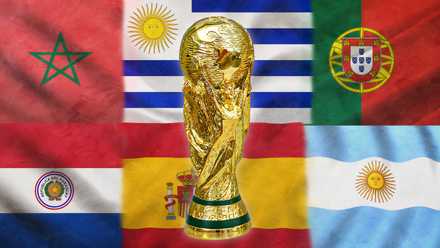
10 Favourites to Win 2026 World Cup (Ranked)
England, Brazil, and Spain are among the current favourites for glory ahead of the 2026 World Cup.
That reduces the chance of making changes down to just six possible rounds. But even then, a game like the final may reduce the player pool available, while the increased transfers later in the tournament may allow other players to make similar moves to the team and reduce the Wildcard’s effectiveness.
One option may be to play it before round three, using it as an opportunity to free hit the team into something for just the final group game, before changing it again with unlimited transfers for the round of 32.
Another option may be to use it around the quarter-final stage, as there will still be eight teams in contention, giving some variety in players available, while it is also two rounds on from the last use of unlimited transfers.
Useful World Cup links


NDC primaries: Peter Obi faces intense pressure in Anambra, other states

2027: Kwankwaso meets Nasarawa NDC candidates
Why Australia Wear Green And Gold In Sport

Simi Sanya and Femi Dapson Are Now Legally Married and It Is Beautiful to See

FCT Area Council Election: Live results from polling units

Premier League Set-Piece Goals (2025/2026)
-
 Entertainment2 days ago
Ojude Oba 2026 Was a Full Fashion Parade and These Looks Stole the Show
-
 Sports21 hours ago
John Terry Sends Message to Gabriel After Champions League Final
-

 Metro2 days ago
Police arrest ex-Okpebholo aide Kelly Okungbowa for allegedly assaulting officer
-
 Sports2 days ago
Liverpool Discussing Personal Terms to Make Diomande First Signing of Iraola
-
 Politics2 days ago
Makinde’s presidential ambition dead on arrival – Oyo APC
-
 Sports2 days ago
Arsenal Linked With Ideal Viktor Gokyeres Upgrade After PSG Loss
-

 Metro2 days ago
Delta: Police nab five suspects, recover revolver pistol, Indian hemp
-
 Metro10 hours ago
Police debunk bandit invasion rumours in Lagos, arrest 15