
Business
NGX Group advocates stronger capital market integration into monetary policy framework


By Peter Egwuatu
Group Managing Director/CEO, Nigerian Exchange Group (NGX Group), Temi Popoola, has urged the Central Bank of Nigeria’s (CBN) Monetary Policy Committee (MPC) to treat capital market development as a macroeconomic necessity, arguing that the effectiveness of monetary policy increasingly depends on the depth, liquidity, and coherence of Nigeria’s financial markets.
Popoola made this call in a presentation delivered during a session at the CBN Monetary Policy Committee, MPC workshop themed: “Structure and Behaviour of Nigeria’s Equity and Government Debt Markets: Implications for Monetary Policy Effectiveness.”
Represented by Jumoke Olaniyan, Group Chief Strategy Officer, NGX Group Popoola, noted that monetary policy decisions travel through market architecture before reaching households and businesses, and weak market structures can dilute policy effectiveness regardless of the stance adopted by the MPC.
The post NGX Group advocates stronger capital market integration into monetary policy framework appeared first on Vanguard News.

By Obas Esiedesa, Abuja
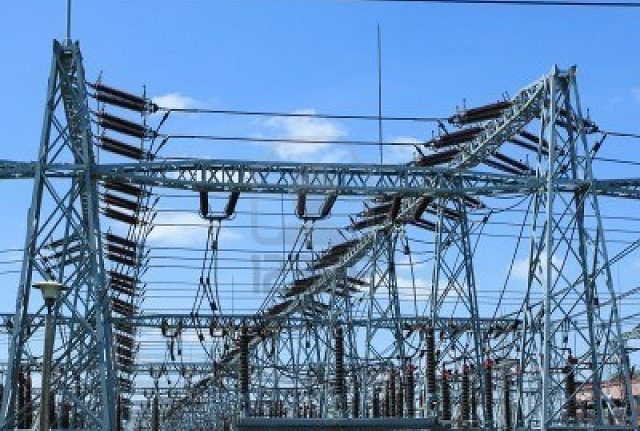
The Federal Government has unveiled new guidelines for the safe and efficient interconnection of solar mini-grids to electricity distribution networks, aimed at accelerating renewable energy deployment and improving electricity access across Nigeria.
Speaking at the launch in Abuja, the Managing Director of the Nigerian Electricity Management Services Agency (NEMSA) and Chief Electrical Officer of the Federation, Engr. Olusegun Adesayo, described the document as “a major milestone in Nigeria’s drive towards achieving a safe, reliable, sustainable and inclusive electricity supply industry.”
According to him, solar mini-grids have emerged as a critical solution for electrifying unserved and underserved communities, making clear operational standards necessary.
“The Guidelines provide comprehensive procedures, technical requirements, interconnection models and operational standards for integrating solar mini-grids into distribution networks without compromising grid stability, power quality, system reliability and public safety.
“The Guidelines seek to reduce uncertainties for investors and developers while strengthening collaboration among Distribution Companies, mini-grid developers, regulators and other stakeholders,” he said..
Adesayo added that the framework aligns with the provisions of the Electricity Act 2023, the Mini-Grid Regulations 2026 and relevant national and international standards, including IEC standards.
Also speaking, Permanent Secretary, Federal Ministry of Power, Alhaji Mahmuda Mamman, represented by the Director of Distribution, Mustapha Abba, said renewable energy, particularly solar mini-grids, plays a strategic role in expanding electricity access, improving energy security and promoting sustainable economic growth.
“As this segment of the electricity market continues to grow, it becomes imperative to establish clear technical and operational frameworks that will ensure safety, reliability and efficient coordination between solar mini-grid systems and existing distribution infrastructure,” he said.
“The Guidelines being launched today provide an important framework for ensuring the safe, reliable and efficient interconnection of solar mini-grids to distribution networks across Nigeria.”
Mamman said the guidelines would strengthen investor confidence, reduce technical and regulatory uncertainties, improve system reliability and support the sustainable integration of renewable energy solutions into Nigeria’s electricity network.
Representing the Delegation of the European Union to Nigeria and ECOWAS, Programme Manager, Energy and Circular Economy, Mr. Godfrey Ogbemudia, said: “The launch of these Guidelines is particularly significant. We are confident that the Guidelines will provide consistency and increase investor confidence in interconnected mini-grid projects.”
He reaffirmed the European Union’s commitment to supporting Nigeria’s energy transition and electrification ambitions, while Head of Development Cooperation at the German Embassy, Dr. Karin Jansen, said Germany remains committed to supporting Nigeria’s efforts to expand energy access, strengthen institutions and mobilise private investment in renewable energy.
The post FG moves to accelerate mini-grid deployment with new guidelines appeared first on Vanguard News.


•Food import share shrinks as total imports jump 28%
By Babajide Komolafe
Nigeria’s spending on food imports declined by 7.4 per cent, year-on-year to $2.34 billion in 2025, signaling a moderation in the country’s dependence on imported food products despite a sharp increase in overall import expenditure. Data on food imports obtained from the Central Bank of Nigeria, CBN, quarterly statistical bulletin, fourth quarter 2025. Q4’25 showed that food imports fell to $2.343 billion in 2025 from $2.530 billion recorded in 2024, representing a decline of $186.42 million of 7.4 per cent year-on-year.
The decline comes after food import spending had risen by 18.8 per cent, YoY to $2.53 billion in 2024 from $2.129 billion in 2023, indicating a reversal of the upward trend witnessed in the previous year.
Further analysis revealed that food imports accounted for a smaller share of the nation’s total import bill in 2025. The ratio of food imports to total imports dropped significantly to 11.8 per cent in 2025 from 16.3 per cent in 2024.
The decline in food import share occurred despite relatively stable food import spending, largely because overall imports grew at a much faster pace during the review period.
According to CBN data, Nigeria’s total imports rose by 28 per cent, YoY to $19.897 billion in 2025 from $15.544 billion in 2024, representing an increase of $4.353 billion. This followed an earlier rise from $14.276 billion recorded in 2023.
Analysis of quarterly food import spending indicated that three of the four quarters in 2025 recorded lower import values compared to corresponding periods in 2024.
Food imports declined by 20.3 per cent, YoY to $550.09 million in Q1’25 from $689.88 million in Q1’24. In Q2 ’25, food import spending dropped by 6.0 per cent, YoY to $515.04 million from $547.70 million in Q2’24.
However, Q3’35 recorded the only year-on-year increase during the year, with food imports rising by 3.2 per cent, YoY to $653.85 million from $633.63 million in Q3’24.
The upward movement was short-lived as food import spending fell again in Q4 ’25 by 5.2 per cent, YoY to $624.36 million from $658.55 million in Q4’24.
The post Nigeria spends $2.34bn on food imports in 2025, down 7.4% appeared first on Vanguard News.

By Efe Onodjae
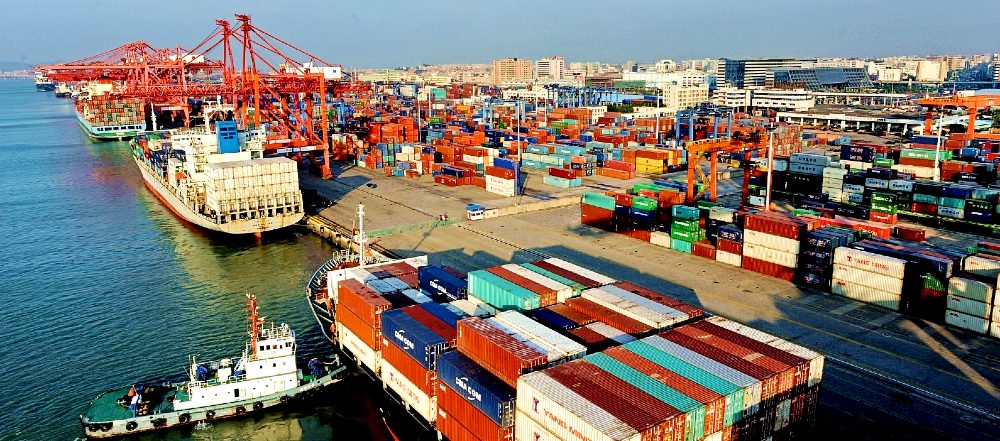
The Director-General of the Nigerian Maritime Administration and Safety Agency (NIMASA), Dayo Mobereola, has reaffirmed Nigeria’s commitment to strengthening regional maritime integration, cooperation and capacity development across Africa. Mobereola made the pledge while receiving the Honorary Consul of Liberia in Lagos, Dapo Akinosun, at the NIMASA headquarters in Lagos.
He described the engagement as a reflection of the longstanding relationship between Nigeria and Liberia, particularly in the maritime sector, stressing that stronger collaboration among African nations is essential to unlocking the continent’s maritime potential and advancing the Blue Economy.
According to him, enhanced cooperation would help build maritime capacity, strengthen regional integration and create employment opportunities for young Africans within the global maritime industry.
“The time has come for African nations to upscale maritime collaboration. The partnership between Nigeria and Liberia will help us build capacity, strengthen regional cooperation and create opportunities for African youths within the global maritime industry,” he said.
Mobereola also underscored the importance of sea-time training and practical exposure for young maritime professionals, noting that such initiatives would equip Nigerian and African youths to compete effectively in the international maritime space.
He commended the Liberian government for supporting Nigeria’s successful bid for a Category C seat at the International Maritime Organization, adding that both countries have maintained productive maritime relations over the years.
Speaking earlier, Akinosun said his visit was aimed at strengthening the enduring ties between Nigeria and Liberia, while exploring avenues for deeper maritime collaboration.
He described the maritime sector as a major driver of economic growth, regional integration and Blue Economy development, and commended NIMASA’s management for efforts aimed at repositioning Nigeria’s maritime industry for sustainable growth and investment.
“Nigeria has demonstrated genuine commitment to maritime partnership and regional growth. Liberia looks forward to deeper collaboration with NIMASA in maritime administration, safety, capacity development and trade promotion for the advancement of Africa’s BlueEconomy,” he said.
The post Nigeria, Liberia move to deepen maritime cooperation, capacity building appeared first on Vanguard News.


Fear in Kano as suspected Yan Daba clashes enter third day
FG moves to accelerate mini-grid deployment with new guidelines

NGX Group advocates stronger capital market integration into monetary policy framework

Simi Sanya and Femi Dapson Are Now Legally Married and It Is Beautiful to See

FCT Area Council Election: Live results from polling units

Premier League Set-Piece Goals (2025/2026)
-
 Sports1 day ago
John Terry Sends Message to Gabriel After Champions League Final
-
 Metro24 hours ago
Police debunk bandit invasion rumours in Lagos, arrest 15
-
 Politics20 hours ago
2027: Jonathan not power-hungry – Former aide
-

 Sports22 hours ago
Everton Lead Race to Sign Midfielder Hayden Hackney: David Ornstein
-
 Sports2 days ago
Rafael Nadal’s Top 10 Male Athletes in Sport History
-

 Sports19 hours ago
Celtic Agree to Terminate Stephen Welsh’s Contract Early
-
 Entertainment1 day ago
Serena Williams Is Coming Back to Tennis, and the Sports World Can’t Stop Talking About It
-
 Business1 day ago
Stock market dips 1.13% as investors lose N1.81trn