
Politics
Emeka Ike drags INEC, Wike’s Aide to Court, demands N10bn over voter data leak


Nollywood actor Emeka Ike has instituted a lawsuit against the Independent National Electoral Commission, INEC,d Lere Olayinka, media aide to the Minister of the Federal Capital Territory, Nyesom Wike, over the alleged unauthorised disclosure of his voter registration information.
According to court documents cited in the report, the suit, marked FHC/ABJ/CS/1272/2026, was filed before the Federal High Court in Abuja on June 15, 2026.
The legal action follows the circulation of details relating to Ike’s voter registration transfer from Imo State to the Federal Capital Territory, which were shared by Olayinka on his verified X account in May.
According to court documents filed by the actor through his lawyer, Leonard Adeh, the publication of the information without his consent amounted to a violation of his constitutional right to privacy and the protection of personal data.
The actor alleged that the information was obtained from a restricted section of INEC’s voter registration system and subsequently published without his authorisation.
The controversy emerged after Olayinka shared screenshots showing Ike’s voter registration transfer while questioning his qualification to participate in political activities linked to a House of Representatives seat in Abuja.
INEC had earlier reacted to the incident, stating that its Continuous Voter Registration database was not hacked, but attributing the disclosure to the misuse of valid internal credentials by authorised personnel.
The actor is asking the court to declare that the publication of his voter information constituted a breach of his rights under Section 37 of the 1999 Constitution, Article 12 of the Universal Declaration of Human Rights, and relevant provisions of the Nigeria Data Protection Act, 2023.
“N10,000,000,000.00 (Ten Billion Naira) as aggravated and general damages, jointly and severally against the 1st and 2nd Respondents, in favour of the Applicant, for the gross breach and violation of his fundamental right to privacy and the protection of personal data,” part of the court filing read.
He also contended that INEC has a statutory responsibility to safeguard the personal information of registered voters and prevent unauthorised access to such records.
Among the reliefs sought, Ike is requesting an order directing Olayinka to remove the publication from his X account and issue a written apology.
The actor is also seeking N10 billion in aggravated and general damages against both INEC and Olayinka over the alleged breach of privacy and unlawful disclosure of personal data.
In addition, he asked the court to hold both respondents jointly liable for the alleged violation of his rights and compel the publication of an apology in national newspapers.
dailypost.ng
The Osun State chapter of the All Progressives Congress, APC, and the governorship candidate of the African Democratic Congress, ADC, Najeem Salaam, have separately rejected recent Federal High Court judgments affecting their political interests.
Both described the rulings as miscarriages of justice and vowed to pursue appeals.
The APC faulted a judgment delivered by the Federal High Court sitting in Osogbo in a suit filed by reinstated local government chairmen and councillors elected in October 2022, while Salaam criticised a separate ruling by a Federal High Court in Abuja ordering the deregistration of the ADC alongside some other political parties.
In a statement signed by the party’s Director of Media and Information, Kola Olabisi, the APC said the Osogbo court erred in dismissing the suit filed by the reinstated local government officials and ruling that the tenure of the elected officers ended in October 2025.
The party maintained that the judgment would be challenged at the Court of Appeal, saying: “The Federal High Court verdict is a miscarriage of justice, and we shall put the judgment to the test at the appropriate venue. The reinstated chairmen and councillors have already filed a notice of appeal alongside a motion for stay of execution.”
The party argued that no enforcement process should be commenced against the officials until the appeal has been finally determined and urged its members and supporters to remain calm and law-abiding while awaiting the outcome of the judicial process.
The APC also cautioned against actions capable of causing unrest and called on security agencies to remain vigilant. It alleged that some political actors were attempting to create tension over the court ruling and urged the public to exercise restraint pending the determination of the appeal.
Meanwhile, Salaam described the Abuja Federal High Court ruling ordering the deregistration of the ADC as neither the end of the legal process nor the end of the party’s political journey.
He expressed confidence that the judgment would be overturned through constitutional means.
“I have received the news of the Federal High Court judgment purportedly ordering the deregistration of our great party, the ADC, alongside some other political parties. Democracy is governed by the rule of law, and our Constitution provides clear avenues for appeal and judicial review.”
He added: “We are confident that the appropriate legal processes will correct any miscarriage of justice and protect the democratic rights of millions of Nigerians who have chosen the ADC as their political platform.”
Salaam urged party members and supporters across Osun State not to panic, insisting that the ADC remained committed to participating in the August 15 governorship election.
He described the party as a movement driven by aspirations for transparent governance, economic growth, quality education, and improved healthcare.
The ADC candidate said the party’s campaign would continue uninterrupted, noting that support from workers, farmers, artisans, students, youths, women, and professionals across the state reflected confidence in its vision for Osun.
dailypost.ng

By Musa Ubandawaki
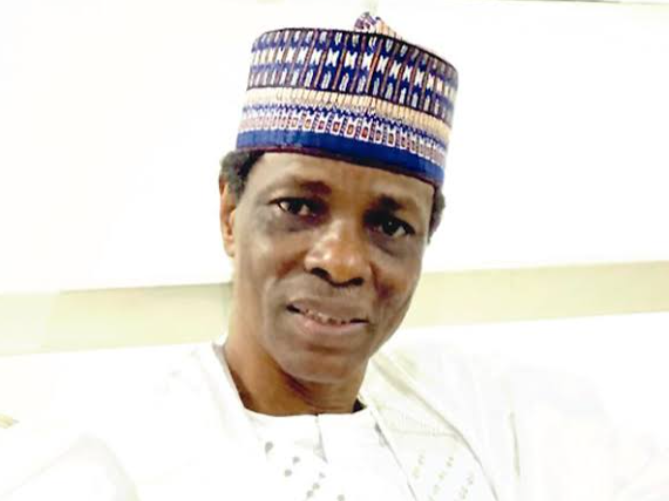
Former Deputy Governor of Sokoto State and former Minister of Water Resources, Alhaji Muktari Shagari, in this interview argues that Nigeria can no longer delay the creation of state police.
He speaks on why the country urgently needs decentralized policing, how funding should be structured, the safeguards required to prevent abuse, and the role state police could play in tackling banditry, kidnapping and other violent crimes across the federation among others.
There appears to be growing momentum in the National Assembly towards establishing state police. Beyond granting states policing powers, what critical safeguards must be included in the legislation to ensure success?
There has never been a more appropriate time in Nigeria’s history to establish state police than now. Across the country, insecurity has become a major concern despite the efforts of the Federal Government and the security agencies.
The reality is that our existing security institutions are overstretched. Banditry, kidnapping and other criminal activities have spread beyond the North-West and North-East to other regions of the country.
I strongly believe state police has become imperative. Members of the National Assembly must recognise their responsibility to enact laws that protect Nigerians. The proposed legislation must ensure professionalism, accountability and effective collaboration with federal security agencies. Above all, it must allow states to recruit personnel from local communities who understand the terrain, culture and security dynamics of their areas.
One of the major concerns is that governors could misuse state police for political purposes. How do you respond to such fears?
The bigger question is whether we should continue allowing Nigerians to be kidnapped, killed and terrorised while we focus on fears about what might happen in the future. Any governor who uses state police to intimidate political opponents would be acting outside constitutional provisions and democratic norms. Nigerians are politically conscious and would resist such abuse.
We cannot allow hypothetical concerns to delay a critical security reform. The priority now should be protecting lives and property. Safeguards can be built into the law to prevent misuse, but the establishment of state police should not be delayed.
Critics argue that many states already struggle to meet financial obligations. Can governors realistically fund state police?
Funding challenges are real, but they are not insurmountable. Security must be treated as the highest priority of government.
States already receive security votes and allocate resources for security-related activities. We must rethink how those resources are utilised. If governments can fund other programmes, they can certainly prioritize security.
The protection of citizens should come before every other consideration.
Should state police funding come solely from state governments or should there be federal support?
There must be a funding arrangement that guarantees sustainability and transparency.
While security votes can contribute, they may not be sufficient to cover all operational costs. Therefore, there should be synergy between the Federal Government and state governments.
My position is that funding mechanisms should include allocations directly linked to the Federation Account, ensuring that personnel salaries and operational requirements are adequately covered.
Many criminal groups possess sophisticated military grade weapons. How can state police effectively confront such threats?
Several state governments are already supporting security operations by procuring equipment for the military and conventional police formations.
At the same time, authorities must intensify efforts to identify and dismantle the networks supplying weapons to criminal groups. The Federal Government must take decisive action against those responsible for arms trafficking.
Another important advantage of state police is their ability to identify informants within local communities. Because officers will be recruited from the areas they serve, they are more likely to understand local dynamics and expose collaborators aiding criminal elements.
Public trust in law enforcement remains a challenge. Why would state police be different from existing policing structures?
The answer lies in recruitment, training and accountability. State police must recruit qualified and educated personnel. Officers should be properly trained to understand that their duty is to protect citizens, not harass them.
The law should contain clear disciplinary provisions for misconduct. There must also be public sensitisation programmes to foster mutual understanding between communities and security personnel.
If citizens and law enforcement officers work together, trust can be built. Community based policing has worked in the past because officers knew the people they served and communities saw them as partners rather than outsiders.
What measures should be taken to prevent the politicisation of state police?
Governors and political leaders must recognize that public institutions outlive individual administrations.
The legal framework must guarantee operational independence, professionalism and accountability. State police should be equipped and supported to perform their constitutional responsibilities, not serve as political instruments. Any attempt to politicise the institution would undermine its effectiveness and create unnecessary tensions.
Some analysts argue that state police alone cannot solve Nigeria’s security crisis. Do you agree?
Absolutely. State police should not be viewed as a replacement for the military, the police, intelligence agencies or other security institutions.
Rather, it should serve as a complementary structure. Effective security depends on cooperation, intelligence sharing and coordination among all agencies.
The military, police, intelligence services, vigilantes and community based security groups must work together. State police will strengthen this network by providing local knowledge and rapid response capabilities.
The key is synergy. When all security stakeholders collaborate effectively, Nigeria will be in a much stronger position to confront insecurity.
What message would you like to send to lawmakers currently considering the state police bill?
My message is simple: Nigerians are looking to the National Assembly for action.
The security situation demands urgent and bold reforms. Lawmakers should rise above partisan interests and pass legislation that strengthens security and protects citizens.
State police is not a luxury; it is becoming a necessity. The time for debate is gradually giving way to the time for action. Nigeria cannot afford further delays.
The post State police: We need constitutional safeguards against abuse —Shagari appeared first on Vanguard News.
www.vanguardngr.com
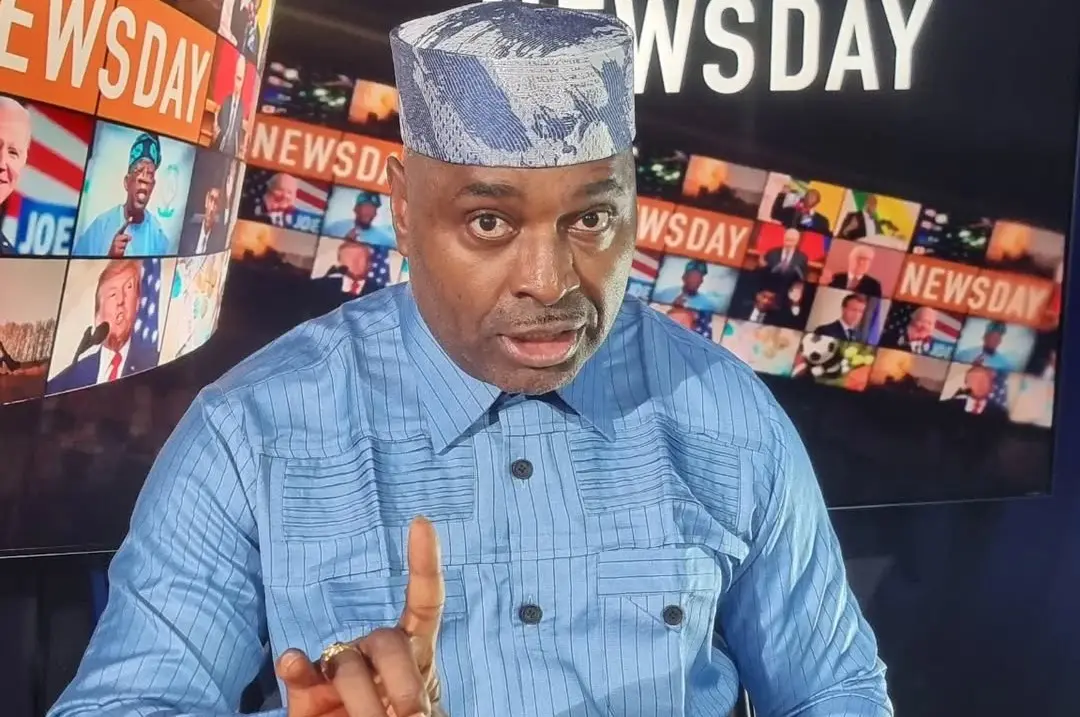
Prominent actor-turned-politician, Kenneth Okonkwo, has expressed disappointment over reports that the African Democratic Congress (ADC) selected its 2027 vice-presidential candidate from the South-South region, warning that such a move would further marginalise the South-East.
In a statement posted on his social media handles, Okonkwo argued that the South-East remains the only geo-political zone that has neither produced a President nor a Vice President since 1999, insisting that denying the region the vice-presidential slot would amount to perpetuating injustice against its people.
The concerns came as the African Democratic Congress (ADC) announced the selection of former Rivers State Governor, Rotimi Amaechi, as its vice-presidential candidate for the 2027 presidential election, pairing him with former Vice President Atiku Abubakar.
The party disclosed this in a statement issued in Abuja by its National Publicity Secretary, Bolaji Abdullahi, following consultations with party stakeholders, coalition partners and representatives from across the country.
“The ADC was founded by Ralph Nwosu from the South-East in 2005. He made the sacrifice to give up the party in 2025 for the coalition to usher in a better Nigeria. He couldn’t have made that sacrifice to marginalise his own people,” Okonkwo said.
He maintained that after relinquishing both the party’s national chairmanship and presidential ticket, it would be an injustice to deny the South-East the vice-presidential slot.
Okonkwo also disclosed that the only request he made to former Vice President Atiku Abubakar, whom he said had publicly promised to support the emergence of a South-East president in the future, was to demonstrate that commitment by choosing a running mate from the region.
“I joined politics to fight for a better Nigeria where no region, geo-political zone, or person will be marginalised,” he stated.
The former Labour Party chieftain added that if reports of a South-South vice-presidential nominee are eventually confirmed, he would not be inclined to campaign for a presidential ticket that does not feature a candidate of South-East origin either as president or vice president.
“I wish him well. I am not favourably disposed to campaigning for any presidential ticket that does not have a person of South-East origin as President or Vice President in 2027,” he said.
dailypost.ng


Osun: APC, ADC fault court rulings, vow appeals
State police: We need constitutional safeguards against abuse —Shagari

Tottenham Eyeing Newcastle Midfielder Sandro Tonali

Simi Sanya and Femi Dapson Are Now Legally Married and It Is Beautiful to See

FCT Area Council Election: Live results from polling units

Premier League Set-Piece Goals (2025/2026)
-
 Sports2 days ago
Thierry Henry Issues Statement After Nigeria Comment Backlash at World Cup
-
 Sports18 hours ago
FIFA Forced Into U-Turn on Spanish Press Conference Rule After Backlash
-
 Sports1 day ago
Uruguay Denied US Entry Day Before World Cup Opener
-
 Sports2 days ago
Gary Neville Calls Out FIFA ‘Dictatorship’ After World Cup Incident
-
 Sports1 day ago
Judges’ Scorecards and Punch Stats For Ilia Topuria vs Justin Gaethje at UFC Freedom 250
-
 Sports10 hours ago
US Denied World Cup Visa For Mum of Cape Verde Goalkeeper Vozinha
-
 Sports11 hours ago
FIFA Ban Pre-Revolutionary Iran Flags From World Cup Stadiums
-
 Sports20 hours ago
Manuel Neuer Breaks World Cup Kit Rules in Germany vs Curacao