
Business
Indigenous companies can build institutions that compete with the very best – Marketsquare CEO



By Nkiruka Nnorom
Ten years after opening its first store, Marketsquare has established itself as one of Nigeria’s leading indigenous supermarket chains, demonstrating the growing strength and resilience of local enterprise. In this interview with The Vanguard, Founder and Chief Executive Officer of Sundry Markets Limited, Mr. Ebele Enunwa, shares insights into the company’s decade-long journey, its contribution to Nigeria’s economic development, the values that have shaped its growth, and his vision for the future of organised retail in the country. The Excerpt
Ten years is a significant milestone for any Nigerian business. What inspired the original vision behind Marketsquare?
The vision was born from a simple observation: that Nigerians deserved a better retail experience.
For many years, grocery shopping in many parts of the country was often characterised by inconsistent standards, limited product availability, and environments that did not place the customer at the centre. I believed there was an opportunity to create something different – a retail business that combined international standards with a deep understanding of Nigerian consumers.
Our ambition was never simply to build supermarkets. It was to build an institution that would improve everyday life by making quality products accessible in clean, organised, and welcoming environments.
When we opened our first store in Yenagoa in 2015, the vision was larger than that single location. We wanted to demonstrate that excellence in retail should not be confined to a few major cities.
Every Nigerian community deserves quality, convenience, and respect. That conviction continues to guide us today.
Looking back over the past decade, what have been the biggest lessons from building an indigenous retail brand in Nigeria?
The biggest lesson is that resilience is not optional; it is a core business capability.
Nigeria presents enormous opportunities, but it also demands patience, adaptability, and discipline. Over the last decade, we have experienced economic recessions, foreign exchange volatility, inflation, supply chain disruptions, and the COVID-19 pandemic. Every one of those events tested our resolve.
What has sustained us is remaining focused on our purpose. We have never allowed short-term challenges to distract us from long-term value creation.
Another lesson is that people make businesses successful. Buildings and technology matter, but, ultimately, it is committed employees, trusted suppliers, and loyal customers that determine whether a company succeeds.
Finally, I have learnt that indigenous businesses should never underestimate their own potential. Nigerian companies are capable of building institutions that compete with the very best when they combine vision with disciplined execution.
How would you describe Marketsquare’s contribution to Nigeria’s economic development over the last ten years?
We see ourselves as participants in Nigeria’s economic development, not merely beneficiaries of it.
Today, Marketsquare directly employs more than 4,000 Nigerians, supports hundreds of local suppliers, and serves over two million customers every month. Behind each of those numbers are families whose livelihoods depend on the success of indigenous enterprise.
Beyond employment, we have invested in communities through education initiatives, medical outreaches, women empowerment programmes, and other social interventions. These initiatives reflect our belief that businesses should create shared value, not just shareholder value.
Beyond providing shopping destinations, what role do you believe organised retail plays in national development?
Organised retail plays a far more strategic role than many people appreciate.
It provides a reliable route to market for manufacturers, supports agriculture by creating demand for local produce, encourages formalisation of businesses, improves food safety standards, and contributes significantly to government revenues through taxation.
It also raises consumer expectations. Once people experience consistent quality, transparency, and professionalism, those expectations spread across the wider economy. Retail, therefore, becomes an engine for productivity, investment, and national competitiveness.
Marketsquare has become one of Nigeria’s largest indigenous supermarket chains. What does this achievement mean personally and institutionally?
Personally, it is deeply humbling. No entrepreneur builds a business of this scale alone. Every achievement reflects the commitment of thousands of employees, the confidence of our customers, and the support of numerous business partners.
Institutionally, it sends a powerful message about Nigerian enterprise. It demonstrates that indigenous companies can build nationally recognised brands that create employment, operate at scale and compete successfully over the long term.
I hope our story encourages more entrepreneurs to pursue ambitious ideas that contribute meaningfully to national development.
Marketsquare has consistently emphasised partnerships with Nigerian suppliers. Why is supporting local enterprise important to your growth strategy?
A successful retailer cannot thrive in isolation. The stronger Nigerian manufacturers become, the stronger our shelves become. The stronger Nigerian farmers become, the stronger our fresh produce offering becomes.
Supporting local suppliers, therefore, makes economic sense while also strengthening national competitiveness. We view supplier relationships as partnerships built on shared growth rather than simple commercial transactions.
Corporate citizenship has become increasingly important. How is Marketsquare contributing to the communities where it operates?
Community engagement is fundamental to our identity. Our stores are not isolated commercial centres; they are part of local communities.
That is why we continue to support education initiatives, healthcare programmes, women empowerment, youth development, and other community-based interventions wherever we operate. We also believe that creating safe, clean shopping environments is itself a contribution to community wellbeing.
Leadership often involves navigating uncertainty. What has been your greatest leadership lesson over the past decade?
Never allow circumstances to determine your vision. Markets change. Economic conditions fluctuate. Competition evolves. But leadership requires clarity of purpose. If you remain committed to your mission while remaining flexible in execution, you can navigate almost any challenge.
What values continue to guide Marketsquare’s leadership philosophy?
Integrity. Respect for people. Continuous improvement. Professionalism. Teamwork. And above all, an unwavering commitment to our customers. These values have shaped every important decision we have made over the past decade and remain the foundation for our future growth.
How would you like Marketsquare to be remembered when people reflect on the evolution of modern retail in Nigeria?
I hope people will say that Marketsquare helped redefine what Nigerian retail could become. Not because we were the biggest, but because we raised standards. Because we created opportunities. Because we invested in people. And because we proved that indigenous businesses can build institutions that endure.
What message would you like to share with Nigerian entrepreneurs?
Nigeria still offers extraordinary opportunities for those prepared to solve real problems.
Do not be discouraged by today’s challenges. Focus on creating value. Build strong teams. Think long term.
If your purpose is clear and your execution is disciplined, success becomes a matter of persistence rather than luck.
The post Indigenous companies can build institutions that compete with the very best – Marketsquare CEO appeared first on Vanguard News.

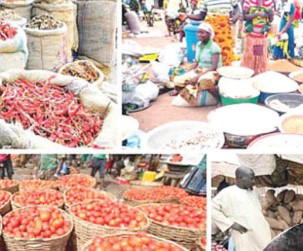
•Sector faces collapse under economic crunch, Labour laments
By Victor Ahiuma-Young, GENEVA
Nigeria’s food and beverage industry is facing worsening employment crisis as rising production costs, foreign exchange volatility and regulatory measures continue to force companies to cut jobs and scale down operations.
Read Also: Bullets Before Ballots: Insecurity threatens 2027 polls – 5,272 killed in 5 months
Consequently, the Food, Beverage and Tobacco Senior Staff Association, FOBTOB, has raised the alarm over increasing layoffs across the sector, warning that unless urgent interventions were implemented, more workers could be thrown into the labour market, while some businesses might be forced to shut down.
The union said the combined impact of soaring energy costs, poor infrastructure, weak consumer purchasing power and policy restrictions on certain product categories has placed unprecedented pressure on manufacturers struggling to remain afloat.
Speaking with journalists on the sidelines of the just concluded 114th Session of the International Labour Conference in Geneva, FOBTOB President, Oyibo Jimoh, said the industry’s dependence on imported raw materials had made it particularly vulnerable to exchange rate fluctuations and escalating production costs.
He said: “Most of our companies in the sector depend on imported raw materials. If you narrow it down to exchange rates, it is biting harder and that is understandable.
“The worsening foreign exchange situation has significantly increased the cost of doing business, compelling many companies to review their operations and workforce strength to survive.”
He expressed particular concern over restrictions on sachet products and beverages packaged in containers below 200 millilitres, saying the policy had already led to job losses and could further threaten the survival of a critical segment of the industry.
“As I am talking to you, many of our members have been thrown into the labour market. We are still engaging government to see how best we can resolve it,” he stated.
Jimoh argued that smaller package sizes remain the preferred choice for many consumers whose purchasing power has been severely eroded by inflation and economic hardship.
“Not everybody wants to go for the big pack sizes. The smaller pack sizes are the cash cow. Allowing that policy to continue could close that sub-sector,” he warned.
The FOBTOB President further noted that manufacturers were grappling with multiple operational challenges ranging from poor road infrastructure and unstable energy supply to declining consumer demand.
“The economy is very tough for every business. Whether it is roads, energy or purchasing power, there are great challenges facing companies, particularly in the food sector,” he said.
On workers’ welfare, Jimoh maintained that the current national minimum wage of N70,000 was grossly inadequate given the prevailing economic realities and the rising cost of living.
“There is no amount that can truly quantify labour, but in this economy, the national minimum wage of N70,000 cannot go anywhere,” he lamented.
He called on employers to improve workers’ remuneration where possible while balancing wage reviews against the economic pressures confronting businesses and investors.
Jimoh also urged workers to embrace continuous training and skills development to remain relevant in an increasingly technology-driven workplace.
“One thing workers can do is upgrade themselves. When you see changing trends, move along with them and avoid making yourself unemployable,” he advised.
He disclosed that FOBTOB would continue to educate its members through zonal meetings and capacity-building programmes focused on career advancement, retirement planning and adaptation to emerging workplace realities.
He reaffirmed FOBTOB’s commitment to protecting workers’ interests while supporting policies capable of ensuring the long-term sustainability and growth of Nigeria’s food and beverage industry.
The post Food industry on brink as rising costs, forex crisis trigger mass layoffs appeared first on Vanguard News.

•Provides benchmark for pricing loans, deposits
By Emma Ujah, Abuja Bureau Chief
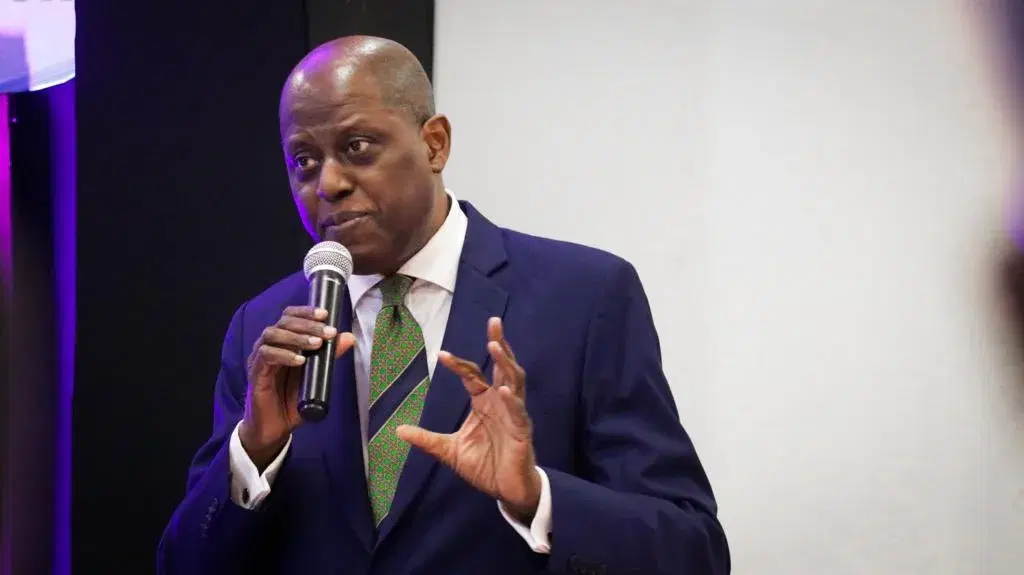
The Governor of the Central Bank of Nigeria (CBN), Mr. Olayemi Cardoso, yesterday, launched the Nigerian Overnight Financing Rate (NOFR), to guarantee greater transparency in the financial market.
The NOFR is a daily benchmark interest rate introduced by the CBN in collaboration with the Financial Markets Dealers Association (FMDA).
NOFR reflects the actual, real-time cost of secured, short-term borrowing between financial institutions.
Speaking at the launch in Abuja, Cardoso described the benchmark interest rates as, “The rate at which everyone agrees, represents a true reflection of the price of money at a particular point in time, and it is the backbone of any modern financial system.”
He said, however, “Before a benchmark can be widely accepted, it must be an output of a trusted, well-governed, and transparent financial market framework with an underlying administrative process and methodology that protects against any form of manipulation.”
The Governor argued that financial systems, much like economies themselves, cannot remain static, saying, “They must evolve continuously to reflect changing realities, respond to emerging opportunities and create stronger foundations for future growth.”
Recent global developments, Cardoso said, have underscored this need, resulting in financial systems transitioning from judgment-based or indicative rates to transaction-based benchmarks that reflect underlying market realities.
He said, the CBN, in collaboration with the Financial Markets Dealers Association, FMDA, and with technical support from the European Bank for Reconstruction and Development, EBRD, developed the NOFR as “a credible and robust benchmark derived from actual market transactions.”
“The NOFR has been designed as a transaction-based overnight secured interbank financing rate, reflecting the true cost of overnight funding in the Nigerian money market by anchoring the benchmark on observable transactions,” he added.
On the impact of the rate on the market, Mr. Cardoso said, “NOFR enhances market integrity and credibility, it reduces reliance on subjective estimates and it minimizes the risk of manipulation, and finally improves price discovery and transparency.”
He described the rate as, “a fundamental shift that aligns Nigeria with global best practices in benchmark rate reform and strengthens confidence in our financial markets.”
The outcome, he said, would be a deepening of Nigeria’s financial market which the regulators crave. The governor said that NOFR would create a basis for transparent pricing of loans and deposits in the money market.
The post Cardoso launches Nigerian Overnight Financing Rate appeared first on Vanguard News.


•Mandates beneficial ownership disclosure
•Sets 25% threshold, 15% cross-market cap
•Compliance deadline set for Dec. 31, 2026
By Babajide Komolafe
The Central Bank of Nigeria, CBN, has directed banks, fintechs and other operators in the payments ecosystem to store all payment transaction data generated in Nigeria within the country, while also introducing measures to curb excessive market dominance in the industry.
The apex bank disclosed this in a circular dated June 15, 2026, titled, “Introduction of Market Structure Requirements, Data Localisation, Ultimate Beneficial Ownership Disclosure, and Systemic Oversight Measures in the Nigeria Payments System.”
According to the CBN, “all financial institutions and participants facilitating payments within Nigeria shall ensure that payments transaction data generated within Nigeria are stored and managed in Nigeria in accordance with data protection laws and regulations applicable in Nigeria.”
The Bank added that “all affected financial institutions shall fully comply with this requirement effective January 1, 2027.”
On ownership transparency, the CBN said: “All Deposit Money Banks, Payment Service Providers and other financial institutions with digital payments footprints shall disclose the Ultimate Beneficial Ownership (UBO) of significant shareholders in accordance with applicable extant laws and regulations, including Anti-Money Laundering, Combating the Financing of Terrorism and Counter Proliferation Financing regulations.”
The apex bank further directed that institutions “shall maintain accurate and up-to-date UBO records and make such information available to the CBN upon request.”
Explaining the rationale for the new measures, the CBN stated: “The Nigerian payments ecosystem has witnessed significant structural developments characterised by rapid growth in electronic payments, increasing adoption of digital financial services and the emergence of operators with substantial market presence across key payment activities.”
It noted, however, that “these developments have also raised concerns relating to market concentration, operational dependence, systemic importance, transparency of ownership structures, and the localisation of critical payment data.”
To address these concerns, the Bank introduced market structure requirements under which “any licensed financial institution engaged in card issuing activities that holds more than 25 per cent market share in card issuing shall not hold more than 15 per cent market share in merchant acquiring activities during the same period.”
Similarly, it stated that “any licensed financial institution engaged in merchant acquiring activities that holds more than 25 per cent market share in merchant acquiring shall not hold more than 15 per cent market share in card issuing activities.”
The CBN directed all regulated entities to submit monthly market share returns and stated that “all affected financial institutions are required to take necessary measures to achieve full compliance not later than December 31, 2026.”
The post CBN orders fintechs, banks to localise payment data, caps market dominance appeared first on Vanguard News.


Tottenham Reach Full Agreement to Sign Jan Paul Van Hecke

Court Judgment on Deregistration: Adeleke’s re-election bid in jeopardy — APC mocks

Celtic in Talks to Sign Borussia Dortmund Forward Cole Campbell

Simi Sanya and Femi Dapson Are Now Legally Married and It Is Beautiful to See

FCT Area Council Election: Live results from polling units

Premier League Set-Piece Goals (2025/2026)
-
 Sports1 day ago
FIFA Forced Into U-Turn on Spanish Press Conference Rule After Backlash
-
 Sports20 hours ago
US Denied World Cup Visa For Mum of Cape Verde Goalkeeper Vozinha
-
 Sports2 days ago
Uruguay Denied US Entry Day Before World Cup Opener
-
 Sports21 hours ago
Rafael van der Vaart Accused of Making Racist Japan Comments
-
 Sports2 days ago
Judges’ Scorecards and Punch Stats For Ilia Topuria vs Justin Gaethje at UFC Freedom 250
-
 Sports21 hours ago
FIFA Ban Pre-Revolutionary Iran Flags From World Cup Stadiums
-
 Sports1 day ago
Manuel Neuer Breaks World Cup Kit Rules in Germany vs Curacao
-
 Sports19 hours ago
Emma Hayes Praised For Using Drinks Break For Tactical Analysis