
Politics
2027: Disquiet in Niger as Christians protest marginalization, make demands


Ahead of the 2027 general election, the issue of religion has taken a new dimension in Niger State, with Christian leaders openly challenging the ruling All Progressives Congress, APC, over what they described as years of political marginalisation.
Their latest demand that Governor Mohammed Umaru Bago should field a Christian deputy governor if he seeks a second term has reignited conversations about inclusion, internal party democracy, zoning, consensus politics and religious representation in the state’s political landscape.
While the APC has yet to openly take a position on the issue, Christian groups insist that the agitation goes beyond religion and is rooted in what they described as the need for equity, fairness and inclusive governance.
The agitation did not begin today
The latest demand by the Coalition of Concerned Christian Stakeholders, CCCS, did not emerge overnight. It follows months of complaints by Christian groups over what they described as shrinking political representation in Niger State.
The first major public push came on May 20, 2026, when the Niger State Christian Voice in Politics and Governance, led by its Convener, Habila Daniel Diko, accused the APC of sidelining Christian aspirants during the National Assembly primaries.
The group alleged that consensus arrangements and zoning were used to edge out Christian aspirants, warning that the development could deepen religious imbalance and discourage especially Christian youths from participating in politics.
It also expressed concern over the fate of the Deputy Speaker of the Niger State House of Assembly, Afiniki Dauda, alleging that she came under pressure during the primaries.
At the time, the group warned that if the situation was not addressed, Christians could lose what remained of their representation in the state’s political leadership.
Weeks later, former Commissioner for Information, Culture and Tourism and APC chieftain, Jonathan Vatsa warned that the party risked alienating Christian voters if it retained another Muslim-Muslim governorship ticket in 2027.
The campaign gathered further momentum last week when the Coalition of Concerned Christian Stakeholders formally demanded that the APC reserve its deputy governorship ticket for a Christian.
Addressing journalists in Minna on Tuesday, 8 July, 2026, the coalition’s Secretary, Comrade Jude Johnson, flanked by Vatsa and other members, said the demand was not aimed at promoting religious division but at ensuring justice, fairness and inclusive governance.
“We demand a Christian deputy,” the coalition declared, arguing that leadership in a diverse state like Niger, comprising Christians, Muslims and adherents of traditional religions, should reflect the composition of its people.
The coalition maintained that Christians had supported Governor Bago’s election in 2023 but said continued support for his second-term ambition would depend on whether the party addressed what it described as the growing imbalance in political representation.
It also urged the governor to consider a Christian from Niger East (Zone B), arguing that the zone has qualified party members and a significant Christian population.
Representation by the numbers
A review of the current composition of major political offices in Niger State helps explain why the issue has resonated within the Christian community.
The offices of Governor, Deputy Governor, Speaker of the House of Assembly, Secretary to the State Government and Chief of Staff are all occupied by Muslims.
The state’s three senators are Muslims, just as its 11 members of the House of Representatives are also Muslims.
In the 27-member House of Assembly, only three lawmakers are Christians, while the Deputy Speaker, Hon Afiniki Dauda remains the highest-ranking Christian political office holder.
However, following the APC primaries, she is not expected to return to the Assembly.
At the local government level, only one of the state’s 25 chairmen is a Christian.
Similarly, only three of the 30 commissioners are Christians.
To members of the coalition, the figures reflect what they described as a steady decline in Christian representation in elective and appointive positions.
They maintained that Christians account for about 45 per cent of Niger State’s population and therefore deserve greater inclusion in governance.
Looking back
For many of those behind the campaign, the current debate is rooted in history.
Since Nigeria’s return to democratic rule in 1999, Dr. Shem Zagbayi Nuhu remains the only Christian to have served as Deputy Governor of Niger State.
He served under the late Governor Engr. Abdulkadir Abdullahi Kure of the People’s Democratic Party (PDP) between 1999 and 2007, a period many Christians say gave them a stronger sense of political inclusion.
Former Governor Mu’azu Babangida Aliyu served with Ahmed Musa Ibeto as his deputy throughout his two terms in office (2007–2015).
During that period, political analyst, Bala John said Christians occupied key positions at different times, including the offices of the Secretary to the State Government and Chief of Staff, while about six commissioners were Christians.
He also noted that Christians had stronger representation in the House of Assembly and that the administration sponsored Christian pilgrims to Jerusalem, just as it sponsored Muslim pilgrims to Mecca.
According to him, “The concern today is not that Christians never had representation. Many simply believe that the level of inclusion has reduced under the current administration.”
Responding to questions from journalists on why Christians remained largely silent during the eight years (2015 to 2023) of former Governor Abubakar Sani Bello, Vatsa said efforts were made to produce a Christian deputy governor then.
According to him, the APC leadership had proposed Mr. Sunday Kolo, who later became Commissioner for Solid Minerals, as deputy governor, but the arrangement did not materialise.
“We proposed a Christian-Muslim ticket and Sunday Kolo was picked. That was the party’s suggestion, but it did not happen, instead, it was given to Ahmed Mohammed Ketso,” Vatsa said.
He argued that the development reflected what he described as the erosion of party supremacy in Nigeria, adding that decisions within political parties were increasingly being influenced by powerful interests rather than party structures.
Vatsa maintained that his position on religious balance in politics was not new, insisting that he had consistently spoken out on the issue at both the state and national levels.
According to him, he did not remain silent when the APC presented a Muslim-Muslim presidential ticket comprising President Bola Ahmed Tinubu and Vice President Kashim Shettima ahead of the 2023 general election.
“I never kept quiet. I spoke when the Muslim-Muslim ticket was adopted at the national level, and I have continued to speak on issues of fairness, inclusion and reports on my comments on it are in the public domain,” he said.
One of the defining moments of the briefing came when a journalist questioned the coalition’s timing.
The journalist asked why Christians remained largely silent throughout the eight years of the Abubakar Sani Bello administration and why they were not more active during party congresses, local government elections and the recent APC primaries.
Vatsa acknowledged that Christians had not always been politically organised.
“Yes, we were docile,” he admitted, adding: “but it is better late than never. We are awake now.”
The coalition, however, maintained that Christians did participate in the political process, alleging that several aspirants were persuaded to step down during the APC primaries, thereby limiting Christian representation among the party’s candidates.
More voices join the debate
Also lending his voice, an APC member, Iliya Garba from Wushishi local government said the demand for a Christian deputy governor was not intended to promote religious division but to ensure fairness, inclusiveness and a sense of belonging for all segments of Niger State’s population.
He maintained that equitable representation strengthens unity and reinforces confidence in the democratic process.
Similarly, Secretary of OAIC, a bloc of the Niger State Christian Association of Nigeria (CAN), Sunday Olayinka Ojimi, said Christians had been largely excluded from governance under the present administration.
According to him, Christian aspirants who enjoyed the support of their constituents were allegedly persuaded to step down during the APC primaries, leaving the community with little representation in elective offices.
“The truth is that Christians in the state are not being carried along in this administration.
“Even where our candidates were popular and the electorate wanted them, they were asked to step down
“At the state level, we are not carried along, and even at the local government level we have only one chairman.
“All we are asking for is the position of deputy governor to ensure equity, fairness and proper representation,” Ojimi said.
Offering another perspective, political analyst, Bala John urged political leaders to view the issue beyond religion, saying balanced political appointments have historically contributed to peaceful coexistence and public confidence in governance.
What is at stake?
For members of the coalition, the issue goes beyond who becomes deputy governor.
They argue that governance should reflect the diversity of the people and that inclusive representation promotes unity, trust and peaceful coexistence.
Vatsa warned that if opposition parties field a Christian deputy governorship candidate, while the APC retains another Muslim-Muslim ticket, many Christian voters could reconsider their political choices.
“We may not be able to control our people,” he said.
Meanwhile, efforts to obtain the reaction of the Niger State Government yielded limited responses.
The Chief Press Secretary to Governor Mohammed Umaru Bago, Ibrahim Bologi, told DAILY POST that he was not aware of the issues raised by the coalition and advised this reporter to contact the Commissioner for Information and Orientation.
When contacted, the Commissioner for Information and Orientation, Hon. Obed Nuhu Nana, declined to comment on the coalition’s demands.
“As a critical stakeholder, I am not aware of the coalition that you’re talking about. The only Christian group I know was inaugurated, I was invited and I gave my blessings,” he said.
Nana, however, noted that Jonathan Vatsa was free to express his personal views.
Efforts to obtain the reaction of the Niger State chapter of the APC were unsuccessful, as calls and messages to the party’s Publicity Secretary, Musa Sarkinkaji, were not responded to before this report was filed.
Beyond 2027
Whether the APC will heed the call for a Christian deputy governor remains uncertain.
What is no longer in doubt, however, is that the debate has grown beyond a single political demand.
It has reignited conversations about equity, inclusion, religious representation and internal democracy within political parties in Niger State.
As political parties begin to position themselves ahead of the 2027 governorship election, the agitation has the potential to influence political calculations, alliances and voting patterns.
Whether the demand ultimately translates into a Christian deputy governorship candidate or not, the conversation has firmly entered the state’s political discourse, setting the stage for what could become one of the defining issues in the race for Government House.
dailypost.ng
Some former executives of the All Progressives Congress (APC) in Misau Local Government Area of Bauchi State have defected to the Peoples Redemption Party (PRP), citing dissatisfaction with the leadership and internal affairs of the ruling party.
The defectors announced their decision at a gathering coordinated by Hon. Maiwada Bakoji Misau and Hon. Shehu Dubagari Misau, describing the move as a “political awakening” aimed at promoting justice, fairness and inclusive leadership in Bauchi State.
Speaking on behalf of the group, the former APC officials said their decision to leave the party was driven by what they described as a lack of internal democracy, poor leadership and the neglect of grassroots members.
“We are joining the PRP because politics should be about service to humanity, empowerment and meaningful development,” the group said.
The new members pledged to mobilise support for the PRP ahead of the 2027 general election, expressing confidence in the party’s vision and leadership.
Welcoming the defectors, PRP leaders assured them of equal opportunities and active participation in the party’s activities.
They also reaffirmed the party’s commitment to justice, unity, transparency and people-oriented leadership, urging members to remain united as preparations for the 2027 general elections gather momentum.
dailypost.ng
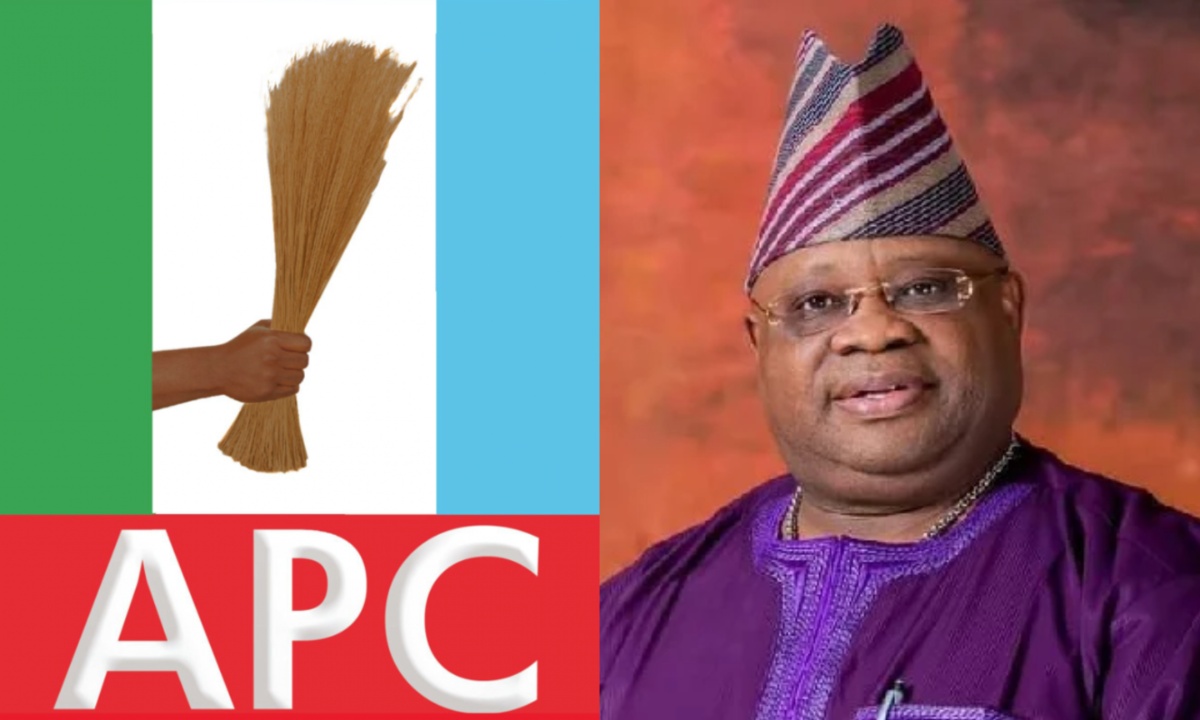
The Osun State chapter of the All Progressives Congress (APC) has accused Governor Ademola Adeleke of misleading a visiting British Government delegation over allegations of political violence ahead of the August 15 governorship election.
In a statement issued on Monday by the party’s Director of Media and Information, Kola Olabisi, the APC alleged that the governor presented inaccurate information during the delegation’s visit to the state.
The party was reacting to Adeleke’s reported appeal to the British delegation, led by Senior Political Adviser Wale Adebajo, to consider economic sanctions and visa restrictions against some APC leaders over alleged involvement in political violence.
The Osun APC rejected the allegations, insisting that none of its leaders had been found guilty by any court or commission of inquiry of aiding or abetting political violence in the state.
“If we may ask, which court or commission of inquiry indicted the APC chieftains as being responsible for aiding and abetting political violence in Osun State ahead of the forthcoming governorship election?” the party asked.
The opposition party alleged that Governor Adeleke had failed to disclose to the British delegation the alleged harbouring of wanted political thugs within the Government House.
The APC also claimed that “more than 30 of our members and supporters were killed before the 2022 governorship election.” It added that Governor Adeleke failed to mention those incidents during his engagement with the delegation.
The party alleged that some aides of the governor were standing trial in connection with the killing of former Irewole Local Government Chairman, Remi Abass, and said the matter should have been brought to the attention of the visiting officials.
The statement also referenced the recent killing of four APC members in Ilesa, alleging that the attack was carried out by thugs linked to the Accord Party.
“We want to inform the visiting British Government delegation to Osun State to disregard the accusations against our chieftains and members of aiding and abetting political violence in Osun State. Past events have shown that Governor Adeleke has been using lies, falsehoods and subterfuge to run his government,” the party stated.
The APC alleged that Governor Adeleke was responsible for the offences he allegedly attributed to the opposition party, as political activities intensify ahead of the August 15 Osun State governorship election.
Governor Ademola Adeleke had called for economic sanctions and visa bans against several political figures for allegedly aiding and abetting political violence ahead of the August 15 governorship election.
Those reportedly mentioned by the governor include the Minister of Marine and Blue Economy, Adegboyega Oyetola; Osun East Senator Francis Fadahunsi; APC governorship candidate Bola Oyebamiji; and the Director-General of the campaign council, Wole Oke.
dailypost.ng

Former England manager, Sam Allardyce, has named Elliot Anderson as the only player in the Three Lions’ squad capable of keeping Lionel Messi quiet in the World Cup semifinal clash.
The 71-year-old emphasized that the new Manchester City player possesses the discipline necessary to manage the Argentina captain.
During his appearance on the No Tippy Tappy Football podcast, Allardyce said that Messi does not physically confront his opponents, which would benefit Anderson.
He suggested that the England player should maintain close proximity to the Argentina captain and remain focused without losing concentration.
He stated, “There’s one individual who can keep Messi quiet for me because, firstly, he[Messi]doesn’t challenge you physically too much.
“Secondly, we can afford to sacrifice one player, and that player has had an exceptional World Cup, but I believe he has the discipline to execute this man-for-man marking, which is, in my opinion, essential. Anderson. The rest of the team is outstanding, and we must be cautious in other areas.”
Allardyce further noted that man-for-man marking would likely frustrate Lionel Messi, which could assist in countering the primary threat. He expressed the need to prevent balls from reaching the 39-year-old and added:
“However, you are neutralizing the main threat, and if you maintain your focus, it won’t matter where he goes; just follow him.
“This could greatly frustrate Messi and prevent him from engaging in the game. Often, it seems that they do not pay enough attention to this; they simply wait to capitalize.”
“For instance, that’s why concentration is crucial. If you are moving around like Messi does, especially, he simply waits, and then he’s off. If you lose focus, you not only stop Messi but also disrupt the service, and I believe that presents an opportunity, as demonstrated by other teams.”
Lionel Messi’s Argentina is set to face England in the semifinal on Wednesday, July 15.
dailypost.ng


Staggering Amount of Money Conor McGregor Made Every Second

Troops, DSS arrest four suspected terrorist collaborators in Kogi

APC executives dump party in Bauchi

Meaning Behind Egypt Manager’s ‘X’ Gesture vs Argentina

Simi Sanya and Femi Dapson Are Now Legally Married and It Is Beautiful to See

Premier League Set-Piece Goals (2025/2026)
-
 Sports2 days ago
2026 World Cup Star Spotted Rowing With Norway Fans During England Match
-
 Sports23 hours ago
Alfie Haaland’s 6-Word Insult to Roy Keane After England vs Norway
-
 Sports16 hours ago
Lionel Messi Missed Training Session Ahead of Argentina vs England
-
 Sports2 days ago
US Pundit Rips Into ‘Embarrassing’ England After World Cup Victory vs Norway
-
 Sports23 hours ago
Argentina ‘Make Special Request to FIFA’ Before England World Cup Clash
-
 Sports2 days ago
Ex-Referee Casts Verdict on Breel Embolo Red Card
-
 Sports2 days ago
Newcastle Agree Deal to Sign Arsenal Winger Kyran Thompson
-
 Sports2 days ago
Man Utd Open Talks to Sign Ederson Upgrade Manu Kone From AS Roma