
Sports
World Cup vs European Championship: How International Tournaments Compare


Cristiano Ronaldo’s claim that Portugal’s Euro 2016 success carries the same weight as lifting the World Cup has reignited one of football’s longest-running debates.
Fresh from confirming that the 2026 tournament will be his last World Cup, the Portugal captain insisted that his country’s historic European Championship triumph means just as much to him as the sport’s biggest prize, arguing that ending Portugal’s long wait for major silverware was every bit as significant.
After his nation’s 1-0 defeat to Spain, Ronaldo spoke to the media to emphasize just how much the Euro 2016 trophy meant to him, saying: “I gave my all. I won three titles with Portugal. Before Cristiano, Portugal had never won a big trophy.”
“The best trophy I won with the national team was [Euro] 2016, which, for me, has the same dimension as the World Cup.”
For many supporters, however, the comparison feels like a stretch. The FIFA World Cup has long been viewed as football’s ultimate achievement, bringing together the best nations from every continent in a tournament watched by billions. The European Championship may boast an exceptional standard, but can a competition limited to UEFA’s members really rival the prestige of a truly global event?
World Cup vs European Championship At a Glance

|
Detail |
World Cup |
European Championship |
|---|---|---|
|
Founded: |
1930 |
1958 |
|
Organiser: |
FIFA |
UEFA |
|
Number of Teams: |
48 (2026) |
24 (2028) |
|
Most Successful Team: |
Brazil (5 titles) |
Spain (4 titles) |
With the inaugural tournament in 1930, the first-ever World Cup saw 13 teams from across the globe travel to Uruguay to participate in what would become football’s greatest accolade. After a varying number of participants for the initial tournaments, from 1954 until 1978, the format was standardized, with four groups of four teams, leading to a total of 16 contributing nations.
For the 1982 tournament, 24 teams made it to the tournament, before the format was expanded to allow an extra eight teams to compete, before the structure was altered again in 1998, taking the total number of teams to 32.
The most recent complete competition, the 2026 World Cup in Qatar, featured 48 teams and saw Spain defeat Argentina to lift their second world title.
The European Championship, on the other hand, has always been contested by a smaller number of nations. The first campaign in 1960 saw just four teams compete in the finals, out of the 17 that entered the competition. Whilst the number of entrants increased over the years, the final’s tournament still only featured four nations until 1980, when the competition was expanded to eight.
1996 saw the number of participants double to 16, before Euro 2016 saw it double again to 24. The most recent tournament saw Lamine Yamal get his first taste of international success after his Spain side beat England 2-1 in the final of the 2024 tournament.
World Cup vs Euros TV Viewership

Worldwide figures for the 2026 World Cup have not yet been released, but the tournament is expected to smash viewership records.
According to FIFA’s website, 2.87 billion viewers watched at least one minute of the 2022 FIFA World Cup coverage on linear TV, with a total media engagement of 5 billion, with significant numbers drawn through digital/streaming and social media. The 2022 final, contested between France and eventual winners Argentina, became the most-watched in World Cup history, with a total of 1.5bn viewers.
Contrasted with the 2024 European Championships, UEFA’s competition drew a similar-sized crowd, with a global cumulative audience of over 5 billion viewers. And whilst no official global viewership numbers have been published, according to the BBC, a peak audience of 24.2 million viewers watched the 2024 final across the BBC and ITV, compared to just 20 million Britons who followed the 2022 World Cup final, according to The Guardian.
⚽
World Cup History Quiz
You scored
out of 20
World Cup vs Euros Prize Money and Prestige

It’s no surprise that, for winning the biggest tournament in football, the victorious team is awarded an eye-watering sum. After beating France on penalties in the final, the Argentinian national team were awarded $42 million, from a staggering total prize pool of $440 million. Even those who got knocked out in the group stage still received $9 million for their efforts. That figure increased for the 2026 tournament, with the winners receiving $50 million.
And whilst the winners of the Euros may not get as much of a payday, their compensation is still far from pocket change, with Spain banking €28.25 million ($32.26 million) from their success in the 2024 tournament. Teams are, however, guaranteed a greater sum for qualifying for the tournament, compared to at the World Cup, receiving €9.25m ($10.5m), according to UEFA’s website. In total, the 2024 European Championship boasted a €331m ($378m) prize pool.
|
Detail |
World Cup |
European Championship |
|---|---|---|
|
Overall Prize Pool |
$871 million |
$378 million |
|
Winners Prize Money |
$50 million |
$32.3 million |
Is the European Championship as Tough as the World Cup?

Well, it depends on how you define ‘tough’, because, if you’re talking about the concentration of high-quality teams, Ronaldo could have a valid point.
Since its inception in 1930, 13 of the 23 World Cup tournaments have been won by a European side, with the other 10 winning sides all hailing from South America. Therefore, it could be argued that, on a match-by-match basis, the Euros are a harder competition, given that the average quality of any given team is higher than that of the World Cup.
But, ultimately, given that Brazil and Argentina have won eight world titles between them, it would be difficult to claim that winning a competition in which they are not included is an equal sporting achievement to, or carries as much prestige, as being crowned champions of the world.
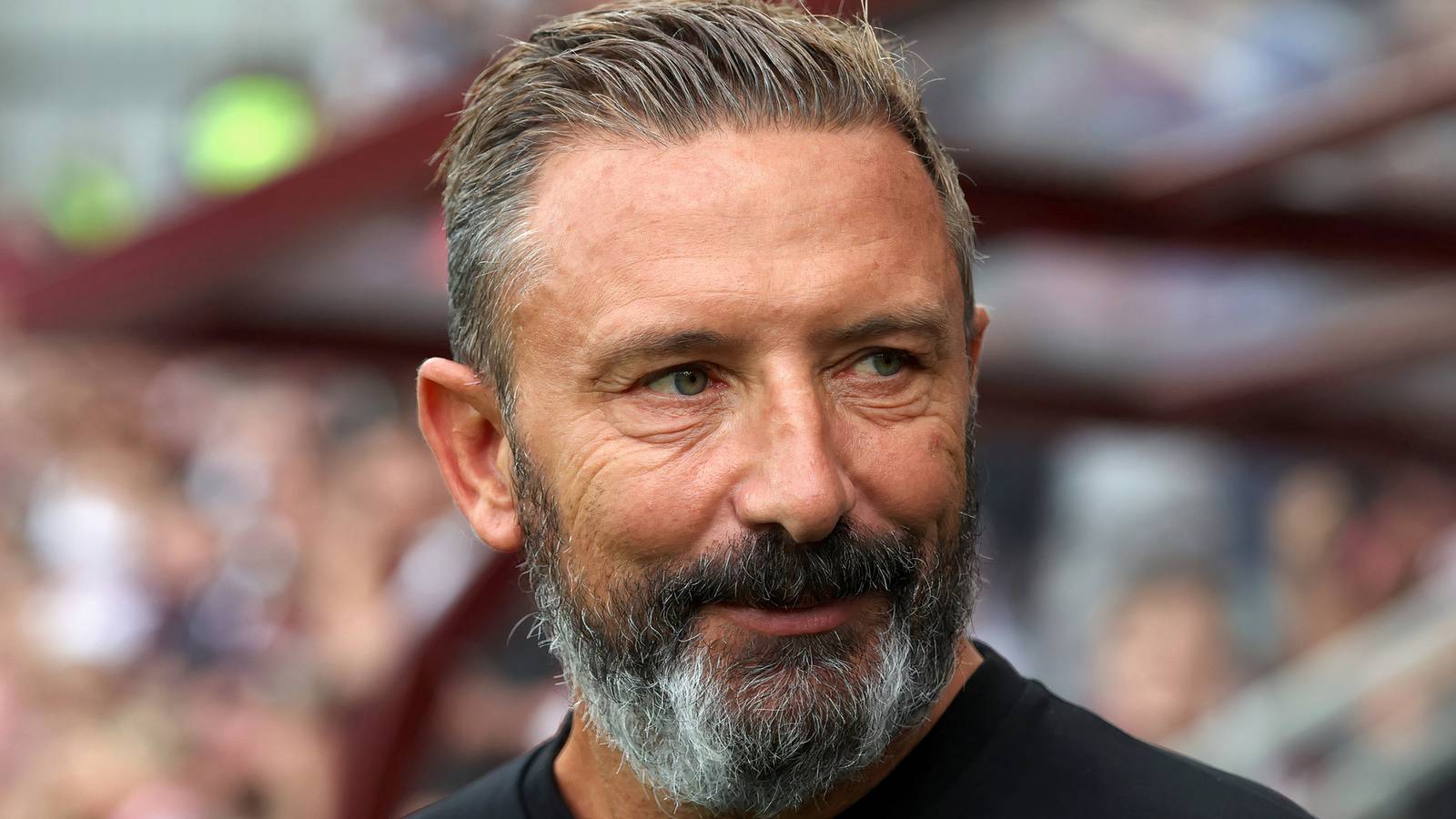
Rangers are showing an interest in signing a Manchester United defender in the summer transfer window.
The Glasgow club are preparing for life under new manager Derek McInnes heading into the new season.
Rangers have already been incredibly busy in the summer window so far, bringing in six new additions for McInnes.
Ivor Pandur, Ross McCrorie, Dan Neil, Lawrence Shankland, Cammy Devlin and Ben Godfrey have all arrived through the door at Ibrox.
Their summer business won’t be stopping there, especially after such a disappointing 25/26 season, which saw them throw away their chances of the Scottish Premiership title in the final weeks.
Rangers have clearly been targeting experienced players in the market, with their youngest being Neil at the age of 24.
Rangers eyeing young star

According to a report from the Daily Mail, Rangers are showing an interest in signing Manchester United ‘rising star’ James Overy in the summer transfer window.
Signing a right-back is likely to be one of Rangers’ priorities this summer after losing James Tavernier following the expiration of his contract.
The Glasgow side also lost Max Aarons, who spent the 25-26 season on loan from Premier League side Bournemouth.
Rangers have already brought McCrorie to the side from Bristol City, but after losing two right-back options, it appears they are in the market for another.
Former Everton defender Godfrey is an option to play at right back, having been deployed there during his time with the Toffees on occasion.
Fees correct prior to summer 2026
All 10 found — excellent!
Who is James Overy?

Overy, who insiders at Old Trafford are ‘raving’ about, made the move to Manchester United from Perth Glory back in 2024.
He is a right back who is capable of pushing into the final third, and he’s eligible to play for both Australia and Scotland.
The now 18-year-old completed the move in September 2024 when he was aged just 16.
Overy later signed his first professional contract with the club last summer, showing how highly rated he is at Old Trafford.
You’d imagine a move to Ibrox would likely only be on loan, considering he’s a highly rated prospect at United.
The youngster is yet to make his senior debut for the Red Devils, but he has been involved with United’s academy sides.

Argentina coach Roberto Ayala has addressed his actions at the 2026 World Cup final, after he was filmed punching Spain’s Dani Olmo.
La Roja added a second star to their crest with a 1-0 extra-time victory over Argentina, in what could be Lionel Messi’s last-ever international game. Tensions boiled over after the final whistle, with several heated interactions.
Nicolas Otamendi furiously confronted Golden Ball winner Rodri, while Leandro Paredes and Nahuel Molina threw Gavi to the floor. Among the chaos, cameras captured Lionel Scaloni’s assistant coach striking Olmo in the face.

FIFA have since opened an investigation into the behaviour of Argentina following the chaotic scenes. The outcome of which is still unknown, but Ayala could be one of those in danger of punishment.
The video that surfaced online shows the coach approach Olmo, who appeared to be trying to diffuse a situation between Ayala and Eric Garcia. The former then swung his arm towards the Barcelona midfielder, making contact with the lower part of his face. Watch below.
Olmo decided to keep his response classy. In a post-match interview, the 28-year-old said: “Well… it doesn’t matter to us in the end.
“I think it’s also important to think about the values you want to convey to the outside. We are role models for many generations, and for many children, and I think they should also be role models in everything and for the better.”
Argentina Coach Breaks Silence on Olmo Punch

Ayala, who played for Argentina 115 times during his career, has now given his version of events. While stating his actions had ‘no excuse’ and he would personally apologise to Olmo, the retired defender claimed it was a push rather than a punch.
Speaking to Esports Migdia, Ayala said:
“When the match ended, my intention was to walk away, but then things happened with my heart rate through the roof. What occurred is no excuse, and I shouldn’t have done it. It was more of a shove than a punch; it was a reaction to some words. If I see Dani Olmo, I’ll apologise to him in person. What happens on the field stays on the field. Spain was superior and deserved to win.”
Emotions appeared to get the better of many Argentina players and staff members after the tough defeat. However, Spain players appear to be ready to move past it. Just like Olmo, Gavi stated that it should all be a thing of the past. He even claimed Paredes should face no further action after their altercation.
Statistics in this article are courtesy of Transfermarkt. Correct as of 22-07-26.

The coverage of women’s athletics on television will appear starkly different to viewers in the future as new changes are set to be introduced to ensure athletes are given more privacy.
Concerns have been raised for some time about the unnecessary camera angles which get shown during athletic events involving female competitors. Often, the television footage in these scenarios can lead to athletes being sexualised and becoming a target for unwanted attention.
The European Broadcasting Union (EBU) has now taken action to ensure measures are in place so that female athletes receive protection from television cameras and feel that their privacy is being respected by broadcasters.
The EBU has consulted professional women athletes such as Olympic long jumper from Serbia, Ivana Spanovic, plus Olympic bronze medallist pole vaulter, Holly Bradshaw.

Bradshaw has been on the receiving end of abuse from people online over sexualised camera footage of her competing in events and believes the issue has been a prevalent one in women’s sports.
“I first-hand have received social media abuse and witnessed inappropriate videos online of myself and colleagues when slow-motion content of us competing is captured,” the now-retired track and field athlete stated.
“On too many occasions, cameras are zoomed in, showing super slow-motion action replays of athletes in undignified positions,” she added.
The new rules issued by the EBU have given guidelines to broadcasters regarding how television cameras should operate around four athletic events, presenting what can and cannot be shown in live coverage.
High Jump
What is allowed
For high jump events, a wide angle should be shown for the run-up and jump over the bar, as well as the replay. A close-up shot of the athlete’s face is permitted.
What isn’t allowed
What is not allowed to be shown in high jump events is any low angles of the athlete, while a zoom into the athlete is not deemed necessary. A slow-motion replay is also regarded as banned for any action in this event.

Pole Vault
What is allowed
For pole vault events, angles are allowed to follow the run-up and vault over the bar, while slow-motion replays are permitted as it is deemed helpful. Also, artistic shots of pole vaulters are allowed as long as they are not compromising in any fashion, plus a full body angle is permitted before the run-up.
What isn’t allowed
What is regarded as a negative angle in pole-vaulting is when an athlete bends over, with camera operators instructed to now shift to the side if this occurs. Also, the EBU advises that a shot does not remain tight on an athlete, while warning that roaming shots can be compromising in certain situations.
Horizontal Jumps (Triple Jump/Long Jump)
What is allowed
With horizontal jumps, camera angles can display a full-body shot of the athlete for the run-up and jump, as it provides a good technical view for commentators and viewers. Also, angles are permitted for when the athlete’s data is shown on the screen before and at the beginning of their run-up.
What isn’t allowed
Angles should not occur from the sandpit when an athlete lands or gets up from the sand. Roaming cameras are also unadvised for these events, especially if the camera is placed low or behind the competitor. A camera from below an athlete is also deemed a negative angle.
Running events
What is allowed

Running events can often be the most compromising for athletes due to them being in a low position for a lengthy period before a race starts. The new rules now indicate that the camera should ideally stay in front of the athlete.
What isn’t allowed
Very tight shots should be avoided. Also, camera operators should not capture an athlete below the pelvis as that can often produce unflattering shots.
These new guidelines by the EBU are set to come into effect for the first time next month at the European Athletic Championships in Birmingham.
Female athletes will hope these recent changes can go a long way to providing greater levels of privacy and respect for them and ensuring they are not targeted with unnecessary sexualised images of themselves moving forward.


Osun Guber: Political parties raise fresh concerns over electoral integrity

Rangers Interested in Signing Manchester United Defender James Overy

ADC supporters protest alleged plan to replace Adamawa governorship candidate

Meaning Behind Egypt Manager’s ‘X’ Gesture vs Argentina

Simi Sanya and Femi Dapson Are Now Legally Married and It Is Beautiful to See

Premier League Set-Piece Goals (2025/2026)
-
 Sports1 day ago
All Completed Arsenal Transfers in 2026/27
-
 Sports1 day ago
Explanation For Lionel Messi’s Strange World Cup Tunnel Room Speech
-
 Sports1 day ago
Enzo Fernandez Releases Statement After World Cup Final Red Card
-
 Sports1 day ago
FIFA Confirm Leandro Paredes Was Not Sent Off in World Cup Final
-
 Politics2 days ago
Peter Obi will defeat Tinubu in 2027 – Kwankwaso
-
 Sports2 days ago
Why UEFA President Refused to Attend 2026 World Cup Final
-

 Metro2 days ago
Father of seven swept away by flood in Edo
-

 Sports2 days ago
Ipswich Town Eye Celtic Forward Daizen Maeda Transfer