
Politics
Kaduna APC aspirants accuse party, government of marginalisation


About 55 aspirants of the All Progressives Congress (APC) in Kaduna State who voluntarily stepped down from various elective contests in the interest of party unity have accused the party leadership and the Kaduna State Government of neglecting and marginalising loyal members.
The aggrieved aspirants, operating under the banner of the Kaduna State House of Assembly APC Aspirants Forum 2026, said they abandoned their political ambitions following appeals by party leaders, believing that their loyalty, discipline and commitment to the party would be rewarded with fairness, inclusion and recognition.
In a statement issued on Friday and signed by the forum’s chairman, Godwin Luka (Maisolar), and Secretary, Tahir Gambo Abubakar, the group lamented that, despite remaining steadfast and loyal to the APC, repeated efforts to seek an audience with the party leadership and the Kaduna State Government had yielded no positive response.
According to the forum, members voluntarily withdrew from their respective contests to preserve party unity and enhance the APC’s electoral prospects, describing the decision as a significant sacrifice made in the collective interest of the ruling party.
The aspirants, however, expressed disappointment that, months after making the sacrifice, they had allegedly been excluded from appointments, consultations and other political engagements.
They further alleged that, while loyal party members who complied with the directives of the leadership had been sidelined, individuals who openly criticised the party or opposed its decisions were allegedly being rewarded with appointments and political opportunities.
The statement said, “We willingly sacrificed our personal ambitions after appeals by the leadership because we believed our loyalty, discipline and commitment to the party would be recognised and appreciated.
“We remain committed to the ideals and success of the APC, but our patience and loyalty should not be mistaken for weakness, neither should our sacrifices be taken for granted.”
The forum stressed that its members were not demanding special treatment but were simply calling for justice, fairness and recognition of those who made personal sacrifices to strengthen the party.
It warned that continued neglect of loyal members could affect the morale of party faithful as political activities gradually gather momentum ahead of the 2027 general elections.
While reaffirming their loyalty to Governor Uba Sani and the APC, the aspirants urged the governor and the party leadership to engage members of the forum urgently and address their grievances before they escalate.
They also noted that many members of the forum command significant political influence across their respective constituencies, adding that their supporters were closely monitoring developments and would expect direction as preparations for the next general elections intensify.
“We have no regrets supporting the success of our great party. However, loyalty should be rewarded. Justice, equity and fairness remain the foundation for sustaining unity and strengthening the APC ahead of future elections,” the statement added.
The forum expressed optimism that the party leadership would resolve the matter through constructive dialogue, insisting that recognising and accommodating loyal members would further consolidate the APC’s unity and electoral strength in Kaduna State.
As of the time of filing this report, neither the Kaduna State chapter of the APC nor the Kaduna State Government had issued an official response to the allegations.
dailypost.ng

The Allied Peoples Movement, APM, has named Grace Oluwatobi Coker as its deputy governorship candidate for the 2027 Lagos State governorship election.
Coker emerged as the running mate to the party’s governorship candidate, Prince Laja Adeoye, and pledged to work towards providing purposeful leadership if elected.
Reacting to her nomination on Saturday, she described her emergence as a great honour and responsibility, expressing gratitude to God, the party leadership, supporters and Lagos residents for the confidence reposed in her.
She also thanked Adeoye for selecting her as his running mate, describing him as her leader, mentor and principal, while expressing her readiness to work closely with him in pursuit of the party’s vision for Lagos State.
Coker reaffirmed her commitment to supporting the governorship candidate in securing victory for the APM in the 2027 governorship election.
She equally appreciated the leadership of the party at the national, state, local government, ward and polling unit levels, as well as other stakeholders and candidates, for their encouragement and unwavering support.
The deputy governorship candidate also commended members of the party’s campaign team, volunteers and supporters for their dedication, sacrifices and prayers, noting that their contributions would remain vital to the party’s success.
She extended her appreciation to her family, friends and associates for standing by her throughout her political journey.
Coker also thanked the people of Ibeju-Lekki Local Government Area, her home constituency, and residents across Lagos State for their trust and support, assuring them that she would not take their confidence for granted.
Reaffirming her loyalty to the APM, she pledged to work hand in hand with Adeoye, the party leadership and members to deliver victory in the 2027 governorship election.
According to her, the APM is offering Lagosians “a new direction anchored on purposeful leadership, accountability, inclusion and sustainable development.”
She also prayed for divine wisdom and guidance as the party intensifies preparations ahead of the 2027 general elections.
dailypost.ng

*As party leaders invoke history, faith and defiance to rally supporters in Abuja, a bruising court setback exposes the legal and political hurdles confronting Nigeria’s main opposition on the road to 2027.
By Luminous Jannamike, ABUJA
The message was unmistakable: the Peoples Democratic Party (PDP) would not go quietly. Beneath the bright lights of a packed stakeholders’ meeting in Abuja, applause repeatedly drowned out whispers of collapse as former governors, Board of Trustees members, state chairmen and loyalists gathered under the shadow of another leadership crisis.
Read Also: ‘Be bold to support your kinsman’ – Atiku blasts Obasanjo over Na’Abba bribery claim
There was no attempt to pretend that all was well. Yet every speech carried the same underlying refrain; that the party had stared into the abyss before and lived to fight another day.
The gathering came at a defining moment for a political organisation that once dominated Nigeria’s landscape for 16 uninterrupted years but now finds itself fighting on multiple fronts.
Beyond the familiar contest with the ruling All Progressives Congress (APC), the PDP has wrestled with internal fragmentation, high-profile defections, competing claims to leadership and an expanding list of legal battles that threaten to distract it from the larger objective of rebuilding ahead of the 2027 general election.
For many in the hall, therefore, the battle was no longer simply about who occupies the party’s national secretariat. It was about preserving the legitimacy, identity and electoral viability of Nigeria’s biggest opposition platform.
That reality hung heavily over the meeting. Yet politics seldom rewards emotion alone. Even as party leaders projected confidence inside the conference hall, events outside it were unfolding rather differently.
Rallying the Faithful
Chairman of the PDP Interim National Working Committee, Kabiru Tanimu Turaki (SAN), wasted little time setting the tone.
Thanking stakeholders for responding to the invitation despite the short notice, Turaki said the turnout itself was proof that predictions of the PDP’s political extinction had once again been exaggerated.
“There comes a time in the life of a human being when challenges and ups and downs become the order of the day,” he told the gathering, arguing that adversity had become part of the party’s political history.
His repeated references to the party’s turbulent past were deliberate. Rather than dwell exclusively on the present crisis, Turaki took members back to the bitter Ali Modu Sheriff-Ahmed Makarfi leadership battle that almost tore the PDP apart several years ago.
For seasoned party faithful, the comparison was instantly recognisable. The Sheriff-Makarfi confrontation was one of the most turbulent chapters in the PDP’s history, dragging through multiple courts before eventually ending in judicial clarity that reunited the party ahead of the 2019 elections.
By invoking that episode, Turaki was doing more than recalling history. He was inviting members to believe that today’s conflict could ultimately follow a similar trajectory.
Whether current political and legal realities will produce the same outcome, however, remains an altogether different question. Still, Turaki was unequivocal.
“What we are now witnessing in our party is even a child’s play,” he declared, expressing confidence that the PDP would once again emerge stronger.
His broader message was equally revealing. Without naming the ruling party, Turaki lamented what he described as a growing pattern of instability across opposition parties, suggesting that many of the crises now confronting opposition platforms could be traced to external political interference.
“It is regrettable,” he said, that tensions affecting opposition parties often lead “back to the footsteps of the party in government.”
Whether that claim resonates beyond the PDP faithful is open to debate. But politically, it served an important purpose: shifting the conversation from internal blame to external pressure.
The Defence Strategy
Beyond rallying emotions, Turaki’s speech also sought to neutralise perhaps the greatest fear within the PDP; that the unresolved leadership dispute could jeopardise the party’s participation in the next general election.
“The essence of every political party is to legitimately capture power. You cannot capture power unless you are on the ballot,” he reminded stakeholders.
He then delivered what was arguably the most significant political assurance of the meeting.
“I want to tell you that PDP shall be on the ballot for all rounds of the 2027 elections,” Turaki declared, insisting that the party would present candidates from the presidential election down to the State Houses of Assembly.
For members increasingly anxious about the legal consequences of the leadership tussle, the declaration was intended to restore confidence.
More importantly, it highlighted the central political calculation now driving the party’s interim leadership: whatever disagreements remain unresolved internally must not be allowed to create the impression that the PDP risks exclusion from the electoral contest.
Turaki’s repeated invocation of the Sheriff-Makarfi crisis reflected that strategy. Rather than deny the gravity of the present conflict, he sought to normalise it, reminding party faithful that institutional crises have become almost cyclical in the PDP’s history; and that survival, rather than stability, has often defined the party’s political character.
To reinforce the fighting spirit, he borrowed from the late educationist Tai Solarin’s famous refrain.
“So let them push us if they like,” Turaki said. “We have the strength to push back.”
The applause that followed suggested his audience wanted, perhaps needed, to believe exactly that.
The Moral Reckoning
If Turaki focused on strategy, former Niger State Governor and Secretary of the PDP Board of Trustees, Babangida Aliyu, turned the conversation inward.
Commending the interim leadership for pursuing what he described as the lawful path through the crisis, Aliyu argued that difficult moments often reveal an organisation’s true character.
“We have been challenged,” he observed. “Many a times, you will never know the strength that you have until you are thoroughly challenged.”
But the former governor reserved his sharpest criticism for politicians who repeatedly abandon one political platform for another in pursuit of personal ambition.
Describing them as ‘nomadic politicia’, Aliyu said many had treated the PDP as a temporary vehicle rather than a political home, only to discover that greener pastures were not always greener.
“It is unfortunate that people are not patient enough,” he said, warning against those who attempt to ‘play God’ by assuming they alone determine political destiny.
Aliyu’s intervention reflected a deeper anxiety within the PDP; that years of defections have not merely depleted the party’s ranks but have steadily weakened the culture of institutional loyalty that once held it together.
For him, the challenge was no longer simply about those who had left. It was about rebuilding a political tradition capable of keeping ambitious politicians invested beyond electoral convenience.
Many of those who believed the PDP would collapse because they abandoned it, he argued, now find themselves navigating uncertainties of their own.
Drawing heavily on morality and faith, Aliyu insisted that politics ultimately answers to a higher authority than personal ambition.
“Our creator judges you by what is in your heart, not what is in your pocket or what is in your mouth,” he said, expressing confidence that members who had remained steadfast would ultimately be vindicated.
It was an intervention that mixed politics with conscience, suggesting that the PDP’s current ordeal was not merely organisational but also moral. His appeal was for patience, introspection and renewed discipline; an acknowledgement, perhaps, that many of the party’s deepest wounds had been self-inflicted.
Anger, Gratitude and Greed
If Aliyu spoke with measured disappointment, Chairman of the PDP State Chairmen’s Forum, Tony Aziegbemi, spoke with barely concealed anger.
His target was politicians who, in his view, rose to prominence on the platform of the PDP only to later ridicule the same institution that made their careers possible.
Recalling a televised remark by one such politician urging that the PDP be ‘killed’, Aziegbemi described the comment as a striking example of political ingratitude.
According to him, the party had repeatedly bent its own rules to elevate individuals beyond what their political records ordinarily justified, only to receive hostility in return.
His remarks exposed an enduring grievance within the PDP; that many of its greatest political setbacks have come not from opponents across the aisle, but from beneficiaries within its own fold whose ambitions eventually outgrew their commitment to the platform.
It is a complaint now heard with increasing frequency among party loyalists, many of whom believe the PDP’s recurring crises have often been manufactured from within rather than imposed from outside.
Aziegbemi then broadened his criticism into a wider commentary on governance, corruption and the moral burden of political power.
Invoking Leo Tolstoy’s celebrated short story, How Much Land Does a Man Need?, he questioned what he described as the endless appetite for wealth among sections of Nigeria’s political elite.
The literary reference was more than rhetorical flourish. It became a metaphor for the widening gulf between extraordinary personal accumulation and widespread public deprivation.
Referring to reports of multiple properties confiscated from politically exposed persons, Aziegbemi wondered how public officials could continue acquiring enormous assets while millions of Nigerians struggled with hunger and economic hardship.
“Where we are is the right place to be,” he assured party faithful. “Don’t be scared. Don’t have doubts. We will get there.”
It was a speech that sought not only to rally the faithful but also to reclaim the PDP’s moral argument as an opposition party seeking relevance in a country weighed down by economic hardship.
The Legal Blow
But while optimism dominated proceedings inside the Abuja meeting hall, the courtroom had already delivered a sobering reminder that political conviction and legal success do not always travel together.
Only days earlier, penultimate Friday, Justice Salim Ibrahim of the Federal High Court in Abuja struck out the suit filed by the Adolphus Wabara-led Board of Trustees seeking to compel the Independent National Electoral Commission (INEC) to recognise the Kabiru Turaki-led Interim National Working Committee as the PDP’s authentic leadership.
More significant than the financial penalties imposed was the signal the judgment sent.
The court did not determine who the authentic leaders of the PDP are. Instead, it dismantled the legal route adopted by one faction to secure official recognition.
Justice Ibrahim held that the Board of Trustees lacked the locus standi to institute the action on behalf of the PDP.
He further ruled that the party itself never authorised the suit, leading to the PDP being struck out as a plaintiff.
The judge also held that the action amounted to an abuse of court process because it sought to re-litigate issues already decided in previous proceedings.
In addition, he observed that the suit had become largely academic since INEC had already monitored the convention that produced the rival leadership recognised by the commission. He equally faulted the decision to commence the action by originating summons despite the existence of substantial disputed facts requiring oral evidence.
The consequences were costly. Justice Ibrahim awarded N70 million in costs against the plaintiffs in favour of the defendants and imposed an additional N10 million personally against the plaintiffs’ counsel, explaining that the sanctions were intended to discourage frivolous pre-election litigation.
Legally, the judgment resolved less than many had anticipated. Politically, however, it reinforced an uncomfortable reality: institutional legitimacy cannot be secured through political declarations alone, and courtroom strategy has now become as critical to the PDP’s future as political mobilisation.
The Wabara-led Board of Trustees has rejected the ruling, describing it as inconsistent with earlier appellate decisions and indicating that it will challenge the judgment through the appellate process. That appeal ensures the legal contest is far from over.
The Big Picture
Ironically, both sides of the PDP divide now invoke history in defence of their positions.
One faction points to previous victories over internal rebellions as evidence that the party’s survival instinct remains intact. The other insists that the law will ultimately vindicate its position.
Between those competing narratives stands an electorate increasingly less interested in procedural victories than in whether the opposition can present a united, disciplined and credible alternative ahead of 2027. That may prove to be the PDP’s greatest challenge.
Political parties rarely collapse because they lose elections alone. More often, they decline when internal disputes begin to consume the energy that should ordinarily be invested in building public confidence. For the PDP, the contradiction could hardly be more striking.
Inside the conference hall in Abuja, party leaders projected confidence, resilience and optimism. They spoke the language of history, perseverance and eventual triumph.
Inside the courtroom, however, the language was altogether different; one of legal standing, procedural defects, abuse of process and institutional recognition.
Both conversations matter. Both will shape the PDP’s immediate future. The Abuja meeting demonstrated that the opposition party has not surrendered its fighting spirit. The Federal High Court, however, reminded it that determination alone cannot settle questions of legitimacy.
As the countdown to the 2027 general election gathers momentum, the PDP’s defining battle may no longer be against the ruling party alone.
It may first have to convince Nigerians, and perhaps even itself, that it has finally mastered the divisions within its own house. Only then can its battle cry of resilience carry the political weight its leaders so passionately claimed in Abuja.
www.vanguardngr.com
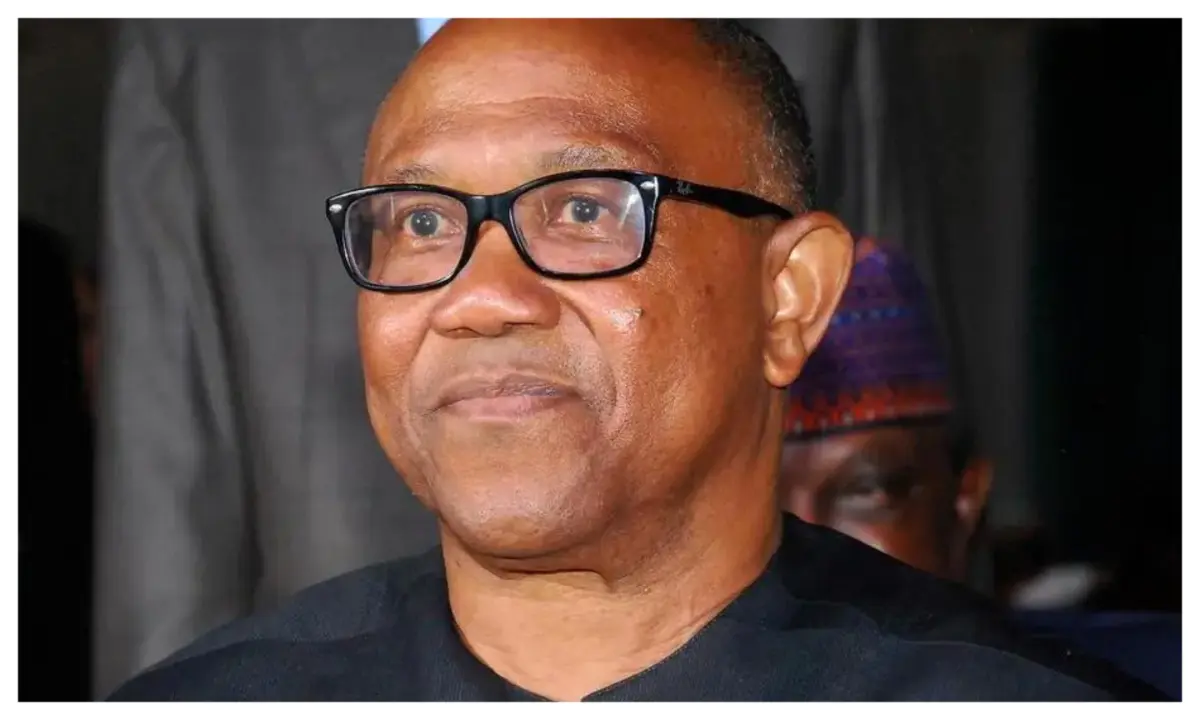
Ahead of the 2027 general elections, a chieftain of the Peoples Democratic Party, PDP, Anselm Ijebor, says the Nigeria Democratic Congress, NDC, presidential candidate, Peter Obi, remains the best choice to rebuild Nigeria.
Describing Obi as a leader with a proven track record of public service, integrity, competence and commitment to national development, Ijebor said he would mobilise support for him
He also called on Nigerians to support candidates they believe possess the experience, vision and capacity required to address the country’s challenges and provide effective leadership.
Ijebor further stated that the 2027 general election presents an opportunity for citizens to elect leaders capable of rebuilding the country through accountability, transparency and purposeful governance.
“As the 2027 general election approaches, Nigerians have an opportunity to elect leaders with the experience, vision and capacity to deliver good governance and rebuild the country.
“To me, Obi remains the best choice,” Ijebor said.
dailypost.ng


Leeds Want to Sign ‘Superb’ Striker in £18.9M Deal

Tottenham Can Save Millions On Savinho Transfer With ‘Special’ Player Plan

Troops rescue five family members of abducted Zamfara LG chairman

Meaning Behind Egypt Manager’s ‘X’ Gesture vs Argentina

Premier League Set-Piece Goals (2025/2026)

Simi Sanya and Femi Dapson Are Now Legally Married and It Is Beautiful to See
-
 Sports1 day ago
Benjamin Sesko’s Body Transformation Stuns Man Utd Players
-
 Sports1 day ago
All Completed Liverpool Transfers in 2026/27
-
 Sports1 day ago
All Completed Man City Transfers in 2026/27
-
 Metro1 day ago
Nigerian military wipes out ISWAP fighters in deadly Borno airstrike
-
Metro1 day ago
Woman allegedly pours hot water on pregnant co-wife, newborn dies in Bauchi
-
 Sports2 days ago
10 English Clubs With the Most Fan Arrests in the 2025/26 Season
-
Politics2 days ago
Court declares Jimi Lawal authentic Ogun ADC governorship candidate
-
 Sports1 day ago
FIFA’s Stance on Replaying Argentina vs Spain 2026 World Cup Final