
Business
REFORMS: Tax Ombud steps in to protect taxpayers, rebuild public trust


…Unveils digital complaint portal, call centre
By Emeka Anaeto, Business Editor
As the Federal Government pushes ahead with its comprehensive fiscal realignments, a critical missing link in the nation’s tax ecosystem has finally been plugged with the formal operationalisation of the Office of the Tax Ombud.
The move is designed to safeguard corporate and individual taxpayers against administrative high-handedness while fostering a balanced social contract between the state and the taxpaying public.
Speaking at an exclusive executive breakfast session with Senior Business Editors in Lagos, the Chief Executive/Tax Ombud, Dr. John Nwabueze, disclosed that the institutional tax arbiter is stepping into the fray to guarantee equity, due process, and speed in resolving tax disputes without the costly encumbrances of litigations.
Established under Part VI of the Joint Revenue Board (Establishment) Act 2025, the independent body arrives at a crucial juncture when the administration of President Bola Ahmed Tinubu, alongside the fiscal policy directions of the Minister of Finance and Coordinating Minister of the Economy, Mr. Taiwo Oyedele, is driving far-reaching measures to widen the national tax net and optimize domestic revenue mobilization.
Nwabueze emphasized that while revenue collection remains vital for economic prosperity, tax administration must not alienate the productive sectors of the economy.
“At its core lies a renewed social contract — one in which taxpayers are not passive partakers, but active partners in nation-building,” Nwabueze stated.
“However, for this contract to endure, the tax system must be fair, responsive, and just,” he added. Addressing crucial boundaries of the Ombud’s powers, Nwabueze clarified that the agency is structured to enforce administrative fairness rather than act as a judicial body.
He said the Ombud serves as a watchdog against administrative lapses, mediates disputes, tracks systemic flaws in tax collection, and protects taxpayer rights.
He also clarified that the Ombud does not determine actual tax liability, nor does it replace the statutory roles of the Tax Appeal Tribunal (TAT) or the regular courts.
To ensure seamless accessibility for the private sector and small business owners across the country, Nwabueze announced that the agency will unveil a dedicated digital portal and call centre in the coming weeks. The platform will allow aggrieved taxpayers to lodge complaints, track dispute resolutions, and access procedural guidance in real time.
“Our journey towards a modernized tax system will not be defined by laws alone; it will be defined by trust,” Nwabueze noted, urging media executives to actively bridge the information gap between the tax authorities and the investing public.

…Disburses over N600bn through BoI to support business
By Yinka Kolawole
The Federal Government has captured more than 500,000 Micro, Small and Medium Enterprises (MSMEs) in a national database as part of efforts to strengthen industrial development, improve policy planning and enhance Nigeria’s competitiveness in regional and global trade. This is even as over N600 billion has been disbursed through the Bank of Industry (BoI) to support businessesMinister of Industry, Trade and Investment, Dr. Jumoke Oduwole, disclosed this at the 17th National Council on Industry, Trade and Investment held in Enugu, where she reaffirmed the Federal Government’s commitment to driving industrialisation, attracting investments and expanding non-oil exports under the Renewed Hope Agenda.
She said the MSME database would provide government with credible information to design targeted interventions, improve access to finance and support business growth, noting that the initiative forms part of broader efforts to build a more competitive and inclusive economy.
Available statistics estimate the number of MSMEs in Nigeria to be over 40 million, many of which operate in the informal sector, accounting for about 48% of the GDP and 86% of national employment. However, the sector faces an estimated N13 trillion credit gap, with businesses heavily impacted by inflation, poor electricity, and a high reliance on personal savings.
Highlighting recent achievements, Oduwole said Nigeria has facilitated more than $50 billion in Foreign Direct Investment (FDI) commitments, recorded $6.1 billion in non-oil exports, and disbursed over N600 billion through the Bank of Industry (BoI) to support businesses across critical sectors.
She added that nearly 300,000 Nigerians have also benefited from government-backed skills development programmes aimed at improving workforce capacity and supporting industrial productivity.
According to the minister, the achievements demonstrate tangible progress towards the administration’s ambition of building a $1 trillion economy through increased production, investment, exports and job creation.
She said the ministry would continue to prioritise the development of industrial clusters, expansion of manufacturing capacity, investment facilitation, digital trade and the implementation of the National Single Window to ease the cost of doing business.
Oduwole also identified stronger intellectual property protection and deeper participation in the African Continental Free Trade Area (AfCFTA) as critical to improving Nigeria’s export competitiveness and positioning local businesses to take advantage of opportunities across Africa.
She urged agencies under the ministry to ensure that resolutions reached at the council meeting are backed by clear ownership, implementation timelines and measurable performance indicators to guarantee effective execution.
Also speaking, Minister of State for Industry, Sen. John Enoh, reaffirmed the government’s commitment to implementing the Nigeria Industrial Policy 2025, noting that the policy would focus on affordable industrial financing, value addition, manufacturing expansion and stronger public-private partnerships to drive sustainable industrial development.
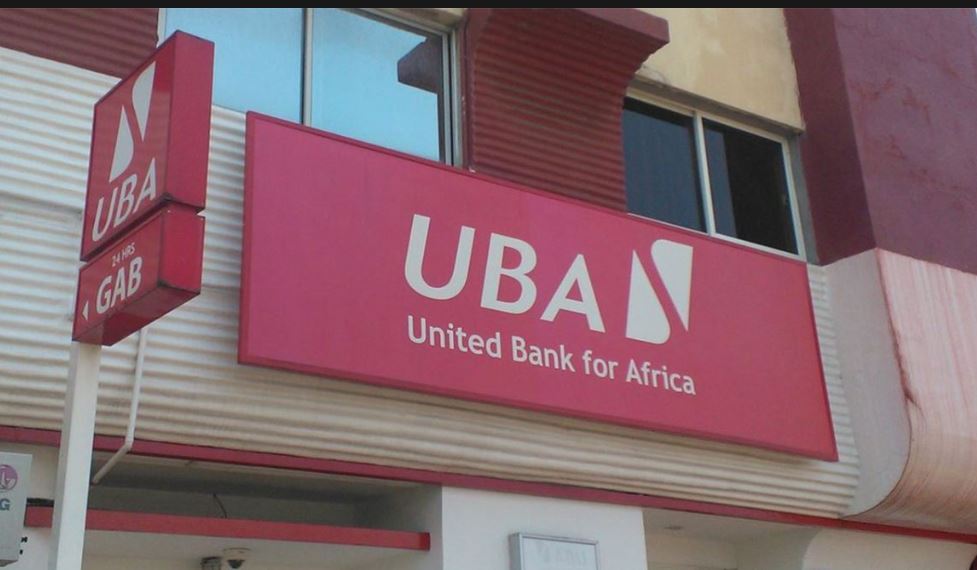
Africa’s Global Bank, United Bank for Africa (UBA) Plc, has reinforced its position as one of the continent’s leading financial institutions after emerging as Nigeria’s Best Bank for Retail and Sustainability Leadership (ESG) at the prestigious 2026 Euromoney Awards for Excellence.
The awards, presented on Thursday, July 17, 2026, at The Peninsula London in the United Kingdom, celebrates banking institutions that demonstrate outstanding financial performance, innovation, customer impact and sustainable business practices.
The double recognition underscores UBA’s leadership in driving sustainable finance while expanding access to innovative banking solutions for millions of customers across Africa.
According to Euromoney, UBA distinguished itself through significant strides in environmental, social and governance (ESG) performance, including the launch of a Green Financing Facility to support households and businesses transitioning to renewable energy, a N5 billion financing programme in partnership with the Bank of Industry to empower women-owned businesses, and its long-term commitment to achieving net-zero emissions by 2050.
The publication also highlighted UBA’s efforts to embed sustainability within its operations through the deployment of solar-powered energy solutions across 50 branches and comprehensive ESG capacity-building initiatives that have trained more than 16,000 employees across the Group. In the retail banking category, Euromoney recognised UBA’s continued expansion as one of Africa’s largest retail banking franchises. The Bank grew its customer base to over 37 million by the end of 2025, while retail revenue more than quadrupled to N429.5 billion.
The awards also acknowledged UBA’s continued digital innovation, particularly the enhancement of its award-winning AI-powered chatbot, LEO, which became Africa’s first artificial intelligence banking platform to facilitate cross-border money transfers in local currencies through the Pan-African Payment and Settlement System (PAPSS).
Commenting on the recognition, UBA’s Group Managing Director/Chief Executive Officer, Oliver Alawuba, described the awards as a validation of the Bank’s unwavering commitment to creating value for customers while advancing sustainable development across Africa.
“To be recognised as Nigeria’s Best Bank for both ESG and Retail Banking in the same year sends a powerful message that sustainable banking and commercial success are mutually reinforcing.
“At UBA, we are committed to financing Africa’s future, supporting businesses and communities, promoting financial inclusion, and delivering innovative banking solutions that improve lives. These awards belong to our customers for their confidence in us and to every member of the UBA family whose dedication continues to make our vision a reality.”

By Obas Esiedesa
The Rural Electrification Agency (REA) has unveiled plans to establish 3.7 gigawatts (GW) of local solar photovoltaic (PV) panel manufacturing capacity by the end of 2027 as Nigeria intensifies efforts to expand electricity access and reduce dependence on imported renewable energy equipment.
Managing Director of the agency, Engr. Abba Aliyu, disclosed the initiative in Abuja during a benchmarking visit by officials of the Zanzibar Utilities Regulatory Authority (ZURA).
He said the agency is encouraging Chinese solar manufacturers to establish production facilities in Nigeria, noting that locally assembled solar panels are already being exported from Lagos to neighbouring Ghana.
According to him, the planned manufacturing expansion will significantly reduce imports while strengthening Nigeria’s renewable energy value chain. Aliyu attributed the rapid global growth of renewable energy to falling prices of solar panels and lithium batteries, saying technological innovation has made off-grid electricity the most cost-effective solution for millions of underserved communities.
He said Nigeria’s electricity access rate currently stands at 61.2 per cent, leaving about 80 million people without reliable power supply.
To address the challenge, REA has adopted a least-cost electrification strategy that determines the most suitable technology for each community rather than relying solely on national grid expansion.
The agency has mapped more than 700,000 communities nationwide, with plans to serve about 45 per cent through solar home systems, 31 per cent through mini-grids and the remaining 24 per cent through grid extension.
Aliyu added that REA has developed one of Africa’s most extensive geospatial electricity databases, covering more than 51,000 health facilities, 11,000 markets, thousands of schools, factories, dams, electricity feeders and existing mini-grids to support investment planning.
He noted that the agency’s interventions also target underserved communities receiving less than six hours of electricity daily. The REA boss warned that electricity demand would continue to rise sharply as Nigeria’s population grows, more sectors become electrified and emerging technologies such as artificial intelligence and data centres consume increasing amounts of power.


The Special Gifts Lionel Messi Gave to Each of His Argentina World Cup Teammates
FG maps 500,000 MSMEs to drive industrial growth, competitiveness

2027: He’s tired, he needs to rest — Peter Obi tells Tinubu to go home

Meaning Behind Egypt Manager’s ‘X’ Gesture vs Argentina

Premier League Set-Piece Goals (2025/2026)

Simi Sanya and Femi Dapson Are Now Legally Married and It Is Beautiful to See
-
 Sports1 day ago
Fabrizio Romano Issues ‘Here We Go’ for Arsenal’s Axel Donczew Transfer
-
 Entertainment2 days ago
EscapeMag Issue 15 Spotlights Mercy Eke’s Growth Through a Fashion Story Worth Watching
-
 Sports1 day ago
Simon Jordan Claims Anthony Joshua vs Kristian Prenga was ‘Fixed’
-
 Sports2 days ago
Argentine TV Names 10 People Responsible for ‘Argentinophobia’
-
 Entertainment2 days ago
Toke Makinwa Is Giving the Two Piece Trend a Luxe New Identity for Every Glam Occasion
-
 Metro2 days ago
Troops intensify hunt for abducted Zamfara council chairman
-
 Metro1 day ago
BREAKING: Many feared dead, 30 missing as suspected herdsmen attack Ohimini in Benue
-
 Sports2 days ago
Fabrizio Romano: Crystal Palace Agree Personal Terms to Sign Raphael Le Gue