
Sports
Leeds Wait on Premier League Vote as £73m Call Highlights Past Errors

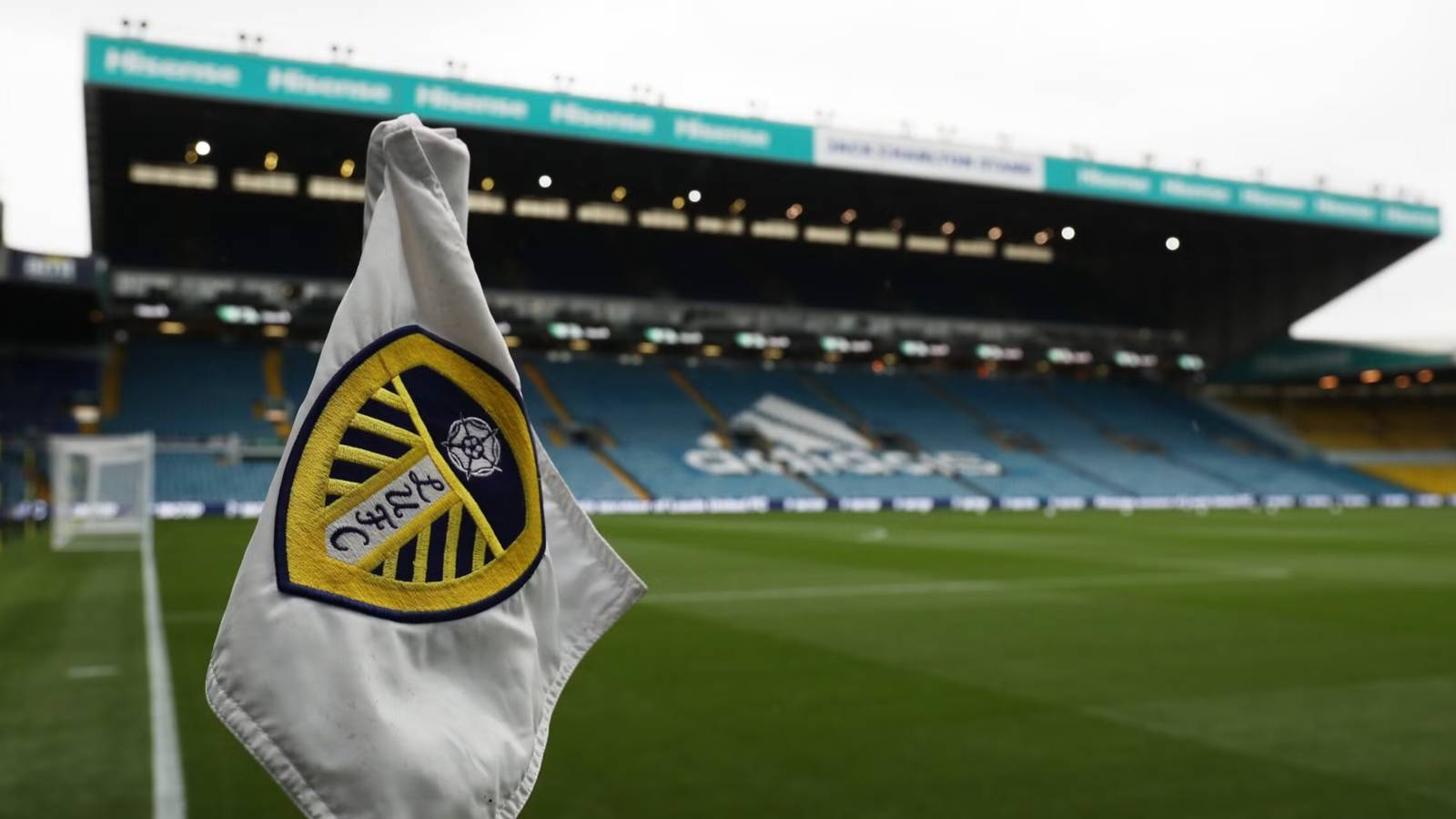
Leeds United are members of the Premier League once again, returning for 2025/26 under the guidance of boss Daniel Farke and with ownership that has bold plans for the future.
But the financial landscape they’ve returned to is more restrictive than ever and looks set to undergo even more changes, some that may impact the Whites more than others.
Anchoring, Profit and Sustainability Regulations (PSR), and the regulatory cliff edge facing clubs like Leicester City and Sheffield United, who have moved into the territory of ‘yo-yo’ clubs flitting between the Premier League and the Championship, means promotion is no longer a license to spend. It’s a compliance gauntlet.
Premier League’s Proposed Model to be Discussed

The Premier League’s proposed anchoring model which will be discussed at the next shareholders meeting in November for potential adoption, is designed to cap squad costs – wages, amortised transfers, agent fees – at five times the revenue of the league’s bottom club. In 2023/24, that would’ve meant a ceiling of around £550m. The model is intended to promote competitive balance and curb excessive spending, but its impact on clubs outside the elite remains a subject of debate.
Anchoring ties spending power to the weakest financial performer in the division. For clubs like Leeds – backed by 49ers Enterprises and aiming to scale quickly – it introduces a ceiling that may not reflect their commercial potential. Whether anchoring protects the league’s integrity or restricts upward mobility depends on how it’s implemented and what safeguards exist for clubs transitioning between divisions.
Leeds’ 2023/24 accounts, filed with Companies House, show the financial impact of relegation. Revenue fell to £128.1m, down from £189.6m. Wages dropped to £84.4m, something that the club managed to do effectively post relegation to limit damage. Amortisation hit £60.1m, while the club posted a pre-tax loss of £61.1m – up from £34m. Transfer fee payables stood at £142.3m, with receivables at £69.2m. Despite wage reduction clauses and outbound loans, Leeds posted the largest financial loss in the Championship. Their wage bill was double Norwich City’s and four times that of Ipswich Town. Promotion has restored top-flight income, but the club remains exposed.
To their credit, the Whites responded with precision. Wage reduction clauses were activated across the squad, slashing the wage bill by 42 per cent and aligning spend with income. That alone helped avoid an immediate PSR breach. But the club didn’t just cut costs – they traded smart. Georginio Rutter is a standout example of Leeds’ strategic player trading. Signed for a club-record fee in January 2023, Rutter initially struggled to justify the outlay but rebuilt his value with a strong Championship campaign. Rather than hold or offload at a discount, Leeds capitalised on his resurgence and agreed a permanent deal with Brighton & Hove Albion in 2024. The sale helped offset amortisation costs and will be reflected in the as yet unpublished accounts for 2024/25. It was a commercially sound exit – timed to support compliance and reinvestment without triggering a fire sale.
Elsewhere, high earners like Rodrigo and Tyler Adams were moved on permanently. Crucially, Leeds recouped loan fees for the likes of Brenden Aaronson, Luis Sinisterra and Jack Harrison, two of whom joined Premier League clubs on structured temporary deals. The result: £69.2m in receivables against £142.3m in payables. No fire sale. No panic. Just disciplined asset management.
Expanding Elland Road Remains Key to Whites’ Plans

Leeds chairman Paraag Marathe had promised to “leave no stone unturned” in backing Leeds under PSR restrictions. His approach is one that can be viewed as aggressive but calculated: invest heavily, grow revenue, and compete sustainably. But anchoring changes the rules of engagement.
While Marathe hasn’t publicly endorsed anchoring, his behaviour and that of ownership suggests caution. The club’s owners look to possibly prefer frameworks like PSR or Squad Cost Ratio (SCR) that reward commercial growth. Anchoring, which ties squad costs to the bottom club’s income, could restrict Leeds even as their revenue rises. That’s why Elland Road matters.
Leeds are planning a major stadium expansion at their long-time home – taking the capacity from 37,000 to more than 50,000, with upgraded hospitality, retail, and event facilities. According to projections, the redevelopment could generate up to £30m in additional annual revenue. That’s not just matchday uplift, it’s compliance headroom. Under anchoring, where spending is tied to income, every extra pound earned is a pound they can spend. Matchday income, which stood at £19.3m in 2023/24, could nearly double. Hospitality and non-football events would add further flexibility.
Whether anchoring supports or stifles this kind of organic growth remains to be seen.
Promotion demands reinvestment. Leeds need Premier League-level depth, experience, and tactical flexibility to increase their odds of remaining a part of European football’s most lucrative domestic league for the long-term, something closely tied to being able to grow revenues to a point to become less concerned with restrictive regulation. But anchoring means every pound spent must be justified against the cap. Even with 49ers’ backing, overspending risks points deductions – six points for a second breach, plus one point per £6.5m overspend. For Leeds, the challenge is not just surviving, but scaling without breaching.
Whites Must be Cautious After Leicester Problems

This is the dilemma facing any ‘yo-yo’ club. Leicester offer a cautionary parallel. After nine consecutive seasons in the top flight, Leicester were relegated in 2023 and spent the 2023/24 season in the Championship. Their Companies House accounts showed revenue fell to £105.3m, down from £177.3m. Despite strong gate receipts (£18.4m) and commercial income (£9.8m), the club posted a pre-tax loss of £19.4m – a sharp improvement on the £89.5m loss in 2022/23, but still enough to trigger scrutiny.
In March 2024, Leicester were charged with breaching PSR based on financial activity during their final Premier League season. But crucially, the club successfully argued that the breach occurred after relegation – placing it outside the Premier League’s enforcement window. No points deduction followed, but the case exposed how timing can shield or expose clubs depending on which division they are in.
That defence delayed any immediate sanction, but the case hasn’t gone away. A formal hearing is expected before the end of 2025, and the Premier League maintains that Leicester exceeded the £105m loss threshold and failed to cooperate fully with the investigation. A points deduction remains possible this season, while the club competes in the Championship.
For clubs like Leeds and Leicester, this sets a precedent: compliance isn’t just about totals – it’s about timing. Anchoring and PSR don’t just regulate ambition – they create a potential cliff edge where one season of overspend can either be punished or ignored depending on jurisdiction.
The core issue with anchoring for clubs that move between the Premier League and Championship is that it ties their spending power to the financial performance of the league’s weakest club – regardless of their own commercial potential. For clubs like Leeds, Leicester, or Southampton, who may have strong matchday income, global fanbases, and ambitious ownership, anchoring introduces a ceiling that doesn’t reflect their actual capacity to invest.
Even if they grow revenue through stadium expansion, sponsorship, or player trading, their squad costs remain capped by a figure they can’t control. This creates a disconnect between ambition and allowable spend, particularly in the first season after promotion when reinvestment is critical.
The second issue is volatility. Clubs that flit between divisions face dramatic swings in revenue – Premier League broadcast income can exceed £100m, while Championship distributions hover around £8-10m. Anchoring doesn’t account for this. A club relegated one season and promoted the next may find its squad cost cap shaped by a bottom club with minimal income, despite having just returned to a league with vastly higher financial demands. That mismatch can force underinvestment, limit squad depth, and increase relegation risk – creating a cycle where compliance is achieved, but competitiveness is compromised.
Sheffield United’s 2023/24 season offers a clear example of the limitations anchoring can impose on a newly-promoted club. Their Companies House filings show a wage bill of £65m – among the lowest in the division – and a net transfer spend of just £29m. Despite access to Premier League broadcast income, the Blades operated with extreme caution, prioritising short-term solvency over squad investment. The result: a squad ill-equipped for top-flight demands, culminating in a 20th-place finish, 104 goals conceded, and relegation.
Mid-season, the club was sold to American investment firm COH Holdings in a £111m deal, but the ownership change came too late to alter the trajectory. A two-point deduction for late transfer payments further compounded the situation. Sheffield United’s approach may have satisfied financial compliance, but it left them not being competitive. For clubs like Leeds, the contrast is stark: anchoring might protect against overspend, but without parallel revenue growth and strategic investment, it risks locking ambitious clubs into survival mode.
Ridsdale Has Been Publicly Critical of Anchoring

Peter Ridsdale, former Leeds chairman and now an advisor at Preston North End, has emerged as one of anchoring’s most vocal critics. Speaking to talkSPORT last week, he questioned the logic behind the model and its impact on clubs trying to break into the top six. He pointed to Manchester United’s wage bill – over £300m last season – compared to the Championship average of just £26m. Anchoring, he argued, doesn’t fix that disparity; it codifies it.
During his tenure as Leeds chairman from 1997 to 2003, the club reached the semi-finals of the UEFA Champions League, finished third in the Premier League, and assembled one of the most exciting young squads in English football. But behind the scenes, Leeds were living far beyond their means, with plenty of wild tales of overspending having done the rounds in football circles for years. Ridsdale’s strategy was built on leveraged growth – spending heavily on transfers and wages with the expectation of consistent Champions League qualification. Leeds borrowed against future broadcast and gate receipts, committing to long-term contracts and transfer instalments that assumed top-four finishes would become the norm. That wasn’t to be the case and one of the biggest financial unravellings in English football history took the club to the brink.
At its peak, Leeds had debts exceeding £100m, and when the club failed to qualify for the Champions League in 2002, the financial model collapsed. The shortfall in revenue triggered a fire sale of assets, including Rio Ferdinand to Manchester United, and the club spiralled into crisis.
Within two years, Leeds were relegated, and the financial damage took over a decade to repair. Ridsdale later admitted that mistakes were made, famously telling reporters: “We lived the dream.” That phrase became shorthand for the era – one of bold ambition, but reckless financial planning. It’s a cautionary tale that still echoes in today’s debates around anchoring and financial regulation.
His recent comments reflect broader concerns around revenue distribution and associated party transactions. “Some clubs have got very close relationships with people… which I would argue is artificially inflating their income,” he said. This is especially relevant for clubs like Manchester City, who’ve faced scrutiny over sponsorship deals. Leeds, by contrast, must rely on organic commercial growth – matchday income, merchandising, and global partnerships.
Ridsdale also flagged the disparity between divisions: “There is a gap between £110m for the bottom team in the Premier League and £11m for the teams in the Championship.” This gulf fuels the very problem anchoring claims to solve. Whether anchoring addresses that imbalance or reinforces it is still up for debate.
The Premier League will vote on November 21 to decide whether to adopt anchoring, SCR, both, or stick with PSR. The outcome will shape the financial future of English football – and determine whether clubs like Leeds and Leicester can compete on ambition, or be capped by regulation.
For now, the question remains open: is anchoring a safeguard – or a ceiling?

As Ben Stokes calls time on his international cricket career, we have asked AI to give us its ranking of the 10 greatest English cricketers of all time, and the results will no doubt lead to some heated debate.
The 35-year-old Stokes announced his decision via a statement while he was in the middle of a bowling spell in the third Test against New Zealand at Trent Bridge.
As news of the decision filtered round the ground, those in attendance stood to recognise his contributions during his glittering 15-year England career.
Stokes, who captained the side for four years, said that he has been questioning his future since the 4-1 Ashes defeat to Australia. He decided to call it a day now as he isn’t sure he has the fight left in him to continue due to the “brutal” physical and emotional demands.
10
Alastair Cook

Another former captain, Alastair Cook, comes in 10th place, according to AI.
The left-handed opening batsman, and occasional bowler, had a career that spanned 14 years in which he played 161 Tests, scoring 33 hundreds and 57 fifties.
Cook would win four Ashes series during his time with the team, and was recognised in the 2019 New Year’s Honours List with a Knighthood for services to cricket.
9
Fred Trueman
Coming in ninth, it’s a bit of a throwback to the 1950s and 1960s. Fred Trueman was a right-arm, fast-bowling Yorkshire man, who took 307 wickets for the first XI.
Trueman was the first man from any country to take 300 Test wickets, a feat he achieved at The Oval in 1964, and when speaking about the bowler, AI said: “Trueman was famous for his intimidating approach. He bowled with intensity, loved taking on the best batters, and was never afraid to express his opinions on the field. Off the pitch, he was outspoken, witty, and sometimes controversial. His broad Yorkshire accent and sharp one-liners made him a memorable public figure.
“He is widely regarded as one of England’s all-time great fast bowlers and is often cited as a pioneer of modern fast bowling.”
8
Ben Stokes

The outgoing Stokes comes next. The Durham man enjoyed an illustrious career at the top of the English game.
The ‘Real Reason’ Ben Stokes Is Retiring From International Cricket Revealed
The Durham man has played for his country since 2011…
While there are numerous highlights in the all-rounder’s long career, his 84 not out in the dramatic 2019 ODI World Cup final Super Over victory over New Zealand stands as one of the most memorable. As New Zealand were fielding the ball, a throw to the wicket struck Stokes’ bat and ran away to the boundary, playing a crucial role in the teams ending all square after 50 overs.
We could sit here all day talking about Stokes’ finest moments in an England shirt, so we won’t, but we simply have to acknowledge his knock at Headingley, one of the greatest innings’ in cricket history.
7
Walter Hammond
Hammond’s international career spanned 20 years from 1927 to 1947, playing 85 times.
When talking about the iconic player, AI said: “If you asked cricket historians to name England’s finest batsman before Len Hutton, Geoffrey Boycott, or Alastair Cook, Hammond’s name would be at or near the top.
“An elegant, yet immensely powerful, stroke-maker, he was also an outstanding slip fielder, a capable right-arm fast-medium bowler, and captained the England cricket team before and after the Second World War.”
6
Len Hutton
In sixth, AI names Len Hutton. A specialist opener who scored a total of 6,971 runs with 19 centuries. He excelled against fast bowling, and his batting was based on patience and precision.
When talking about the cricketer, AI said: “Len Hutton is widely regarded as one of the greatest opening batsmen in the history of cricket. A master technician with immense concentration and resilience, he was the backbone of England’s batting before and after the Second World War.
“Unlike the flamboyant Walter Hammond or outspoken Fred Trueman, Hutton was quiet, disciplined, and intensely focused. He demanded high standards from himself and his teammates, earning enormous respect even if his cautious leadership divided opinion.”
5
Joe Root

The former Test captain, Root is an England great and has broken numerous batting records. He played a vital role in the 2019 World Cup triumph, and has been a cornerstone of the team across formats, cementing his legacy through prolific run-scoring, leadership, and longevity.

Stuart Broad and Ricky Ponting Name Their All-Time Combined Ashes 11 of 21st Century
Two of the very best to play the game got together to agree on their best-ever Ashes XI of the 21st century.
As of writing this article, he is the second-highest run scorer in the history of the game, only behind the great Sachin Tendulkar.
4
Ian Botham
‘Beefy’ is a larger-than-life all-rounder, whose undeniable spirit guided him during his tenure with the team.
“Many cricket historians place him alongside other legendary all-rounders such as Jacques Kallis, Kapil Dev, Imran Khan, and Richard Hadlee. While some of those players finished with stronger career statistics, Botham’s ability to seize pivotal moments and inspire England has given him an enduring place in cricket folklore,” AI said.
Outside of cricket, he became famous for walks, such as from John O’Groats to Land’s End, to raise money for charity.
3
James Anderson

James “Jimmy” Anderson debuted in 2002 and never looked back, claiming more than 700 Test wickets with some deadly swing bowling.
He played a pivotal role in numerous Ashes victories, and formed a wicked partnership with Stuart Broad.
“His durability, professionalism, and relentless excellence secured his status among cricket’s all-time greats,” AI said.
2
Jack Hobbs
Jack Hobbs, nicknamed “The Master,” played from 1908 to 1930. He scored 61 Test centuries and was renowned for elegance, technique, and consistency.
Speaking about Hobbs, AI said: “Hobbs was renowned for his perfect balance, quick footwork, and ability to judge length almost instantly. He could adapt his game to any pitch or bowling attack, making him exceptionally difficult to dismiss. He continued performing at the highest level into his late 40s, an exceptional feat in any era of professional sport.”
1
W.G. Grace
Topping the list is the legendary W.G. Grace. The all-rounder is widely regarded as one of the first true cricket superstars. He is a defining figure in the sport’s early history despite playing just 22 Test matches for England from 1880 to 1899, scoring 1,098 runs and taking nine wickets.
“His enormous personality, competitive spirit, and remarkable consistency helped popularise the game worldwide. Known as “The Doctor,” he became a symbol of Victorian-era cricket and remains one of the most influential players ever to represent England,” AI said.

Chelsea have issued a controversial statement explaining the circumstances behind Enzo Maresca’s departure from the club, on the same day that Manchester City formally confirmed the Italian as Pep Guardiola’s successor.
The timing of the statement is unlikely to be coincidental, with Chelsea making their feelings very clear about how Maresca’s exit was handled back in December, despite the two clubs reaching what’s described as a mutual settlement.
It’s a rare and direct intervention from the Blues, who have chosen to set the record straight on a saga that they believe derailed their season.
Chelsea Explain why Maresca Left

In the statement, Chelsea acknowledged that the 2025/26 campaign had been a “hugely disappointing” one, pointing to the upheaval caused by Maresca’s exit as a major factor.
Chelsea finished the Premier League season in 10th, a dismal season by their standards. Maresca had them sitting in 5th place at the time of his departure, which would have been good enough for a place in next season’s Champions League, a tournament they won just five years ago, but the Blues will now have to settle for no European football at all.
The club revealed they were informed in autumn that an opportunity to succeed Guardiola may arise, and it quickly became clear it was something Maresca was determined to pursue, despite being under a long-term contract.
“In December 2025, our Head Coach unexpectedly and abruptly resigned from his position,” the statement read, adding that Chelsea felt his “head and heart were focused on another club and another opportunity, despite having just arrived at Chelsea the year before.”
Read Chelsea’s full statement below:
“Chelsea FC appreciates the 2025/26 season was a hugely disappointing one for the Club and its supporters. A major contributing factor was the disruption caused as a result of changes that the Club was forced to make to the Head Coach position over the Christmas period. Due to recent developments, we consider that it is important to explain to our supporters what happened and why our former Head Coach left the Club on 1 January 2026.
In Autumn last year, the Club was informed by our former Head Coach that there might be an opportunity for him to succeed Pep Guardiola at the end of the season. It became clear to us that it was his strong desire to succeed Guardiola and that he was fully committed to pursuing the opportunity, despite the fact he was under a long-term contract which he had no right to terminate.
In December 2025, our Head Coach unexpectedly and abruptly resigned from his position. Obviously, we felt let down as we believed that his head and heart were focused on another club and another opportunity, despite having just arrived at Chelsea the year before.
No club wants to change its head coach midway through a season. However, in light of his decision not to continue fulfilling his responsibilities through to the end of the season, the Club was left with no choice but to protect our players, our supporters, and the Badge and accept his resignation.
In the circumstances and given the mutual respect between clubs, a confidential settlement has been reached with Manchester City, which includes the payment of compensation. A confidential settlement has also been reached with the former Head Coach under which he will pay compensation.
Looking forward to next season, in Xabi Alonso, we have a Manager who has an exceptional football mind and is a professional of the highest integrity. He has all the attributes to deliver the success the Club’s supporters deserve and expect.”
Maresca Responds as Focus Shifts to Xabi Alonso

Chelsea confirmed a confidential settlement had been reached with both Manchester City and Maresca himself, which includes compensation being paid to the club on both fronts. Maresca has since responded to the statement, offering something of an apology for the timing of his exit.
“I recognise that my departure from Chelsea in the middle of the season caused disruption for the club and I apologise for that. It was neither my intention nor my wish.”
Despite the frustration being evident throughout the statement, Chelsea were quick to turn attention to the future, praising new head coach Xabi Alonso as a manager with an “exceptional football mind” and a “professional of the highest integrity.”
The club also added that Alonso has “all the attributes to deliver the success the Club’s supporters deserve and expect,” drawing a clear line under the Maresca saga as they look to move forward under their new appointment.

It has been well-documented that Manchester United are looking to strengthen their midfield options this summer as the Red Devils look to build on the good work done by Michael Carrick during his spell as interim manager last season.
United finished third in the Premier League, subsequently qualifying for the Champions League, and Carrick saw his temporary contract made permanent.
Casemiro’s departure at the end of his contract means that the Red Devils will be looking to sign one midfielder at the very least, but it could certainly end up being multiple.
Numerous names have been linked with a switch to Old Trafford and work is going on behind the scenes regarding targets. However, to no surprise, some of those players are also courting interest from Premier League rivals, and it appears as though United are currently facing a similar scenario.
Next Rodri: Man Utd Want £60.5m Midfield Star After Ederson
Manchester United are in the market for midfielders, with a former Manchester City academy player in their sights.
United want Felix Nmecha

According to TEAMtalk, Borussia Dortmund midfielder Felix Nmecha is currently subject to strong interest from Manchester United, as well as fellow Premier League club Chelsea.
Additionally, Newcastle United had also been an interested party but the Magpies have since stepped away from a potential deal due to Dortmund’s reported €100m (£86m) valuation of the Germany star.
Nmecha is currently at the World Cup in North America with Die Mannschaft and scored in Germany’s 7-1 romping of Curaçao in the opening match. He also registered an assist in that match, as well as one in a 2-1 victory over the Ivory Coast.
The 25-year-old was on course to feature in all 34 of Dortmund’s Bundesliga matches last season but an injury towards the back end of the campaign kept him sidelined for a month.
Often deployed as either an eight or a six, Nmecha isn’t known for his goalscoring but did contribute five goals across all competitions alongside three assists.
United in the strongest position

Assessing the current negotiating stance of both Manchester United and Chelsea, the former are in the strongest position considering that they have Champions League football to offer, whereas the latter aren’t even in Europe this season.
Additionally, Nmecha’s previous links to Manchester could act as a factor. Although German, the midfielder came through Manchester City’s youth ranks and even played for England at a couple of youth levels.
He made a total of three first-team appearances for the Cityzens before joining Wolfsburg on a free transfer in 2021 and has spent the last three seasons at Dortmund.
Labelled as “world-class” by his national team manager Julian Nagelsmann, Nmecha would certainly bring plenty of athleticism and tenacity to the United core and could prove to be a perfect Casemiro replacement.


SDP has credible followership to win election in Oyo – Governorship candidate
Greatest England Cricketers in History Named and Ranked
Chelsea Call Out Enzo Maresca in Stunning Statement After He’s Appointed Man City Manager

Simi Sanya and Femi Dapson Are Now Legally Married and It Is Beautiful to See

FCT Area Council Election: Live results from polling units

Premier League Set-Piece Goals (2025/2026)
-
 Sports23 hours ago
Statement Released as Lucas Trejo’s Wife and Children Die in Earthquake
-
 Sports2 days ago
Cody Gakpo’s Son Passes Away During Pregnancy, Girlfriend Confirms
-
 Sports16 hours ago
Jesse Marsch’s Full Speech After Canada vs South Africa
-
 Sports2 days ago
2026 World Cup Nation Punish Players By Cancelling Their Flight Home
-
 Sports1 day ago
Spain’s Nico Williams Calls Out Uruguay Ace After He Suffers Injury
-
 Sports1 day ago
Pele and Diego Maradona’s Private Chat About Lionel Messi in 2016
-
 Sports2 days ago
Supercomputer Predicts Entire F1 Race After Qualifying
-
 Sports2 days ago
World’s Richest Tennis Player Refuses to Stay at Same Hotel as Other Players