
Business
Nigeria’s debts to hit N155trn as Senate approves FG’s $6bn loan request


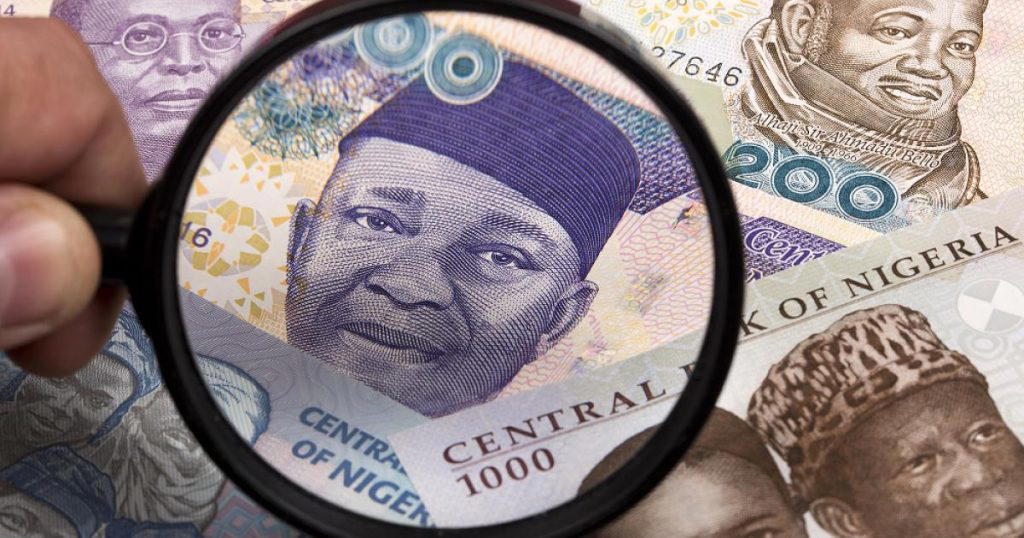
—Experts highlight naira depreciation, debt service risks
–Atiku slams Tinubu, Senate over $6bn loan approval in 4hrs
By Babajide Komolafe, Peter Egwuatu, Henry Umoru & Omeiza Ajayi
ABUJA—Nigeria’s total debt stock is set to rise to N155.1 trillion, following an additional $6 billion loan request by President Bola Tinubu, hurriedly approved by the Senate yesterday.
The $6 billion loan at an exchange rate of N1,400 per dollar, adds N8.4 trillion to the country’s debt stock which stood at N146.69 trillion at the end of 2025, to N155.1 trillion.
Experts, however, warned that the new borrowing comes with huge foreign exchange risks and will lead to worsening of the federal government’s debt service-to-revenue ratio, which is estimated at 60 per cent by the end of 2025.
The approval for the $6 billion yesterday came barely three and half hours after the President of the Senate, Senator Godswill Akpabio, read the letter from the President, seeking the approval.
Former Vice President, Atiku Abubakar, flayed what he described as lightning-speed approval of a fresh $6 billion external loan request by the National Assembly.
The letter was read the first time, scaled for a second reading, read the third time, and passed the same day by the senators.
The Senate approved the loans, following the presentation and consideration of the report by Senator Aliyu Wammakko, Chairman, Senate Committee on Local and Foreign Debts.
Tinubu’s requests
President Tinubu’s request to borrow an additional $6 billion was contained in two separate letters addressed to the President of the Senate, Senator Godswill Akpabio, read at plenary yesterday.
According to the President, the Senate should “Pursuant to Sections 21(1) and 27(1) of the Debt Management Office (Establishment, Etc.) Act, 2003, to: Approve the establishment of a structured Total Return Swap, TRS, derivative external financing programme of up to $5 billion with First Abu Dhabi Bank (FAB), United Arab Emirates; “ Approve the indicative Terms and Conditions of the facility, including collateralisation with Naira-denominated Federal Government of Nigeria Securities and margining obligations in USD; and Authorise the Federal Government to draw down the facility in tranches and issue FGN Securities as collateral.”
In the first letter read by Akpabio, President Tinubu requested the approval to establish a structured total return swap (TRS) external financing programme of up to $5 billion with First Abu Dhabi Bank of United Arab Emirates.
In the letter, President Tinubu, who noted that the facility would be made available to Nigeria in tranches, said: “The purpose of this letter is to request for the approval and resolution of the National Assembly pursuant to the provisions of section 21(1) and 27(1) of the Debt Management Office Establishment Act 2003 to establish a structured total return swap, TRS, derivative external financing programme from First Abu Dhabi Bank of the United Arab Emirates of up to $5 billion which will be made available to the Federal Republic of Nigeria in tranches.”
According to him, the proceeds will be used for budget implementation, development of priority infrastructure projects and repayment of relatively expensive domestic and external debts.
He added that the facility would also help the federal government meet urgent financial obligations when necessary.
The President said Nigeria’s total public debt currently stood at $110.3 billion, equivalent to about N159.2 trillion as of December 31, 2025.
He said the loan would be drawn in phases to reduce pressure on the country’s debt stock and servicing obligations.
In the second letter, Tinubu also asked the Senate to approve the issuance of naira-denominated Federal Government securities as collateral for the facility and the payment of margin obligations in US dollars.
In the letter, the President, who sought approval for a $1 billion United Kingdom, UK, export finance loan facility arranged by Citibank, London branch, said the loan would be used for the reconstruction and rehabilitation of Lagos Port complex and Tin Can Island Port.
The letter read: “The rehabilitation of the ports project is a strategic modernisation initiative of the Federal Government of Nigeria, through the Nigerian Ports Authority, to restore and upgrade two of Nigeria’s most vital ports, namely Tin Can Island Port complex and Lagos Port complex, Apapa, which have reached critical engineering failures.”
According to him, the project is aimed at addressing infrastructure deficiencies, improving port efficiency, enhancing safety standards and aligning Nigeria’s port facilities with global best practices.
Tinubu added that the rehabilitation would help sustain Nigeria’s competitiveness as a maritime hub and support non-oil trade diversification.
Immediate C’ttee’s oversight
Akpabio subsequently referred the requests to the Senate Committee on Local and Foreign Debts, led by Senator Aliyu Wammakko, APC, Sokoto North, to carry out legislative actions on the request and report back immediately.
In his presentation, Senator Wammakko said: “The proposed financing is structured as a Total Return Swap, TRS, a derivative-based instrument governed by International Swaps and Derivatives Association, ISDA, rules.
“The facility provides access to up to $5 billion, to be drawn in tranches, thereby allowing flexibility in utilisation and limiting immediate fiscal pressure. The transaction is collateralised by Naira-denominated FGN Securities at 133.3%, representing over-collateralisation to mitigate lender risk.
‘’The securities will be marked-to-market monthly, and any shortfall will require margin calls in USD cash, while excess collateral will be returned to the Federal Government.
“The facility has a tenor of six years, with a three-year break clause and annual rollover provisions subject to mutual agreement.
“The indicative pricing of the facility is SOFR +3.95% for the first tranche and SOFR + 4% for subsequent tranches, which is considered competitive relative to prevailing Eurobond yields for Nigeria. An arranger fee of 1.5% flat per tranche is payable upfront.
“The committee notes that the pricing reflects Nigeria’s current sovereign risk profile and compares favourably with alternative external borrowing options.”
On use of proceeds, the committee said: “The proceeds of the facility are intended for: budget implementation, financing critical infrastructure projects, refinancing more expensive domestic and external debt, addressing urgent fiscal and liquidity needs
“In addition, 40% of the said fund will be used to fund the capital projects in the 2025 and 2026 budgets. The committee notes that these uses are consistent with national development priorities and fiscal consolidation objectives.”
On the impact on public debt and sustainability, Wammakko said: “The facility will be reflected in Nigeria’s external debt stock as it is drawn, thereby increasing total public debt.
“As at December 31, 2025, Nigeria’s total public debt stood at approximately $103.20 billion (N146.69 trillion). The committee observes that Nigeria’s debt-to-GDP ratio of 36.92% remains within the 60% threshold approved by the Federal Executive Council and the 80% benchmark advised by international financial institutions.
“The phased drawdown structure helps to moderate the impact on debt stock and debt service obligations.
“Debt service-to-revenue ratio remains a concern (estimated at about 60%), underscoring the need for prudent debt management and enhanced revenue mobilisation, which we believe should improve as revenues of the government improve with the new tax reforms.
“The committee notes several advantages of the proposed TRS structure; immediate access to foreign currency liquidity without issuing new Eurobonds, thereby avoiding additional pressure on international capital markets.
“Flexible drawdown in tranches, enabling efficient cash flow management and reduced exposure.
“Strengthening bilateral financial relations with a major Gulf financial institution, enhancing Nigeria’s global financing options. Potential refinancing of expensive debt, thereby improving the overall cost profile of public debt.
“Embedded dispute resolution and valuation safeguards, which provide protection to the FGN in the execution of the transaction. Risks and Mitigating Factors. Currency Risk: Margin calls in USD may arise due to exchange rate volatility, Mitigation: Conservative collateralisation and phased drawdowns
“Market Risk: Fluctuations in the value of FGN securities used as collateral.”
Naira depreciation could spike loan costs
The new loan comes with significant foreign exchange risk, said Tunde Abidoye, Head of Equity Research, Quest Merchant Bank.
He said: “Apparently, the $5 billion is said to be a total return swap. Essentially, the FGN borrows $5 billion from an offshore bank, and will be collateralising this by issuing naira-denominated bonds which will be delivered to the bank. The FGN will pay the interest rate on the loan.
“Additionally, if exchange rates depreciate, the FGN will have to pay any difference between the value of the loan and the naira-denominated bond .
“The first implication is the exchange rate risk. If the naira depreciates, the value of the bond will decrease in dollar terms. As such, the Federal Government will have to pay the bank the difference.
‘’Also, since the interest payment is in dollars, naira depreciation will increase the cost of servicing the loan, hence aggravating the nation’s debt service-revenue ratio.
“This will be covered by regular margin payments – in the event that there is a depreciation. Consequently, this carries significant currency risk/exchange rate risk.”
Mounting foreign debt mortgages
the future of the country
Reacting to President Tinubu’s proposed $6 billion borrowing, David Adonri,Executive Vice Chairman at High Cap Securities Limited, said : “It appears that President Bola Tinubu is not constrained by any public debt limit.
‘’His borrowing spree locally and internationally has continued with undiminishing intensity. Financing an economy with external debt is a dangerous proposition because of the erratic flow of foreign income required to extinguish the obligations.
‘’The best option is to dominate the debt in domestic currency and let the foreign creditors convert their hard currencies into naira so that debt servicing will be in naira. Mounting foreign debt mortgages the future of the country.”
Underperformance in projected earnings could tighten fiscal space
Commenting as well, economy and communication expert, Clifford Egbomeade, said : “The borrowing request by Bola Tinubu should be viewed within the 2026 fiscal framework. ‘’The proposed budget stands at N58.18 trillion, with projected revenue of N34.33 trillion and a deficit of N23.85 trillion, equivalent to 4.28% of GDP. The additional $5bn in external borrowing, alongside a $1bn facility for port rehabilitation, will increase Nigeria’s external debt exposure and future repayment obligations.
“The port component has clear economic logic. The allocation of $429.7 million to Lagos Port Complex and $571.1 million to Tin Can Island targets critical trade infrastructure. Improved port efficiency can reduce congestion, shorten cargo clearance time, and enhance customs revenue, which may support broader economic activity.
“However, concern lies in debt sustainability and execution. External loans must be serviced in foreign currency, creating exposure to exchange rate movements. With revenue significantly below expenditure, any underperformance in projected earnings could tighten fiscal space.
‘’The overall impact will depend on whether these investments translate into measurable gains in productivity, trade efficiency, and government revenue.”
FG needs to be very transparent on its loan policy, repayment plans — Tumba
Also reacting, Simon Tumba, a Lagos based Business Executive, said : “ I think the FG should come clean with its plans and repayment structure for these loans. There appears to be many overlaps.
‘’For instance , contract was awarded for the rehabilitation of the Lagos ports last year running to hundreds of millions of dollars. During the recent President’s visit to the UK, an agreement was signed to fund the rehabilitation of the ports in Lagos at around $1 billion, now, another request to secure a $1billion loan approval for the Lagos ports. The government needs to be very transparent on its loan policy and the repayment plans.
‘’The implication is that if care is not taken, over the next 10-20 years, Nigeria may become a bankrupt nation, except we are able to produce more to pay our debt and fast-track our development.”
Atiku slams Tinubu, Senate over $6bn loan approval in 4hrs
Reacting to the development last night, former Vice President and a chieftain of the African Democratic Congress, ADC, Atiku Abubakar, launched a scathing attack on the Presidency and the National Assembly for what he described as lightning-speed approval of a fresh $6 billion external loan request.
In a statement by his Senior Special Assistant on Public Communication, Phrank Shaibu, Atiku expressed “deep concern” over reports that the Senate greenlit President Bola Tinubu’s multi-billion-dollar request in less than four hours.
“What Nigerians have witnessed is not legislative diligence, but a disturbing erosion of oversight responsibility,” Atiku stated.
“Where was the debate? Where was the rigorous analysis? Where was the accountability?” he queried.
The former vice president highlighted a “dangerous cycle” in the nation’s fiscal management, pointing out that resorting to fresh borrowing to plug budget gaps and service existing debts reflected a total absence of fiscal discipline.
Atiku said: “What does a government that appears to be preparing for electoral rejection in 2027 intend to do with an additional $6 billion in borrowed funds – on top of the mounting obligations it has already accumulated in just the first quarter of 2026?,” he queried.
Warning that the country’s future was being “signed away in a matter of hours,” Atiku reminded the National Assembly that it was not designed to be a “rubber stamp” for executive requests.
He noted that while borrowing was not inherently wrong, “reckless borrowing, enabled by legislative complacency, is dangerous.”
The former vice president called for transparency and prudence, insisting that history would judge the current administration and the legislature for their choices.
The post Nigeria’s debts to hit N155trn as Senate approves FG’s $6bn loan request appeared first on Vanguard News.

By Etop Ekanem
Guinness Nigeria Plc has reaffirmed its confidence in the strength and future of its business, as the Company enters a new phase of growth underpinned by improved profitability, a significantly stronger balance sheet and continued investment in its brands, manufacturing capabilities and route to market.
The company shared this outlook during its first half 2026 (H1’26) Investors and Analysts Call, where Managing Director/Chief Executive Officer, Girish Sharma, Finance and Strategy Director, Mayank Kabra, and Corporate Relations and Legal Director, Rotimi Odusola, provided investors and analysts with an update on Guinness Nigeria’s financial performance, strategic priorities and outlook.
Guinness Nigeria delivered a strong performance for the six months ended 30 June 2026, reporting approximately N265 billion in revenue, while profit after tax grew 53 percent to N25.3 billion.
The performance reflects the company’s continued focus on driving quality growth while improving operational efficiency and strengthening its financial position.
A key highlight of the period was Guinness Nigeria’s significant progress in deleveraging and rebuilding its balance sheet. Shareholders’ equity increased from N43.3 billion to N64.2 billion, while net debt declined substantially from approximately N37 billion to about N19 billion.
Speaking during the call, Sharma said the company’s progress reflected a deliberate focus on building a stronger and more resilient business.
He stated: “We have made significant progress in strengthening our financial position while continuing to invest in the growth of the business. The days of operating with a weak balance sheet are behind us. Today, we are in a much stronger position to pursue growth, improve returns and create sustainable value for our shareholders and other stakeholders.”

The Federal Government (FG) is set to introduce performance scorecards for operators across Nigeria’s electricity value chain, with underperforming distribution and generation companies (DisCos and GenCos) to face sanctions while high-performing operators will be rewarded.
Meanwhile, Nigerians spent an estimated N16.5 trillion on self-generated electricity in 2023, compared with about N1 trillion in revenue generated by the national grid, underscoring the enormous economic cost of Nigeria’s unreliable power supply.
The Minister of Power, Joseph Olasunkanmi Tegbe, disclosed this in a policy brief presented by his Special Adviser, Martins Olajide, at the Nigerian Economic Summit Group (NESG) Industrialisation and Competitiveness Forum on Wednesday.
Tegbe said the ministry would introduce performance scorecards for power sector personnel, DisCos and GenCos as part of efforts to strengthen accountability and enforce clear performance standards across the electricity value chain.
According to him, the framework will reward excellence and penalise underperformance, thereby restoring discipline and improving service delivery in the sector.
He also announced plans for tariff reforms aimed at protecting vulnerable consumers while ensuring that electricity supply obligations are met across the value chain.
The minister said the measures formed part of the ministry’s eight-point agenda to stabilise the power value chain, restore market discipline and strengthen governance.
He noted that Nigeria currently has 13,625 megawatts (MW) of installed grid capacity, but average daily available capacity is only 4,854MW, leaving about 62 per cent of installed capacity idle.
This, he said, was occurring despite realistic peak electricity demand of about 20,000MW.
“The power arithmetic does not add up,” Tegbe said, stressing that the persistent gap between available supply and demand had forced households and businesses to increasingly rely on self-generation.
He stated: “Nigerians spent an estimated N16.5 trillion on self-generated electricity in 2023, compared with about N1 trillion in revenue generated by the national grid.”
Citing World Bank estimates, Tegbe said inadequate electricity supply costs the Nigerian economy about $25 billion annually, equivalent to between five and seven per cent of Gross Domestic Product (GDP).
“Improving the performance of electricity operators and reforming tariffs were critical to creating a reliable power market capable of supporting industrialisation and boosting productivity,” he stated.
The minister said the government would also strengthen existing power infrastructure and improve the utilisation of assets across the value chain.
According to him, the ministry plans to enhance the Lagos, Enugu-Port Harcourt and Abuja-Kaduna-Kano transmission corridors, with the Lagos corridor serving as a proof of concept for the broader grid stabilisation programme.

The Nigeria Ports Economic Regulatory Agency (NPERA) has formally commenced operations, ushering in a new era designed to make Nigeria’s ports more transparent, competitive, predictable and efficient.
The commencement follows President Bola Ahmed Tinubu’s assent to the Nigeria Ports Economic Regulatory Agency Bill, 2026, which established NPERA as the statutory authority responsible for the economic regulation of the nation’s ports.
Chairman of the NPERA Governing Board, Dr. Ibrahim Shema, traced the evolution of port economic regulation to the establishment of the Nigerian Shippers’ Council in 1978 and the concessioning of port terminals in 2006. He noted that the Shippers’ Council was subsequently designated as the interim Port Economic Regulator in 2014. Under that arrangement, the Council undertook key economic regulatory functions, including tariff regulation, dispute resolution and protection of port users.
Shema described the legislation as a fundamental reform of Nigeria’s port governance, saying the new agency represents the culmination of nearly five decades of institutional evolution in port economic regulation.
Shema said NPERA’s emergence would not result in institutional rivalry with the Nigerian Ports Authority (NPA), which retains responsibility for port infrastructure and its landlord functions.
“This is not about creating competing authorities. It is about establishing a coherent system in which institutions work together, each within its statutory responsibilities,” he said.
According to him, NPERA will focus on reducing uncertainty and unnecessary regulatory barriers, while promoting faster cargo movement and strengthening Nigeria’s competitiveness as a trading and investment destination.
He identified transparency, fairness, predictability, efficiency and accountability as the five core principles that will underpin the agency’s regulatory philosophy.
On port tariffs, Shema said the new regulatory framework would enable port users to better understand the basis for regulated charges, while service providers would have clearer expectations regarding compliance and regulatory requirements.
Also speaking, the Executive Secretary/CEO of NPERA, Dr. Pius Akutah, expressed optimism that the new law and agency would, within the next one to two years, significantly clarify the regulatory environment governing Nigeria’s ports.
Akutah said the agency would work towards ensuring fair pricing, promoting competition, improving trade facilitation and strengthening government revenue.
He added that the NPERA Act provides the agency with stronger powers to improve commercial dispute resolution and protect the welfare and interests of port users and other stakeholders.
For port users and operators, the new framework is expected to bring greater clarity around tariffs, charges, licensing, service standards and commercial disputes, while supporting a more predictable business environment.


Why I left Kwara APC for PDP — Mustapha

Alisson Won’t Wear Captain’s Armband Despite Being Vice-Captain

Fans Claim ‘Electric’ Tzolis Ended Martinelli’s Career

Meaning Behind Egypt Manager’s ‘X’ Gesture vs Argentina

Premier League Set-Piece Goals (2025/2026)

Simi Sanya and Femi Dapson Are Now Legally Married and It Is Beautiful to See
-
 Sports2 days ago
Erling Haaland Reacts to Real Madrid’s Bizarre Bernardo Silva Video
-
 Sports2 days ago
Ex-WWE Superstar Dawn Marie Reveals Real Reason She’s Making Adult Content
-

 Metro2 days ago
Lagos: EFCC arraigns two over alleged sale of bank credentials for $15,000
-
 Sports2 days ago
Romano Reveals Two More Signings Man Utd Signings Could Make After Baleba
-

 Sports2 days ago
Man Utd in Talks to Sign Barcelona Star Alejandro Balde
-
 Politics2 days ago
2027: I pity Tinubu because they’ll say he rigged after he wins - Sowunmi
-
 Politics2 days ago
‘Obasanjo has no electoral value’ – Atiku
-
 Sports2 days ago
Roy Keane Tips Bruno Fernandes For 2026-27 Premier League Award