
Business
NGX expands trading window to 7hrs


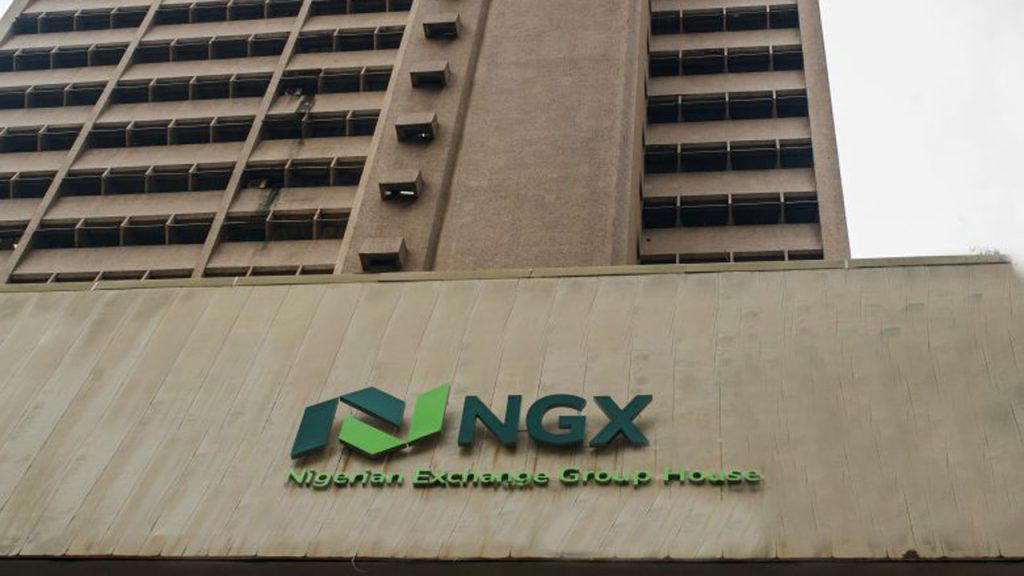
The Nigerian Exchange Limited (NGX) has expanded its trading window to seven hours (9:00am to 4:00pm) WAT, effective from Monday, 27 April 2026, in a move designed to deepen market liquidity, enhance price discovery, and broaden investor access.
Previously, the market opens for four hours and thirty minutes, opening by 9:30am and closing 2:00pm.
Approved by the Securities and Exchange Commission (SEC) Nigeria, the expansion marks a significant evolution in the Exchange’s market structure.
In a statement at the weekend, the NGX said, “The expanded trading window will provide greater flexibility for investors, improve responsiveness to market-moving information, and support broader participation across the market”. The development builds on the momentum of Nigeria’s recent reclassification to Frontier Market status by FTSE Russell, reinforcing NGX’s global positioning and enhancing its attractiveness to a broader pool of domestic and international investors.
This reform reflects strong regulatory collaboration and underscores the Securities and Exchange Commission’s continued commitment to advancing market development initiatives. Alongside Nigeria’s Frontier Market reclassification, it signals a deliberate shift towards a more accessible, liquid, and globally competitive market.
NGX added, “The implementation follows extensive stakeholder engagement, ensuring alignment and operational readiness ahead of the go-live date. NGX Regulation Limited will continue to provide robust oversight to support a smooth and orderly transition, while maintaining high standards of transparency and investor protection.
“With this development, NGX reinforces its position as a leading multi-asset exchange, deepening liquidity, improving market access, and supporting efficient capital formation within Nigeria’s financial markets”.
The post NGX expands trading window to 7hrs appeared first on Vanguard News.

By Yinka Kolawole
Foreign investment into Nigeria’s production and manufacturing sector declined sharply by 50.7 percent quarter-on-quarter to $152.27 million in the first quarter of 2026 (Q1’26), down from $308.93 million recorded in the preceding quarter (Q4’25), according to the latest Capital Importation Report released by the National Bureau of Statistics (NBS).
The report revealed that the sector accounted for only 1.47 per cent of the total capital importation valued at $10.37 billion recorded during the review period, highlighting the continued struggle to attract significant foreign capital into the productive segment of the economy.
However, on a year-on-year basis, foreign investment in the sector rose by 17.2 per cent from $129.92 million recorded in the corresponding period of 2025 (Q1’25).
Further analysis of the NBS data showed that the manufacturing sector’s share of total capital inflows has continued to shrink. The 1.47 per cent contribution recorded in Q1’26 was lower than the 2.3 per cent recorded in Q1’25 and significantly below the 4.79 per cent posted in Q4’25.
The report indicated that portfolio investment remained the dominant source of foreign capital, accounting for $9.86 billion or 95.09 per cent of total inflows during the quarter. Other Investments contributed $374.48 million, representing 3.61 per cent, while Foreign Direct Investment (FDI) amounted to $135.08 million, accounting for just 1.30 per cent of total capital imported into the economy.
Sectoral distribution of the inflows showed that the banking sector attracted the largest share of foreign capital, receiving $7.55 billion or 72.79 per cent of total inflows. The financing sector followed with $2.43 billion, representing 23.42 per cent, while production and manufacturing attracted only $152.27 million.
Reacting to the development, Chief Executive Officer of the Centre for the Promotion of Private Enterprise (CPPE), Dr. Muda Yusuf, said the pattern of capital inflows reflects a persistent structural weakness in the economy, noting that increased foreign capital is yet to translate into meaningful expansion of productive capacity.
He stated: “Without stronger capital flows into industry, agro-processing, logistics, energy and export-oriented manufacturing, the broader economy will see limited gains in employment, productivity and inclusive growth.
“Financial deepening without real-sector expansion risks creating a liquidity-driven recovery that does not fundamentally alter Nigeria’s productive base.”
The post Foreign investment in manufacturing slumps 50.7% to $152m in Q1’26 appeared first on Vanguard News.

By Progress Godfrey
Nigeria recorded a 91 per cent, year-on-year, YoY increase in trade surplus to N7.55 trillion in the first quarter of 2026, Q1’26 from N3.95 trillion in the same period of 2025, Q1’25, driven by a sharp decline in imports and a modest rise in exports.
The National Bureau of Statistics (NBS) disclosed this yesterday in the Foreign Trade in Goods for Q1’26.
The report showed that total trade fell by 6.48 per cent, YoY to N34.79 trillion in Q1’26 from N37.24 trillion in Q1’25.
The sharp increase in trade surplus and decline in total trade in Q1’26 was driven by an 18.6 per cent, YoY decline in imports and a 2.77 per cent, YoY increase in exports.
According to the NBS, the value of total imports stood at N13.62 trillion in the quarter of 2026, representing a 18.17% decrease from the value recorded in the corresponding quarter of 2025 (N16.64 trillion) and a 21.05% decrease compared to the value recorded in Q4 2025 (N17.25 trillion).
On the other hand, total exports rose to N21.17 trillion in Q1’26, up 2.77 per cent from N20.60 trillion in Q1’25 and 11.63 per cent higher than N18.96 trillion in Q4’25.
Agricultural imports were valued at N827.72 billion, down 20.09 per cent YoY and 42.39 per cent QoQ, while raw material imports fell to N1.58 trillion, a 12.63 per cent decline from Q1’25 and 32.72 per cent lower than Q4’25.
Agricultural exports fell to N1.17 trillion, down 31.20 per cent year-on-year and 11.39 per cent quarter-on-quarter, while raw material exports increased to N1.53 trillion, reflecting strong growth in industrial inputs.
The NBS stated: “In Q1 2026, Nigeria’s top five trading export partners were India, France, The Netherlands, Spain, and The United States of America. The most exported commodities were crude oil, natural gas, Urea, whether or not in aqueous solution, other petroleum gases in a gaseous state, and kerosene-type jet fuel.
“In the same period, the value of raw material exports stood at N1,533.75billion, representing a rise of 46.83% from N1,044.59billion in Q1 2025 and a 28.62% increase from N1,192.49 billion in Q4 2025,” the statistics agency added.
Crude oil exports were valued at N11.20 trillion, though this represented a decline of 13.53 per cent YoY despite a 15.45 per cent rebound from Q4’25. Other oil product exports rose sharply to N6,78 trillion, supported by stronger global demand.
The post Nigeria’s trade surplus rises 91% to N7.55trn in Q1’26 appeared first on Vanguard News.
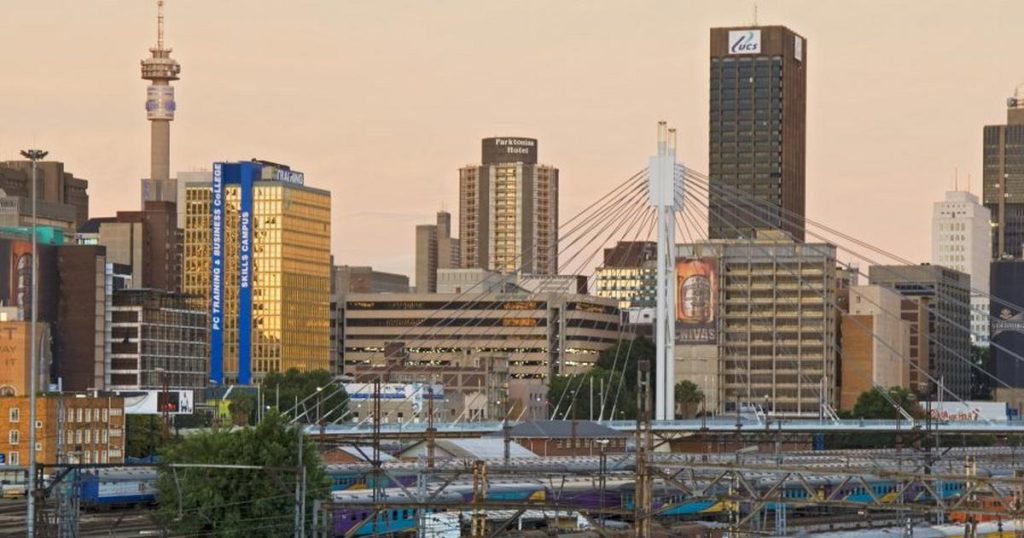
The Federal Government and six state governments have urged investors at the ongoing Invest in Lagos 3.0 Summit to channel funds into critical sectors, promising attractive returns and improved business conditions.
The summit, themed “Lagos: The Business Gateway to Africa,” featured presentations from representatives of the Presidency and the governors of Lagos, Imo, Abia, Plateau, Taraba and Nasarawa states.
Minister of Finance, Dr. Taiwo Oyedele, assured investors of the Federal Government’s commitment to creating a conducive business environment through ongoing fiscal reforms. He said the new tax law has eliminated multiple taxation, improved compliance and provided relief for small and medium enterprises. He added that stamp duty collection has been transferred to state governments and commended states that have adopted harmonised tax systems.
Oyedele told the more than 600 delegates—including global institutions, sovereign wealth funds, development finance institutions and trade networks—that the government remains committed to building a $1 trillion economy through supportive fiscal and monetary policies.
Lagos State Governor, Babajide Sanwo-Olu, called for increased private sector investment in rail transport, energy, agriculture, agro-processing and water infrastructure. He said addressing transportation challenges would unlock Lagos’ economic potential, reduce travel time, boost productivity and improve returns on investment.
Abia State Governor, Dr. Alex Otti, said his administration is redesigning Aba and major business clusters to harness the entrepreneurial strengths of residents. Imo State Governor, Hope Uzodinma, highlighted efforts to address infrastructure deficits and drive industrialisation, while Nasarawa State Governor, Abdullahi Sule, promoted investment opportunities in agriculture and urban development, leveraging the state’s proximity to Abuja.
The post FG, 6 states woo investors at ‘Invest in Lagos 3.0’ Summit appeared first on Vanguard News.


Boyfriend arrested for alleged attempt to murder girlfriend in Gombe

Jonathan failed in 2015 because he didnt listen to me – Fr Mbaka reacts to online attack

20 Worst Premier League Signings in Football History (Ranked)

Simi Sanya and Femi Dapson Are Now Legally Married and It Is Beautiful to See

FCT Area Council Election: Live results from polling units

Premier League Set-Piece Goals (2025/2026)
-
 Sports18 hours ago
Simon Jordan Defends the US Decision to Ban World Cup Referee
-
 Sports2 days ago
FIFA Referee ‘Denied Entry’ into the US Ahead of 2026 World Cup
-
 Sports1 day ago
Ian Wright’s Reaction to Ref Being Denied Entry to the US Goes Viral
-
 Sports2 days ago
George Russell’s Mercedes Contract Could Soon Be ‘Void’
-
 Sports2 days ago
Iran World Cup Stars Arrive in the US With ‘168’ Pinned to Shirts
-

 Sports2 days ago
Tyson Fury’s Final Opponent Before Facing Anthony Joshua ‘Leaked’
-
 Sports2 days ago
Lewis Hamilton Seriously Slammed For ‘Hypocritical’ Billionaire Comments
-

 Sports2 days ago
Man Utd Want Pio Esposito Amid Joshua Zirkzee Swap Deal Chance