
Health
Can diabetics take lactulose for constipation?


Can diabetics take lactulose? Does lactose increase blood sugar?
A diabetic patient with constipation asked me:
“Doc, isn’t lactulose a type of sugar? Then why are you giving it to me for constipation? Won’t it increase my sugar levels too?”
How will you explain this to him?
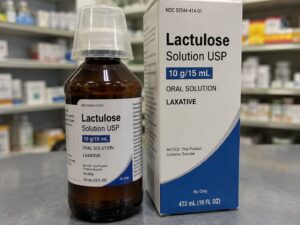
Lactulose is a synthetic sugar that cannot be digested by the human body. It passes straight through the stomach and small intestine without entering your bloodstream, so it will not cause your blood sugar levels to spike.
Here are the key points to explain to the patient:
It’s indigestible:
The human body lacks the enzymes required to break down or absorb lactulose. Because it never gets absorbed into the bloodstream, it doesn’t affect blood glucose.
How it works:
Lactulose travels entirely to the colon (large intestine) intact. There, it draws water into the stool, making it softer and much easier to pass.
Safe for diabetics:
Clinical studies confirm that taking standard therapeutic doses of lactulose does not significantly alter blood glucose levels in patients with type 2 diabetes.
More explanation by board certified doctors:
Dr Sunny
Lactulose is called a sugar chemically, but the body barely absorbs it, so it mainly works inside the gut rather than raising blood sugar.
Bensings
Lactulose is a sugar-based laxative that is poorly absorbed, so it usually has little effect on blood sugar and is generally considered safe for people with diabetes when used as prescribed.
Chirag
Yes, lactulose is a type of sugar, but your body cannot properly digest or absorb it like normal sugar.
It passes mostly unchanged into the large intestine, where it pulls water into the stool and helps soften it, making bowel movements easier.
Since very little enters the bloodstream, it usually does not raise blood sugar significantly when used in recommended doses for constipation.
That’s why we can safely use lactulose even in many diabetic patients while still monitoring sugars regularly.
Medlearn Hub
Lactulose is a synthetic, non-absorbed osmotic laxative, so very little enters the bloodstream and it usually does not raise blood sugar significantly.
• In the colon, it pulls water into the bowel and softens stool, which helps constipation without acting like a typical sugar.
• In diabetics, normal constipation doses are generally safe, though very prolonged/high dose use may need glucose monitoring.
Dr Frank MD, PhD
Lactulose is a synthetic combination of fructose & galactose acting not only as an osmotic laxative but also as a prebiotic encouraging growth of Lactobacilli and Bifidobacterium producing short chain fatty acids which increase colonic motility. Some of SCFA are absorbed. Bloating and gas occur during fermentation. The gut bacteria breaking it down is what often causes the gas and fullness.
Is lactulose OK for diabetics? Yes.

*CONSULTANT PAEDIATRIC SURGEON, DR. ILUOBE INEGBENOSUN, DISTINGUISHES HIMSELF AT NIGERIAN SURGICAL RESEARCH SOCIETY CONFERENCE*
Excellence, innovation, and academic distinction once again took center stage as Dr. Iluobe Inegbenosun, MBBS, MHPM, FWACS, Consultant Paediatric Surgeon at the University of Benin Teaching Hospital (UBTH) and State Secretary of the Edo State Branch of the Nigerian Medical Association (NMA), made a remarkable impact at the just-concluded Scientific Conference of the Nigerian Surgical Research Society (NSRS), held in Benin City.
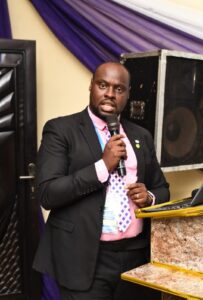
Dr. Inegbenosun was among the distinguished surgeons whose insightful research presentation enriched deliberations on emerging trends, groundbreaking innovations, and the future of surgical practice and research in Nigeria. His scholarly contribution drew commendation from colleagues and experts, reinforcing his reputation as one of the nation’s leading voices in paediatric surgery and clinical research.
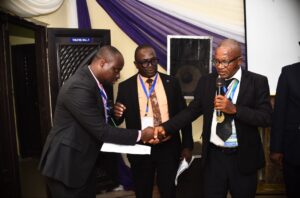
The conference, which brought together eminent surgeons, researchers, and healthcare professionals from across the country, provided a vibrant platform for the exchange of cutting-edge ideas, professional collaboration, and the advancement of evidence-based surgical care aimed at improving patient outcomes nationwide.
In recognition of his commitment to surgical scholarship and research excellence, Dr. Inegbenosun was formally inducted into the prestigious Nigerian Surgical Research Society (NSRS) alongside other accomplished surgeons. The induction marks another significant milestone in his distinguished career and underscores his unwavering dedication to advancing surgical science, mentoring future generations of surgeons, and strengthening healthcare delivery in Nigeria.
Dr. Inegbenosun’s achievements continue to bring pride to the University of Benin Teaching Hospital, the Edo State medical community, and the Nigerian Medical Association, serving as an inspiration to young medical professionals committed to excellence in patient care, research, and innovation.
He is Married to his lovely beautiful wife Dr. Ann Inegbenosun and blessed with 3 lovely children and currently undergoing a PhD program in Healthcare Administration UNIBEN.

NSRS CONCLUDES 87TH SCIENTIFIC CONFERENCE IN BENIN, SETS STRATEGIC AGENDA FOR NIGERIA’S SURGICAL WORKFORCE
Benin City, Nigeria — July 2026: The Nigerian Surgical Research Society (NSRS) has successfully concluded its 87th Annual General Meeting and Scientific Conference in Benin City, Edo State, bringing together leading surgeons, researchers, educators, policymakers, and trainees from across the country and beyond.
The conference, hosted at the University of Benin Teaching Hospital (UBTH), focused on one of the most pressing issues in Nigeria’s healthcare sector: the future of the nation’s surgical workforce.
This year’s theme, “Surgical Workforce 2030: Training, Retaining and Task-Sharing in the Nigerian Context,”guided two days of intensive deliberations, scientific presentations, and policy-driven discussions. According to the Chairman of the Local Organizing Committee, Professor Stanley Ukadike Okugbo, the theme “strikes at the very heart of the structural headwinds confronting healthcare delivery in Nigeria today,” highlighting the challenges of brain drain, uneven workforce distribution, and evolving surgical needs.
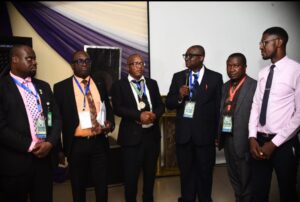
In his presidential address, Prof. Afeyodion Akhator, President of NSRS, emphasized the urgency of strengthening surgical training programs, improving retention strategies, and adopting safe, evidence-based task-sharing models. He noted that the outcomes of the conference “will influence the direction of surgical education, workforce planning, healthcare policy, and patient care for years to come.”
A major highlight of the event was the keynote lecture delivered by Professor Peter Ndidi Ebeigbe, immediate past President of the National Postgraduate Medical College of Nigeria and Consultant to the World Health
Organization. His address provided a comprehensive roadmap for building a resilient and future-ready surgical workforce, drawing on global best practices and Nigeria’s unique healthcare realities.
The conference featured multiple scientific sessions, exhibitions, debates, and a pre-conference workshop. Delegates presented high-quality abstracts spanning trauma care, oncology, gastrointestinal surgery, surgical
education, and innovations in clinical practice. Participants were also encouraged to experience the cultural richness of Benin City, described in the brochure as “one of Africa’s most historic urban centres and the cradle of the ancient Benin Kingdom.”
The 87th AGM also marked a significant leadership transition for the Society. Members elected a new executive committee to steer NSRS into its next phase of growth, including preparations for the Society’s landmark 50th anniversary in December.
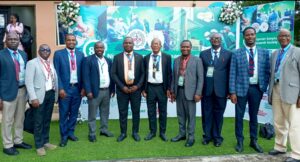
New Executive Committee of the Nigerian Surgical Research Society (NSRS)
• Dr. George C. Obonna — President
• Dr. Clement Odion — Secretary
• Dr. Lucky Ehiagwina — Assistant Secretary
• Dr. Raymond Eghonghon — Treasurer
• Dr. Omorodion Irowa — Auditor
• Prof. Emmanuel Akpo — Editor
• Dr. Francis Campbell — Assistant Editor
• Prof. Aifeyodion Akhator — Ex Officio I
• Prof. Stanley Okugbo — Ex Officio II

Why you feel dizzy when you stand up?
A young, healthy patient asked me: “Doc, sometimes when I stand up from the bed too fast, my vision goes completely black for two seconds and I get dizzy. Am I having a mini-stroke?”
No, it is actually proof that your nervous system is working perfectly.
The exact neurovascular cascade behind why your vision blacks out when you stand up too fast and why you don’t actually pass out. 👇
• The Gravity Drop: When you are lying down, your heart pumps blood easily on a flat plane. The moment you stand up abruptly, gravity instantly pulls about 500 to 800 mL of your blood straight down into your legs.
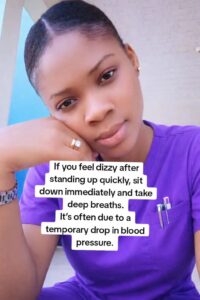
• The Transient Drain: This sudden pooling means less blood returns to your heart, which temporarily means less blood is pumped up to your head. For a split second, your brain experiences a drop in pressure.
• The Visual Blackout: The retina (the back of your eye) is incredibly sensitive to oxygen and pressure changes. When the blood pressure dips, the retina temporarily shuts down to conserve energy which is exactly why your vision goes black or static.
• The Baroreceptor Rescue: Luckily, you have pressure sensors (baroreceptors) in your neck. Within milliseconds, they detect the blood pressure drop and fire a panic signal to your brainstem.
• The Sympathetic Snap: Your autonomic nervous system instantly kicks in. It violently constricts the blood vessels in your legs and spikes your heart rate, physically squeezing the blood right back up to your brain. Vision restored.
Summary:
First time this happened to me I genuinely thought I was dying.
Turns out my body was just buffering.
Knowing the science changes everything
Here’s what’s actually happening:
When you stand up quickly, gravity pulls blood downward. Your body briefly has less blood reaching the brain. Your nervous system — specifically the baroreceptors –detects this drop and rapidly triggers your heart to beat faster and your blood vessels to constrict, restoring blood flow within seconds.
The momentary blackout and dizziness is just that brief gap before the correction kicks in.
👉Hi, I am Dr. Priyam. I break down complex medical science and advocate for Evidence-Based Medicine. FOLLOW ME for more clinical facts.


Chelsea Could Cost Tottenham Djed Spence Amid Inter Milan Interest

World Cup Fans Tip Rodri For Second Ballon d’Or

Didier Deschamps Slams World Cup Referee After Spain 2-0 France

Meaning Behind Egypt Manager’s ‘X’ Gesture vs Argentina

Simi Sanya and Femi Dapson Are Now Legally Married and It Is Beautiful to See

Premier League Set-Piece Goals (2025/2026)
-
 Sports19 hours ago
England vs Argentina: Referee and Assistants Announced
-
 Sports2 days ago
Alfie Haaland’s 6-Word Insult to Roy Keane After England vs Norway
-
 Sports1 day ago
Lionel Messi Missed Training Session Ahead of Argentina vs England
-
 Sports2 days ago
Argentina ‘Make Special Request to FIFA’ Before England World Cup Clash
-
 Sports2 days ago
Alexander Sorloth’s Girlfriend Releases Statement After Online Backlash
-
 Sports2 days ago
Concerning Jude Bellingham Footage Sparks England Injury Fears
-
 Sports2 days ago
Fresh FIFA Data Emerges Following Controversial England Goal vs Norway
-
 Politics2 days ago
2027: Nafiu Bala’s ADC faction uploads presidential candidate, others on INEC portal