
Politics
NDC ticket: ‘I’m not asking for a level playing ground’ – Aisha Yesufu fumes

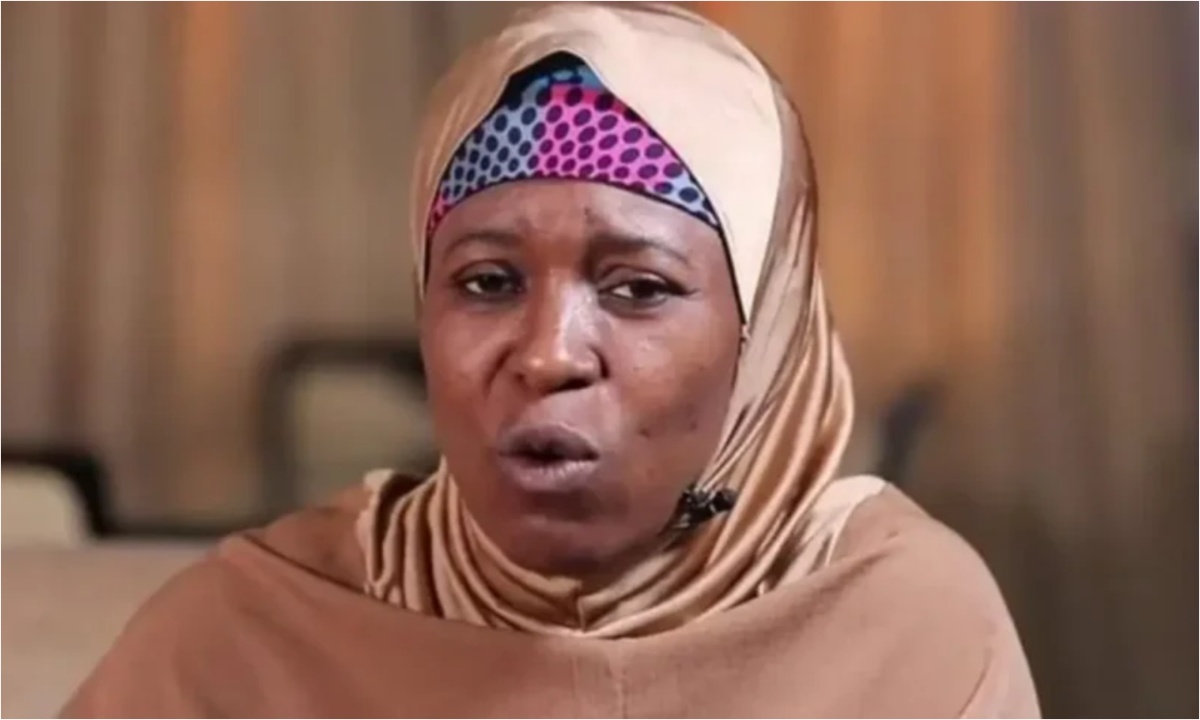
Activist and politician, Aisha Yesufu has expressed dissatisfaction with the process leading to the selection of candidates for the Federal Capital Territory, FCT, senatorial ticket of the Nigeria Democratic Congress, NDC.
The remarks were made during an interaction with party officials, where she questioned the handling of the process and the reasons given for her not emerging as the party’s candidate.
According to Yesufu, party leaders had made commitments regarding consultations and engagement with stakeholders, insisting that such commitments should be honoured.
Yesufu also stated that she had recently been informed that she joined the party late, a development she suggested affected her chances in the process.
“I was told recently that I came in late to this party. Who does that? I have endured a lot in the last few days. My name has been dragged all over,” she said.
The activist maintained that she was not seeking special treatment but wanted a transparent process that would give all aspirants a fair opportunity.
“I am not even asking for a level playing ground, I am asking for a ground,” she stated.
According to her, she would have accepted the outcome if the process had been conducted fairly.
“I am ready to accept that I lost. If I lost fairly, I am ready to accept that I lost,” she added.
Yesufu further said she had refrained from publicly reacting to criticisms because she was focused on a bigger goal.
dailypost.ng
The Chairman of the Independent National Electoral Commission, INEC, Professor Josiah Amupitan, has assured political parties and Nigerians that the commission will remain neutral in the 2027 elections.
Amupitan gave the assurance on Tuesday at the National Peace Accord ahead of the 2027 presidential election.
“INEC has no interest in who wins or loses any election. The commission does not have a candidate, nor does it favour any political platform,” Amupitan said.
The INEC chairman also urged political parties and candidates to focus on issues during the 2027 campaign rather than turning the election into a contest of violence and personal attacks.
“Let the 2027 election campaign be a marketplace of ideas, not a theatre of war,” he said.
Amupitan said Nigerians were more interested in practical solutions to their challenges and urged political actors to present clear and measurable programmes.
“Nigerians do not want insults; they want solutions. They deserve to hear clear, concrete, and measurable manifestos,” he said.
He also assured Nigerians that the commission was building on previous preparations to deliver a credible election in 2027.
Amupitan said INEC’s preparations were progressing, adding that the commission was expanding its logistics to handle the large number of personnel required for the nationwide exercise.
“I am pleased to report that our preparations for the 2027 elections are progressing with absolute precision. We are scaling our operational logistics to manage a massive nationwide ad hoc workforce of 1.4 million personnel across over 176,000 polling units,” he said.
dailypost.ng
Politics
Fadahunsi apologises for palace remarks, denies violence call, commends Owa Haastrup’s leadership

Senator Adenigba Fadahunsi, OFR, has apologised for the tension caused by remarks he made during his campaign visit to the palace of the Paramount Ruler of Ijesaland, Owa Clement Adesuyi Haastrup, Ajimoko III.
Fadahunsi, while speaking after the conclusion of the Osun State governorship election, said his visit to the palace was mainly to seek justice and express his pain over the killing of some members of his political party.
He said it was painful that his emotional appeal was later presented by his critics as a call for violence.
The senator maintained that he never called for chaos or violence, describing the criticism against him as unfair.
According to him, his words were made at a difficult moment when he was deeply affected by the deaths of party members.
Fadahunsi also expressed special appreciation to the Owa of Ijesaland, Owa Clement Adesuyi Haastrup, for the way he handled the situation.
He praised the monarch for showing wisdom and remaining calm despite claims by some people that his remarks were disrespectful to the traditional institution.
The senator said the Owa demonstrated the qualities of a true father to all people, regardless of their political party.
He said the monarch’s calm and balanced response helped to prevent the situation from becoming worse.
Fadahunsi said leaders must learn to place the interest of the people above personal feelings and political differences.
He added that the peace of Osun State and Ijesaland is more important than any political victory, defeat or disagreement.
“Because the peace of Osun State and Ijesaland in particular is far more important than any political dispute, victory, or defeat, I sincerely apologise for the tension that resulted from this misunderstanding,” the senator said.
He also called on his supporters and other residents of the state to embrace peace and work towards healing after the election.
Fadahunsi urged the people to respect the role of traditional institutions in promoting peace and unity in Ijesaland.
He, however, said his call for justice over the deaths of his party members remained unchanged.
The senator called on the Osun State Government and security agencies to properly investigate the killings and ensure that justice is achieved through lawful and peaceful means.
He urged all sides to put political differences aside and work together for peace and unity in the state.
Fadahunsi said he would continue to seek justice for the victims while encouraging supporters and citizens to avoid actions that could create further tension.
The statement was signed by Senator Adenigba Fadahunsi, OFR.
dailypost.ng
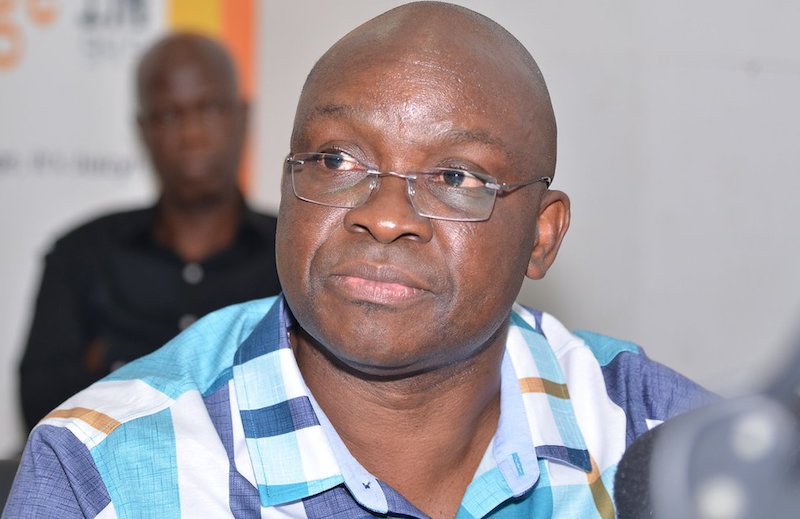
Former Ekiti State governor, Ayodele Fayose says the African Democratic Congress, ADC, presidential candidate, Atiku Abubakar, is too old to contest an election.
Featuring in an interview on TVC’s Politics Tonight, Fayose likened Atiku to former US President Joe Biden.
He also said that Atiku’s running mate, Rotimi Amaechi, faces challenges in the South-South due to his lack of political influence.
“Atiku is now really old. He’s a good man, but time has caught up with him. Atiku contesting an election is like calling Biden to come and contest again.
“Let me say this again: President Bola Tinubu, Atiku and Peter Obi, this is their last chance of contesting an election. The three of them.
“In Rivers State, during this election, Amaechi will have very little support. Even the party is not together. Most of these ADC and Nigeria Democratic Congress, NDC, members are not on ground. Nobody is connected to those parties yet,” he said.
dailypost.ng


F1 Driver Won’t Be Competing at the Dutch Grand Prix

Nick Kyrgios Issues Statement After Being Banned From Tennis
2027: INEC has no candidate, favours no party –Prof Amupitan

Meaning Behind Egypt Manager’s ‘X’ Gesture vs Argentina

Premier League Set-Piece Goals (2025/2026)

Simi Sanya and Femi Dapson Are Now Legally Married and It Is Beautiful to See
-
 Sports2 days ago
Paul Scholes Predicts Final 2026-27 Premier League Top 6
-
 Sports2 days ago
Man Utd Injury Update on 8 Stars Ahead of Premier League Opener vs Hull
-
 Sports2 days ago
5 Things We Learnt About Man Utd in Pre-Season
-
 Sports17 hours ago
Newcastle Discuss Move to Sign Carlos Baleba Ahead of Man Utd
-
Politics2 days ago
Osun: We did everything possible – Farouq Aliyu reveals why APC lost
-
 Politics2 days ago
Osun election: Tinubu lost, APC afraid of 2027 – Dele Momodu
-

 Metro23 hours ago
Suspected gunmen kill 20, injure others in Plateau
-
 Metro15 hours ago
NDLEA arrests Lagos socialite KC Luxury, seizes cocaine worth N39bn