
World News
What does Trump want with boat strikes near Venezuela and Caribbean?

Bernd Debusmann Jr,at the White House and
Joshua Cheetham,BBC Verify

 US Southern Command
US airstrikes against alleged drug boats in the Caribbean and eastern Pacific have continued unabated since early September – a deadly campaign now dubbed Operation Southern Spear.
Tens of thousands of troops and substantial air and naval assets have been deployed to the region, collectively forming the largest US military presence in and around Latin America in decades.
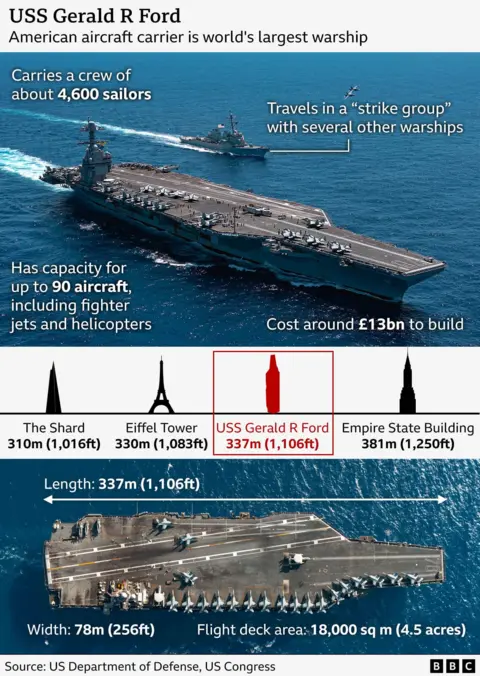
On Sunday the US military confirmed the world’s largest aircraft carrier, the USS Gerald R Ford, had arrived in the Caribbean.
The Trump administration argues the strikes are necessary to stem the flow of drugs to the US.
They have, however, been controversial and sparked fears of a wider conflict in the region.
Why is the US conducting strikes?
President Trump and members of his administration have justified the strikes as a necessary counter-drug measure to stem the flow of narcotics from Latin America to US streets.
In a statement, Defence Secretary Pete Hegseth said that the campaign – which on 13 November was officially named Operation Southern Spear – is aimed at removing “narco-terrorists from our hemisphere” and securing the US from “the drugs that are killing our people”.
But little information about the targets or what drug trafficking organisations they allegedly belonged to has been officially released by the Pentagon.
In at least a few cases, Hegseth and several other officials have claimed that the targets were tied to Tren de Aragua, a Venezuelan gang designated as a foreign terrorist organisation by the Trump administration at the start of the year.
It is unclear how much of an impact US officials believe that the strikes are having on the wider flow of drugs, a significant portion of which cross the land border between Mexico and the US.
Where are US military units?
The US has deployed substantial strike power in the Caribbean and western Atlantic within striking distance of Venezuela.
BBC Verify has identified 15 warships in the region based on ship-tracking data, satellite imagery and announcements by US authorities.
This includes the USS Gerald R Ford aircraft carrier, described by the US Navy as “the most capable, adaptable, and lethal combat platform in the world”.
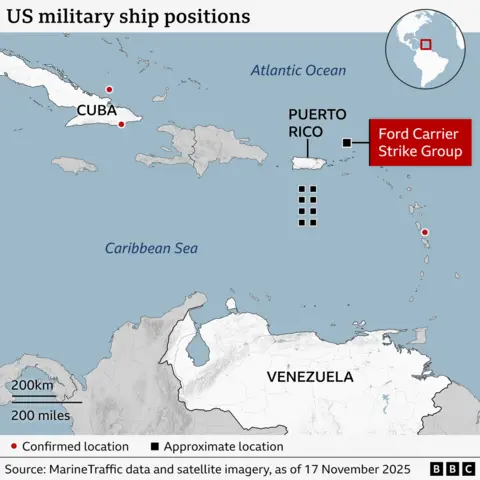
The deployment also includes a range of guided-missile destroyers and amphibious assault ships capable of landing thousands of troops.
Additionally, US combat aircraft have been deployed to bases in Puerto Rico, and US long-range bombers have flown within striking distance of Venezuela’s coastline.
Trump has also acknowledged that he authorised the CIA to conduct covert action in Venezuela, although the scope of what that could mean remains highly classified.
How many strikes have there been?
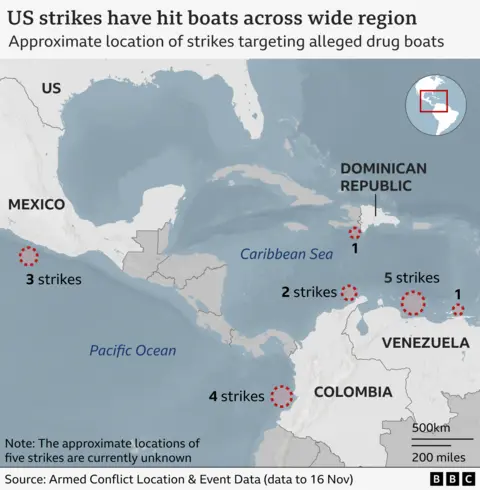
Between 2 September and 16 November, US forces hit at least 22 vessels in 21 separate strikes in international waters, both in the Caribbean and in the eastern Pacific.
The majority of these strikes have taken place off the coasts of Venezuela and Colombia.
US Southern Command announced on Sunday that its latest strike, conducted on Saturday in eastern Pacific international waters, killed three “male narco-terrorists” on board.
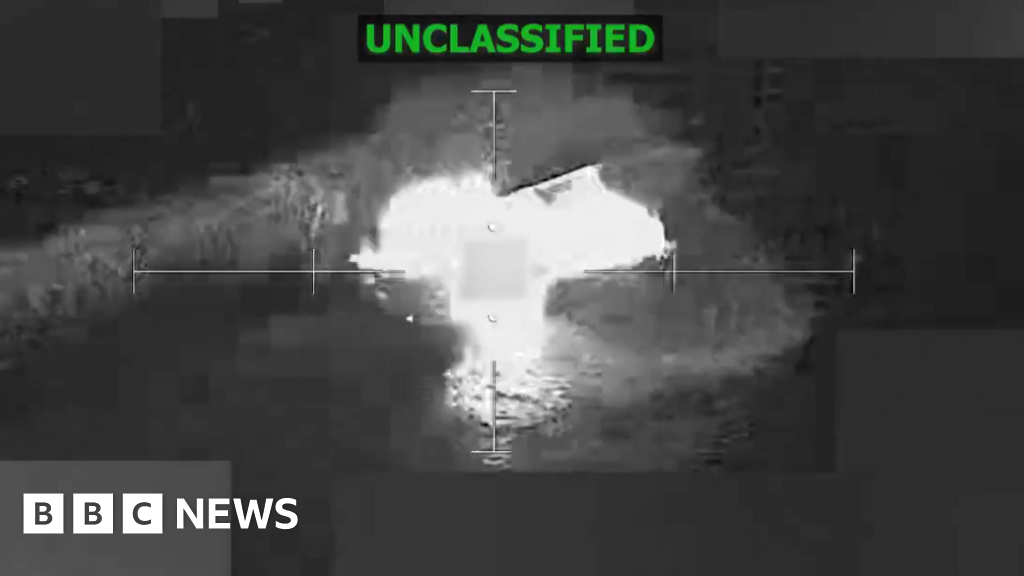
“Intelligence confirmed that the vessel was involved in illicit narcotics smuggling, transiting along a known narco-trafficking route, and carrying narcotics,” Southern Command wrote in a post on X, alongside a video showing the boat exploding in a massive fireball.
Collectively, at least 83 people have been killed.
While US forces have not publicly identified them, they have all been alleged to be “narco-terrorists”.
One investigation, from the Associated Press, reported that several Venezuelan nationals killed in the strikes were low-level traffickers driven by poverty to a life of crime, as well as at least one local crime boss.
Are these boat strikes legal?
The Trump administration has insisted that the strikes are legal, justifying them as a necessary self-defence measure aimed at saving American lives.
In a confidential note to Congress, the administration argued that the US is engaged in an armed conflict with drug cartels who are “unlawful combatants” and whose actions – drug trafficking – “constitute an armed attack against the United States”.
But some legal experts have said the strikes could be illegal and violate international law by targeting civilians, with no due process afforded to the suspects.
Luis Moreno Ocampo, a former chief prosecutor at the International Criminal Court (ICC), told the BBC that he believes that the strikes could be treated as crimes against humanity.
Critics have also questioned whether the White House complied with US law in initially authorising the strikes.
According to the US constitution, only Congress is able to declare war.
In October, President Trump said the US is “allowed” to strike vessels near Venezuela, but that his administration “may go back to Congress” if the campaign was expanded to include targets on land.
“We don’t have to do that,” he said. “But I think…I’d like to do that.”
Is the US preparing to attack Venezuela?
The build-up has prompted concerns that the US is preparing to directly target Venezuela, or potentially to try to topple the left-wing socialist government of President Nicolás Maduro.
On 3 November, Trump downplayed the possibility of a war with Venezuela, but suggested that he believed Maduro’s days as the country’s president were numbered.
Asked if the US was going to war against Venezuela, the US president told CBS’ 60 Minutes: “I doubt it.”
“I don’t think so,” he added. “But they’ve been treating us very badly.”
How has Maduro responded?
The Maduro government has accused the US of stoking tensions in the region, with the aim of toppling the government.
In response, the Venezuelan military have announced readiness exercises and in November declared a “massive mobilisation” of troops, which saw 200,000 personnel sent across the country.
Maduro has cautioned against the US becoming involved in Venezuela, and called for peace.
“No more forever wars. No more unjust wars. No more Libya. No more Afghanistan,” Maduro said on CNN on 13 November. “Long live peace.”
Additional reporting by Tom Edgington
www.bbc.com

The US Coast Guard is in “active pursuit” of another vessel in international waters near Venezuela, an official has told the BBC’s US partner CBS News, as tensions in the region continue to escalate.
US authorities have already seized two oil tankers this month – one of them on Saturday.
Sunday’s pursuit related to a “sanctioned dark fleet vessel that is part of Venezuela’s illegal sanctions evasion”, a US official said. “It is flying a false flag and under a judicial seizure order.”
Washington has accused Venezuela of using oil money to fund drug-related crime, while Venezuela has described the tanker seizures as “theft and kidnapping”.
US President Donald Trump last week ordered a “blockade” of sanctioned oil tankers entering and leaving the country.
Venezuela – home to the world largest proven oil reserves – has accused the Trump administration of trying to steal its resources.
US authorities have not yet officially confirmed Sunday’s pursuit, and the exact location and name of the tanker involved is not yet known.
As of last week, more than 30 of the 80 ships in Venezuelan waters or approaching the country were under US sanctions, according to data compiled by TankerTrackers.com.
Saturday’s seizure saw a Panamanian-flagged tanker boarded by a specialised tactical team in international waters.
That ship is not on the US Treasury’s list of sanctioned vessels, but the US has said it was carrying “sanctioned PDVSA oil”. In the past five years the ship also sailed under the flags of Greece and Liberia, according to records seen by BBC Verify.
“These acts will not go unpunished,” the Venezuelan government said in response to Saturday’s incident. It added that it intended to file a complaint with the UN Security Council and “other multilateral agencies and the governments of the world”.
Venezuela is highly dependent on revenues from its oil exports to finance its government spending.
In recent weeks, the US has built up its military presence in the Caribbean Sea and has carried out deadly strikes on alleged Venezuelan drug-smuggling boats, killing around 100 people.
It has provided no public evidence that these vessels were carrying drugs, and the military has come under increasing scrutiny from Congress over the strikes.
The Trump administration has accused Venezuelan President Nicolás Maduro of leading a designated-terrorist organisation called Cartel de los Soles, which he denies.
www.bbc.com

Yogita LimayeSouth Asia and Afghanistan correspondent in Myanmar

 BBC
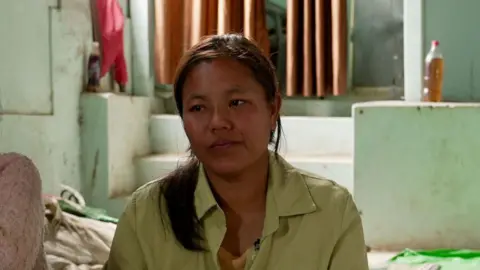
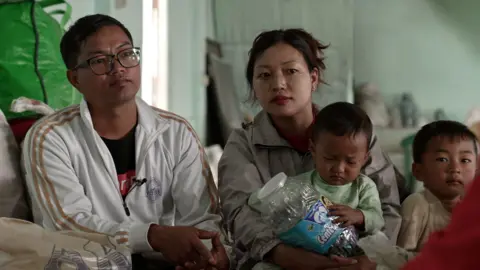
BBCLate one night last month Iang Za Kim heard explosions in a neighbouring village, then fighter jets flying overhead. She ran out of her home to see smoke rising from a distance.
“We were terrified. We thought the junta’s planes would bomb us too. So we grabbed what we could – some food and clothes and ran into the jungles surrounding our village.”
Iang’s face quivers as she recounts the story of what happened on 26 November in K-Haimual, her village in Myanmar’s western Chin State, and then she breaks down.
She’s among thousands of civilians who’ve fled their homes in recent weeks after the Burmese military launched a fierce campaign of air strikes, and a ground offensive in rebel-held areas across the country, to recapture territory ahead of elections starting on 28 December.
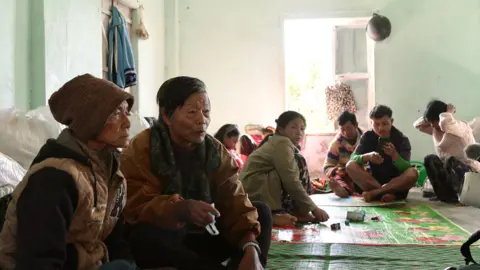
Four other women sitting around her on straw mats also start crying. The trauma of what they’ve gone through to make it to safety is clearly visible.
While the air strikes were the immediate cause for Iang to flee, she also doesn’t want to be forced to participate in the election.
“If we are caught and refuse to vote, they will put us in jail and torture us. We’ve run away so that we don’t have to vote,” she says.
Some from Chin state have described the junta’s latest offensive as the fiercest it has launched in more than three years.
Many of the displaced have sought refuge in other parts of the state. Iang is among a group that crossed the border into India’s Mizoram state. Currently sheltered in a rundown badminton court in Vaphai village, the group’s few belongings they were able to carry are packed in plastic sacks.
Indian villagers have given them food and basic supplies.
Ral Uk Thang has had to flee his home at the age of 80, living in makeshift shelters in jungles for days, before finally making it to safety.
“We’re afraid of our own government. They are extremely cruel. Their military has come into our and other villages in the past, they’ve arrested people, tortured them, and burned down homes,” he says.
It isn’t easy to speak to Burmese civilians freely. Myanmar’s military government does not allow free access in the country for foreign journalists. It took over the country in a coup in February 2021, shortly after the last election, and has since been widely condemned for running a repressive regime that has indiscriminately targeted civilians as it looks to crush the armed uprising against it across Myanmar.
During its latest offensive, the junta last week targeted a hospital in Rakhine State, just south of Chin State. Rebel groups in Rakhine say at least 30 people were killed and more than 70 injured.
The Chin Human Rights Organisation says that since mid-September at least three schools and six churches in Chin State have been targeted by junta airstrikes, killing 12 people including six children.
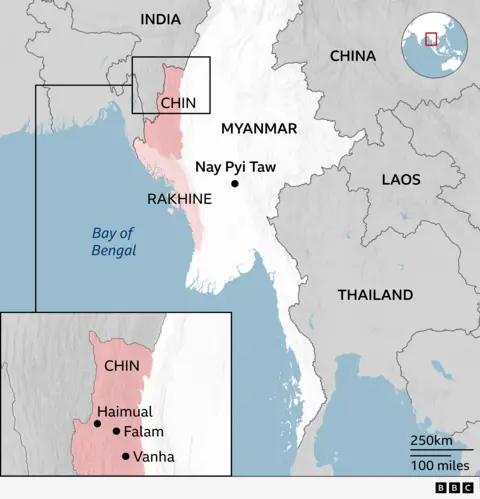
The BBC has independently verified the bombing of a school in Vanha village on 13 October. Two students –Johan Phun Lian Cung, who was seven, and Zing Cer Mawi, 12 – were killed as they were attending lessons. The bombs ripped through their classrooms injuring more than a dozen other students.
Myanmar’s military government did not respond to the BBC’s questions about the allegations.
This is the second time Bawi Nei Lian and his young family – a wife and two young children – have been displaced. Back in 2021, soon after the coup, their home in Falam town was burnt down in an air strike. They rebuilt their lives in K-Haimual village. Now they’re homeless again.
“I can’t find the words to explain how painful and hard it is and what a difficult decision it was to make to leave. But we had to do it to stay alive,” he says.
“I want the world to know that what the military is claiming – that this election is free and fair – this is absolutely false. When the main political party is not being allowed to contest the election, how can there be genuine democracy?”
The National League for Democracy party, led by Aung San Suu Kyi, which won landslides in the two elections prior to the coup, will not be contesting as most of its senior leaders including Suu Kyi are in jail.
“We don’t want the election. Because the military does not know how to govern our country. They only work for the benefit of their high-ranking leaders. When Daw Aung San Suu Kyi’s party was in power, we experienced a bit of democracy. But now all we do is cry and shed tears,” says Ral Uk Thang.
Iang Za Kim believes the election will be rigged. “If we voted for a party not allied with the military, I believe they will steal our votes and claim we voted for them.”
The election will take place in phases, with a result expected around the end of January. Rebel groups have called it a sham.
At the base of the Chin National Front in Myanmar, the most prominent rebel group operating in the state, the group’s Vice Chairman Sui Khar says: “This election is only being held to prolong military dictatorship. It’s not about the people’s choice. And in Chin State, they hardly control much area, so how can they hold an election?”
He points out the areas where the most intense fighting is ongoing on a map and tells us nearly 50 rebel fighters have been injured in just the past month. There have been deaths too, but so far the groups have not released a number.
“There are columns of hundreds of soldiers trying to advance into the northern part of Chin state from four directions,” Sui Khar says. “The soldiers are being supported by air strikes, artillery fire and by drone units.”
Access to the base is extremely rare. Set amid thickly forested mountains, it is the heart of the resistance against the junta in Chin state.
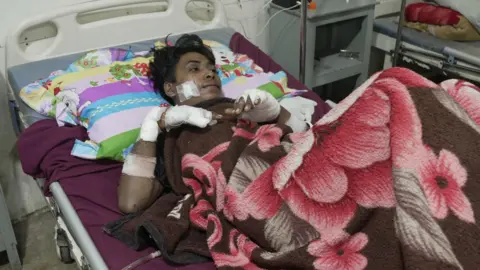
Sui Khar takes us to the hospital at the base. We see a group of injured fighters who were brought in overnight and had to undergo hours of surgery. Some of them have had to undergo amputations.
Many of them were just schoolboys when the coup occurred in 2021. Just about adults now, they’ve let go of their dreams to fight on the frontline against the junta.
Abel, 18, is in too much pain to speak. He was with a group of fighters trying to take back territory the junta captured a week ago. They won the battle, but Abel lost his right leg and has serious injuries to his hands as well.
In a bed next to him is Si Si Maung, 19, who’s also had a leg amputated.
“As the enemy was retreating we ran forward and I stepped on a landmine. We were injured in the explosion. Then we were attacked from the air. The airstrikes make things very difficult for us,” he says. “I’ve lost a leg, but even if I’ve to give up my life I’m happy to make the sacrifice so that future generations have a better life.”
The impact of the ferocity of the latest offensive is visible in room after room at the hospital.
Yet, it’s the support and grit of tens of thousands of youngsters like Si Si Maung, who picked up arms to fight against the junta, that have helped the rebels make rapid advances against a much more powerful rival in the past four-and-a-half years.
Some like 80-year-old Ral Uk Thang hope that after the election, the junta will retreat, and he will be able to go back home.
“But I don’t think I will live to see democracy restored in Myanmar,” he says. “I hope my children and grandchildren can witness it some day.”
Additional reporting by Aamir Peerzada, Sanjay Ganguly and Aakriti Thapar
www.bbc.com

Tiffanie TurnbullBondi Beach
 Getty Images
As helicopters circled overhead, sirens descended on her suburb, and people ran screaming down her street on 14 December, Mary felt a grim sense of deja vu.
“That was when I knew there was something seriously wrong – again,” she says, her eyes brimming with tears.
Mary – who did not want to give her real name – was at the Westfield Bondi Junction shopping centre last April when six people were stabbed to death by a man in psychosis, a tragedy still fresh in the minds of many.
Findings from a coronial inquest into the incident were due to be delivered this week, but were delayed after two gunmen unleashed a hail of bullets on an event marking the start of the Jewish festival of Hanukkah eight days ago.
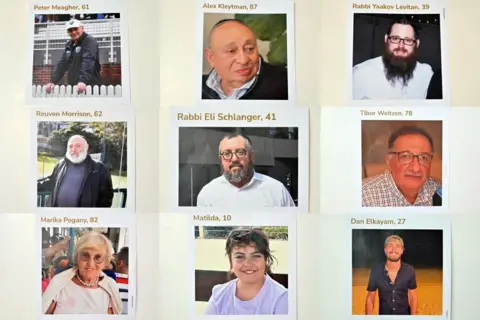
Declared a terror attack by police, 15 people were shot and killed, including a 10-year-old girl who still had face paint curling around her eyes.
The first paramedic to confront the bloody scenes at the Chanukah by the Sea event was also the first paramedic on the scene at the Westfield stabbings.
“You just wouldn’t even fathom that something like this would happen,” 31-year-old Mary, who is originally from the UK, tells the BBC. “I say constantly to my family at home how safe it is here.”
This was the overarching sentiment in the days following the shooting. This kind of thing, mass murder, just doesn’t happen in Australia.
But it can and it has – twice, in the same community, within 18 months.
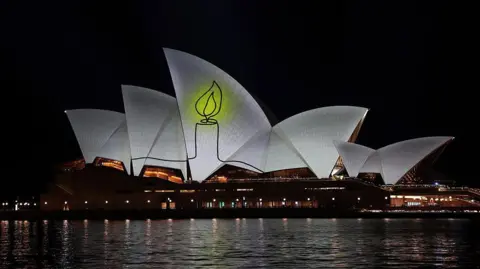
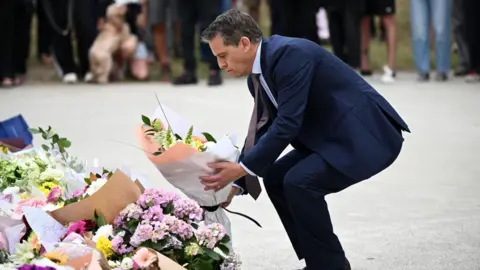
A sea of flowers left by shocked and grieving people at Bondi is being packed up. A national day of reflection is over. On Sunday night, Jewish Australians lit candles for the last time this Hannukah.
But the two tragedies have left scores physically scarred and traumatised, and the nation’s sense of safety shattered.
‘Everyone knows someone affected’
 EPA
EPABondi is Australia’s most famous beach – a globally recognised symbol of its way of life.
It’s also a quintessential slice of Australian community. There’s a bit of “everyone knows everyone” – and that means everyone knows someone affected by the 14 December tragedy, mayor Will Nemesh told the BBC.
“One of the first people I texted was [Rabbi] Eli Schlanger. And I said, ‘I hope you’re OK. Call me if you need anything’,” he said.
But the British-born father of five, also known as the “Bondi Rabbi”, was among the dead.
The first responders, police and paramedics would have been working on members of their own community. Others had the task of having to treat the shooters who had taken aim at their colleagues.
“[Westfield Bondi Junction] was horrendous, something we’re certainly not used to. And then this again was massive, catastrophic injuries,” Ryan Park, health minister for New South Wales, told the BBC.
“They’ve seen things that are like you would see in a war zone… You don’t get those images out of your head,” Park added.
Mayor Nemesh fears this will forever be a stain on Bondi, and Australia.
“If this can happen here at Bondi Beach, it really could happen anywhere… the impact has reverberated around Australia.”
 EPA
EPA‘Warnings ignored’
No one is feeling this more than the Jewish community, for whom Bondi has become a sanctuary.
“I swam here every day for years on end, rain or shine. And this week… I couldn’t get in the water. It didn’t feel right. It felt sacrilegious in some way,” Zac Seidler, a local clinical psychologist, told the BBC.
Many of the victims of the attack moved here over many decades for safety from persecution, including 89-year-old Holocaust survivor Alex Kleytman. Instead, his life was bookended by violent acts of antisemitic hate.
Mr Seidler has spent the past two years trying to convince his grandparents, who are also Holocaust survivors, to hold on to their belief in the good of humanity.
“[My grandmother] kept saying, ‘These are the signs. I’ve seen this before’. And I just kept saying, ‘Not in Australia, not here. You’re safe’, just trying to soothe her.
“But now I kind of feel like the fool.”
No community is a monolith, but one thing many Jewish Australians believe is that warnings about a rise of antisemitism in the months preceding this attack were ignored.
The year started with a spate of vandalism and arson incidents on Jewish marks in the suburbs surrounding Bondi. It has ended with mass murder targeting their community.
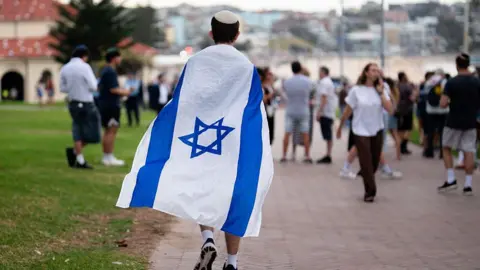
There has been resistance in the face of fear – some leaders urging Jewish Australians to double down, be more publicly Jewish and display their religious symbols with pride.
One woman perusing the flowers outside the Bondi Pavilion on Sunday admits she is too scared to do that. It took her all week to even work up the courage to visit this site, which is just metres from where many of the victims died.
“I’ve never felt my Jewishness before. I’ve never experienced antisemitism in my whole life until now,” MaryAnne says. “And now, I don’t want to wear my Star of David.”
Community, anger and sadness
The shooting triggered a massive outpouring of support from around the nation.
When the news broke, many in the community rallied to help.
Lifeguards – volunteer and paid – put their lives on the line. Restaurants opened their doors and hid people in their store rooms and freezers, and locals ushered lost children into their apartments.
Even the New South Wales opposition leader Kellie Sloane – also the local state member – was at the scene, helping pack bullet wounds.
In the days after the shooting, thousands of ordinary Australians lined up – many for hours on end – to donate blood desperately needed to treat those injured.
Each day, a carpet of petals, handwritten notes, commemorative stones and candles grew out from the gates of the Bondi Pavilion.
Bee motifs – stickers, balloons, even pavement art – are all over the suburb, in remembrance of Matilda, the terror attack’s youngest victim.
Surfers and swimmers on Friday paddled out beyond Bondi’s iconic breaks to honour those who died.
A day later, surf livesavers and lifeguards stood shoulder to shoulder on the beach in solidarity with the Jewish community.
But amid the platitudes, sadness and shock is calcifying into anger and tension.
Last year’s Bondi Junction stabbings were devastating for the community – but a shared resolution united it.
Experts say the attacker, who had schizophrenia, was in psychosis at the time of the stabbings, and his family have previously said he was frustrated at being unable to find a girlfriend. The question of whether he targeted women will likely forever go unanswered. But clear failures in the mental health system have been identified.
Last month, families of the victims asked the coroner to refer the doctor who weaned him off medication with limited supervision to regulators for investigation, and they have also argued for a massive boost to mental health service funding.
But last Sunday’s events raise more uncomfortable feelings and questions.
There is palpable fury at the government, over a perceived – and admitted – failure to do more to stop antisemitism. Prime Minister Anthony Albanese has been booed during public appearances this week, and talking to people visiting the site of the attack in Bondi, it isn’t uncommon to hear them demand his resignation.
Many people the BBC spoke to pointed to his government’s decision to recognise Palestinian statehood, alongside countries including the UK and Canada, and regular protests in Australia by members of the pro-Palestinian movement, which though largely peaceful but have been peppered with antisemitic chants and placards.
The state of New South Wales – which has in recent years tightened protest rules – has already announced it will introduce more legislation cracking down on “hateful” chants and give police more powers to investigate demonstrators. The federal government has promised similar.
The blame apportioned to these protests does not sit right with many, even some sections of the Jewish community.
“We need to hold multiple truths,” Mr Seidler says. “We can be afraid, we can feel that there is deep antisemitic rhetoric going on in certain circles within Australia… while also understanding that there is a right of people in this country – especially Muslim Australians – to be concerned about what is taking place in Gaza.
“We need to get better at finding that line and calling out when that line has been crossed.”
 Getty Images
For others, there is anger at what they feel is the politicisation of a tragedy.
“It’s a bloody photo op,” one woman tells me on Sunday, as a prominent Australian businesswoman arrives and begins posing with the floral tributes outside the Bondi Pavilion.
Some – including the local federal MP Allegra Spender – worry the attack is being used to fuel anti-immigration sentiment.
“We would not have had the man who saved so many Australians if we had cut off, for instance, Muslim immigration,” she said.
Mr Seidler says these arguments fail to recognise that antisemitic views – and other forms of bigotry – are formed here too.
“I heard someone say the other day that Australia thinks it’s on a holiday from history, that we’re somehow immune to this stuff, that it’s not bred here, it’s imported,” Mr Seidler says.
With the anger, there is also fear: for the Jewish community of other attacks, for the Muslim community of retaliation for an act of terror they have loudly condemned.
There are questions over how Australia’s security agency fumbled an alleged terrorist who at one point was on their watch list, prompting a review into federal police and intelligence agencies that was announced on Sunday.
There is frustration at NSW Police, who have for years been warned by the Muslim community of hate preachers poaching their young men.
There is animosity towards the media, driven by hurt among both Jewish and Arab Australians over a belief they and their communities have been misrepresented, and frustration at what some feel is incitement against them.
But there is also a queasiness at the treatment of traumatised victims throughout this week, some of whom were interviewed live on television while the blood of their friends still stained their hands.
Through it all, is an undercurrent of suspicion of institutions and each other.
There are varying opinions on how those rifts can heal – or even if they can. But there is a shared determination to try.
 EPA
EPAOne UK expat who was at the beach at the time of the shooting says everyone he speaks to is adamant this will not change Bondi, or Australia.
“It’s seriously unique what you have as a nation… there’s a magic about it,” Henry Jamieson tells the BBC.
“I’m traumatised… and I’m going to have to deal with that for the rest of my life, I know I am… even people who weren’t there were traumatised.
“But I’m not gonna let it shake me and we will not let it shake this community.
“You can’t let them win,” he says of the alleged terrorists.
At an emotional memorial on Sunday night, seven days since the attack, the same sense of defiance was on show. It ended with the lighting of the menorah, something the crowds gathered for Hannukah last week never got to do.
The shamash, the centre candle, was lit by the father of Ahmed al Ahmed, in honour of his bravery in wrestling a gun off one of the attackers. The children of the two rabbis who were killed lit another. Others were lit by a representative of surf lifesavers and a Jewish community medic who rushed to the scene and began treating the injured before the shots had even stopped. The final candle was lit by Michael, the father of Matilda, who has been described a fountain of joy to all who knew her.
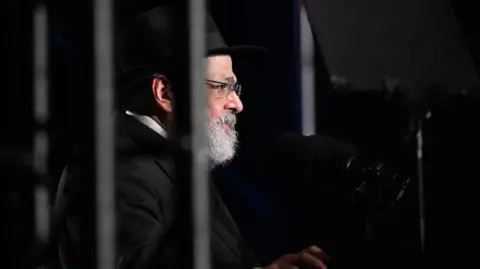
After the parade of diverse Australians had sparked flames on each arm of the menorah, Rabbi Yehoram Ulman of Bondi Chabad made a plea for more love and more unity.
“Returning to normal is not enough,” he said.
“Sydney can and must become a beacon of goodness. A city where people look out for one another, where kindness is louder than hate, where decency is stronger than fear, and we can make it happen,” he said, stopping for a moment as the crowd applauded.
“But only if we take the feelings we have right now and turn them into action, into continuous action.”
www.bbc.com


Kim Kardashian Blasted Over Treatment of Martin Brundle at Monaco GP

Every 2026 World Cup Squad Ranked By Age

APC’s Monsuru Osho wins Ogun councillorship bye-election

Simi Sanya and Femi Dapson Are Now Legally Married and It Is Beautiful to See

FCT Area Council Election: Live results from polling units

Premier League Set-Piece Goals (2025/2026)
-
 Sports1 day ago
Yaya Toure to Take Charge of Slovan Bratislava in First Manager Job
-
 Sports2 days ago
Sheikh Jassim’s Stance on New Man Utd Takeover Bid
-
 Sports6 hours ago
Why Rio Ngumoha Can’t be Called into England’s World Cup Squad
-
 Sports1 day ago
Tensions Boil Over Between F1 Teammates in X-Rated Radio Exchange
-
 Sports2 days ago
Arsenal Set Record-Breaking Transfer Price Tag For Gabriel Martinelli
-
 Sports1 day ago
More Than a Dozen Iran Staff Members Denied Entry Into the United States
-
Sports17 hours ago
Rio Ngumoha is Not Allowed in Liverpool or England’s Dressing Room
-
 Sports7 hours ago
Lee Dixon’s Commentary on Kobbie Mainoo vs New Zealand Slammed