
Business
Africa trade policy group appoints Ese Owie as Convenor, targets global influence


By Jeremiah Urowayino
Trade experts and thought leaders from across the African continent have said Africa has a role in shaping the World Trade Organisation, WTO, reform, saying this is because the world is at a critical juncture for the multilateral trading system.
They said this while launching the Africa Trade Policy Working Group, ATP Working Group, a new effort to strengthen African voice and influence in global trade governance, with Dr Ese Owie appointed as Convenor.
The ATP Working Group, launched on the sidelines of World Trade Organization’s 14th Ministerial Conference, MC14, in Yaoundé, Cameroon, aims to position Africa as a strategic actor in the evolving global trade order by amplifying and connecting leading thinkers from across the continent and the African diaspora, while bridging policy, academia, and practice.
The ATP Working Group emerged from a high-level workshop co-organised by the Remaking Trade for a Sustainable Future Project, RTP, ODI Global, Trade Negotiations and Investment Forum, TNIF, International Relations Institute of Cameroon, IRIC, Forum on Trade, Environment & the SDGs, TESS, and South African Institute of International Affairs, SAIIA.
Those featured include WTO Director-General, Dr Ngozi Okonjo-Iweala; WTO Deputy Director-General, His Excellency Xiangchen Zhang; and Professor Dan Esty of Yale University and a co-founder of the Remaking Trade Project, and other leading policymakers, negotiators, and scholars.
The statement, which revealed the group, said: “Key areas of focus will include development-oriented reform, climate-trade linkages, supply chain resilience, digital trade, and institutional renewal, thereby advancing a more coherent, coordinated, and forward-looking African contribution to global trade debates.
“Discussions at MC14 and associated convenings underscore both the urgency of WTO reform and the growing recognition that Africa must step forward to proactively shape the future of global trade governance.
“The multilateral trading system is undergoing structural transformation, driven by geopolitical realignment, climate change, supply chain restructuring, and digitalization. The establishment of the ATP Working Group reflects a strategic shift in Africa’s engagement with global trade governance—from fragmented participation to coordinated influence.
“The ATPWG, convened by the Remaking Trade for a Sustainable Future Project’s Senior Advisor Dr Ese Owie, is anchored by a coalition of leading African and globally recognized institutions, reflecting both regional depth and international reach. Founding partners include: African Future Policies Hub; Firoz Lalji Institute for Africa, London School of Economics; International Relations Institute of Cameroon, IRIC, Lagos Business School, Pan-Atlantic University; Onsi Sawiris School of Business, American University in Cairo; Trade Negotiations and Investment Forum, TNIF; South African Institute of International Affairs, SAIIA; Strathmore Law School, SLS. In addition to its institutional partners, the ATPWG is supported by a network of leading African trade experts, several of whom attended the launch in Yaoundé, underscoring the depth of expertise and commitment behind the initiative.”
By Babajide Komolafe
Financial institutions including banks and insurance firms recorded a 8.5 per cent growth in real Gross Domestic Product, GDP to N1.9 trillion in the first quarter of 2026, Q1’26 from N1.78 trillion in Q1’25.
The National Bureau of Statistics, NBS disclosed this in its GDP report for Q1’26. The report showed that the financial institutions sub-sector remained the dominant driver of activity, contributing N1.75 trillion in Q1 2026, up from N1.61 trillion in the corresponding period of 2025. This reflects an increase of about 8.4%, underscoring sustained expansion in banking operations, credit delivery, and financial intermediation.
The insurance sub-sector also recorded steady growth, rising to N180.95 billion in Q1 2026 from N164.58 billion in Q1 2025, representing an increase of approximately 9.9%. The performance signals gradual improvement in risk underwriting, premium generation, and broader market penetration.
The NBS in its report stated: “The Finance and Insurance Sector consists of the two subsectors, Financial Institutions, and Insurance, in which the former accounted for 90.62% and the latter 9.38% of the sector, respectively in real terms in Q1 2026.
“The sector grew at 46.91% in nominal terms (year-on-year), with the growth rate of Financial Institutions at 46.71% and 48.80% growth rate recorded for Insurance. The overall rate was higher than Q1 2025 by 25.89% points, and higher by 20.33% points than the preceding quarter.
“The quarter-on quarter growth was 18.86%. The sector’s contribution to the nominal GDP was 3.83% in Q1 2026, higher than the 3.07% it represented a year previous, and higher than the contribution of 2.91% it made in the preceding quarter.
“Growth in this sector in real terms totaled 8.54%, lower by 6.49% points from the rate recorded in the 2025 first quarter and higher by 0.24% points from the rate recorded in the preceding quarter.
“Quarter-on-quarter, growth in real terms stood at 17.77%. The contribution of Finance and Insurance to real GDP totalled 3.76%, higher than the contribution of 3.60% recorded in the first quarter of 2025 by 0.16% points, and higher than 2.56% recorded in Q4 2025 by 1.20% points.”
The post Banks, insurers, others record 8.5% growth in GDP to N1.93trn appeared first on Vanguard News.
•As currency outside banks drops 12% to N5.08tr
By Babajide Komolafe & Elizabeth Adegbesan
Credit to the government rose by 65.6 per cent year-on-year, YoY, to N39.6 trillion in April 2026 from N23.9 trillion in April 2025, driven by increased borrowing to finance the 2026 budget deficit.
The Central Bank of Nigeria, CBN, disclosed this in its latest Money and Credit Statistics.
Under the Appropriation Act 2026, the Federal Government plans to borrow N29.2 trillion, to fund the gap between the revenue of N68.32 trillion and expenditure of N36.87 trillion.
Vanguard analysis showed that the Federal Government increased borrowing from domestic investors by 7.4 per cent to N8.1 trillion in the first quarter of 2026 from N7.5 trillion in the same period of 2025.
The CBN data also showed that credit to the private sector rose by 3.25 per cent to N80.6 trillion in April 2026 from N78.06 trillion in April 2025.
Consequently, net domestic credit rose by 17.8 per cent to N120.2 trillion in April 2026 from N102 trillion in the corresponding period last year.
Following the same trend, Nigeria’s broad money supply (M2) increased by 4.8 per cent YoY to N124.98 trillion in April 2026 from N119.2 trillion recorded in April 2025, reflecting improved liquidity in the financial system.
Further breakdown of the money supply components showed that currency outside banks declined by 12.2 per cent to N5.08 trillion in April 2026 from N5.7 trillion in the corresponding period of 2025, indicating increased use of banking channels and electronic payment systems.
However, demand deposits (current accounts) increased by 6.3 per cent to N38.7 trillion from N36.4 trillion during the review period.
Also quasi-money increased by 3.8 per cent to N81.2 trillion in April 2026 from N78.2 trillion in April 2025. Quasi money includes money in savings accounts, time deposits, treasury bills and other money market instruments.
Narrow money, which includes currency in circulation and current accounts, also grew by 7.09 per cent to N43.8 trillion from N40.9 trillion.
The post Credit to government surges 65.6% to N39.6trn appeared first on Vanguard News.

By Godwin Oritse
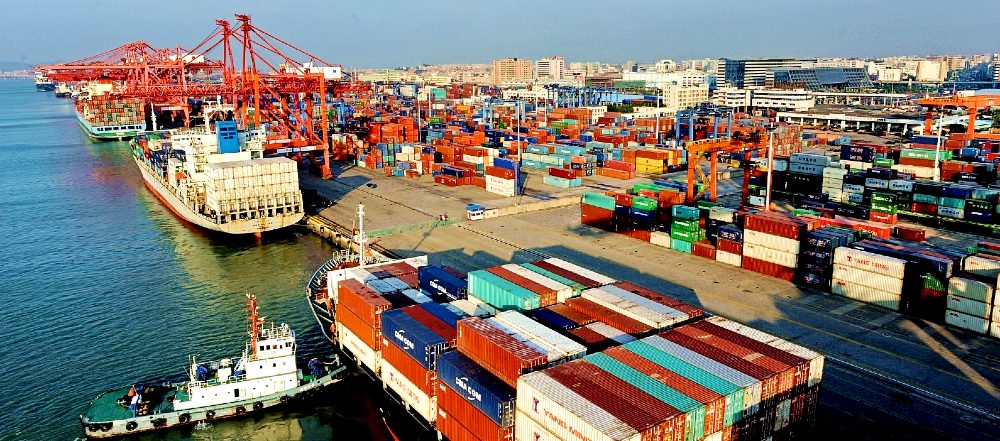
The Nigerian Maritime Law Association, NMLA, has called for a robust legal and regulatory framework to ensure the successful implementation of the National Single Window, NSW, project in Nigeria.
According to the association, the National Single Window initiative of the Federal Government is designed to improve operational efficiency through faster cargo clearance processes, greater transparency in regulatory procedures, and enhanced coordination among government agencies involved in maritime trade and port operations.
Speaking at the 4th Breakfast meeting of the NMLA, Mr. Mike Igbokwe, Senior Advocate of Nigeria, SAN, who is also President of the group said that the initiative represents a major shift towards the digitalisation of processes within the maritime sector and is expected to promote ease of doing business, reduce bottlenecks at the ports, and strengthen Nigeria’s trade competitiveness.
Speaking on the theme of the meeting, “Regulatory Reforms and the National Single Window (NSW) Project,” Igbokwe noted that Nigeria’s maritime sector is characterised by the involvement of multiple regulatory agencies with overlapping responsibilities, resulting in duplication of functions, efforts and costs.
He further observed that the traditional processes within the sector remain fragmented and largely manual, leading to delays in cargo clearance, increased cost of doing business, rising inflation, and higher prices of imported raw materials and manufactured goods.
He said: “NSW will be of benefit to members of NMLA as maritime lawyers and IT experts as there will be a need to update regulatory frameworks, data governance and cybersecurity considerations, contractual and liability adjustments in trade transactions and greater reliance on electronic records and systems.”
“Nigeria does not lack good regulatory frameworks but usually lacks the political will and determination for implementing, monitoring and supervising the legislation.
“The National Single Window Project represents a transformative regulatory reform capable of modernizing Nigeria’s trade and maritime sector. If effectively implemented, it can significantly improve efficiency, transparency, revenue generation, and ease of doing business.
“However, its success will depend not only on technology, but also on strong political will, institutional cooperation, legal reforms, and sustained stakeholder engagement.”
The post Maritime lawyers seeks stronger legal framework for NSW appeared first on Vanguard News.


Banks, insurers, others record 8.5% growth in GDP to N1.93trn

Credit to government surges 65.6% to N39.6trn
Maritime lawyers seeks stronger legal framework for NSW

Simi Sanya and Femi Dapson Are Now Legally Married and It Is Beautiful to See

FCT Area Council Election: Live results from polling units

Premier League Set-Piece Goals (2025/2026)
-
 Sports2 days ago
Nottingham Forest’s Evangelos Marinakis Involved in Fight at Basketball Game
-
 Sports1 day ago
Arsenal and Spurs Stars Celebrate End of Season in Same Nightclub
-
 Politics2 days ago
BREAKING: Ex-Chief of Staff to APC National Chairman joins NDC after losing 2027 ticket
-
 Politics2 days ago
Gombe PDP aspirants oppose Pantami’s alleged entry into governorship race
-
 Entertainment2 days ago
After Party? Make It Chic and Glam With This Stunning Bridal Look
-
 Entertainment2 days ago
Be the Best Dressed Guest With These 10 Elegant WeddingFlow Outfits That Deliver Pure Glamour
-
 Politics2 days ago
ADC presidential primary: Why Atiku is best choice – Buhari’s ex-aide, Onochie
-
 Business2 days ago
Cardoso recommits to orthodox monetary policy, transparency