
Business
Importers pay N100,000 daily demurrage over NSW delays — Customs agents


…We didn’t promise one-day approval — NSW
By Efe Onodjae
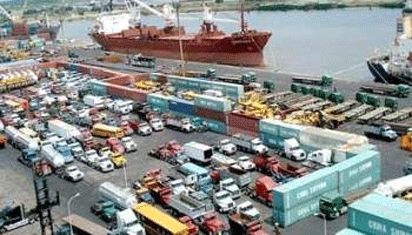
Importers and clearing agents have raised concerns over mounting demurrage costs at Nigerian seaports, blaming delays linked to the National Single Window (NSW) platform for prolonged cargo clearance processes.
The National President of the National Council of Managing Directors of Licensed Customs Agents, NCMDLCA, Lucky Amiwero, along with other customs agents, alleged that some importers now pay as much as N100,000 daily in demurrage to shipping companies and terminal operators while awaiting approvals from regulatory agencies.
Speaking with Vanguard, Amiwero described the platform as ineffective, arguing that it has complicated rather than streamlined port operations.
According to him, delays in obtaining approvals from agencies such as the National Agency for Food and Drug Administration and Control (NAFDAC) and the Standards Organisation of Nigeria (SON) have worsened congestion and increased the cost of doing business.
He argued that the current structure of the National Single Window falls short of the globally accepted model of a true single-window platform.
“The National Single Window is not effective. What we have now is more of a multiple-window system that duplicates Customs functions,” he said.
“A proper single window should involve single administration, single transaction, and single delivery. Once processes are harmonised at the backend, cargo clearance should be seamless.
“But importers are still required to interact separately with agencies like NAFDAC and SON. That defeats the purpose of a single-window system.”
Amiwero further alleged that the Nigerian Revenue Service, which is driving the initiative, lacks the expertise required for customs and import procedures, insisting that tax administration and customs operations should remain separate.
According to him, consignments are often trapped at terminals for weeks due to delays in approvals and documentation processing, leading to huge financial losses for importers.
“Some importers are paying close to N100,000 daily in demurrage because their cargoes remain uncleared for two or three weeks. Government needs to review the system and properly harmonise the process,” he added.
Responding to the allegations, the Director of Communications for NSW, Tola Fakolade, said criticisms of the platform largely stem from resistance to stricter compliance procedures introduced under the system.
He clarified that the first phase of the initiative was never designed to guarantee one-day approvals for all regulatory processes.
“What we promised was a unified entry point where importers and stakeholders can process documentation seamlessly without moving from one agency office to another,” he said.
Fakolade acknowledged existing implementation challenges, particularly inherited backlogs within some agencies, but noted that efforts were ongoing to resolve them.
“For NAFDAC specifically, there was already a backlog before the National Single Window went live, and that accounts for some of the delays currently being experienced. However, the agency is working to clear the pending applications,” he added.
The post Importers pay N100,000 daily demurrage over NSW delays — Customs agents appeared first on Vanguard News.

By Emma Ujah
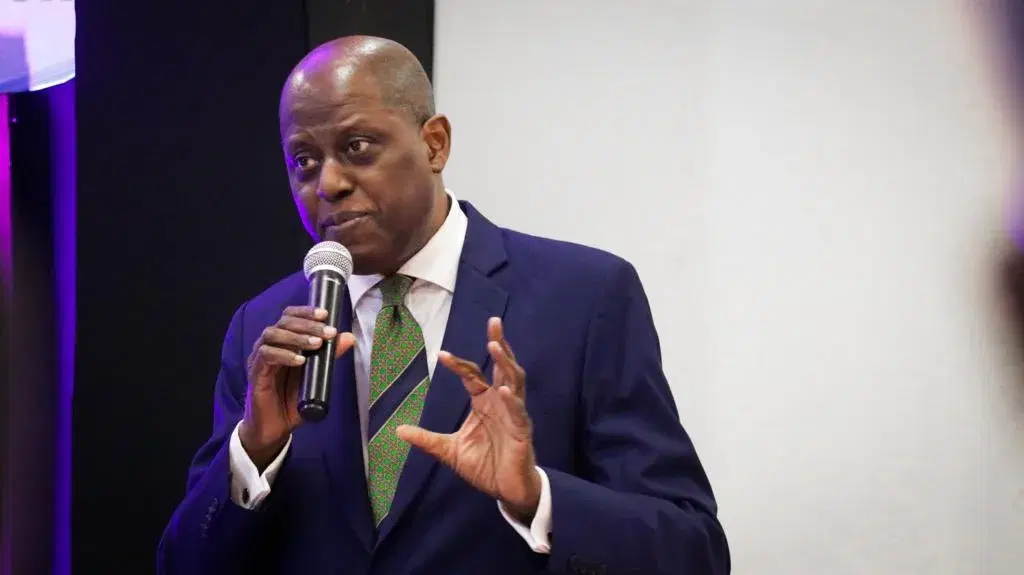
The Governor of the Central Bank of Nigeria, Olayemi Cardoso, has reaffirmed the apex bank’s commitment to orthodox monetary policy, transparency and evidence-based decision-making, warning against renewed calls for interventionist programmes.
Speaking at the opening of the Monetary Policy Committee workshop in Abuja, Mr Cardoso said: “The ongoing reforms are critical to restoring confidence in the Nigerian economy and strengthening macroeconomic stability.”
Reflecting on the state of the economy at the inception of the current administration, he said the bank inherited “weakened institutional autonomy, reduced policy credibility, and reliance on unorthodox monetary tools.”
According to him, “the challenges blurred the distinction between fiscal and monetary responsibilities, reduced transparency, and limited the effectiveness of policy interventions.”
He added: “The foreign exchange market was opaque and inefficient, while weak fiscal-monetary coordination further constrained economic outcomes.”
The CBN governor said the structural distortions contributed to “rising inflationary pressures, exchange-rate volatility, and erosion of investor and public confidence,” but stressed that reforms introduced by the current management were reversing the trend.
“We have restored a more orthodox approach to monetary policy under the current MPC framework, with renewed emphasis on conventional instruments and the policy rate as the primary signalling tool,” he stated.
Mr Cardoso further said: “Improvements in liquidity management, forward guidance and policy communication have enhanced transparency and helped anchor expectations among households, businesses and investors.”
According to him, “inflation, while still elevated and requiring close monitoring, has begun to moderate, while exchange-rate stability has improved.”
Reiterating the bank’s stance, he cautioned against interventionist measures, saying: “Such programmes previously distorted the Bank’s balance sheet. The institution’s renewed credibility over the past two and a half years has largely stemmed from disciplined reliance on conventional policy tools.”
He added: “Decision-making processes are increasingly anchored in data-driven analysis and structured deliberation, while communication practices have become more consistent and predictable.”
The governor also reaffirmed the apex bank’s commitment to “transparency, evidence-based policymaking and institutional strengthening” as key pillars for achieving sustainable macroeconomic stability.
The post Cardoso recommits to orthodox monetary policy, transparency appeared first on Vanguard News.

•Provision for insurance removed in new NCAA regulation — Experts
By Rosemary Iwunze
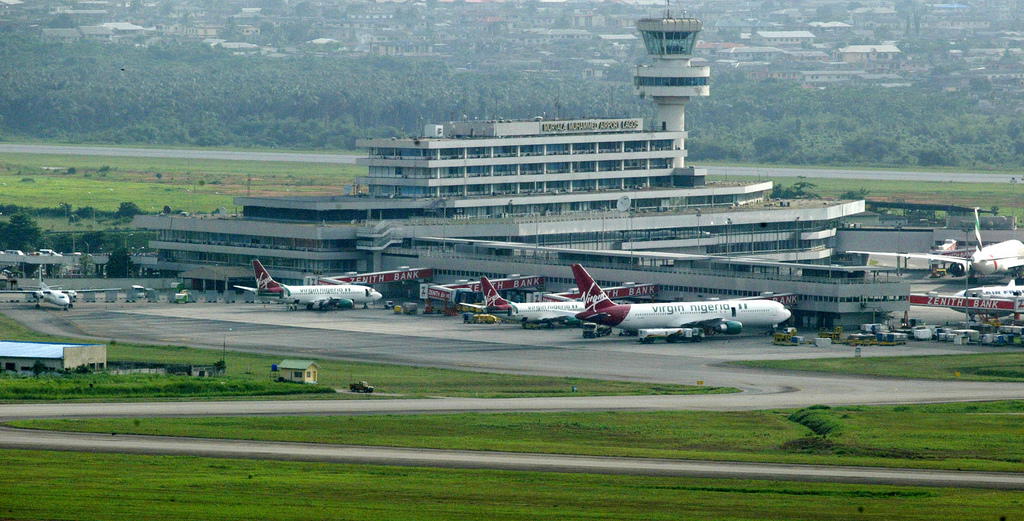
Indications have emerged that the Federal Government may shoulder the full financial burden arising from the recent fire incident at the international terminal of the Murtala Muhammed International Airport, following the apparent absence of insurance cover for Nigerian airports.
The airport is managed by the Federal Airports Authority of Nigeria, FAAN.
Findings by Financial Vanguard revealed that several months after the incident no insurance company has reported claims exposure or liability in relation to the airport fire disaster, raising concerns over the lack of insurance protection for critical aviation infrastructure in the country.
The development implies that government will not only finance the rehabilitation of the burnt terminal estimated at over one billion Naira, but will also be responsible for compensating affected victims and settling all medical expenses resulting from the incident.
The situation comes despite an earlier approval by the Federal Executive Council of N712.26 billion for the comprehensive rehabilitation of Terminal One of the airport before the fire outbreak.
Commissioner for Insurance, Mr. Olusegun Omosehin said that no insurance company has paid claims in respect of the airport fire incident.
He stated: “I am not aware of the entities that covered the airport. If there was cover on that property, claims must be paid. That is where we stand.”
Industry experts noted that while aviation regulations make it compulsory for all aircraft operating in the country to maintain insurance cover, there is no regulatory requirement compelling airport operators to insure airport terminals and related infrastructure.
The development has again brought to the fore concerns over risk management practices in the aviation sector, especially with regard to protection of strategic national assets against fire and other operational hazards.
Financial performance
At the backdrop of non-coverage of the airport infrastructure, Financial Vanguard findings indicate steady growth in the combined aviation and marine insurance premiums.
But industry operators said most of the premium comes from the marine segment, while aviation premium is mostly from aircraft covers.
The strongest growth in the past five years came in 2024. While the insurance industry total premium expanded by 50 aviation and marine insurance premium surged by 73.9 per cent to N128.2 billion from N73.7 billion. Claims profile rose significantly during the year as aviation and marine claims rose by 106 per cent to N64.2 billion from N31.1 billion.
In 2025, the industry sustained its expansion trajectory as total premium income increased by 47.5 per cent while aviation and marine insurance premium rose by 45.9 per cent to N187.1 billion from N128.2 billion.
Operators’ insight
Speaking on the aviation segment insurance both aviation and insurance experts lament that the airports are not insured.
An aviation analyst, Grp. Capt. John Ojikutu, retd, stated that the absence of comprehensive insurance coverage for these airports could expose government to huge financial losses and compensation claims in the event of major disasters.
Ojikutu stated: “Statutory regulatory requirements should mandate airports to have a comprehensive insurance cover but that is not the case in the country today.
“Earlier provisions of the Nigerian Civil Aviation Regulations required international airports to maintain insurance coverage of about $250 million, while domestic airports were expected to carry coverage of around $100 million. “The regulations that came out in 2012, which were reviewed in 2022, made provision for our international airports to be insured for $250 million.
“However, in the new regulation, the insurance is not there. Whose fault? I will hold the Nigerian Civil Aviation Authority, NCAA, responsible.
“The impact of an uninsured airport would be huge financially, especially for government. Government would have to start allocating large sums of money to rebuild such infrastructure. Those who do business at the facility could also be forced out of business.”
Also speaking, former General Manager, Public Affairs for defunct Nigeria Airways, Mr. Chris Aligbe, who is now Chief Executive Officer of Belujane Konzult, stated that it is important that airports are insured.
He said: “It is very important that we insure our airports because in other countries, the amount of money that is being used to develop or renovate airports is usually not spent by governments these days.
“A few countries, who have money to spend, like the Middle East countries do. In Africa, there is Angola. Angola is an oil producing country, but I think it is not even doing so itself.
“Some other West African countries have done theirs themselves, but these are countries with just one airport. Their population is not very large, but the fact is that while new developments have shown that concession is one of the best ways to finance airport development, these airports must be insured.”
Also speaking, Mr. Sunny Adeda, former President of the Chartered Insurance Institute of Nigeria, CIIN, said that aviation as an industry is international in nature and therefore aviation insurance is affected in the international market more than any other branch of insurance.
He said: “The Nigeria aviation sector ensures that every aircraft operating in the Nigeria airspace is insured, but such cannot be said of the airports.
“Aircrafts are high valued and therefore value at risk is quite high. You need an insurer with a lot of financial strength to play in this class of business.
“Even locally, strict regulations by the insurance regulator are in place for any operator that wants to participate in aviation business.
“The current local legislation in Nigeria is the Nigerian Civil Aviation Authority (NCAA). A carrier must submit his insurance certificate to the NCAA before they can operate a domestic flight.
“Civil aviation is a highly regulated industry all over the world. In Nigeria the NCAA is the regulator. Every single technical personnel, equipment and airport must be certified and monitored by competent regulatory agencies. NCAA oversees the activities of all airlines, their pilots and crew, airport, navigation aids, all service providers including training institutions.
“The NCAA issues guideline requirements for grant of Airline Operating Permit, AOP. Amongst other requirement is that every airline operator providing air transport services for hire/reward must have adequate insurance for passenger/cargo and third party.
“While these strict regulations are in place to keep airlines in check, the regulation of the airports is just left to the whims and caprices of FAAN, which is not supposed to be so.”
Also speaking, a former President of the Nigerian Council of Registered Insurance Brokers, NCRIB, Mr. Babajide Olatunde-Agbeja, said that the airports used to be insured about 10-12 years ago, but he is not certain about the current status.
Olatunde-Agbeja said: “I recall that the airports used to be insured about 10-12 years ago, but I cannot say for certain now. Consequently, the full brunt of renovating the airport will fall on the shoulders of government, which shouldn’t be.
“Look at all the fires that are happening in the markets. Markets are not insured. And everything falls on government. In many instances, state governments would say, ‘don’t worry, we will rebuild the market’. But what of the contents lost? The billions of Naira of contents lost in those market fires?
“We need to ensure that government assets are insured. When I was president of NCRIB, we liaised with government and they issued a circular mandating all parastatals, ministries, departments, and agencies to ensure that all government assets are insured. I don’t see any reason why government assets should not be insured. Government must insure all their assets, personnel, and liability.”
The post No insurance cover for airports, exposes FG to losses, compensation claims appeared first on Vanguard News.

By Peter Egwuatu
After the sustained rally recorded in the previous weeks of May 2026, profit-taking by investors last week have taken toll on the Nigerian stock market.
Analysts noted that the profit-taking was mostly in major blue chip and mid-cap companies that had paid dividends to their shareholders.
A review of activity on the Nigeria Exchange Limited, NGX, last week, showed that sell pressures on BUA Cement resulted in its share price decline by 3.5%. GTCO recorded a 1.2% decline, Dangote Sugar decline 4.4%, NASCON went down 5.4% and UACN down by 5.0% to drag the NGX All Share Index, ASI, lower by 0.24% Week-On-Week, WoW, to 249,540.75 points from 250,339.92 points the previous week.
In the same manner, another major market indicator, NGX market capitalisation shed over N366 billion to close at N260.077 trillion from N160.443 trillion in the previous week.
Consequently, the Month-to-Date, MtD and Year-to-Date, YtD returns moderated to 3.0% and 60.4%, respectively.
On trading activity, total volume and value traded declined by 50.2% WoW and 56.6% WoW respectively.
Across sectors, the Insurance Index declined by -1.8%, Industrial Goods Index -1.2% and Consumer Goods Index -0.8%, while the Banking Index inched up by 1.1% and Oil & Gas Index 0.1%.
In the international commodities market, crude oil prices fell sharply after comments from Donald Trump suggesting that negotiations with Iran had entered the final phase.
Commenting on the future outlook, analysts at InvestData Consulting Limited, said: “The decline in crude prices eased immediate fears of prolonged supply disruption in the Middle East, although geopolitical tensions in the region continued to keep investors cautious. Concerns over global oil supply and possible disruptions around the Strait of Hormuz remain significant factors influencing energy markets. For Nigeria, movements in crude oil prices remain critical due to their impact on foreign exchange earnings, government revenue and overall macroeconomic stability. Consequently, investors in the domestic equities market are expected to continue monitoring developments in the global oil market alongside exchange rate trends and monetary policy direction.
“In the near term, the market may continue to experience mixed trading sessions as investors react to profit-taking opportunities, corporate disclosures, fixed-income market yields and global economic developments.”
For analysts at Cordros Capital, they said :”Looking ahead, we expect market activity to remain relatively subdued in the near term in the absence of a major positive catalyst to drive sentiment. Nonetheless, we do not rule out selective bargain hunting across fundamentally sound names following the recent moderation in prices.
The post Stock market slides as profit-taking hits blue chip companies appeared first on Vanguard News.


2027 Presidency: How far can PDP-APM alliance take Makinde?

ADC presidential primary: Why Atiku is best choice – Buhari’s ex-aide, Onochie

2027: Lamido’s son emerges PDP gov’ship candidate in Jigawa

Simi Sanya and Femi Dapson Are Now Legally Married and It Is Beautiful to See

FCT Area Council Election: Live results from polling units

Premier League Set-Piece Goals (2025/2026)
-

 Sports22 hours ago
Tyson Fury and Zlatan Ibrahimovic ‘Planning’ to Buy Morecambe FC
-
 Sports2 days ago
Bernardo Silva Names Anfield as Premier League Stadium With Best Atmosphere
-

 Sports1 day ago
Rico Verhoeven Reacts to Judges’ Scorecards Following Oleksandr Usyk Defeat
-
 Sports1 day ago
Toto Wolff Names His F1 GOAT Out of Lewis Hamilton and Michael Schumacher
-
 Entertainment2 days ago
Liquorose Is Serving Bold Style, Soft Glam and Main Character Energy in These Eye-Catching Looks
-
 Business2 days ago
Court grants CBN sole ownership of eNaira platform
-
 Health2 days ago
Can diabetics take lactulose for constipation?
-
 Metro2 days ago
Troops foil ISWAP, Boko Haram attack in North East