
Business
Stock market slides as profit-taking hits blue chip companies


By Peter Egwuatu
After the sustained rally recorded in the previous weeks of May 2026, profit-taking by investors last week have taken toll on the Nigerian stock market.
Analysts noted that the profit-taking was mostly in major blue chip and mid-cap companies that had paid dividends to their shareholders.
A review of activity on the Nigeria Exchange Limited, NGX, last week, showed that sell pressures on BUA Cement resulted in its share price decline by 3.5%. GTCO recorded a 1.2% decline, Dangote Sugar decline 4.4%, NASCON went down 5.4% and UACN down by 5.0% to drag the NGX All Share Index, ASI, lower by 0.24% Week-On-Week, WoW, to 249,540.75 points from 250,339.92 points the previous week.
In the same manner, another major market indicator, NGX market capitalisation shed over N366 billion to close at N260.077 trillion from N160.443 trillion in the previous week.
Consequently, the Month-to-Date, MtD and Year-to-Date, YtD returns moderated to 3.0% and 60.4%, respectively.
On trading activity, total volume and value traded declined by 50.2% WoW and 56.6% WoW respectively.
Across sectors, the Insurance Index declined by -1.8%, Industrial Goods Index -1.2% and Consumer Goods Index -0.8%, while the Banking Index inched up by 1.1% and Oil & Gas Index 0.1%.
In the international commodities market, crude oil prices fell sharply after comments from Donald Trump suggesting that negotiations with Iran had entered the final phase.
Commenting on the future outlook, analysts at InvestData Consulting Limited, said: “The decline in crude prices eased immediate fears of prolonged supply disruption in the Middle East, although geopolitical tensions in the region continued to keep investors cautious. Concerns over global oil supply and possible disruptions around the Strait of Hormuz remain significant factors influencing energy markets. For Nigeria, movements in crude oil prices remain critical due to their impact on foreign exchange earnings, government revenue and overall macroeconomic stability. Consequently, investors in the domestic equities market are expected to continue monitoring developments in the global oil market alongside exchange rate trends and monetary policy direction.
“In the near term, the market may continue to experience mixed trading sessions as investors react to profit-taking opportunities, corporate disclosures, fixed-income market yields and global economic developments.”
For analysts at Cordros Capital, they said :”Looking ahead, we expect market activity to remain relatively subdued in the near term in the absence of a major positive catalyst to drive sentiment. Nonetheless, we do not rule out selective bargain hunting across fundamentally sound names following the recent moderation in prices.
The post Stock market slides as profit-taking hits blue chip companies appeared first on Vanguard News.


By Godwin Oritse
A retired Customs officer, Seyi Adeyemo, has raised concerns over the loss of billions in revenue allegedly caused by the Nigerian government’s trade restrictions at the Seme Border, despite the multi-billion-naira infrastructure upgrades supported by the World Bank.
Adeyemo also stated that the border post remains far below its economic potential, as ongoing trade restrictions continue to encourage smuggling and deprive the national treasury of significant revenue.
He explained that for years, Nigeria’s trade policy has relied heavily on a blunt and increasingly ineffective tool. Although aimed at protecting local industries and curbing illegal imports, developments at the busy yet troubled Seme Border continue to show that bans are rarely the most rewarding strategy for a country seeking to boost revenue generation.
Stretching between Lagos and the Republic of Benin, Seme is arguably Nigeria’s most modern and accessible land gateway.
Recognising its strategic importance, the World Bank recently funded a comprehensive facelift of the border station, transforming it into a model of efficient cross-border infrastructure. Beyond international financing, private stakeholders—from logistics firms to regional trade bodies—have invested heavily in bonded terminals, warehouses, and trailer parks tailored to facilitate seamless trade.
He said:”The infrastructure is there. The technology is ready. The storage capacity is unmatched. Yet, Seme remains underutilised.
“Despite these massive investments, the Federal Government has maintained a stranglehold on the movement of certain high-demand goods, most notably used vehicles (*Tokunbo*). The official justification is the need to curb smuggling and encourage local assembly. However, the reality on the ground presents a stark paradox: diehard smugglers, undeterred by the bans, simply move their operations into the “black market” or through porous coastal routes. Meanwhile, the state bleeds the very revenue it desperately needs to fund the national budget.
“If these restrictions were replaced with a transparent, technology-driven tariff system, Nigeria could collect billions of naira in legitimate import duties. These are funds that currently disappear into the pockets of non-state actors or are lost entirely to the Republic of Benin’s economy. In an era where the government is scrambling to diversify revenue away from oil, leaving such a lucrative tap closed is an economic own-goal.
“The deeper issue is a lack of strategic flexibility. Border management in Nigeria has defaulted to the easiest path: restriction. But in economics, the “easy” path is often the most expensive. By failing to weigh the trade-offs—enforcement costs versus revenue potential, and informal smuggling versus formal trade facilitation—the government is undermining the very modernisation efforts championed by its international partners.
“The Seme Border should be a beacon of legitimate, revenue-yielding trade for the West African sub-region. It has the warehouses, the data collection hubs, and the strategic location to become a primary engine of the Nigerian Customs Service. What it lacks is a policy rethink.
“To fix the economy, we must fix the borders. It is time to move beyond the era of bans and ask a fundamental question: What if the most effective way to stop smuggling is to stop blocking trade and start taxing it efficiently”
The post Why Nigeria keeps loosing revenue at Seme Border —Seyi Adeyemo appeared first on Vanguard News.

…We didn’t promise one-day approval — NSW
By Efe Onodjae
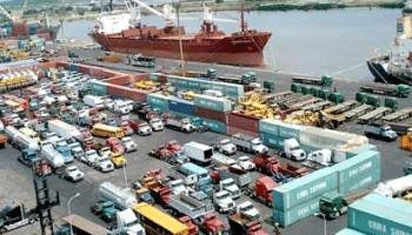
Importers and clearing agents have raised concerns over mounting demurrage costs at Nigerian seaports, blaming delays linked to the National Single Window (NSW) platform for prolonged cargo clearance processes.
The National President of the National Council of Managing Directors of Licensed Customs Agents, NCMDLCA, Lucky Amiwero, along with other customs agents, alleged that some importers now pay as much as N100,000 daily in demurrage to shipping companies and terminal operators while awaiting approvals from regulatory agencies.
Speaking with Vanguard, Amiwero described the platform as ineffective, arguing that it has complicated rather than streamlined port operations.
According to him, delays in obtaining approvals from agencies such as the National Agency for Food and Drug Administration and Control (NAFDAC) and the Standards Organisation of Nigeria (SON) have worsened congestion and increased the cost of doing business.
He argued that the current structure of the National Single Window falls short of the globally accepted model of a true single-window platform.
“The National Single Window is not effective. What we have now is more of a multiple-window system that duplicates Customs functions,” he said.
“A proper single window should involve single administration, single transaction, and single delivery. Once processes are harmonised at the backend, cargo clearance should be seamless.
“But importers are still required to interact separately with agencies like NAFDAC and SON. That defeats the purpose of a single-window system.”
Amiwero further alleged that the Nigerian Revenue Service, which is driving the initiative, lacks the expertise required for customs and import procedures, insisting that tax administration and customs operations should remain separate.
According to him, consignments are often trapped at terminals for weeks due to delays in approvals and documentation processing, leading to huge financial losses for importers.
“Some importers are paying close to N100,000 daily in demurrage because their cargoes remain uncleared for two or three weeks. Government needs to review the system and properly harmonise the process,” he added.
Responding to the allegations, the Director of Communications for NSW, Tola Fakolade, said criticisms of the platform largely stem from resistance to stricter compliance procedures introduced under the system.
He clarified that the first phase of the initiative was never designed to guarantee one-day approvals for all regulatory processes.
“What we promised was a unified entry point where importers and stakeholders can process documentation seamlessly without moving from one agency office to another,” he said.
Fakolade acknowledged existing implementation challenges, particularly inherited backlogs within some agencies, but noted that efforts were ongoing to resolve them.
“For NAFDAC specifically, there was already a backlog before the National Single Window went live, and that accounts for some of the delays currently being experienced. However, the agency is working to clear the pending applications,” he added.
The post Importers pay N100,000 daily demurrage over NSW delays — Customs agents appeared first on Vanguard News.

By Emma Ujah
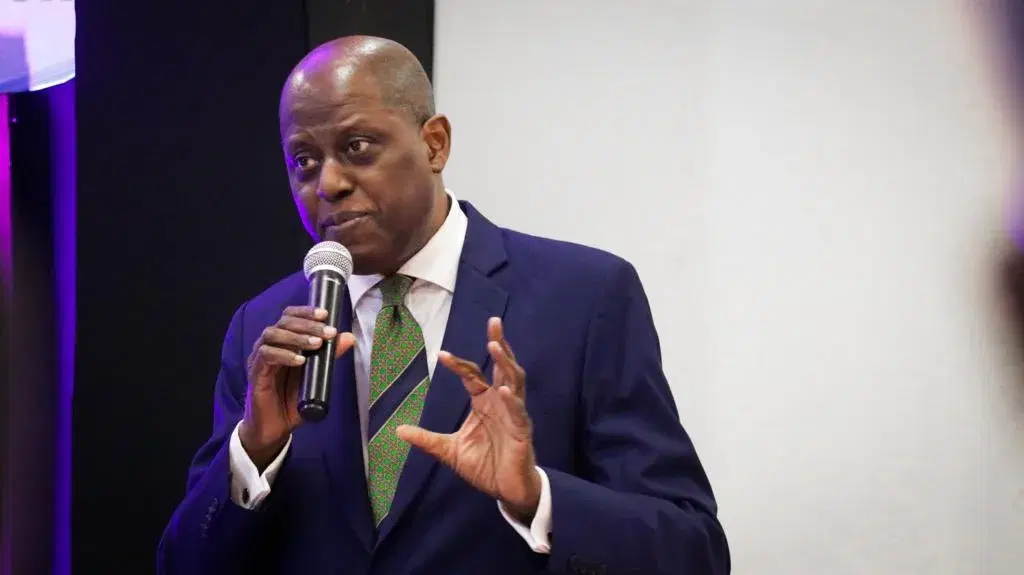
The Governor of the Central Bank of Nigeria, Olayemi Cardoso, has reaffirmed the apex bank’s commitment to orthodox monetary policy, transparency and evidence-based decision-making, warning against renewed calls for interventionist programmes.
Speaking at the opening of the Monetary Policy Committee workshop in Abuja, Mr Cardoso said: “The ongoing reforms are critical to restoring confidence in the Nigerian economy and strengthening macroeconomic stability.”
Reflecting on the state of the economy at the inception of the current administration, he said the bank inherited “weakened institutional autonomy, reduced policy credibility, and reliance on unorthodox monetary tools.”
According to him, “the challenges blurred the distinction between fiscal and monetary responsibilities, reduced transparency, and limited the effectiveness of policy interventions.”
He added: “The foreign exchange market was opaque and inefficient, while weak fiscal-monetary coordination further constrained economic outcomes.”
The CBN governor said the structural distortions contributed to “rising inflationary pressures, exchange-rate volatility, and erosion of investor and public confidence,” but stressed that reforms introduced by the current management were reversing the trend.
“We have restored a more orthodox approach to monetary policy under the current MPC framework, with renewed emphasis on conventional instruments and the policy rate as the primary signalling tool,” he stated.
Mr Cardoso further said: “Improvements in liquidity management, forward guidance and policy communication have enhanced transparency and helped anchor expectations among households, businesses and investors.”
According to him, “inflation, while still elevated and requiring close monitoring, has begun to moderate, while exchange-rate stability has improved.”
Reiterating the bank’s stance, he cautioned against interventionist measures, saying: “Such programmes previously distorted the Bank’s balance sheet. The institution’s renewed credibility over the past two and a half years has largely stemmed from disciplined reliance on conventional policy tools.”
He added: “Decision-making processes are increasingly anchored in data-driven analysis and structured deliberation, while communication practices have become more consistent and predictable.”
The governor also reaffirmed the apex bank’s commitment to “transparency, evidence-based policymaking and institutional strengthening” as key pillars for achieving sustainable macroeconomic stability.
The post Cardoso recommits to orthodox monetary policy, transparency appeared first on Vanguard News.


APC primaries: Breakdown of Tinubu’s victory across states

Why Nigeria keeps loosing revenue at Seme Border —Seyi Adeyemo

2027 Presidency: How far can PDP-APM alliance take Makinde?

Simi Sanya and Femi Dapson Are Now Legally Married and It Is Beautiful to See

FCT Area Council Election: Live results from polling units

Premier League Set-Piece Goals (2025/2026)
-

 Sports23 hours ago
Tyson Fury and Zlatan Ibrahimovic ‘Planning’ to Buy Morecambe FC
-
 Sports2 days ago
Bernardo Silva Names Anfield as Premier League Stadium With Best Atmosphere
-

 Sports1 day ago
Rico Verhoeven Reacts to Judges’ Scorecards Following Oleksandr Usyk Defeat
-
 Sports2 days ago
Toto Wolff Names His F1 GOAT Out of Lewis Hamilton and Michael Schumacher
-
 Business2 days ago
Court grants CBN sole ownership of eNaira platform
-
 Health2 days ago
Can diabetics take lactulose for constipation?
-
 Health2 days ago
Why spicy foods cause diarrhea?
-

 Politics18 hours ago
Nasarawa 2027: Labour Party clears Labaran Maku, Gaza, others for primaries