
Business
Finance Ministry, contractors clash again over outstanding debt


•We processed N700bn payments to 1,240 local contractors – Ministry
•We have not received any money – Contractors
By Emma Ujah, Abuja Bureau Chief & Progress Godfrey
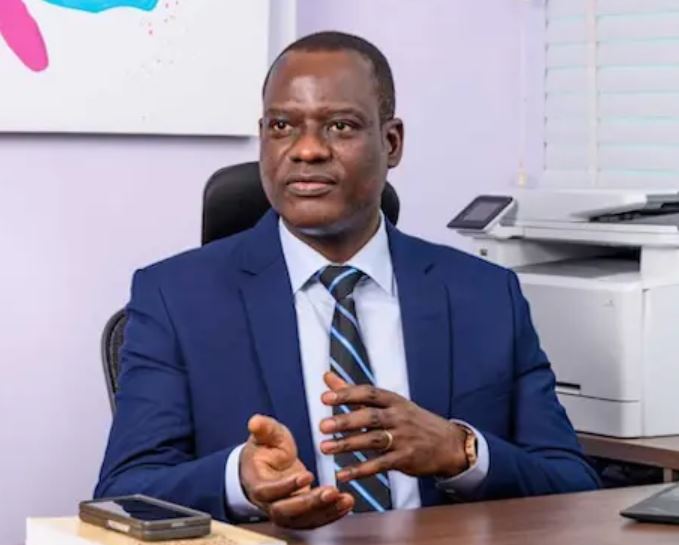
At the backdrop of a resumption of protests by contractors, the Minister of Finance and Coordinating Minister of the Economy, Mr. Taiwo Oyedele, has said it approved payments to more than 1,240 contractors.
According to a statement signed by Efe Ovuakporie, Head Information and Public Relations of the Ministry of Finance, “Contractors prioritised for payment in the most recent batch are those with verified claims in the region of N100 million or less.
“The release of funds is expected to provide immediate relief to hundreds of businesses, enabling them to return to project sites, pay workers, settle suppliers, meet financial commitments, and support economic activity across the country.
“Over the past few months, the Federal Government has processed payments exceeding N700 billion across various categories of verified obligations owed to local contractors.
“Within the month of May alone, approximately ¦ 436.6 billion in transactions were processed, demonstrating a significant acceleration in payment activity aimed at unlocking liquidity and supporting economic growth.
“By prioritising a large number of smaller contractors rather than concentrating payments among a few large beneficiaries, the Government is broadening the economic impact of these disbursements, supporting businesses across different sectors and regions of the country.”
But the contractors under the auspices of All Indigenous Contractors Association of Nigeria (AICAN) resumed protest at the Federal Ministry of Finance Headquarters, Abuja, yesterday saying the demonstration followed frustrations over long-standing arrears tied to 2024 project executions.
Speaking during the protest, the National President of AICAN, Mr Jackson Nwosu, said about 85 per cent of contractors were still unpaid, despite earlier assurances from government officials that funds were being processed.
He explained that the association had engaged with officials of the Ministry of Finance and the Office of the Accountant General, where they were informed that about N40 billion would initially be released to beneficiaries.
Nwosu said contractors had already submitted verified payment lists across different categories and were expecting funds to reflect in accounts by the previous Friday, but the expectation was not met.
“We were expecting all the payments to drop into beneficiaries’ accounts by Friday, but that did not happen. Only a few persons, from what we have seen, have received payments,” he said.
National Secretary of the association, Mr Babatunde Seun, also questioned reports circulating that N700 billion had been paid to contractors, insisting that members had not seen any evidence of such disbursement.
Responding to the protesters, Permanent Secretary (Special Duties) at the Ministry of Finance, Mr Mohammed Sanusi, clarified that approval of funds does not equate to immediate payment, noting that the government was still working through outstanding liabilities.
“Some of these monies have been approved, please get it clear, approval is different from payment, we had a meeting with the Accountant General, we are working on contractors’ payment.
“N700 Billion has been approved by the Federal Government for payment to the contractors, extra fund of N70 Billion has been assigned for payment to this association. Payment will start dropping any moment from now,” Sanusi assured.
The post Finance Ministry, contractors clash again over outstanding debt appeared first on Vanguard News.

By Godwin Oritse
A former Director of Shipping Development and Cabotage, Mr. Boniface Igwe, has warned that the continued dominance of foreign interests in Nigeria’s territorial waters poses a serious threat to the country’s internal security.
Igwe, in his forthcoming book, Cabotage Law and Practice, argued that the growing presence and dominance of foreign operators in Nigeria’s coastal waters could undermine national security and the country’s maritime sovereignty.
He said, ”apart from the economic opportunities inherent in the practice of reserving coastal shipping trade for indigenous operators, the uncontrolled foreign domination of trade in a country’s coastal waters portends grave national security implementation for that country.”
The unreleased book reads in part: “The idea of countries creating captive markets for their indigenous stakeholders for the purpose of developing capacity in critical sector of their economies and making them globally competitive is commonplace.
“The historical reason for this interventionist policy template ranges from economic, through political, to security considerations. There is no gainsaying the criticality of the maritime industry to the economic growth of Nigeria as it provides the interface between it and the oil and gas industry which is the lifeblood of the nation’s economy.
“Statistics revealed that an average cargo traffic of 152 million metric tonnes approximating $5billion in freight earnings was generated annually in the country and close to 90 percent of this income was earned by foreign controlled businesses.”

By Emma Ujah, Abuja Bureau Chief
The Ag. Director of Corporate Communications of the Central Bank of Nigeria (CBN), Mrs. Hakama Sidi-Ali, has won the 2026 edition of the National Spokespersons Award.
The recognition was announced during the 6th National Spokespersons Awards and the 4th Economic Confidential Annual Lecture, organised by Image Merchants Promotion Limited (IMPR), publishers of PRNigeria, Economic Confidential and Spokespersons Digest, in Abuja at the weekend.
The organisers stated: “With the latest honour, Sidi-Ali completed an unprecedented hat-trick at the National Spokespersons Awards, becoming the first communications professional to progress from winning a sector-specific award twice consecutively to claiming the overall Spokesperson of the Year title.
“Her achievement comes just three years after she broke another historic barrier when CBN Governor Olayemi Cardoso appointed her in 2023 as the first female spokesperson in the Central Bank’s 66-year history.”
In 2024, Mrs. Sidi-Ali won the Outstanding Spokesperson – Banking Sector award, becoming the first female banking communicator to receive the honour and retained the same title in 2025.
The climax came in 2026, when the awards jury elevated her to Spokesperson of the Year, recognising her influence beyond the banking industry and acknowledging her role in shaping national economic communication, strengthening public confidence in the Central Bank and projecting Nigeria’s monetary policy on the global stage.
Image Merchants said the award followed a rigorous evaluation process based on four key criteria: impact, innovation and originality, campaign reach, and quality of evidence.
“The jury acknowledged her efforts in building a proactive communications architecture at the apex bank through regular Monetary Policy Committee briefings, stakeholder engagements, investor relations, media management and international advocacy.
“These initiatives also earned international recognition, with the CBN’s communications campaign emerging as a finalist at the 2026 International Public Relations Association (IPRA) Golden World Awards,” the organisers said.
Earlier in the year, Sidi-Ali was honoured as the African Iconic Female Spokesperson of the Year at the African International Women Recognition Awards (AIWRA) 2026, following a continent-wide public voting process Chairperson of the Awards Jury, Professor Saudat Abdulbaqi, disclosed that the 2026 edition attracted 171 nominations from across the country.
She explained that after an initial screening, only entries meeting the required standards of clarity, measurable impact and verifiable evidence progressed to subsequent stages of evaluation, eventually producing 30 finalists across 15 categories.
Speaking at the event, Alhaji Yushau A. Shuaib, Chief Executive Officer of IMPR, said the National Spokespersons Awards and the Economic Confidential Annual Lecture were established to promote informed national discourse, celebrate professional excellence and strengthen strategic communication in Nigeria.

By Peter Egwuatu
HBM Nigeria Plc, formerly Lafarge Africa Plc, has declared a Profit After Tax (PAT) of N208billion representing a 57% growth for the first half of 2026, H1’26, against N132.677 billion in the corresponding period of last year, H1’25.
According to the result released on the Nigerian Exchange Limited, NGX, the company’s net sales grew by 31% in H1’26, driven by an 11% volume growth, enhanced operational stability and improvement in distribution efficiency.
Operating profit during the period grew by 51% to close at N291billion from N192.270 billion in H1’25 and was supported by sustained efficiency gains across the business while operating margin soared to 43% from 37% in H1’25.
In his remarks on the result, the Group Managing Director and Chief Executive Officer, HBM Nigeria Plc, Lolu Alade-Akinyemi said: “Our H1 2026 performance demonstrates the continued strength of our business and the successful execution of our strategic priorities. These results reflect disciplined cost management, operational excellence, and prudent financial stewardship. We are focused on further improving supply reliability, advancing our cost leadership agenda, driving innovation, accelerating our sustainability initiatives, and maintaining the highest standards of health and safety.’
He further stated that HBM Nigeria will remain focused on building on a strong operational momentum by leveraging the industrial and technical expertise of Huaxin Building Materials Ltd to drive operational excellence and improve efficiency across the business. In light of this on HBM Nigeria’s business outlook for the rest of the year, Alade-Akinyemi continued: ”Nigeria’s demand outlook for cement remains positive, supported by ongoing infrastructure development, urbanization, and resilient activity across the construction sector, despite a dynamic global operating environment”.


INEC fixes September 19 for Gombe federal constituency bye-election

Newcastle Discuss Move to Sign Carlos Baleba Ahead of Man Utd

2027: OK Movement DG resigns after one month, gives reason

Meaning Behind Egypt Manager’s ‘X’ Gesture vs Argentina

Premier League Set-Piece Goals (2025/2026)

Simi Sanya and Femi Dapson Are Now Legally Married and It Is Beautiful to See
-
 Sports1 day ago
Arsenal Fans Left Heartbroken By Duo’s Actions During Community Shield Celebrations
-
 Sports1 day ago
Jeff Bezos Liverpool Deal: Amazon Billionaire’s Involvement Explained
-
 Sports1 day ago
Data Analysts Calculate Every Club’s Chance of Winning 26/27 Premier League
-
 Sports23 hours ago
Man Utd Injury Update on 8 Stars Ahead of Premier League Opener vs Hull
-
 Sports21 hours ago
Paul Scholes Predicts Final 2026-27 Premier League Top 6
-
 Politics2 days ago
Osun election: ADC’s Najeem Salaam congratulates Adeleke, urges respect for people’s mandate
-
 Sports1 day ago
Tottenham Agree Guglielmo Vicario Deal With Juventus
-
 Business2 days ago
India-Nigeria trade hits $9bn as firms deepen local production