
Sports
Dustin Poirier Named Hardest Hitter He Faced During UFC Career


After Dustin Poirier retired from MMA following his unanimous decision loss to Max Holloway at UFC 318, it was the perfect time to look back at his glittering career, and he once revealed who hit him the hardest inside the Octagon.
With a professional MMA career spanning over 15 years, Poirier has endured his fair share of hits. While his unanimous decision loss to Holloway at UFC 318 certainly wasn’t the final fight he would’ve hoped for, his professional record of 30-10 stands as testament to his long and storied time in the sport.
Dustin Poirier’s MMA Career
Initially fighting across various regional promotions in his native Louisiana and Southern US, Poirier boasted a 7-0 record before his World Extreme Cagefighting debut provided the first loss of his career at the hands of Danny Castillo at WEC 50. A first-round TKO of Zach Micklewright at WEC 52 concluded his participation in the promotion, as it was merged with the UFC.
His life in the UFC started with a four-fight win streak, including a submission victory over Max Holloway, before his first loss, courtesy of Jung Chan-sung.
The Diamond’s wait for a UFC title ended in 2019 with yet another bout against Holloway, in which the judges unanimously hailed Poirier the victor, awarding him the interim UFC lightweight title in the process. However, his reign lasted only five months, having submitted to Khabib Nurmagomedov‘s rear-naked choke hold at UFC 242.
Dustin Poirier on Hardest Hitting Opponent

Of Poirier’s 10 losses, only three came via KO/TKO, but one fighter’s striking ability stood out from the rest.
“Conor McGregor, no doubt about it. As the biggest puncher I’ve fought? Yeah. He’s a special individual, for sure,” he revealed in an interview with Valuetainment. “Fought him in 2014; lost, and that was when his trajectory was just… sky was the limit.”
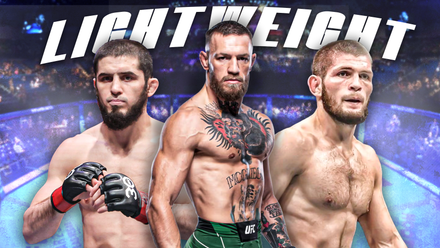
The fierce rivalry shared between the pair first emerged ahead of their 2014 bout at UFC 178. Within two minutes of the first round, McGregor had dropped his opponent to the floor, before pouncing on the stricken Poirier and unleashing another barrage of strikes, forcing the referee to call it off, only one minute and 46 seconds into the fight.
Reflecting on whether the Irishman had lost any of his punching power prior to their rematch at UFC 257, Poirier suggested that it was a change in his mental approach that allowed him to set up a trilogy fight: “Still the same; very dangerous. It’s just, I felt differently mentally going into it.”

Poirier opened the 2021 rematch by focusing on McGregor’s left calf. With the Dublin-born fighter landing a flurry of clean shots, The Diamond remained undeterred, focusing on breaking down the Irishman’s leg.
At the beginning of the second round, McGregor stunned the American with a strong left-hand, but, once again, Poirier remained focused. With McGregor’s calf becoming increasingly red, he was unable to use his notorious striking power due to his inability to put weight on his left leg. Smelling weakness, Poirier dropped him with a right hook before unraveling a series of blows, ending the bout.
As the pair trash-talked one another following the rematch, everything was poised for one of the fights of the year, a trilogy bout to settle it once and for all. In the first round of their UFC 264 meeting, the pair traded a series of punches and kicks, attempting to work out an opportunity in which to stop the fight early.
As McGregor attempted to throw a left hand, his leg went underneath him, snapping in the process. As his screams echoed around the T-Mobile Arena, Poirier tried to seize his opponent’s misfortune, bombarding him with shots. The horn sounded and the Irishman’s screams continued, as the ringside doctor entered the cage and stopped the fight.
Both fighters, as well as UFC CEO Dana White, suggested a fourth instalment was on the cards once McGregor returned from injury, but his lengthy absence from the UFC, and Poirier’s decision to retire, put an end to such an idea.

Former Chelsea physio Eva Carneiro has hit out at Jose Mourinho and John Terry following comments made about her in the three-part Netflix docu-series, MOURINHO.
Carneiro and Mourinho were involved in a highly publicized dispute that began in 2015 during Chelsea’s Premier League clash with Swansea City. In that season’s opener, Eden Hazard went down injured in the dying embers of the game and referee Michael Oliver waved for medical staff to attend to the Belgian winger.
The Gibraltarian doctor and chief physiotherapist Jon Fearn entered the pitch and treated Hazard. This forced the Blues’ star man to leave the field before play could resume but the hosts were already down to 10 men following Thibaut Courtois’ sending off.
This meant Mourinho’s troops would have to see the game, which finished 2-2, out with just nine players and it inevitably left the Portuguese coach fuming. He vented his frustrations at Carneiro, with footage appearing to show him directing profanities in Portuguese at the physio once she returned to the bench.
Mourinho and Terry Recall Carneiro Clash

Carneiro and Mourinho’s relationship soured and eventually she was stripped of matchday and first-team duties, banned from training and staying in the team hotel. A few weeks later, she officially parted ways with the Premier League club but that wasn’t the last of a lengthy ordeal.
The 52-year-old launched legal proceedings against Chelsea, claiming she was forced to resign, while making a claim against Mourinho for sex discrimination and harassment. An employment tribunal took place in June 2016 and the club issued an apology as the backlash against the West London outfit and their manager heightened.
Mourinho recalled his falling out with Carneiro in his new Netflix docu-series and he explained why he approached the situation with such anger:
“For me, a lady doctor is the same as a man’s doctor. So, as always, I use my vocabulary when I’m not happy. There are words in moments where the tension is very, very high. Normally, people with football culture, with football DNA, with football background, they go over it in one second. In that case, it was different.”
The newly-appointed Real Madrid boss added that he knew ‘when a player is not injured’ and that he knew Hazard ‘was not injured.’ His former Chelsea captain Terry defended him when interviewed for the docu-series:
“Medically, he would say unless it’s really, really bad, then they’re [the team doctors] not coming on. That was the understanding for us as players; the medical staff, everyone bought into that. It was a big moment obviously and he took a lot of backlash for that. There was a lot of heat on the football club.”
After the tribunal, Carneiro reached a confidential financial settlement with the club but she has now spoken out following the docu-series. She has condemned Mourinho and Terry’s assessments of the incident and advised them to ‘learn the rules of the game’.
Carneiro Fires Back at Ex-Chelsea Duo

Carneiro’s first post on X lifted the lid on how she felt at the time and how she’s having to relive the incident again. She posted a picture of herself on the bench with the caption: “11 years on and here we are reliving the worst. Hope they made some money.”
The sports physician took umbrage with Terry’s comments, writing: “We are bound by a medico-legal code of conduct. Genuinely it would be healthy for John Terry to learn the rules of the game. It’s been long enough mate.”
Carneiro then posted a screenshot of rules stated by the Faculty of Sport and Exercise Medicine UK and the British Association of Sport and Exercise Medicine. She delved into the incident and defended her role as a medical professional:
“So IT IS really simple. Referee Michael Oliver called us on TWICE, player Eden Hazard requested medical assistance we then made eye contact from side line and he confirmed he needed medical assistance, TWICE. At that point my hands are bound as a medical professional.”
Carneiro has looked to put the bust-up with Mourinho behind her, venturing into private medical practice, which includes practicing at private facilities, including in Harley Street, London. She also worked as a consultant at the 2022 World Cup and continues to be involved in football as a co-owner of Lewes FC, the first professional club to pay men and women equally.

Manchester United have made contact over a deal to sign Paris Saint-Germain forward Ibrahim Mbaye as they look to bolster their attack.
The Reds are in the market to improve their forward line further after they reached the Champions League for the first time since 2023, with Michael Carrick enjoying a strong pre-season despite question marks over the futures of Joshua Zirkzee and Marcus Rashford.
But the club are still keen to make more additions, despite spending over £200m last summer to bring in Benjamin Sesko, Bryan Mbeumo, and Matheus Cunha, and the Senegalese forward has now emerged as a potential option.
According to a report by AS, United are understood to have made a formal enquiry to Paris Saint-Germain about a deal to bring Mbaye to Old Trafford.
The teenager, who has been described as a ‘phenomenon’, is expected to leave Paris this summer after growing frustrated at a lack of first-team football opportunities under Luis Enrique, with the likes of Ousmane Dembele, Khvicha Kvaratskhelia, Desire Doue, Bradley Barcola, and new signing Maghnes Akliouche all ahead of him in the pecking order.
It’s reported that PSG are demanding in excess of €50m (£42m) for the Senegal star, but with his contract due to expire in 2028, there may be room for negotiation.
Fees correct prior to summer 2026
All 10 found — excellent!
Carrick’s side are understood to be looking at a number of positions before the transfer window closes. A new left-back is reportedly high up on their list of priorities, while a new central midfielder is also believed to be under consideration alongside a new forward.
So far under Carrick, Man Utd have used Patrick Dorgu as a left-winger regularly, rather than as a left-back, but a move for Mbaye would undoubtedly be a big upgrade in that position.
Mbaye a Huge Dorgu Upgrade

Dorgu’s best performances in a Man Utd shirt have come while playing in a more advanced position, but it’s quite evident that he has a lot of learning to do in that role if he wants to become a regular starter.
But with a left-back needed, a move to bring in Mbaye would allow him to move back to his more natural role, and bring in a truly exciting talent in attack who could provide quality depth and competition alongside the current forward options.
Mbaye has blistering pace, excellent trickery, but is also a great ball striker and has great creativity. With Champions League football to come, and a busier schedule, this could be a top signing for the squad and a shrewd bit of business for the club.
|
Ibrahim Mbaye Ligue 1 Stats 25/26 |
|
|---|---|
|
Appearancs |
10(14) |
|
Minutes |
1002 |
|
Goals |
3 |
|
Assists |
2 |
|
Shots (per 90) |
1 |
|
Key Passes (per 90) |
0.8 |
|
Dribbles (per 90) |
0.9 |
Statistics courtesy of WhoScored – correct as of 13/08/2026.

Bradley Barcola wants to join Liverpool this summer and personal terms are almost in place, according to Fabrizio Romano.
The Reds have added to their attack ahead of the 2026/27 season with the addition of Victor Munoz from Osasuna, but fans are hoping for a statement signing in what remains of the window.
Liverpool go into the new term without Mohamed Salah after the Egyptian departed Anfield on a free transfer before signing for Turkish side Trabzonspor this month.
Andoni Iraola’s team do need to bring in a long-term replacement for the club legend and Barcola could potentially be the man to fill his boots with a Paris Saint-Germain exit a real possibility.
Clubs interested in the French international will have to stump up the money as the Champions League holders value their attacker around the £145m mark.
After finding himself in and out of the team last season, Barcola was an unused substitute for Wednesday evening’s 2-1 triumph over Aston Villa in the UEFA Super Cup final.
“We’re working calmly, we don’t talk too much. I can’t say whether he will leave or not … Today, he is a PSG player. We’ll see.” – Nasser Al-Khelaifi on Bradley Barcola’s future
The 23-year-old did look disinterested during the post-match celebrations, with transfer expert Romano pointing out on his YouTube channel today that Barcola’s face very much speaks for itself with so much talking surrounding a move to Liverpool.
“If you look at Bradley Barcola, probably the story of the night in terms of transfers, is about the French winger because Barcola was not playing one single minute for Paris Saint-Germain,” said Romano when speaking on his YouTube channel. “And also if you look at Barcola’s face, it looks very clear that the player is probably thinking about leaving the club.
“It doesn’t mean that Barcola, eventually, if he will end up staying at Paris Saint Germain, I’m sure he’s going to be a super professional as always. But, as of today, while there is the chance to go to Liverpool, Bradley Barcola face is speaking for himself.
“The body language of Bradley Barcola looks very clear. Barcola was almost not even celebrating. Barcola wants to go to Liverpool, I told you several times. The personal terms are almost in place, it’s not a problem.”
Fees correct prior to summer 2026
All 10 found — excellent!
Barcola’s career in numbers
PSG
- Appearances: 152
- Goals: 39
- Assists: 37
Lyon
- Appearances: 47
- Goals: 7
- Assists: 12
France
- Appearances: 28
- Goals: 6
- Assists: 3
PSG chairman gives Barcola transfer response

Barcola’s future is a big talking point at present given all the speculation surrounding his future.
Paris Saint-Germain chairman Nasser Al-Khelaifi was asked about his player when speaking following the French side’s win over Aston Villa in the Super Cup.
However, he couldn’t give a definitive answer over Barcola’s future.
“We’re working calmly, we don’t talk too much,” Al-Khelaifi told Canal Plus. “I can’t say whether he will leave or not … Today, he is a PSG player. We’ll see.”

Eva Carneiro Slams Jose Mourinho & John Terry’s Comments on Chelsea Clash
Man Utd Make Contact to Sign Ibrahim Mbaye
Bradley Barcola Wants Liverpool Transfer As Personal Terms Close

Meaning Behind Egypt Manager’s ‘X’ Gesture vs Argentina

Premier League Set-Piece Goals (2025/2026)

Simi Sanya and Femi Dapson Are Now Legally Married and It Is Beautiful to See
-
 Business18 hours ago
CBN reverses OMO restriction, opens market to local investors
-
 Sports2 days ago
Fabrizio Romano Drops Update on Arsenal Signing Jules Kounde
-
 Sports1 day ago
European Athletics Championships Food and Drink Prices [2026]
-
 Sports2 days ago
The All-Time English Top-Flight League Table [1888-2026]
-
Business2 days ago
CBN opens second sandbox for virtual assets, data-driven finance
-
 Sports1 day ago
Arsenal Fans Cast Early Verdict on Bruno Guimaraes After Draw vs Como
-
 Sports15 hours ago
Man City In Advanced Talks To Sell Tijjani Reijnders
-
 Metro13 hours ago
Suspected Shilla boy allegedly robs minor at knife-point in Adamawa