
Business
Fertiliser Plants: Dangote vows to ensure food security in Africa

By Udeme Akpan
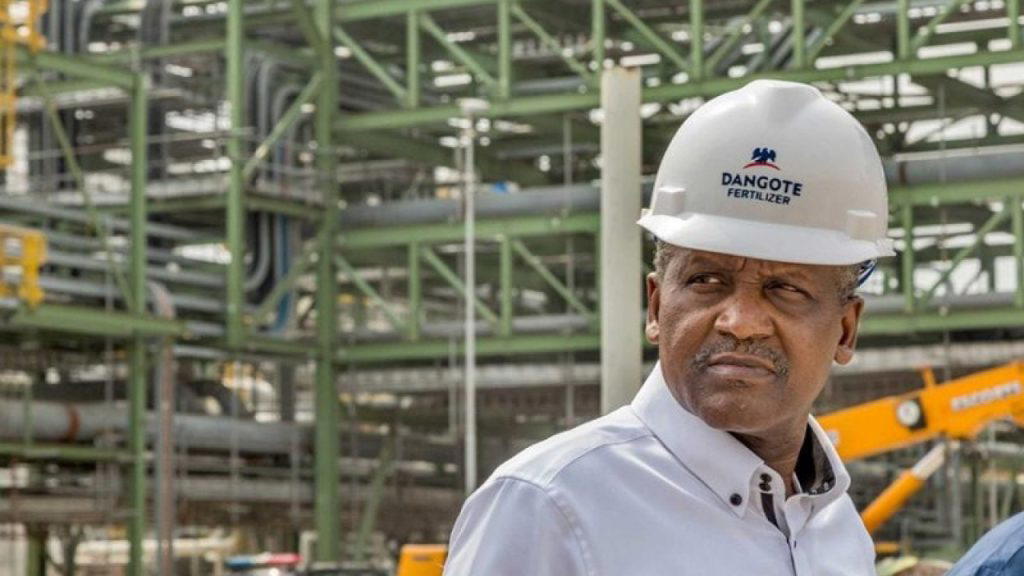
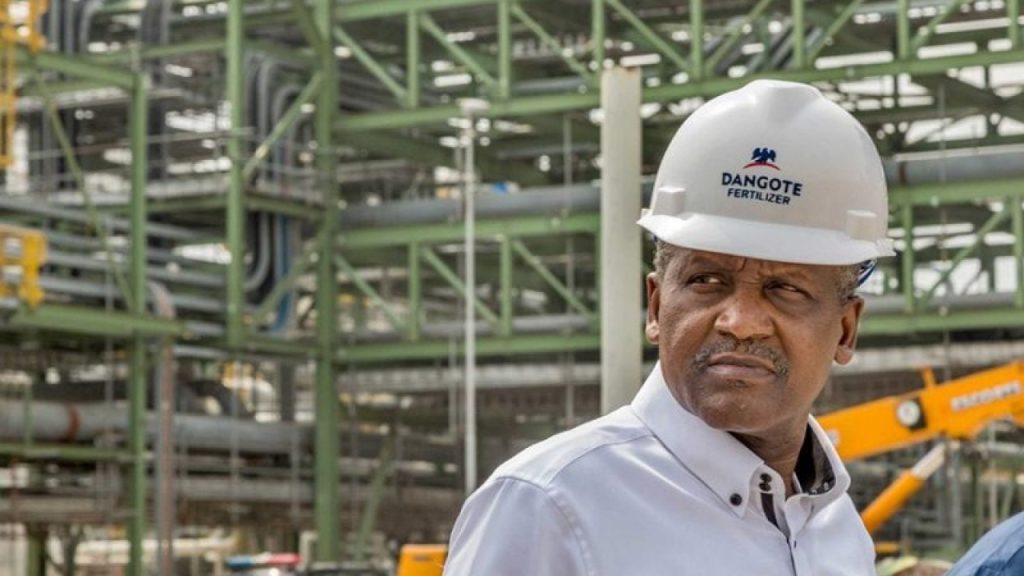
President of the Dangote Group, Aliko Dangote, has reaffirmed his commitment to boosting food security across Africa through large-scale fertiliser investments, declaring that the continent has the capacity to feed itself and become a net exporter of agricultural products.
Dangote made this known while addressing journalists in Gode, in Ethiopia’s Somali region, during a high-profile visit hosted by Prime Minister Abiy Ahmed.
The Prime Minister personally received Dangote and accompanied him to inspect the site of the proposed fertiliser plant, where construction activities are already underway.
Speaking on the strategic importance of fertiliser in agricultural productivity, Dangote noted that Africa’s food insecurity challenges are largely due to limited access to key inputs.
“Africa holds immense agricultural potential, yet continues to grapple with food insecurity due to limited access to fertilizer. Through our investments, we are committed to reversing this trend by boosting productivity, empowering farmers, and advancing a sustainable path to food self-sufficiency.”
He added that the Group’s ambition, though bold, is achievable with sustained investment in fertiliser production and agricultural infrastructure.
“Africa has the capacity to feed itself and even export to the rest of the world. Our fertiliser investments across the continent are designed to unlock that potential and secure a prosperous future for our people,” Dangote stated.
Dangote also announced a significant increase in the Group’s investment in Ethiopia, rising from $2.5 billion to over $4 billion.
The expanded scope includes critical infrastructure such as a 110-kilometre pipeline, a 120MW power plant, a polypropylene packaging facility, and a two-million-tonne NPK blending plant, among other new components.
He described Ethiopia as a key strategic destination for Dangote Group’s long-term investments.
“In total, our declared and signed investments in Ethiopia now exceed $4 billion. This makes Ethiopia the second-largest recipient of our investments in Africa, accounting for nearly nine per cent of our continental outlay between now and 2030,” he said.
Dangote further commended Prime Minister Abiy Ahmed’s leadership and vision for economic transformation.
“The Prime Minister is driving development beyond expectations, but such progress requires strong private sector collaboration. We are proud to partner with Ethiopia to help build one of Africa’s most dynamic economies in the coming decade,” he added.
Prime Minister Abiy Ahmed, in his remarks, described Dangote as a trusted partner and commended the pace of work on the fertiliser project, which he said aligns with Ethiopia’s broader development priorities.
He emphasised that the project would significantly boost domestic fertiliser production, reduce dependence on imports, and provide critical support to millions of Ethiopian farmers.
According to the Prime Minister, the fertiliser plant will also create extensive employment opportunities, strengthen the industrial value chain, and reinforce Ethiopia’s position as an emerging agro-industrial hub in Africa.
“This type of large-scale investment demonstrates the power of strong collaboration between government and the private sector,” he said. “Expanding such partnerships will accelerate economic growth, attract further investment, and improve the livelihoods of our people.”
The Dangote fertiliser initiative is widely seen as a transformative step toward reshaping Africa’s agricultural landscape, with the potential to enhance productivity, reduce import dependence, and drive inclusive economic growth across the continent.
The post Fertiliser Plants: Dangote vows to ensure food security in Africa appeared first on Vanguard News.

By Babajide Komolafe
Alert Microfinance Bank has recorded a 20-fold increase in total assets to N50 billion in three years, as rising inflation, naira depreciation and stronger demand for credit reshape Nigeria’s banking landscape.
Speaking in a media interview, Group Chief Executive Officer of Alert Group, Mr. Olanrewaju Kazeem, said the bank’s growth was driven by a deliberate strategy focused on financial inclusion and nationwide expansion following the Central Bank of Nigeria’s approval of a national microfinance banking licence.
According to him, “The growth that you see in Alert Microfinance Bank and Alert Group as a whole is a deliberate plan to ensure that we are able to deliver quality service and extend our services to as many Nigerians as possible. Today, the Group has total assets of about N120 billion, while Alert Microfinance Bank has about N50 billion, from about N2.5 billion three years ago.”
He added: “The need for us to extend our services to other parts of the country where there is yearning for such services, particularly by improving financial inclusion and supporting the underbanked and unbanked, is what is driving us. We have also seen strong acceptance of the brand, making expansion across Nigeria very compelling.”
On operating challenges, Kazeem said: “The industry is still relatively young and getting quality personnel to execute our plans and strategy remains very challenging. In addition, with the Monetary Policy Rate at 26.5 per cent, you can imagine the cost of funds we use for business. When you add operating costs, the cost of credit becomes very high.”
He explained that “higher funding costs naturally increase repayment pressure on borrowers, raising default risks. However, through discipline, special skills and close monitoring, we have consistently maintained our default rate below four per cent.”
Kazeem further disclosed that inflation forced the bank to review staff salaries four times last year. “Sometimes you have to go beyond your budget to retain critical staff because of prevailing macroeconomic realities,” he said.
Despite these pressures, he said the reforms have created opportunities. “As prices rise, businesses require more working capital to restock, so demand for credit naturally goes up. Businesses that previously imported goods at exchange rates of N500 or N800 now require far more naira at around N1,300, increasing loan demand.”
He added: “Our deposits have grown by more than 200 per cent annually over the last two years. People are saving more, while our growth strategy is delivering exactly as planned as we prepare for regional expansion across Africa.”
By Peter Egwuatu
The stock market closed higher Week on Week, WoW, with the banking and consumer goods stocks being the toast of investors last week.
The Financial services industry (measured by volume) led the activity chart with 2.006 billion shares valued at N99.697 billion traded in 96,171 deals, thus contributing 71.17% and 54.63% to the total equity turnover volume and value, respectively. The Consumer Goods Industry followed with 178.863 million shares worth N7.872 billion in 26,637 deals. Third place was the Oil and Gas Industry, with a turnover of 151.237 million shares worth N38.309 billion in 16,879 deals.
Analysts noted that investors returned to fundamentally strong banking, consumer goods and other blue-chip stocks, adding that the market witnessed renewed bargain hunting following recent price corrections, with institutional investors taking advantage of lower entry prices in fundamentally sound stocks. Further analysis of the market last week shows that the Nigerian Exchange market capitalisation, which measures the total value of equities, surged by N613 billion to close at N157.057 trillion from N156.444 trillion the previous week.
The market capitalisation had the penultimate week rebounded to a bullish note with investors gaining N9.342 trillion from their investment listed on the Exchange.
Similarly, another benchmark performance indicator, NGX All Share Index, ASI, up 0.14% to close at 243,462.13 points from 243,798.76 points the previous week.
Trading in the top three equities, namely First Holdco Plc, FCMB Group Plc and Access Holdings Plc (measured by volume), accounted for 939.402 million shares worth N57.673 billion in 19,051 deals, contributing 33.33% and 31.60% to the total equity turnover volume and value respectively.
According to analysts, investors continued to position ahead of the release of second-quarter and half-year corporate earnings, particularly from the banking sector, where expectations remain upbeat following resilient first-quarter numbers and improved macroeconomic conditions.
Reacting to market performance and outlook, investors at InvestData Consulting Limited, stated: “Despite the positive outlook, investors are expected to remain cautious around stocks that have recorded substantial gains since the beginning of the year, as profit-taking could periodically interrupt the rally.
“Going forward, market direction will likely be influenced by the release of second-quarter corporate earnings, developments in the global oil market, movements in fixed-income yields and expectations surrounding monetary policy. Investors are also expected to monitor foreign portfolio flows, exchange rate stability and inflation data for further clues on the sustainability of the current market rally. Should earnings meet or exceed market expectations, the NGX could extend its upward momentum as institutional investors continue rotating into fundamentally strong sectors.”

By Peter Egwuatu
Analysts have warned that the rise in inflation, policy inconsistency, and volatile exchange rate, among other factors, can destabilise the ongoing economic reforms, which have started yielding fruits.
However, the analysts stated that the Nigeria’s capital market is expected to maintain its positive momentum in the second half of 2026, supported by stronger macroeconomic fundamentals, banking sector recapitalisation, improved foreign exchange stability and the anticipated listing of Dangote Refinery, despite lingering inflationary pressures and global geopolitical uncertainties.
This projection formed the highlight of presentations delivered by Professor Uche Uwaleke, President, Capital Market Academics of Nigeria, during a webinar organised by Arthur Steven Asset Management Limited (ASAM), titled “Mid-year macroeconomic review and investment outlook for H2 2026”.
Analysts and investment experts noted that the Nigerian economy has shown remarkable resilience in the first half of the year following major structural reforms, including foreign exchange liberalisation, fuel subsidy removal and monetary tightening.
According to Uwaleke, the Nigerian Exchange (NGX) recorded one of its strongest first-half performances in history, with the All-Share Index rising by about 47 per cent to close June at over 229,000 points after reaching an all-time high of more than 252,000 points in May. The rally translated into approximately N47 trillion in investors’ wealth, driven largely by strong corporate earnings, banking recapitalisation and renewed domestic institutional participation.
Analysts at ASAM observed that improved investor confidence was supported by greater exchange rate stability, stronger external reserves of over $51 billion and increased pension fund participation following the National Pension Commission’s revised investment guidelines.
Uwaleke, however, cautioned that inflation remains a key concern after the earlier disinflation trend was interrupted by rising global oil prices triggered by the Middle East crisis.
“Headline inflation, which declined to 15.06 per cent in February, rose steadily to 15.93 per cent in May as higher fuel and transportation costs filtered into food prices” he noted.
The analysts at ASAM and Uwaleke maintained that despite the inflation risks, there is a constructive outlook for equities, citing expectations of sustained corporate earnings growth, continued banking sector expansion, insurance recapitalisation and possible inclusion of Nigeria in major frontier market indices.
Uwaleke described the successful completion of the banking recapitalisation exercise as one of the most significant financial sector achievements in recent years, noting that 33 banks collectively raised about N4.65 trillion in fresh capital, strengthening the industry’s capacity to support economic growth.
He also identified the implementation of the T+1 settlement cycle, the Investments and Securities Act (ISA) 2025 and ongoing capital market reforms as measures capable of enhancing market efficiency and attracting more foreign investors.
Looking ahead, the analysts at ASAM projected a favourable environment for equities, particularly banking, oil and gas, industrial goods and telecommunications stocks, while maintaining that fixed-income securities would continue to offer attractive yields amid the Central Bank of Nigeria’s cautious monetary policy stance.
The investment firm recommended a diversified portfolio comprising 50 per cent equities, 20 per cent fixed income, 20 per cent alternative investments and 10 per cent dollar-denominated assets and cash to balance growth opportunities with risk management.
However, the analysts warned that investors should remain cautious of downside risks, including renewed exchange rate volatility, persistent inflation, reversal of foreign portfolio inflows, geopolitical tensions and uncertainties associated with the build-up to the 2027 general elections.


NDLEA raids Edo warehouse, arrests couple with 22 bags of skunk, Canadian Loud

Sokoto windstorm claims four lives, displaces hundreds of families

Man Utd Must Snub Summerville After Signing ‘One of England’s Best Prospects’

Meaning Behind Egypt Manager’s ‘X’ Gesture vs Argentina

Simi Sanya and Femi Dapson Are Now Legally Married and It Is Beautiful to See

Premier League Set-Piece Goals (2025/2026)
-
 Sports1 day ago
Why Thomas Tuchel Gave Bukayo Saka Zero Minutes in England vs Argentina
-
 Sports1 day ago
Michael Olise ‘Broke Down in Tears’ After France vs England
-
 Sports10 hours ago
Nicolas Otamendi and Rodri’s Post-World Cup Final Chat Revealed
-
 Sports1 day ago
Adrien Rabiot Slams France Teammates in Stunning Interview After England Defeat
-
 Metro1 day ago
Army dismantles illegal bunkering site, arrests six suspects in Lagos
-

 Metro2 days ago
Three Chinese, others arrested over alleged illegal mining in Nasarawa
-

 Metro1 day ago
Lagos court arraigns tenant over alleged illegal apartment alteration
-

 Politics22 hours ago
APC chairman holds closed door meeting with Barau, NDC senator