
Business
Fertiliser Plants: Dangote vows to ensure food security in Africa

By Udeme Akpan
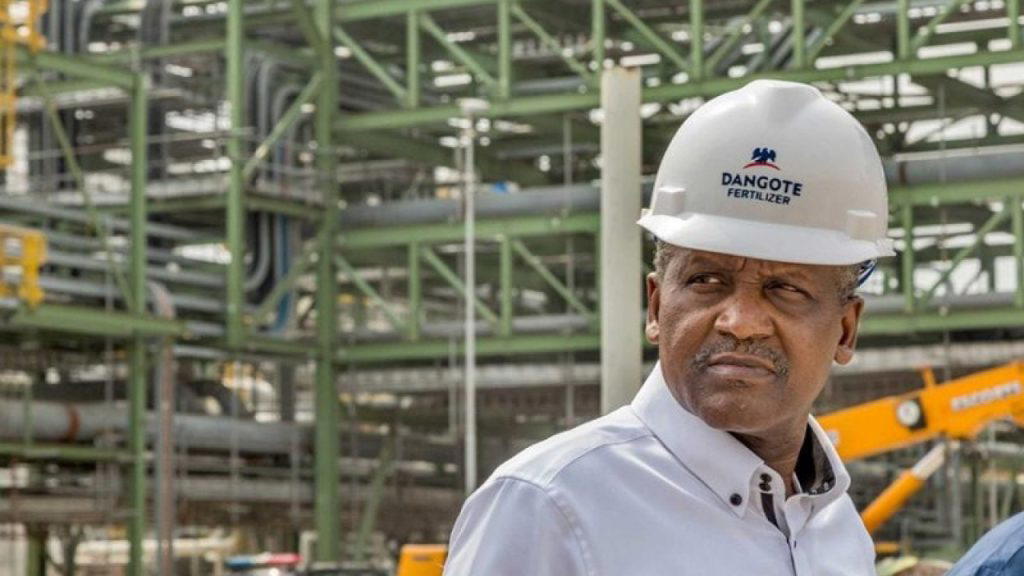
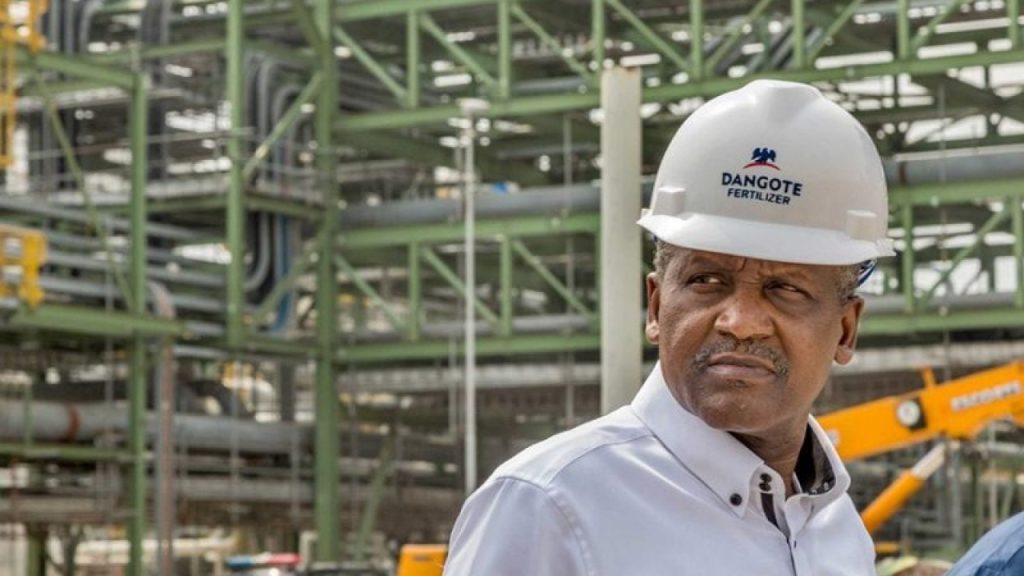
President of the Dangote Group, Aliko Dangote, has reaffirmed his commitment to boosting food security across Africa through large-scale fertiliser investments, declaring that the continent has the capacity to feed itself and become a net exporter of agricultural products.
Dangote made this known while addressing journalists in Gode, in Ethiopia’s Somali region, during a high-profile visit hosted by Prime Minister Abiy Ahmed.
The Prime Minister personally received Dangote and accompanied him to inspect the site of the proposed fertiliser plant, where construction activities are already underway.
Speaking on the strategic importance of fertiliser in agricultural productivity, Dangote noted that Africa’s food insecurity challenges are largely due to limited access to key inputs.
“Africa holds immense agricultural potential, yet continues to grapple with food insecurity due to limited access to fertilizer. Through our investments, we are committed to reversing this trend by boosting productivity, empowering farmers, and advancing a sustainable path to food self-sufficiency.”
He added that the Group’s ambition, though bold, is achievable with sustained investment in fertiliser production and agricultural infrastructure.
“Africa has the capacity to feed itself and even export to the rest of the world. Our fertiliser investments across the continent are designed to unlock that potential and secure a prosperous future for our people,” Dangote stated.
Dangote also announced a significant increase in the Group’s investment in Ethiopia, rising from $2.5 billion to over $4 billion.
The expanded scope includes critical infrastructure such as a 110-kilometre pipeline, a 120MW power plant, a polypropylene packaging facility, and a two-million-tonne NPK blending plant, among other new components.
He described Ethiopia as a key strategic destination for Dangote Group’s long-term investments.
“In total, our declared and signed investments in Ethiopia now exceed $4 billion. This makes Ethiopia the second-largest recipient of our investments in Africa, accounting for nearly nine per cent of our continental outlay between now and 2030,” he said.
Dangote further commended Prime Minister Abiy Ahmed’s leadership and vision for economic transformation.
“The Prime Minister is driving development beyond expectations, but such progress requires strong private sector collaboration. We are proud to partner with Ethiopia to help build one of Africa’s most dynamic economies in the coming decade,” he added.
Prime Minister Abiy Ahmed, in his remarks, described Dangote as a trusted partner and commended the pace of work on the fertiliser project, which he said aligns with Ethiopia’s broader development priorities.
He emphasised that the project would significantly boost domestic fertiliser production, reduce dependence on imports, and provide critical support to millions of Ethiopian farmers.
According to the Prime Minister, the fertiliser plant will also create extensive employment opportunities, strengthen the industrial value chain, and reinforce Ethiopia’s position as an emerging agro-industrial hub in Africa.
“This type of large-scale investment demonstrates the power of strong collaboration between government and the private sector,” he said. “Expanding such partnerships will accelerate economic growth, attract further investment, and improve the livelihoods of our people.”
The Dangote fertiliser initiative is widely seen as a transformative step toward reshaping Africa’s agricultural landscape, with the potential to enhance productivity, reduce import dependence, and drive inclusive economic growth across the continent.
The post Fertiliser Plants: Dangote vows to ensure food security in Africa appeared first on Vanguard News.

By Juliet Umeh
For years, Africa was seen mainly as a market for technology products developed elsewhere, with few believing globally successful technology companies could emerge from the continent.
That perception is changing, and one of those leading that transformation is Iyinoluwa Aboyeji, who co-founded Andela and Flutterwave, two technology companies that have each achieved valuations of over $1 billion.
Speaking in a recent interview on School of the Hard Knocks, Aboyeji shared the principles that shaped his entrepreneurial journey, offering lessons for young Nigerians seeking to build successful businesses.
Inspired by a dream
Aboyeji said his entrepreneurial journey began after watching The Social Network, a movie based on the rise of Facebook founder, Mark Zuckerberg.
“The really funny thing is that I watched The Social Network and, full circle, Mark Zuckerberg ended up investing in my first billion-dollar company,” he said.
That first company was Andela, a technology talent company that trains and connects African software developers with global employers.
For Aboyeji, what started as inspiration eventually became reality, demonstrating that ideas developed in Lagos could attract global investors.
Building systems, not just companies
Asked about the secret behind building billion-dollar businesses, Aboyeji did not point to funding or luck.
“It’s all about systems,” he said.
He recalled advice from one of his billionaire mentors, saying: “A billion-dollar company is just a bunch of people who could have individually built $10 million businesses but decided to come together and build one business.”
According to him, “the success of any organisation depends less on one exceptional founder and more on building strong systems supported by capable people.”
Teamwork makes the difference
Aboyeji repeatedly stressed that no entrepreneur succeeds alone.
“It’s the team,” he said.
He explained that assembling talented people around a shared vision was one of the biggest factors behind the growth of both Andela and Flutterwave.
Echoing that view, ARISE News co-host, Dr. Reuben Abati, said one of the biggest lessons from the interview was the importance of teamwork.
“He made a point about the team. He said it’s about the team. Teamwork, teamwork. If you come together and you have a good team, you will produce results,” Abati said.
According to him, many people mistakenly attribute business success solely to individual brilliance.
“Oftentimes, many Nigerians are delusional. They think you are such a genius that’s why you are progressing, but businesses are products of the quality of people that make that business,” he added.
Creating value first
Beyond teamwork, Aboyeji urged young entrepreneurs to focus on serving others before seeking personal rewards.
“The biggest advice for networking is to serve people. ‘How can I help?’ Those four words are the most powerful words in the world,” he said.
He warned against approaching relationships with a selfish mindset.
“Don’t be a taker. Give, give, give, give, give, and eventually, it will be given unto you.”
He added: “The more money you make other people to make, the more money you’re going to make yourself.”
According to him, “entrepreneurs who consistently create value naturally attract opportunities and long-term success.”
Learning from mentors
Aboyeji also acknowledged the role mentors played in shaping his entrepreneurial journey.
He said many of the principles that guided his businesses came from conversations with experienced business leaders who challenged him to think differently about leadership and growth.
Reflecting on the interview, Abati noted that mentorship, opportunity and divine favour all played important roles.
“First, he said, ‘Look at God.’ There is a God factor because sometimes you just find favour. It’s an opportunity,” Abati said.
He added that Aboyeji’s relationship with Zuckerberg and other global investors also underscored the importance of support and strategic partnerships in building successful businesses.
Simplicity despite success
Although Aboyeji has helped build companies worth billions of dollars, those who know him say he has remained remarkably humble.
ARISE News presenter Rufai Oseni described him as one of Nigeria’s most inspiring entrepreneurs, recalling interviewing him during the early days of Andela.
“I remember when I first interviewed him around 2012 or 2013. He came to tell the story of Andela, and shortly afterwards the company received that major investment from Mark Zuckerberg,” Oseni said. According to him, Aboyeji has continued to push boundaries.
“He’s a double unicorn. These two companies have crossed the billion-dollar mark, and he keeps pushing the envelope. He’s a great inspiration to young people.”
His colleague, Vimbai Mutinhiri-Ekpenyong, said one lesson that stood out was Aboyeji’s modest lifestyle.
“He’s one of the simplest, most understated people you’ll meet. You won’t see him coming and think there are billions around him,” she said. According to her, successful entrepreneurs often focus less on luxury and more on creating lasting value.
“People who are committed to building are ready to make sacrifices. They don’t spend too much time on unnecessary luxuries; they focus on doing the work.”
Building from Nigeria
Perhaps the most memorable part of the interview came when Aboyeji reflected on how perceptions about Africa have changed.
“There was a time people just didn’t believe billion-dollar companies could come from this part of the world. But look at God. Build, build, build,” he said.
Aboyeji’s story shows that Nigerian entrepreneurs can build businesses that compete globally despite challenges such as poor infrastructure and limited access to funding. His journey proves that success is possible with a clear vision, the right team, good systems and a commitment to solving real problems. His message to young Nigerians is simple: “Build, build, build.”

By Yinka Kolawole
The Minister of Finance and Coordinating Minister of the Economy, Taiwo Oyedele, has disclosed plans by the Federal Government to publish indicators tracking poverty, incomes and inequality to assess the impact of the government’s economic reforms on the living standards of Nigerians.
He said the move is aimed at addressing criticism of the reform programme suggesting that gains in revenue, foreign exchange liquidity and investor confidence have yet to translate into meaningful relief for households facing high food, transport and living costs.
Speaking at a ‘ conference organised by BusinessDay newspaper, in Lagos, yesterday, Oyedele said the government would assess “shared prosperity” using three measures – reductions in multidimensional poverty, increases in real income per capita, and lower inequality.
The government is seeking to demonstrate that reforms introduced in 2023, including scrapping a fuel subsidy and liberalising the naira, applauded by lenders and investors, are translating into broader gains for Nigerians after driving up inflation and living costs.
Recall that the International Monetary Fund (IMF) said in June that ‘ the reforms were improving investor confidence and economic stability, 63% of the Nigerian populace remained in poverty and millions faced food insecurity.
The measures have also been accompanied by criticism over persistent corruption and allegations of unbudgeted government spending, raising questions about ‘ whether the sacrifices demanded of citizens are being matched by fiscal discipline.
Oyedele said inflation was easing, the foreign exchange market was functioning more efficiently and investor interest was returning, ‘ but acknowledged that macroeconomic stability alone would not be enough.
“A stable economy can still be a stagnant one if we become complacent,” he said.
Oyedele said ‘ the ministry of finance would be responsible for producing the scorecard but did not provide a timeline for publishing the indicators or say how frequently they would be updated.

•May confiscate unutilised balance
By Elizabeth Adegbesan
The Central Bank of Nigeria, CBN, has directed Bureau De Changes, BDCs, to sell unutilised foreign exchange (FX) balances to the Nigerian Foreign Exchange, NFEM, market within twenty-four (24) hours of the expiry of the utilisation period.
The apex bank disclosed this in its regulatory guidance on purchase of FX by BDCs through authorized dealer banks in NFEM.
According to the apex bank, “BDCs are not permitted to retain in their possession any foreign exchange purchased from the NFEM that remains unutilised. All unutilised balances shall be sold back to the NFEM market within twenty-four (24) hours of the expiry of the utilisation period.
“Failure to comply shall attract regulatory sanctions including but not limited to forfeiture of the unutilised balance and suspension of the BDC’s NFEM access.
‘‘BDCs shall disclose any unutilised balance from the prior week in each new purchase request submission.
“Authorised Dealer Banks shall factor disclosed unutilised balances into their weekly cap calculations.”
CBN said further that this guidance aims at facilitating seamless implementation of the framework and support sustained liquidity in the retail segment of the foreign exchange market.
The apex bank also prohibited third party transactions saying, “Foreign exchange purchased by a BDC shall be credited only to the BDC’s registered settlement account.
“Disbursement to any account other than the BDC’s own registered account shall constitute a regulatory violation and shall be reported immediately to the CBN.”
CBN noted that only BDCs in possession of a valid and subsisting CBN licence shall be entitled to access foreign exchange under this framework.
The apex bank, however, excluded BDCs under regulatory sanction, whose licences are suspended, or whose operating conditions have been restricted by the CBN, from participation until such restrictions are lifted.
The apex bank also mentioned that it shall maintain a centralised portal, the FX BDC Purchase Tracker (FXBT), to which all BDCs shall be registered and submit real-time or same-day data on BDC purchases, enabling systemic compliance and oversight.
It also warned that no Authorised Dealer Bank should impose exclusivity arrangements, referral fees, or any condition that restricts a BDC’s freedom to select its preferred counterparty bank.
The apex bank warned that violations of the provisions of the Circular and the attached Guidance shall attract appropriate regulatory sanctions.


Tottenham Hold Talks to Sign Harry Kane

Man Utd Set to Make Move to Sign £80m Forward

2027: NDC will win before 12 noon in free, fair election – Fayose

Meaning Behind Egypt Manager’s ‘X’ Gesture vs Argentina

Simi Sanya and Femi Dapson Are Now Legally Married and It Is Beautiful to See

Premier League Set-Piece Goals (2025/2026)
-
 Sports11 hours ago
Why Thomas Tuchel Gave Bukayo Saka Zero Minutes in England vs Argentina
-
 Sports12 hours ago
Michael Olise ‘Broke Down in Tears’ After France vs England
-
 Sports14 hours ago
Adrien Rabiot Slams France Teammates in Stunning Interview After England Defeat
-
 Sports12 hours ago
Premier League Star Slammed For ‘Disgraceful’ Behaviour in England v France
-
 Metro15 hours ago
Army dismantles illegal bunkering site, arrests six suspects in Lagos
-
 Metro2 days ago
Foreign nationals, Nigerians arrested over alleged illegal mining in Nasarawa community
-
 Sports1 day ago
David Robertson Banned From Golf For 20 Years Due to Actions
-

 Metro2 days ago
Lagos court arraigns microfinance bank staff for alleged forgery