
Agriculture
Inside Anambra, Imo communities where flooding forces farmers to harvest crops prematurely

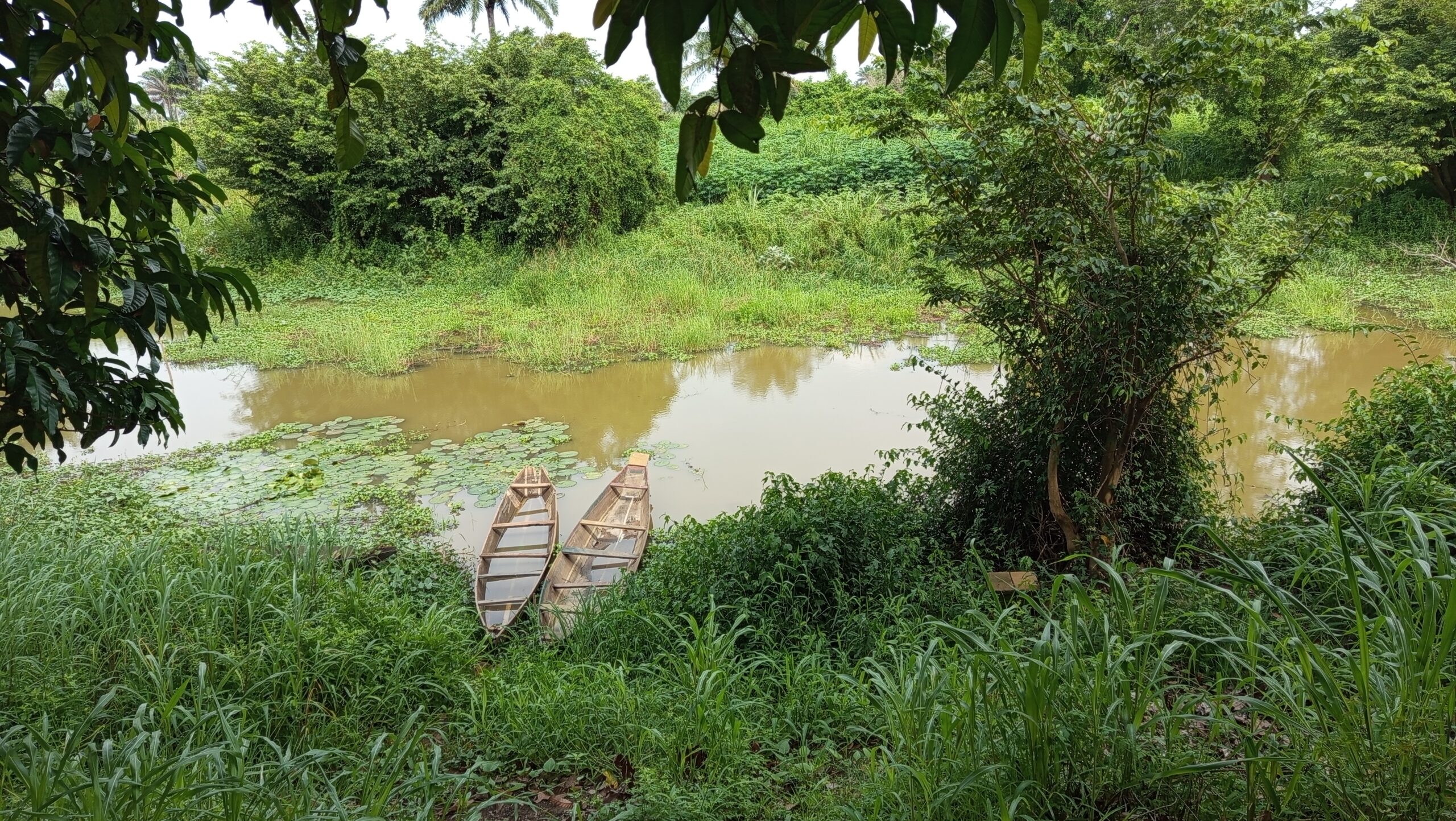
In Obiakpu, a farming community in Ohaji-Egbema Local Government Area of Imo State, Beatrice Okiro braces up to harvest cassava from her two plots of land. It’s only been five months since the planting season began, but Okiro is already preparing for harvest—seven months earlier than planned.
Ideally, she would wait until December for the tubers to mature. But the rains have come early, and the fear of flooding forces her to act in June. This planting season, Ms. Okiro invested over ₦250,000 in her farm, hoping to reap more than ₦500,000. Now, her only goal is to salvage what she can before the water takes everything.

“If the land gets flooded, I can’t enter again,” she says in an interview in June. “Sometimes the cassava decays in the ground before I reach it. Severely, flooding has damaged cassava and resulted in massive loss of income.”

Flooding has become an annual menace in Obiakpu, where agriculture is a major source of livelihood. Since 2015, the community—one of the largest cassava producers in Imo—has endured recurrent floods, which wash away crops and incomes alike. After the devastating 2012 flood, residents enjoyed a brief reprieve. But by 2016, the deluge returned and it hasn’t stopped since.
Women like Ms Okiro, who bear the brunt of this crisis, often take on extra work in less-affected areas or trade vegetables like pepper and garden eggs to support their families. But their earnings are no match for the losses.
According to Paul Nwokedi, a community leader, the damage has transformed farming from a dependable source of income into a gamble. A chain of farmland (roughly two and a half plots) typically yields four bags of garri. But in flood years, families barely get a bag.

“Some families invest over ₦500,000 cultivating four plots and expect over ₦1 million,” Mr Nwokedi says. “But when the flood comes, they’re left with nothing.”Rainfall

Rivers Rise, Livelihoods Sink
Obiakpu’s topography—a flat, low-lying area—makes it highly vulnerable. Floodwaters from rivers like Orashi, Ishiobu, and Oguta Lake easily submerge the land, especially when industrial activities disturb riverbanks.
In 2024, Sterling Global, an oil company operating nearby, allegedly breached a riverbank in neighbouring Egbema while laying pipelines. The result was catastrophic: overflowing waters destroyed multiple farmlands.
Theresa Obdohwa, another farmer, owns cassava farms across three locations in Obiakpu, none of which are spared during floods. “I’ve thought of quitting many times,” she says. “But I don’t know anything else.”
A Professor of Agricultural Economics, Ahmed Ladan, said that when water submerges crops—especially those not adapted to aquatic environments—it often leads to their death. “Even if the crops themselves aren’t fully submerged, waterlogged soil can be just as damaging,”he said. “Excess water limits the roots’ ability to absorb nutrients and displaces oxygen in the soil, which plants need to survive. As a result, crops can begin to wither and die, even when surrounded by water.”
Since early harvests affect starch content and crop size, farmers end up with poor-quality cassava. According to flood risk consultant Taiwo Ogunwumi, this not only affects health and income but also causes higher post-harvest losses due to spoilage and food insecurity.

As a result, many farmers now buy garri in local markets at exorbitant prices. A painter (bucket) of garri goes for ₦4,000; a basin can cost ₦20,000.
“If we plant our own and harvest, we sell for 15,000, that is N3000 per painter,” said Nwokedi. “We can also store and sell in the future,”.

Blessing Ekpereme, another Obiakpu farmer, couldn’t harvest a single tuber in 2024. “I used to afford eggs, meat, rice, and beans,” she says. “Now, I can’t.” Though she replanted in December, she knows the risk of another early harvest looms.

In 2023, both the National Emergency Management Agency (NEMA) and the State Management Emergency Agency (SEMA) distributed relief materials. But as Ms Nwokedi puts it: “That’s not a solution. What we want is real intervention to tackle the flooding problem.”
Ossomala Battles Sun and Water
In Anambra’s Ossomala community—one of 15 that make up Ogbaru LGA—the climate has dealt a different blow. This year, excessive sun scorched the soil, forcing cassava farmers to replant up to three times between November and March. Now, as the flood season nears, they fear the same fate as their counterparts in Obiakpu.
Ossomala, located along the east bank of the River Niger, is known for its robust yam and cassava harvests. But this geography also places it directly in the floodpath when the river overflows.
“Those who planted in November had to replant by March,” says Ogo Ifeanyi, a women leader. “Now, those crops won’t mature before the floods begin.”
Ngozi Chukwuma, a cassava farmer and member of a women’s cooperative trained by the International Fund for Agricultural Development (IFAD), under the Value Chain Development Programme (VCDP), has been hit hard. Her crops—meant for processing pastries—were ruined by the sun, forcing Ngozi Chukwg her to buy cassava at high market prices. “I’ve given up hope,” she says. “My business and my family’s income are affected.”

Nduka Ngozi planted Cassava in November 2024 and was able to start harvesting by June. But she too knows what’s coming. “By the time you return in July, you won’t recognize my farm—it’ll be underwater,” she says.

To access her farm, she uses a canoe. If the floods come too quickly, she hires at list three young men to harvest for ₦15,000 daily. Still, early harvests mean poor yields and unsellable crops. On a good season, Ms Ngozi harvests over five bags of cassava from a plot of land and feeds herself from what money she earns. She also sells ‘Moi Moi,’ a local delicacy made from beans.

In 2022, Chimabele Chukwudifu lost her yam farm to floods. This year, she invested ₦720,000 in 400 heaps of yam. But like many others, she is bracing for loss. “We harvest when we see signs of flood. But the tubers are always too small to sell.”

Beyond yam and cassava, women like Ndidiamaka Nwabueze grow vegetables and pepper. This year, she has already sold 30 bundles of Ugu (fluted pumpkin), each worth up to ₦20,000. But she’s racing against time. “Once the flood comes, I can’t sell anymore,” she says. “I won’t even have enough to feed my children.”

Government Promises, Budget Realities
Despite annual devastation, state responses have been underwhelming. Anambra’s 2024 budget allocated ₦1.175 billion for erosion and flood control but released just ₦248 million—only 21.2 per cent. In 2025, it budgeted ₦2.2 billion but had only released ₦112 million (5.1 per cent) by Q1.
Imo State’s situation is not any better. It budgeted ₦12.9 billion for flood control in 2024 and released ₦6.3 billion. Yet, of the ₦5 billion earmarked for 30 specific erosion sites, only ₦1 billion was spent. In 2025, another ₦30 million budgeted for unforeseen flood remediation never materialised.
However, the Commissioner for Environment in Anambra State, Felix Odimegwu, said the state government remains committed to addressing perennial flooding across communities.
“We have established multi-sectoral committees headed by Deputy Governor Dr. Onyekachi Ibezim tasked with early planning and strategic action to ensure swift responses to any emergencies,” Mr Odimegwu said.
He said that residents must also desist from constructing houses along waterways and drainages, or blocking them with waste.
What Can Be Done?
Experts recommend long-term infrastructural solutions. The most important among them is dredging the River Niger to deepen its channel and embankments to prevent overflow.
“Without dredging, the river’s shallow depth makes it prone to flooding,” says Mr Ogunwumi. “Embankments—if well-designed—can act as protective barriers.”
He also urges the use of geospatial technology for flood monitoring and data-driven planning, noting that states like Imo and Anambra must invest in proper drainage systems and early warning infrastructure.
Mr Ladan, a professor, emphasised the need for government intervention to regulate sand mining activities, warning that the unregulated removal of sand from riverbeds and banks diminishes the river’s capacity to hold excess water, thereby increasing the risk of flooding.
He also urged authorities to adopt water harvesting strategies—such as constructing dams, deep pits, and aquifers—to collect and store rainwater or runoff for future use in irrigation, power generation, and domestic needs. According to him, “this represents a more sustainable and proactive approach to water resource management,”.

For now, communities like Obiakpu and Ossomala remain in survival mode—trapped in a cycle of climate disruption, failed harvests, and broken government promises.
“We are helpless,” says Ifeanyi. “But we cannot continue to lose everything each year.”

A long-awaited rainfall should have been received with joy by Khalid Umar and other farmers in the Pandogari district of Rafi Local Government Area of Niger State. In these rural communities, a downpour prompts farmers to rush to their fields to spray pesticides and plant seeds. Instead, a recent one became a trap. Within hours of the rain stopping, armed bandits encircled the farmlands on 15 June, forcing Mr Umar to abandon his motorcycle and run on foot for his life.
Some villagers were not as fortunate. That afternoon, the assailants killed Dauda Galadima, a resident of the nearby Ruba village. They also abducted five farmers on their fields, including Nasiru Yakubu and his son, Bilyaminu. After their family paid a five-million-naira ransom, the bandits released the father but kept the son for more money.

A similar attack had occurred a day earlier. Mr Umar told PREMIUM TIMES that bandits raided a farm plantation on 14 June, killing two farmers and kidnapping four women and a man identified as Haruna Dattijo. Upon hearing the news of his abduction, Mr Dattijo’s mother reportedly slumped and was later pronounced dead at the hospital.
For peasant farmers, avoiding the fields is not an option. In these rural communities, farming is the sole means of survival. Left to fend for themselves, residents are now devising localised security measures to protect their communities and stave off starvation.
“We are devising local security initiatives just to continue farming,” Mr Umar explained. “We now assign individuals to climb the tallest trees to act as sentries. Their job is to monitor the horizon and alert those working on the ground the moment they spot any suspicious movement toward the fields.”

Yet, even these makeshift early-warning systems are not enough, Mr Umar said. In several parts of the community, agricultural activity has stopped because of the bandits. He estimated that roughly half of the region’s farms have been abandoned.
The rising toll
Since the onset of this year’s rainy season, the violence has escalated drastically. At least nine people have been killed and approximately 20 others abducted in the Pandogari district.
Mr Umar stated that the casualties span all sectors of rural life. Among those killed was Abubakar Idris, a staff nurse at the Kagara General Hospital—the council headquarters—who was murdered on his farm. Recently, he added, the community evacuated the remains of two women murdered on their family farms.

As the rainy season peaks, the window for planting is rapidly closing. Mr Umar warned that without a decisive shift in security strategy to protect the agricultural periphery, these communities face not only the immediate threat of violence but a catastrophic food crisis.
The limit of military operations
While a military base is stationed in Pandogari town, locals argue that its current operational strategy leaves the surrounding agricultural areas highly vulnerable.
A resident, Garba Haruna, noted that the soldiers are static, adopting a defensive posture instead of launching offensive operations into the bush.
“The military base is strategically positioned on the bandits’ primary transit route, effectively blocking them from invading Pandogari town itself. However, recognising this bottleneck, the bandits have simply altered their path by bypassing the military checkpoint,” Mr Haruna said. “The armed groups are now filtering directly into the isolated farmlands—areas where the military cannot provide security cover—and picking off vulnerable farmers one by one.”
Birnin Gwari – Kaduna State
In June, tragedy struck the Kuyello District of the Birnin Gwari Local Government Area in Kaduna State when armed bandits invaded the Kujijiro farmlands, killing at least nine farmers. According to local sources, the victims were working on their fields when the heavily armed attackers suddenly arrived and opened fire.
Ishaq Kasai, a security expert and community leader, told PREMIUM TIMES that farmers in the Birnin Gwari axis are routinely killed or abducted while working their land.
The attacks dealt a blow to the fragile peace in the Birnin Gwari Emirate, which had been brokered by the government between armed bandits and crop farmers. The region, regarded as one of Kaduna State’s primary agricultural hubs, is now facing a resurgence of violent crime.
In a separate incident on 15 June, armed bandits killed another farmer in Kasuwar Magani, a village in the Kajuru Local Government Area of Kaduna State. The victim, Baba Bala—popularly known within the community as Sarkin Daji—was reportedly killed on his farm.
On 3 July, in the Birnin-Gwari Emirate, armed bandits attacked local communities, killing at least nine farmers and abducting an unspecified number of villagers.
On that day, the attacks began around 3 p.m. Residents said the bloodshed was triggered by a failed robbery attempt in which two armed bandits had attempted to snatch a farmer’s motorcycle.
A resident, Ibrahim Garba, said the incident ended in the death of one of the bandits.
“The other bandit fled and returned with a heavily armed gang that unleashed a ruthless assault on farmers working in the vicinity, killing nine of them”, Mr Garba narrated.
Local authorities confirmed the names of some of the deceased as Habibu Danko, Zaharaddin Gumu, and Maibaka Mayana. Others are Umar Maibaka, Yusufu Dankatakaki, and Shaf’iu Kagadama.
Mr Garba said this latest massacre followed another attack on 2 July, when armed bandits killed a man identified as Ya’u Gayam on the Birnin-Gwari–Kaduna Road and stole his motorcycle.
“The situation is becoming unbearable. Our people cannot even go to their farms without facing the threat of attack,” the distraught resident, Mr Garba, lamented.
The security commissioner in Kaduna State, Sule Shuaibu, and that of Niger State, Maurice Magaji, did not respond to phone calls or text messages from PREMIUM TIMES in the course of this story.

The agricultural sector and challenges
In 2026, Nigeria’s agricultural sector has an optimistic growth trajectory. Data from Veriv Africa’s Macroeconomic Outlook 2026 reveals a thriving non-oil sector, with agricultural commodities dominating the nation’s export growth. The report projects stable growth in agriculture throughout 2026. Currently employing approximately 45 per cent of the national workforce, the industry remains a vital engine for economic expansion, even as structural bottlenecks frequently cap its full potential.
Nigeria’s agricultural sector demonstrated progressive improvement throughout 2025, laying a strong foundation for the current year. Agriculture contributed over ₦17.8 trillion to the nation’s GDP in the third quarter of 2025 alone. By the end of Q3 2025, the sector’s total output reached ₦30.5 trillion, with crop production accounting for 66 per cent of that value.
According to the 2025 Agricultural Performance Survey (APS) Report by the National Agricultural Extension and Research Liaison Services (NAERLS), the sector recorded sustained growth in key staples—including maize, rice, sorghum, millet, cowpea, yam, and cassava—compared to 2024. This surge in productivity was driven by improved extension delivery and technology integration, which ultimately contributed to a nationwide reduction in food prices. Furthermore, farmers demonstrated remarkable resilience by expanding their acreage and adopting modernised farming practices.
This domestic strength translated into a formidable presence in the global market, heavily supported by liberalised trade channels through the African Continental Free Trade Area (AfCFTA). In the first half of 2025, Nigeria’s non-oil export earnings surged to $6.11 billion, spurred by rising global demand. Total export volume reached 8.02 million metric tonnes. Cocoa and its derivatives led the charge, accounting for $1.99 billion of the total export value.
These metrics underscore a banner year for the agro-sector, creating strong momentum that is projected to carry into 2026.
READ ALSO: Bandits kill nine farmers, abduct many in Kaduna attacks
However, despite these statistical triumphs, long-standing systemic vulnerabilities continue to stifle productivity and threaten to undermine 2026 growth projections. The primary threat to the sector’s expansion is a persistent climate of insecurity. The North-west and North-central regions remain particularly volatile, creating high-risk farming environments. Security breaches have forced many smallholders, such as those in Pandogari district, to abandon their land, resulting in a significant loss of cultivated acreage and potential crop output.
Despite reports of successes in military operations in those areas, farmers struggle to cultivate more land as the country fails to provide tangible, localised security measures for rural agrarian communities. While Nigeria’s agricultural sector possesses immense momentum and global market appeal, its long-term expansion will remain strictly capped until the government successfully secures its primary production zones and addresses core infrastructural deficits.
Local authorities and community leaders warn that if the military fails to flush out the bandits and reclaim the rural spaces decisively, the total collapse of this farming cycle will spike food prices and trigger widespread hunger.


When Halidu Musa received a phone call on the afternoon of 30 July 2025, he did not expect it to be the last time he would hear his father’s voice alive. His father, Musa Yatsu, the vigilante commander of Gurfata village in Gwagwalada Local Government Area of Abuja, had gone to the farm with colleagues to verify reports of renewed destruction of crops allegedly linked to herders. Moments into the call, Halidu said the conversation turned chaotic as gunshots erupted in the background and voices shouted warnings that they were under attack. In what would become his final conversation with his father, Halidu recalled hearing him struggle to communicate as violence unfolded around him.
By evening, Musa Yatsu was dead. His killing would become one of the most defining moments in a chain of violence that residents say did not begin in 2025 but had been building for years through unresolved land disputes, misinformation, weak mediation structures, and what both farmers and herders describe as abandoned peace agreements that were never fully enforced.
Interviews with community leaders, farmers, herders, security officials, and victims’ families indicate that the crisis in Gurfata did not begin with killing but with disputes over land use and access between farmers and herders. The traditional ruler of Gurfata, Adamu Pada, said the immediate trigger began between June and July 2025 when herders allegedly attempted to create a passage through cultivated farmland. According to him, farmers rejected the attempt, leading to a confrontation that was eventually separated, but not resolved.


The disagreement, however, did not end there. Residents say a second confrontation occurred shortly after, during which a farmer was allegedly attacked with a machete and taken to the hospital, where he later died the same day. That death, according to several accounts, marked a turning point in the escalation of tensions in the community as fear and suspicion deepened on both sides.
While the community was still mourning, another incident unfolded along the same stretch of the farming corridor. Halidu Musa said vigilantes were deployed after renewed reports that farms were being destroyed. He explained that the team, which included his father, went to document what was happening on the ground in order to report back to authorities. However, instead of documentation, the mission ended in violence when the vigilantes reportedly walked into an ambush. Mr Pada said the herders had hidden in the bush and launched a sudden attack that led to the killing of Musa Yatsu, the vigilante commander. Residents claim that at least nine individuals were identified in connection with the attack, although arrests remain disputed within the community. Mr Pada insisted that those responsible were known but had not been arrested, while the police maintain a different position.
The Nigeria Police Force, through the FCT Police Public Relations Officer, Josephine Adeh, said farmer–herder disputes in the area are usually handled through mediation rather than prosecution. She explained that whenever incidents are reported, both parties are invited for dialogue aimed at settlement, adding that no arrests were made in relation to the recent killings. This position, however, contrasts with the accounts of residents who believe that the absence of prosecutions has contributed to a sense of impunity and recurring violence.
The violence in Gurfata has left behind a long and painful trail of deaths and injuries spanning several years. Community accounts indicate that as far back as 2020, residents such as Labaran Musa sustained injuries in farmland-related confrontations, while in 2024, Shuaibu Gimba was also injured in a similar incident. In May 2025, Hamza Yakubu was killed, followed in June by a series of injuries involving Abdul Abubakar, Auwal Musa Lana, and Abraham Moses, also known as Manya. The escalation reached its peak in July 2025 when Dahiru Yakubu was killed on 29 July, followed by the killing of Musa Yatsu on 30 July, the same day Isa’ac Abubakar sustained gunshot injuries and Sa’ad Yakubu was also injured. For families affected, these are not isolated statistics but repeated losses that have reshaped entire households and deepened distrust in the possibility of lasting peace.
A relative of Dahiru Yakubu said the killings were preceded by years of unresolved disputes over farmland boundaries and repeated cases of crop destruction. He explained that despite repeated complaints to both community leaders and police authorities, no lasting solution was achieved, leaving residents increasingly frustrated and vulnerable to further escalation.
The herders, however, present a different interpretation of the conflict. The Chairman of Miyetti Allah in Gwagwalada, Ibrahim Chiroma, said increasing expansion of farmlands has significantly reduced available grazing routes, forcing cattle into closer contact with cultivated land. He argued that this pressure has made coexistence more difficult and stressed that earlier informal systems of dispute resolution, where farmers and herders directly negotiated compensation for damage, have broken down over time. He also said that livestock deaths caused by suspected poisoning have increased, and that over one hundred cattle may have been lost, although this figure could not be independently verified.
Security agencies and community leaders confirmed that multiple peace meetings were held in Gurfata involving traditional rulers, security agencies, and local authorities. The Officer-in-Charge of the State Security Service (SSS) in Gwagwalada, Sarah Ebeh, said early warning signals usually trigger immediate intervention and that meetings are often convened between both parties whenever tensions rise. She confirmed that a peace accord was reached but declined to disclose its contents, describing it as confidential. She also stated that since the intervention, the SSS had not received any new complaints, although residents dispute this claim, insisting that tensions remain and that cattle continue to enter farmland in some areas.
Efforts to obtain full responses from the Gwagwalada Area Council revealed partial disclosure. The media aide to the chairman, Ibrahim Yamawo, said the administration intervened in collaboration with security advisers and confirmed that a farmer–herder peace committee was established to address recurring tensions. However, he also acknowledged that no compensation had been made to victims or affected families despite the reported losses and destruction. Repeated attempts to obtain further clarification from the council leadership were unsuccessful.


Across all interviews conducted in Gurfata, three recurring issues emerge as central to the escalation of the conflict. Residents describe how misinformation and rumours of retaliation often spread quickly between farms and settlements, shaping perceptions before facts could be verified. Mr Pada, the community head, explained that rumours of impending attacks frequently circulate within the community, creating fear and heightening tensions even before formal mediation can take place. Farmers, on the other hand, argue that misinformation is also reinforced when reports of farm destruction are either delayed or dismissed, allowing frustration to build. Herders say they are also affected by misinformation, particularly allegations of deliberate cattle poisoning, which they argue fuels suspicion and retaliatory thinking.
READ ALSO: SSS releases herder wrongfully detained for two years, gives N3 million compensation
The second recurring issue is the weak enforcement of peace agreements. While both sides confirm that peace accords have been signed at different times, there appears to be little or no structured monitoring mechanism to ensure compliance or address violations when they occur. The third issue is the reactive nature of security interventions, in which authorities tend to respond after violence has already escalated rather than preventing it at the early warning stage.
For Halidu Musa, the crisis is no longer a policy discussion but a personal loss that defines the reality of Gurfata. He said his father went to the farm not as a fighter but as a documenter of destruction, believing that official intervention would follow. Instead, he was killed in the line of duty, leaving behind a family and a community still searching for answers.
The Gurfata crisis ultimately exposes a deeper governance gap in rural conflict management, where repeated mediation efforts are not matched with enforcement, early warning systems are not backed by preventive action, and peace agreements exist without accountability mechanisms to sustain them. Today, the community remains caught between competing realities, with farmers insisting their land is under pressure, herders arguing that grazing routes are shrinking, and institutions maintaining that peace exists even as residents continue to live with fear and uncertainty. In that gap between agreement and enforcement, the violence in Gurfata continues to find space.
(This report was commissioned with support from the Centre for Journalism Innovation and Development (CJID) under a journalism support initiative funded by the Open Society Foundations.)

Africa’s next food crisis may not begin on the farm, but in a distant shipping lane. With the Iran war, international attention has focused on oil flows through the Strait of Hormuz and related shortages or price spikes in energy and fuel. Less visible is another vulnerability moving through the same corridor: the fertilisers underpinning global food production.
Fertiliser supply disruptions feed directly into food prices and agricultural output, and most African countries have high import volumes and are ill-positioned to absorb the shock. Domestic production in Africa is insufficient to meet the growing demand.
Production capacity exists in parts of North and West Africa, driven by massive phosphate deposits and natural gas reserves. Morocco leads in phosphates, accounting for over 50 per cent of Africa’s supply and ranks among the top five global phosphate fertiliser exporters, while Nigeria, Egypt and Algeria dominate in nitrogenous (urea) fertiliser production.
A significant share of global fertiliser output is tied to energy-rich regions, particularly in the Gulf. The Middle East is a major hub for nitrogen-based fertilisers, reflecting the local availability of natural gas, which underpins ammonia and urea production.
The Strait of Hormuz connects these production hubs to global markets through a single, highly exposed shipping route. Almost 50 per cent of the globally traded sulphur used in phosphate fertilisers moves through it, making it a critical corridor for global agricultural inputs.
In parts of the Gulf, fertiliser plants have reduced output or paused operations. Even major producers like Morocco’s OCP Group are affected.
Fertiliser production relies on critical inputs like sulphur, much of which is sourced from the Persian Gulf, particularly the United Arab Emirates and Saudi Arabia, regions entangled in these disrupted trade routes. As sulphur supply tightens, production cannot be scaled up, even where phosphate reserves are abundant, and domestic logistics remain intact.
Constrained production will also erode export revenues for Africa’s major fertiliser exporters. Morocco and Egypt, together accounting for roughly 70 per cent of the continent’s fertiliser exports, could be disproportionately affected. At the same time, net importers, like Ethiopia, Côte d’Ivoire, Zambia, Kenya and the Democratic Republic of the Congo, face heightened risks of food inflation and declining crop yields.
The combined effect is a dual shock: export earnings weaken for producers, while import-dependent economies absorb rising costs and agricultural stress, amplifying macroeconomic and food security pressures.
Urea prices have surged from just under $500 per tonne before the conflict to above $700 per tonne in recent weeks. In South Africa, where roughly 80 per cent of crop production inputs are imported, and fertiliser constitutes a major share, grain farmers face input cost increases of up to 35 per cent. As Africa’s largest supplier of packaged foods, these pressures will likely transmit through the food system, worsening inflation.
Disruptions place disproportionate pressure on Africa’s low-industrialised farming systems. Fertiliser use remains far below global levels, averaging just 17 kg to 23 kg per hectare compared with a global average of 135 kg per hectare, reflecting persistent constraints on affordability and access. Reduced access to fertiliser is likely to lower application rates, with direct knock-on effects on crop yields and overall production across the growing season.
The stakes are particularly high given the central role of agriculture in African economies. The sector employs between 60 per cent and 70 per cent of the workforce, with rates exceeding 80 per cent in countries like Burundi, Malawi and Madagascar. However, it is dominated by smallholder farmers with limited capacity to absorb rising input costs or supply disruptions, making them acutely vulnerable to fertiliser shocks.
The lesson is not only about exposure tied to price volatility risks. It is also one of the structural vulnerabilities and untapped capacities. Africa holds many of the inputs required to reduce this dependency: natural gas reserves in Nigeria, Mozambique, Tanzania and Senegal; significant phosphate resources in Morocco and Tunisia; and rapidly growing demand driven by the need to boost agricultural productivity and contain food crises.
Converting this resource base into production and supply capacity is achievable, but requires focusing on three priorities.
First, production must be scaled strategically. Not every country needs to produce fertiliser, but a core group with comparative advantages could anchor regional supply. Second, markets must be integrated. Without efficient cross-border trade, lower transport costs and reliable distribution, increased production won’t translate into access. The African Continental Free Trade Area agreement provides a ready framework, but it must be operationalised.
Third, fertiliser policy must extend beyond production. Supply depends on functioning ecosystems: storage, blending, transport, finance and last-mile delivery. Without these, fertiliser will not reach farmers at scale. These segments create space for local entrepreneurship. The growth of agri-tech platforms such as Hello Tractor and Apollo Agriculture shows what’s possible, but these remain the exception, not the norm.
Self-sufficiency is neither feasible nor necessary. However, the current disruption exposes the cost of leaving a strategic input to external markets. Greater regional capacity would not eliminate global exposure, but would reduce the extent to which distant crises dictate African food systems.
The Hormuz shock is a warning about the fragility of supply chains. It exposes a persistent blind spot in agricultural policy debates. While financing gaps and farm-level productivity dominate the agenda, less attention is given to upstream supply chains that shape access to critical inputs such as fertiliser.
It’s a reminder that agricultural stability and food security depend not just on seeds, rainfall and land, but on whether Africa can build the industrial foundations that address the fertiliser system deficit and make food production less vulnerable to external dependencies.
A previous version of this article was published in Africa Tomorrow, the blog of the ISS African Futures and Innovation Programme.
Julia Baum, Website Consultant and Marvellous Ngundu, Research Consultant, Institute for Security Studies (ISS).
(This article was first published by ISS Today, a Premium Times syndication partner. We have their permission to republish).


‘I Am a Female Athlete

Army pounds ISWAP terrorist, recovers weapons, logistics in Yobe

2027: INEC-recogniszed PDP not original – Party chieftain, Umar Sani

Meaning Behind Egypt Manager’s ‘X’ Gesture vs Argentina

Simi Sanya and Femi Dapson Are Now Legally Married and It Is Beautiful to See

Premier League Set-Piece Goals (2025/2026)
-
 Sports1 day ago
Nicolas Otamendi and Rodri’s Post-World Cup Final Chat Revealed
-
 Sports1 day ago
World Cup Fans Blame Argentina Loss vs Spain on Giuliano Simeone
-

 Politics2 days ago
APC chairman holds closed door meeting with Barau, NDC senator
-

 Metro2 days ago
Kidnappers free driver, corpse, one sibling, demand N30m for two others in Benue
-
 Sports1 day ago
Cristian Romero Snubs Donald Trump Handshake During World Cup Final Ceremony
-
 Entertainment1 day ago
Davido Is Making Traditional Fashion Feel Cooler Than Ever With This Timeless Look
-
 Metro2 days ago
Two firefighters hospitalised as fire engulfs Lagos building
-
 Sports2 days ago
F1 Bosses React to Claims They Are Censoring Belgian Grand Prix