
Business
Global Shocks: Edun warns against subsidy return, seeks cheaper financing


•Says high borrowing costs choking developing economies
•Urges Central Banks to balance monetary policy
•Says Developing countries pay more in debt than they receive
By Babajide Komolafe, Economy Editor
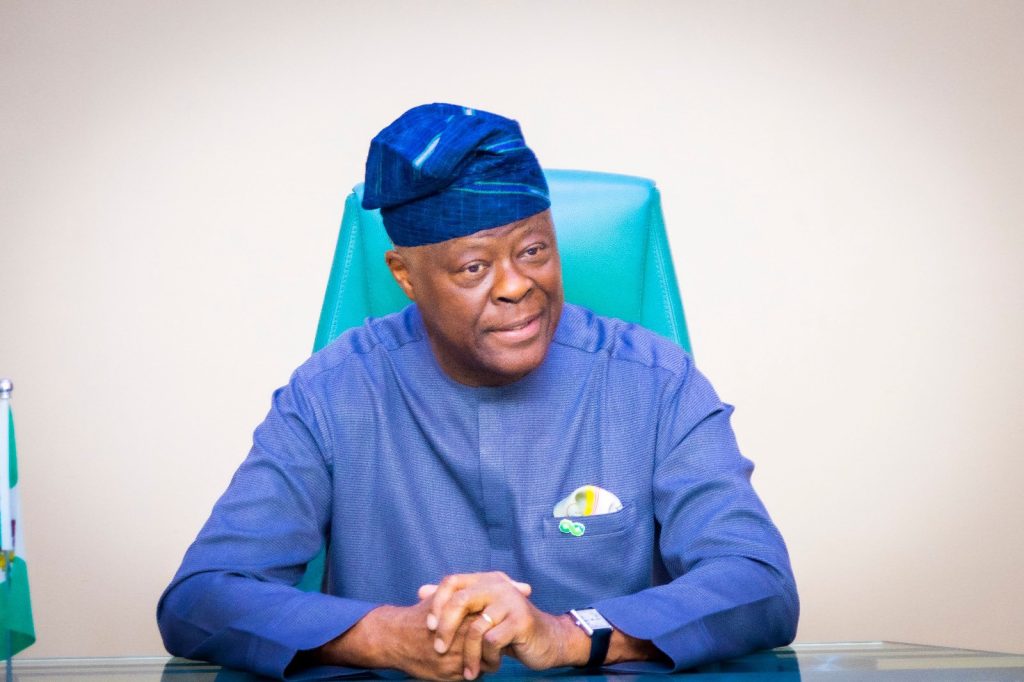
Minister of Finance and Coordinating Minister of the Economy, Mr. Olawale Edun has warned against a return to subsidy regimes despite mounting global shocks, as he raised concerns that developing countries are now paying more in debt servicing than they receive in external support.
Speaking in his capacity as Chair of the G-24 Group of Nations, at a press briefing of the group on the sidelines of the World Bank/IMF Spring Meetings, Edun said policymakers must strike a delicate balance between inflation control and economic growth.
“There’s a critical balancing role here, where if interest rates are raised too early and too high in an effort to curtail potentially rising inflation, that too can do damage to the transformations which are taking place in economies,” he said.
“On the other hand, if interest rates are not moved in time, that too can do damage. So the central banks have a balancing act in helping to steer economies safely through this current energy crisis and geopolitical tensions.”
Reforms
On Nigeria’s reform trajectory, Edun cautioned against policy reversals, stressing that hard-earned gains must be preserved. “Having made so much progress, it is important that we don’t have a return to generalized subsidies, a sort of relapse into policies that have not proven successful in the past,” he said.
He argued instead for targeted interventions, noting that “the focus really should be on helping the poorest and most vulnerable to cope with the increased pricing regime that they will face,” rather than abandoning reforms.
Providing context on the global energy shock, Edun explained that even oil-producing countries are not insulated. “It’s also not a one-way street, even an oil producing country does have transmission of the higher costs, which feeds through from gas prices to fertilizer to food prices and so forth.”
Debt Burden
On the growing debt burden, Edun delivered a stark warning: “The elevated borrowing costs and the debt servicing burden that developing countries are paying is weighing heavily on their ability to transform their economies and to achieve sustainable development.”
He revealed that the situation has worsened significantly. “When you look at debt servicing, the outflow from debt servicing because of elevated interest costs outweigh what came in,” he said, underscoring that developing nations are effectively experiencing net resource outflows.
Backing this position, Director of the G-24 Secretariat, Iyabo Masha, noted that despite reforms by global institutions, gaps remain. She said, “even with that, the gap remains, and so there’s still much more they can do, especially on the debt side, on how they bring down the cost of borrowing.”
Edun called on global institutions to step up support. “Multilateral development institutions should step up at this time with support, liquid support, as well as thought leadership to help countries navigate this period,” he said, adding that concessional financing and liquidity tools are urgently needed.
He, however, stressed that long-term resilience must come from within. “There has to be a reliance on domestic resource mobilization, comprehensive tax regimes that not only improve resource mobilization but at the same time reduce the cost to the lowest earners,” he stated.
Other officials at the briefing included First Vice-Chair, Akhtar Javed, representing Pakistan’s Finance Minister, and Second Vice-Chair, Bernardo Acosta, representing Ecuador’s Minister of Economy and Finance.
Global trade
On global trade and structural shifts, Edun pointed to rising fragmentation. “What we have seen in recent years is a retreat from a world trading system that is rules-based and orderly. That has driven developing countries to focus on domestic production and more on regional integration.”
Edun warned that, “It is this type of self-help, self-reliance and domestic resource mobilization that countries need to look to as the sustainable basis for transformation,” even as he reiterated that “the strong” nations and institutions must do more to support vulnerable economies.
The post Global Shocks: Edun warns against subsidy return, seeks cheaper financing appeared first on Vanguard News.

By Obas Esiedesa, Abuja
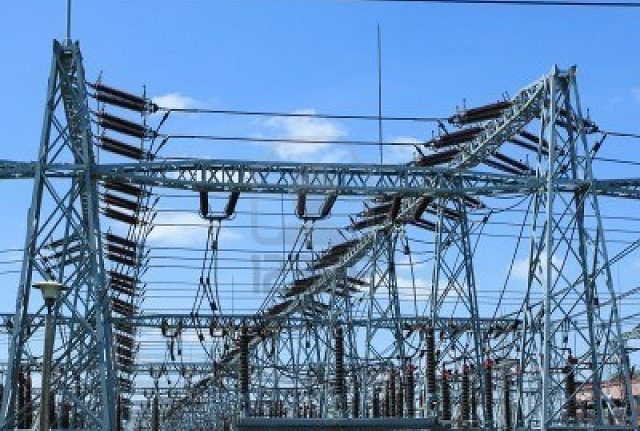
The Federal Government has unveiled new guidelines for the safe and efficient interconnection of solar mini-grids to electricity distribution networks, aimed at accelerating renewable energy deployment and improving electricity access across Nigeria.
Speaking at the launch in Abuja, the Managing Director of the Nigerian Electricity Management Services Agency (NEMSA) and Chief Electrical Officer of the Federation, Engr. Olusegun Adesayo, described the document as “a major milestone in Nigeria’s drive towards achieving a safe, reliable, sustainable and inclusive electricity supply industry.”
According to him, solar mini-grids have emerged as a critical solution for electrifying unserved and underserved communities, making clear operational standards necessary.
“The Guidelines provide comprehensive procedures, technical requirements, interconnection models and operational standards for integrating solar mini-grids into distribution networks without compromising grid stability, power quality, system reliability and public safety.
“The Guidelines seek to reduce uncertainties for investors and developers while strengthening collaboration among Distribution Companies, mini-grid developers, regulators and other stakeholders,” he said..
Adesayo added that the framework aligns with the provisions of the Electricity Act 2023, the Mini-Grid Regulations 2026 and relevant national and international standards, including IEC standards.
Also speaking, Permanent Secretary, Federal Ministry of Power, Alhaji Mahmuda Mamman, represented by the Director of Distribution, Mustapha Abba, said renewable energy, particularly solar mini-grids, plays a strategic role in expanding electricity access, improving energy security and promoting sustainable economic growth.
“As this segment of the electricity market continues to grow, it becomes imperative to establish clear technical and operational frameworks that will ensure safety, reliability and efficient coordination between solar mini-grid systems and existing distribution infrastructure,” he said.
“The Guidelines being launched today provide an important framework for ensuring the safe, reliable and efficient interconnection of solar mini-grids to distribution networks across Nigeria.”
Mamman said the guidelines would strengthen investor confidence, reduce technical and regulatory uncertainties, improve system reliability and support the sustainable integration of renewable energy solutions into Nigeria’s electricity network.
Representing the Delegation of the European Union to Nigeria and ECOWAS, Programme Manager, Energy and Circular Economy, Mr. Godfrey Ogbemudia, said: “The launch of these Guidelines is particularly significant. We are confident that the Guidelines will provide consistency and increase investor confidence in interconnected mini-grid projects.”
He reaffirmed the European Union’s commitment to supporting Nigeria’s energy transition and electrification ambitions, while Head of Development Cooperation at the German Embassy, Dr. Karin Jansen, said Germany remains committed to supporting Nigeria’s efforts to expand energy access, strengthen institutions and mobilise private investment in renewable energy.
The post FG moves to accelerate mini-grid deployment with new guidelines appeared first on Vanguard News.

By Peter Egwuatu
Group Managing Director/CEO, Nigerian Exchange Group (NGX Group), Temi Popoola, has urged the Central Bank of Nigeria’s (CBN) Monetary Policy Committee (MPC) to treat capital market development as a macroeconomic necessity, arguing that the effectiveness of monetary policy increasingly depends on the depth, liquidity, and coherence of Nigeria’s financial markets.
Popoola made this call in a presentation delivered during a session at the CBN Monetary Policy Committee, MPC workshop themed: “Structure and Behaviour of Nigeria’s Equity and Government Debt Markets: Implications for Monetary Policy Effectiveness.”
Represented by Jumoke Olaniyan, Group Chief Strategy Officer, NGX Group Popoola, noted that monetary policy decisions travel through market architecture before reaching households and businesses, and weak market structures can dilute policy effectiveness regardless of the stance adopted by the MPC.
The post NGX Group advocates stronger capital market integration into monetary policy framework appeared first on Vanguard News.


•Food import share shrinks as total imports jump 28%
By Babajide Komolafe
Nigeria’s spending on food imports declined by 7.4 per cent, year-on-year to $2.34 billion in 2025, signaling a moderation in the country’s dependence on imported food products despite a sharp increase in overall import expenditure. Data on food imports obtained from the Central Bank of Nigeria, CBN, quarterly statistical bulletin, fourth quarter 2025. Q4’25 showed that food imports fell to $2.343 billion in 2025 from $2.530 billion recorded in 2024, representing a decline of $186.42 million of 7.4 per cent year-on-year.
The decline comes after food import spending had risen by 18.8 per cent, YoY to $2.53 billion in 2024 from $2.129 billion in 2023, indicating a reversal of the upward trend witnessed in the previous year.
Further analysis revealed that food imports accounted for a smaller share of the nation’s total import bill in 2025. The ratio of food imports to total imports dropped significantly to 11.8 per cent in 2025 from 16.3 per cent in 2024.
The decline in food import share occurred despite relatively stable food import spending, largely because overall imports grew at a much faster pace during the review period.
According to CBN data, Nigeria’s total imports rose by 28 per cent, YoY to $19.897 billion in 2025 from $15.544 billion in 2024, representing an increase of $4.353 billion. This followed an earlier rise from $14.276 billion recorded in 2023.
Analysis of quarterly food import spending indicated that three of the four quarters in 2025 recorded lower import values compared to corresponding periods in 2024.
Food imports declined by 20.3 per cent, YoY to $550.09 million in Q1’25 from $689.88 million in Q1’24. In Q2 ’25, food import spending dropped by 6.0 per cent, YoY to $515.04 million from $547.70 million in Q2’24.
However, Q3’35 recorded the only year-on-year increase during the year, with food imports rising by 3.2 per cent, YoY to $653.85 million from $633.63 million in Q3’24.
The upward movement was short-lived as food import spending fell again in Q4 ’25 by 5.2 per cent, YoY to $624.36 million from $658.55 million in Q4’24.
The post Nigeria spends $2.34bn on food imports in 2025, down 7.4% appeared first on Vanguard News.


Liverpool Working on ‘Fast’ Deal for Diomande, He’s Iraola’s Next Semenyo

2027: Accord disowns Gbenga Olawepo-Hashim as its presidential candidate

Soldier, five others killed in Adamawa road crash

Simi Sanya and Femi Dapson Are Now Legally Married and It Is Beautiful to See

FCT Area Council Election: Live results from polling units

Premier League Set-Piece Goals (2025/2026)
-
 Sports14 hours ago
FA to ‘Consider England Position’ on Thomas Partey 2026 World Cup Handshake
-
 Politics2 days ago
2027: Jonathan not power-hungry – Former aide
-
 Metro2 days ago
Police debunk bandit invasion rumours in Lagos, arrest 15
-

 Sports2 days ago
Everton Lead Race to Sign Midfielder Hayden Hackney: David Ornstein
-

 Sports1 day ago
Celtic Agree to Terminate Stephen Welsh’s Contract Early
-
 Sports6 hours ago
Sadio Mane: ‘Mo Salah Was Not Liverpool’s Best Finisher
-
 Business2 days ago
Cardoso re-assigns deputy govs, Ikeazor now in charge of policy
-

 Metro2 days ago
Five police officers arraigned over death of musician OG Millan