
Politics
2027: Utomi’s proposal dangerous, threat to democratic stability – Agbakahi


A political affairs analyst and chieftain of the All Progressives Congress, APC, Dr George Agbakahi, has cautioned against proposals for political parties and private groups to establish parallel election result declaration systems.
He warned that such initiatives could undermine Nigeria’s constitutional order, fuel political instability, and threaten national security.
In a comprehensive rebuttal to recent suggestions attributed to political economist and public affairs commentator, Prof Pat Utomi, Agbakahi argued that only the Independent National Electoral Commission, INEC, possessed the constitutional authority to authenticate and declare election results in Nigeria.
Agbakahi, who serves as the South-East Leader of the Tinubu Support Organization, made the argument in a statement titled “Competing Electoral Verdicts and the Threat to Democratic Stability in Nigeria: The Perils of Parallel Result Declarations in Nigeria.”
According to Agbakahi, the legitimacy and stability of any democratic system depend on the existence of a single lawful authority empowered to determine electoral outcomes.
He maintained that the Nigerian Constitution and the Electoral Act clearly vest that responsibility exclusively in INEC, stressing that electoral results derive legal force only when they have been authenticated and declared through constitutionally prescribed procedures.
“The stability and legitimacy of every constitutional democracy depend fundamentally upon the existence of a single lawful authority empowered to determine and authenticate electoral outcomes,” he stated.
He argued that the electoral framework established under the Constitution and Electoral Act provides a structured chain of result collation and declaration, beginning from polling units through various levels of collation up to the national level, all under INEC’s supervision.
According to him, the legal framework neither contemplates nor authorizes any parallel institution to perform equivalent functions.
Political parties have access to results, not authority to declare winners
Agbakahi acknowledged that political parties play a significant role in monitoring elections and already possess broad access to electoral data through accredited agents stationed at polling units and collation centres.
He noted that party agents are entitled to observe vote counting, verify entries on official result sheets, receive copies of polling unit results, and monitor the collation process at various levels.
Furthermore, he pointed to technological innovations such as the Bimodal Voter Accreditation System (BVAS) and the INEC Result Viewing Portal (IReV), which provide political parties, observers, civil society organisations, and the public with enhanced access to election information.
However, he insisted that access to electoral data does not translate into legal authority to declare election outcomes.
While parties may collect, analyse, and preserve election results for verification purposes and challenge discrepancies through election petitions, he argued that the authority to officially announce winners remains solely with INEC.
“The possession of electoral data does not confer the legal authority to pronounce upon the outcome of an election,” he wrote.
Judicial review, not parallel declarations
The APC stalwart further argued that where political parties believe official results do not reflect lawful votes cast, the Constitution already provides a clear avenue for redress through election petition tribunals and appellate courts.
He stressed that democratic governance requires aggrieved actors to seek remedies through judicial processes rather than resorting to what he described as “self-help” mechanisms.
According to him, attempts by political parties to establish alternative result declaration platforms would amount to an unconstitutional usurpation of powers reserved for electoral authorities.
Agbakahi also dismissed arguments that such declarations could be justified under constitutional guarantees of freedom of expression, noting that fundamental rights are subject to lawful restrictions in the interest of public safety, public order, and democratic stability.
Parallel result-transmission systems dangerous
Agbakahi expressed particular concern over proposals advocating real-time independent result aggregation systems operated by political parties and accessible to both domestic and international audiences.
Although such proposals are often presented as tools for enhancing transparency and accountability, he argued that they could create competing centres of electoral legitimacy.
He warned that if multiple parties begin publishing independent electoral verdicts, Nigeria’s electoral landscape could become fragmented into conflicting narratives, especially in an era increasingly influenced by artificial intelligence, machine learning, and deepfake technologies.
“If every registered political party were to establish and publicise independent result-declaration systems, Nigeria’s electoral space would inevitably become fragmented into multiple and potentially conflicting narratives of electoral truth,” he stated.
According to him, democracy requires certainty regarding who has won an election and which institution possesses the authority to make that determination.
Agbakahi further linked competing electoral verdicts to broader concerns about national security and political stability.
He described INEC’s exclusive authority as a component of what he termed “electoral sovereignty”.
Drawing parallels with the judiciary, he argued that just as individuals cannot establish private courts to issue binding judgments, political parties cannot establish alternative institutions to declare election results.
He warned that situations where multiple actors claim authority to determine election outcomes often trigger legitimacy crises that can lead to unrest, institutional breakdown, and economic instability.
To support his argument, Agbakahi cited several historical examples from Nigeria’s political experience.
He referenced the Western Region crisis of 1964–1965, which contributed to the collapse of the First Republic and eventually led to military intervention in 1966.
He also pointed to the fallout from the annulment of the June 12, 1993 presidential election, which generated a prolonged legitimacy crisis and political instability.
The APC chieftain further recalled the violence that followed the 2011 presidential election, noting that more than 800 people were reportedly killed and tens of thousands displaced in post-election disturbances.
According to him, these incidents demonstrate that disputes over electoral legitimacy often carry significant consequences for national unity, economic growth, and public security.
African examples highlight dangers
Beyond Nigeria, Agbakahi cited experiences from other African countries where disputed election results and competing claims to victory triggered violent crises.
He highlighted the 2007–2008 post-election violence in Kenya, which resulted in over 1,100 deaths and widespread displacement.
He also referenced the 2010–2011 electoral crisis in Côte d’Ivoire and the disputed 2008 elections in Zimbabwe, arguing that fragmented electoral legitimacy frequently leads to violence, institutional disruption, and economic decline.
Given Nigeria’s size, ethnic diversity, and history of election-related tensions, he warned that similar developments could have particularly severe consequences.
Concerns ahead of 2027 elections
Looking ahead to the 2027 general elections, Agbakahi identified growing political polarisation, declining trust in public institutions, economic hardship, and the rapid spread of digital information as factors that could amplify the dangers associated with competing result-declaration systems.
He warned that partisan result platforms could encourage premature mobilisation of supporters, deepen mistrust in official institutions, and create narratives that become difficult to resolve through constitutional channels.
Such uncertainty, he said, could negatively affect investor confidence, economic planning, and perceptions of Nigeria’s political stability.
Agbakahi concluded by urging strict enforcement of existing electoral laws against unauthorised attempts to announce or simulate official election results.
He also called on INEC to continue strengthening transparency measures, including the expansion of real-time publication of polling-unit results through digital platforms.
In addition, he advocated possible legislative clarification to address emerging technological challenges while balancing freedom of expression with public order and electoral integrity.
He urged both domestic and international media organisations to clearly distinguish between official election declarations and partisan tallies to avoid amplifying narratives that could inflame tensions.
According to him, Nigeria’s democratic future depends not only on conducting credible elections but also on preserving the integrity of the institutions constitutionally empowered to validate electoral outcomes.
“The choice confronting the nation is not between transparency and opacity; it is between constitutional order and institutional fragmentation. In a constitutional democracy, electoral sovereignty must remain singular, lawful, and institutional,” Agbakahi stated.
dailypost.ng

Popular Nigerian Big Brother Naija reality show star and comedian, Aderombi Adedayo Martins, better known as DeeOne, has emerged as the Lagos State House of Assembly candidate for Ibeju Lekki constituency 1.
DeeOne, who is contesting under BOOT Party, emerged Ibeju Lekki constituency 1 candidate after emerging the winner of the primary election.
Speaking after his victory, DeeOne in a post on his Instagram page on Wednesday night, appreciated the party for trusting him and assured the public of his commitment to serve them diligently if given the opportunity.
He wrote “I want to thank my party, BOOT party for the confidence in voting for me to emerge the winner of the primary election for Ibeju lekki constituency 1.
“To Ibeju lekki constituency 1, come 2027 by the grace of God, I will be your worker and not your boss”, he said.
dailypost.ng

The Peoples Redemption Party, PRP, says it will field a candidate regardless of where he comes from.
Speaking during an interview on Arise Television on Thursday, the National Chairman of the PRP, Hakeem Baba-Ahmed said zoning is not important but competence and capacity.
Baba-Ahmed added that the PRP will field a presidential candidate no matter his religious or ethnicity background.
“Fielding a candidate from a particular zone is not important. I believe that it doesn’t matter where the candidate is coming from.
“Insisting that the president must come from one part of the country has damaged this country beyond anything you can imagine.
“Look, we lived for eight years under a very inept, incompetent, and indifferent administration of President Muhammadu Buhari. He was from the north,” he said.
dailypost.ng
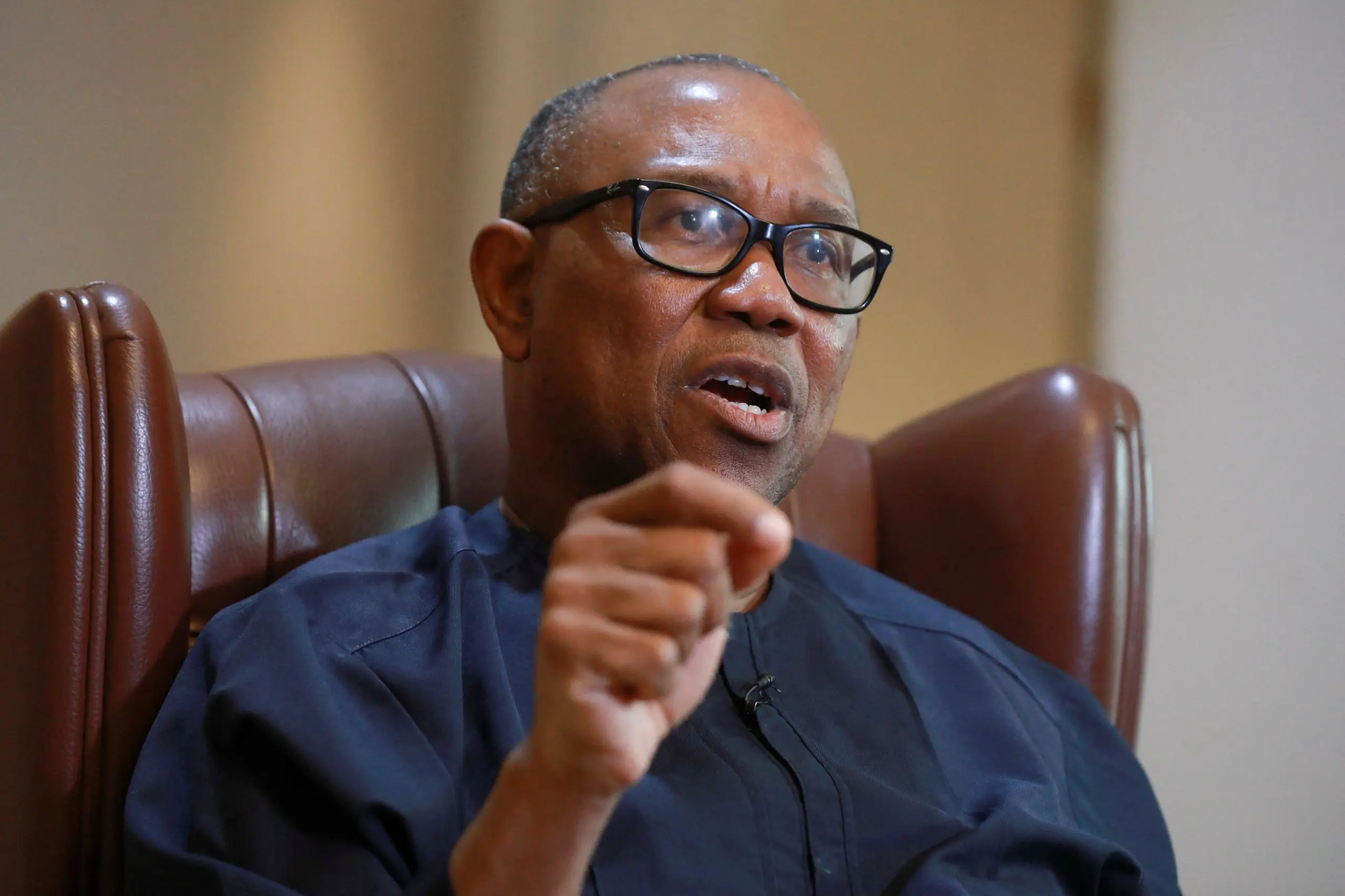
The Nigeria Democratic Congress, NDC, presidential candidate, Peter Obi, has appealed to the aspirants of party who lost in the primary election to accept the result in good faith.
Obi urged them to rather work for the unity and growth of the party ahead of the 2027 general elections.
He made this appeal at the second National Executive Committee, NEC, meeting of the NDC in Abuja.
The former Anambra state governor begged members to put aside grievances arising from the primaries and focus on building a credible political platform capable of addressing Nigeria’s challenges.
He acknowledged the presence of senior party leaders, serving and former lawmakers, state chairmen and other stakeholders, while apologising for the delayed commencement of the meeting.
The Anambra-born politician described the NDC as a young political organisation that had made remarkable progress within a short period, noting that the party had successfully conducted congresses, conventions and primaries within about 90 days.
“I want to sincerely appeal to all our aspirants who participated in the primaries to accept the outcomes in good faith.
“In every democratic process, there will be winners and there will be those who do not succeed. What matters is what we do after the process,” he said.
dailypost.ng


Man City Threaten Real Madrid With Legal Action Over Erling Haaland
2027: Comedian DeeOne emerges House of Assembly candidate in Lagos
2027: Zoning not important, we want someone to salvage Nigeria – Baba-Ahmed

Simi Sanya and Femi Dapson Are Now Legally Married and It Is Beautiful to See

FCT Area Council Election: Live results from polling units

Premier League Set-Piece Goals (2025/2026)
-
 Sports1 day ago
FA to ‘Consider England Position’ on Thomas Partey 2026 World Cup Handshake
-
 Politics2 days ago
2027: Jonathan not power-hungry – Former aide
-
 Sports17 hours ago
Sadio Mane: ‘Mo Salah Was Not Liverpool’s Best Finisher
-
 Sports12 hours ago
Gilberto Silva Ranked Gerrard, Lampard and Scholes From Worst to Best
-

 Sports2 days ago
Celtic Agree to Terminate Stephen Welsh’s Contract Early
-
 Sports2 days ago
Liverpool Hold Talks to Sign PSG Star Iliya Zabarnyi
-

 Metro2 days ago
Ogun is safe’ – Police debunk false banditry alert in Ifo, Ota
-
 Politics2 days ago
Aggrieved party sues INEC, seeks withdrawal of NDC registration