
Business
US–Iran tensions: Crude oil rebounds above $100 per barrel


By Udeme Akpan
The price of crude oil has risen to over $100 per barrel from $90 in the global market, following the collapse of talks between the United States and Iran over the weekend.
Crude oil prices had dropped to $90 per barrel from $100 last week, as market watchers anticipated that the talks would culminate in an agreement in Islamabad, Pakistan’s capital.
The United States Vice President, JD Vance, said Tehran refused to accept Washington’s terms during the negotiations, stating: “The bad news is that we have not reached an agreement, and I think that’s bad news for Iran much more than it’s bad news for the United States of America.
“We need to see an affirmative commitment that they will not seek a nuclear weapon, and that they will not pursue the tools that would enable them to quickly achieve a nuclear weapon.”
However, in an interview with Vanguard, the Chief Executive Officer of Petroleumprice.ng, Olatide Jeremiah, said: “From all indications, the price of crude will continue to rise in the coming weeks because of tensions, speculation, and uncertainties in the market. The market will be driven by heightened conflict and instability.
“The impact will not be limited to the upstream segment; it will spill over into the downstream, leading to higher prices of petroleum products, especially Premium Motor Spirit (PMS), also known as petrol. Such increases will also affect transportation costs, as well as the prices of goods and services.”
Similarly, the National President of the Oil and Gas Services Providers Association of Nigeria (OGSPAN), Mazi Colman Obasi, said: “The expected surge in energy costs will impact our domestic economy, but it may not be as severe as it could have been due to the operations of the 650,000 barrels-per-day Dangote Petroleum Refinery.”

By Elizabeth Adegbesan
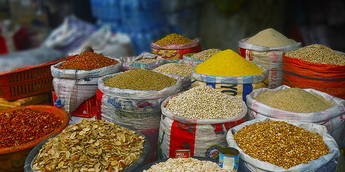
Despite the moderation in inflation rate reported by the National Bureau of Statistics, NBS, the financial burden of feeding on Nigerian households may have intensified as the national average Cost of a Healthy Diet (CoHD) climbed to N1,541 per adult per in March 2026, about 4.4 per cent up from N1,477 in March 2025.
The Bureau had reported a steady downward trend in inflation rate up till February 2026 but the trend reversed marginally in March and April.
On a month-on-month basis, nutritious food prices rose by 1.89 percent from February 2026.
However, NBS noted that the upward movement in CoHD was driven by price hikes across almost all essential food groups.
It stated: “The national average Cost of a Healthy Diet was N1,541 per adult per day in March 2026.
“On a month-on-month basis, the cost increased by 1.89 percent compared to February 2026 (N1,513).
“The increase was driven by the rise in prices across all food groups.”
Data from the report revealed sharp geographical divides in food affordability.
Southern states bear the heaviest financial burden, while northern regions enjoy lower costs.
NBS said: “At the State level Ekiti, Imo and Abia States recorded the highest cost at N2,091, N2,052, and N1,970 respectively.
“Adamawa, Federal Capital Territory and Taraba State accounted for the lowest costs at N1,004, N1,113 and N1,149 respectively.”
Zonally, the South-East emerged as the most expensive region at N1,899 per day, followed closely by the South-West at N1,801.
The North-East remained the most affordable zone at N1,233 daily.
The report further showed that meeting dietary guidelines for animal-source foods proved to be the most expensive component.
This category accounted for 39 percent of total daily costs while delivering just 13 percent of total calorie intake.
Fruits and vegetables also strained budgets due to their low calorie-to-price ratio.
Fruits consumed 16 percent of the daily budget for a mere 7 percent of calories.
Vegetables consumed 14 percent of the budget while providing only 5 percent of calories. Legumes, nuts, and seeds remained the most economical choice, representing just 7.0 percent of total costs.
The post Food Crisis: Cost of healthy diet rises further — NBS Report appeared first on Vanguard News.

By Obas Esiedesa, Abuja
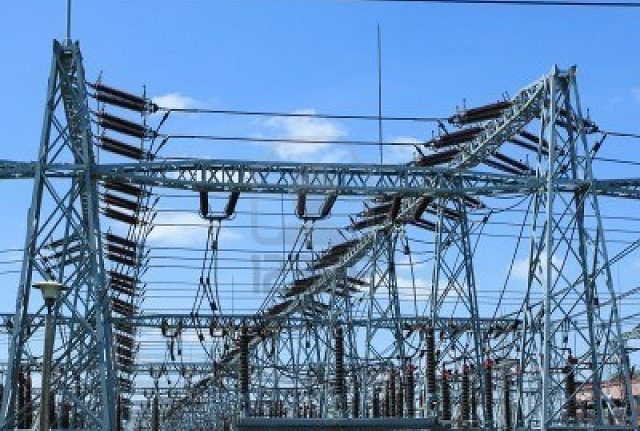
The Federal Government has unveiled new guidelines for the safe and efficient interconnection of solar mini-grids to electricity distribution networks, aimed at accelerating renewable energy deployment and improving electricity access across Nigeria.
Speaking at the launch in Abuja, the Managing Director of the Nigerian Electricity Management Services Agency (NEMSA) and Chief Electrical Officer of the Federation, Engr. Olusegun Adesayo, described the document as “a major milestone in Nigeria’s drive towards achieving a safe, reliable, sustainable and inclusive electricity supply industry.”
According to him, solar mini-grids have emerged as a critical solution for electrifying unserved and underserved communities, making clear operational standards necessary.
“The Guidelines provide comprehensive procedures, technical requirements, interconnection models and operational standards for integrating solar mini-grids into distribution networks without compromising grid stability, power quality, system reliability and public safety.
“The Guidelines seek to reduce uncertainties for investors and developers while strengthening collaboration among Distribution Companies, mini-grid developers, regulators and other stakeholders,” he said..
Adesayo added that the framework aligns with the provisions of the Electricity Act 2023, the Mini-Grid Regulations 2026 and relevant national and international standards, including IEC standards.
Also speaking, Permanent Secretary, Federal Ministry of Power, Alhaji Mahmuda Mamman, represented by the Director of Distribution, Mustapha Abba, said renewable energy, particularly solar mini-grids, plays a strategic role in expanding electricity access, improving energy security and promoting sustainable economic growth.
“As this segment of the electricity market continues to grow, it becomes imperative to establish clear technical and operational frameworks that will ensure safety, reliability and efficient coordination between solar mini-grid systems and existing distribution infrastructure,” he said.
“The Guidelines being launched today provide an important framework for ensuring the safe, reliable and efficient interconnection of solar mini-grids to distribution networks across Nigeria.”
Mamman said the guidelines would strengthen investor confidence, reduce technical and regulatory uncertainties, improve system reliability and support the sustainable integration of renewable energy solutions into Nigeria’s electricity network.
Representing the Delegation of the European Union to Nigeria and ECOWAS, Programme Manager, Energy and Circular Economy, Mr. Godfrey Ogbemudia, said: “The launch of these Guidelines is particularly significant. We are confident that the Guidelines will provide consistency and increase investor confidence in interconnected mini-grid projects.”
He reaffirmed the European Union’s commitment to supporting Nigeria’s energy transition and electrification ambitions, while Head of Development Cooperation at the German Embassy, Dr. Karin Jansen, said Germany remains committed to supporting Nigeria’s efforts to expand energy access, strengthen institutions and mobilise private investment in renewable energy.
The post FG moves to accelerate mini-grid deployment with new guidelines appeared first on Vanguard News.

By Peter Egwuatu
Group Managing Director/CEO, Nigerian Exchange Group (NGX Group), Temi Popoola, has urged the Central Bank of Nigeria’s (CBN) Monetary Policy Committee (MPC) to treat capital market development as a macroeconomic necessity, arguing that the effectiveness of monetary policy increasingly depends on the depth, liquidity, and coherence of Nigeria’s financial markets.
Popoola made this call in a presentation delivered during a session at the CBN Monetary Policy Committee, MPC workshop themed: “Structure and Behaviour of Nigeria’s Equity and Government Debt Markets: Implications for Monetary Policy Effectiveness.”
Represented by Jumoke Olaniyan, Group Chief Strategy Officer, NGX Group Popoola, noted that monetary policy decisions travel through market architecture before reaching households and businesses, and weak market structures can dilute policy effectiveness regardless of the stance adopted by the MPC.
The post NGX Group advocates stronger capital market integration into monetary policy framework appeared first on Vanguard News.


Six feared dead in Adamawa auto crash

2027: Zamfara ADC governorship candidate denies withdrawing from race

Tottenham in Talks to Sign Manchester United’s Marcus Rashford

Simi Sanya and Femi Dapson Are Now Legally Married and It Is Beautiful to See

FCT Area Council Election: Live results from polling units

Premier League Set-Piece Goals (2025/2026)
-
 Sports22 hours ago
FA to ‘Consider England Position’ on Thomas Partey 2026 World Cup Handshake
-
 Politics2 days ago
2027: Jonathan not power-hungry – Former aide
-
 Sports14 hours ago
Sadio Mane: ‘Mo Salah Was Not Liverpool’s Best Finisher
-

 Sports2 days ago
Celtic Agree to Terminate Stephen Welsh’s Contract Early
-

 Sports2 days ago
Everton Lead Race to Sign Midfielder Hayden Hackney: David Ornstein
-
 Sports9 hours ago
Gilberto Silva Ranked Gerrard, Lampard and Scholes From Worst to Best
-
 Politics2 days ago
‘They will not escape this’ – Emeka Ike storms INEC office over NDC primary election
-
Sports2 days ago
Tottenham Progressing With Deal to Sign Man City Winger Savinho